Our commitment in 5 points:
- Energy and emissions
- Recycling and recovery of materials
- Waste management
- Water resources management
- Product environmental footprint assessment
Efficiency and circularity are key issues when it comes to sustainability. At Fassa Bortolo we are committed to optimising the use of resources, reducing waste and promoting a circular economy in the building industry. Only through responsible business practices can we create a better future.
ENERGY AND EMISSIONS
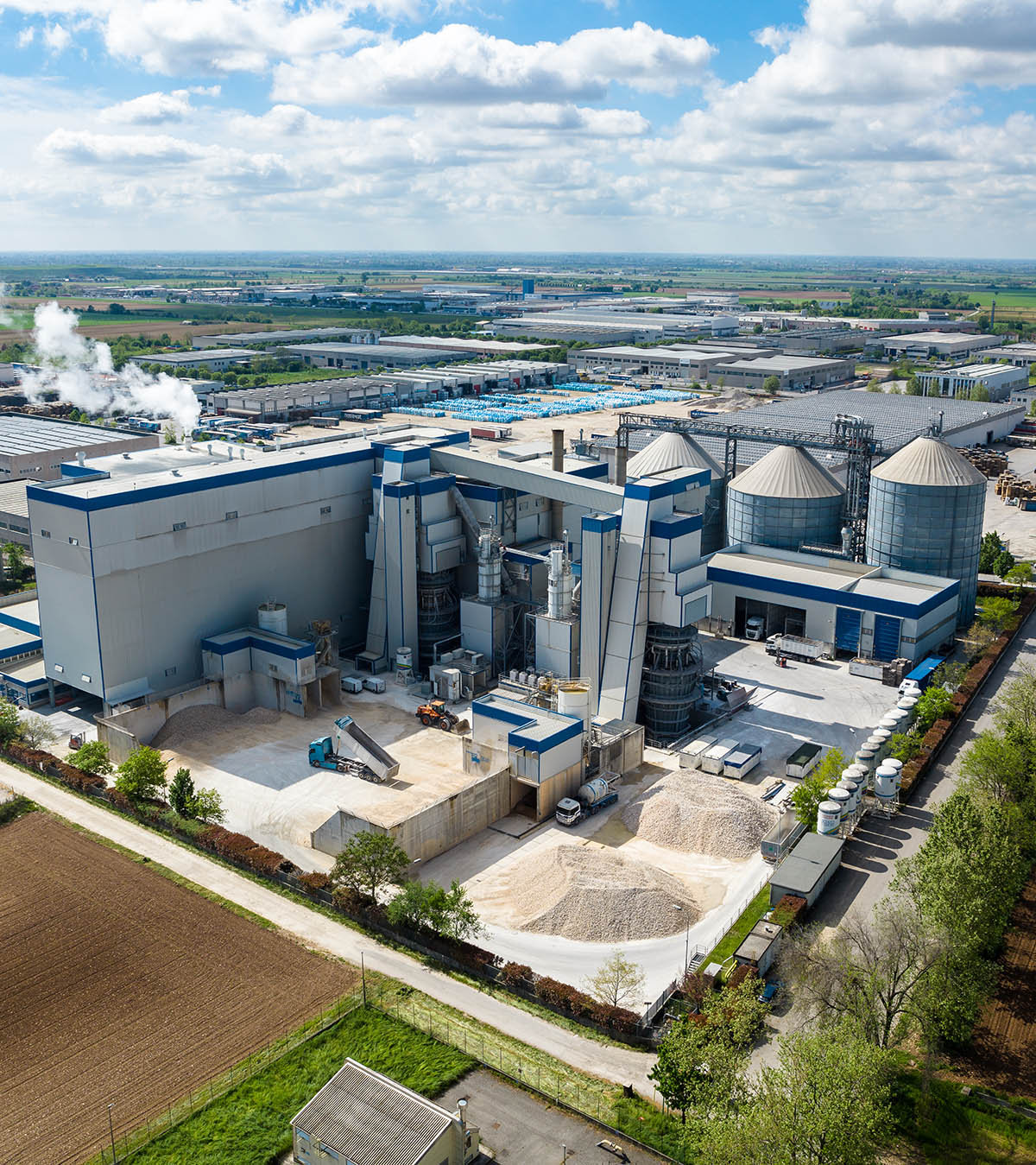
A first step in ecological transition is the installation of lime kilns that can be fuelled either by methane or using wood processing waste: for more than two decades we have been one of the few groups in the world able to produce lime by limiting the use of fossil fuels.
These systems are installed at the plants in Spresiano (TV), Montichiari (BS), Schio (VI) and Ceraino di Dolcè (VR). In the latter, which became part of the Group after the acquisition of Vilca S.p.A., we decided to invest in converting the existing technology to wood powder kilns, despite having the authorisation to use petroleum coal as fuel.
RECYCLING AND RECOVERY OF MATERIALS
For Fassa Bortolo, moving towards a circular economy model means continuing to innovate processes, from production to waste transformation, and evolving the way products are conceived. In construction, more and more products are manufactured using waste materials from other industrial sectors.
Giving a second life to these materials and transforming them into new resources is the challenge launched by Europe and demanded by future generations. In this context, full cooperation between the different players throughout the supply chain, each bringing their own experience, is crucial.
WASTE MANAGEMENT
Careful waste management is essential to minimise the impact that production activities can have on the environment and therefore on society: this is why over the years at Fassa Bortolo we have adopted strict guidelines on waste we produce, transport and recover.
We collaborate with the building industry, universities and associations, both public and private, to study, identify and implement an increasing number of applications for materials that are now considered waste. A collective effort to reduce the amount of material going to disposal, whether from internal or external production processes.
WATER RESOURCES MANAGEMENT
The amount of water withdrawn and consumed by an organisation and the quality of its discharges can have impacts on ecosystems and people. Reductions in water availability or quality can result in long-term impacts on ecosystems and biodiversity, which in turn can cause health and development problems for humans and compromise food security.
We have implemented the treatment of rainwater, which is collected in storage and treatment tanks, an operation that ensures, among other things, better water quality at the drain.
PRODUCT ENVIRONMENTAL FOOTPRINT ASSESSMENT
Life Cycle Assessment is an objective method that assesses the impact of a product or service on the environment throughout its life cycle. The calculation includes the stages of preparation, production, distribution, use, recycling and finally disposal. One of the categories considered is the production of CO2.
At Fassa Bortolo we have joined the Italian environmental footprint assessment programme. The analysis carried out measures the environmental impact generated by the different production processes in kg of CO2 equivalent, in order to identify those with the greatest impact.
Starting by determining the carbon dioxide production of the products being analysed, possible measures were then defined so as to reduce, or even eliminate, emissions throughout the product life cycle. This analysis aims to improve the production system and reduce the impact on the environment.