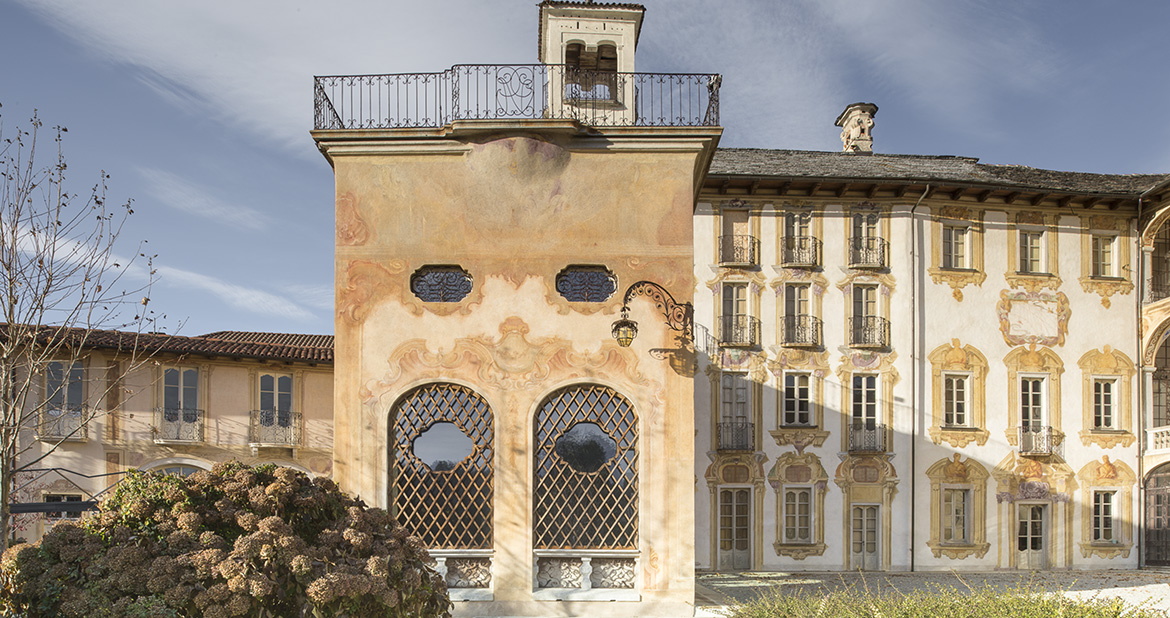
Chiesa di San Giuseppe degli Scolpi
Credits
Client
Comune di Cagliari
Collaborators
Authors
Marcello Carzedda
The executed works, corresponding to a 15% to complete the whole plan, was part of a general restoration project, that intended to link the building, aimed to be transformed in multi purpose room-auditorium, through Castello’s monumental emergences system, intended to cultural activities.
Tecnical drawings:
Extended report:
Description
Current Situation (analysis of the area, subject of the intervention)
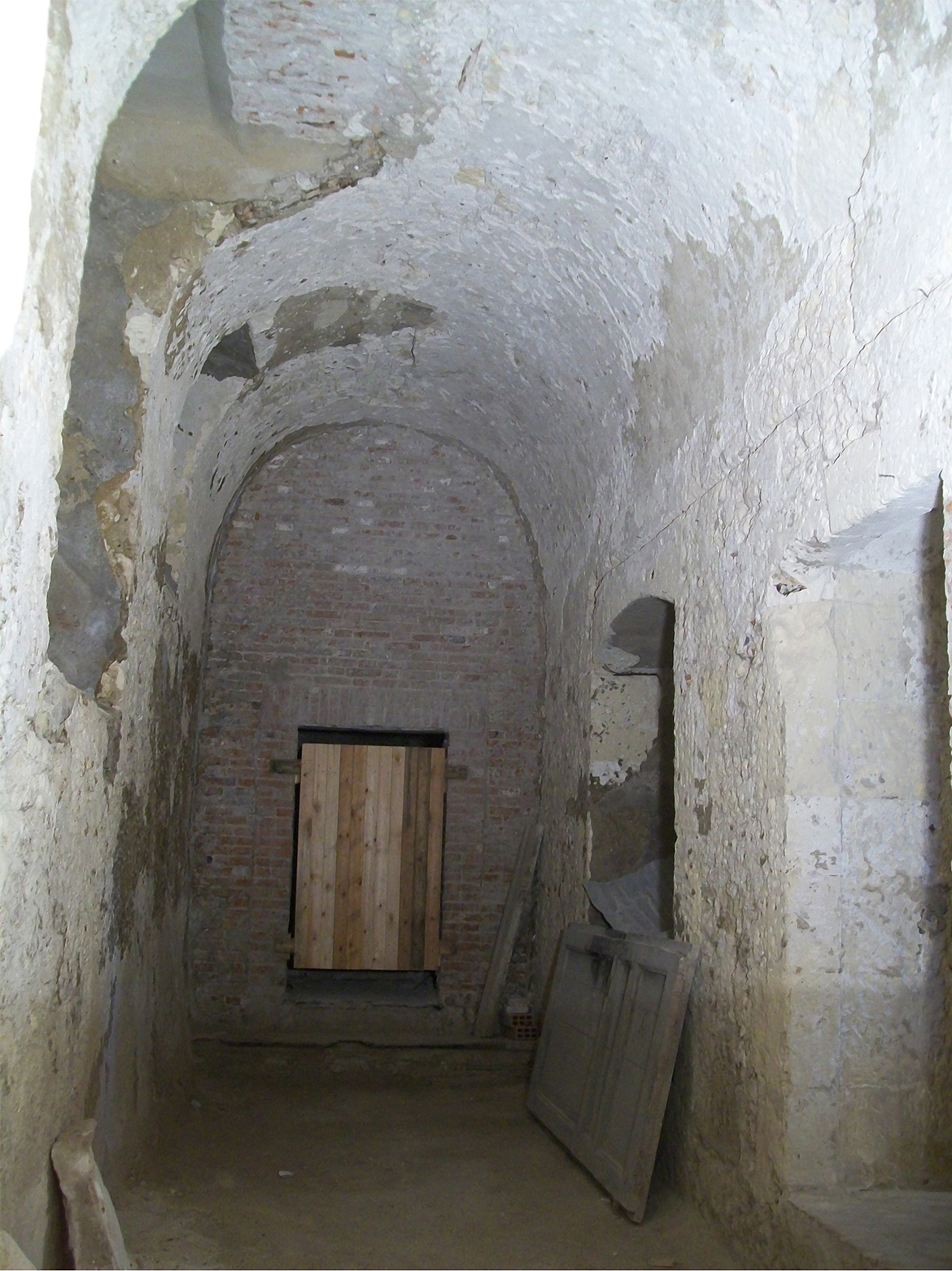
After the analysis of survey managed through several on-site inspections and partial tests done in masonry, it has been defined the map problems present in the building, caused, over the years, by the deterioration and the serious state of neglect and abandon.
Slots, both longitudinal and transverse, and infiltration from ceiling, due to widespread permeation of water from coverage, have been found in the barrel vault nave.
On December 22th 1948, the Superintendency of Monuments and Galleries of Cagliari compiled an analysis report of the damages, that the Church endured after the bombing on February 1943, where it confirms that the coverage was a tile roof, removed as the works executed from 1948 by Cagliari Public Works Office have been started, followed by the collapse of the entire vaulted structure of the coverage, as archival records expressly report .
The entire surface was composed of cement screed and marked by a grid of expansion joints, without the necessary sealing.
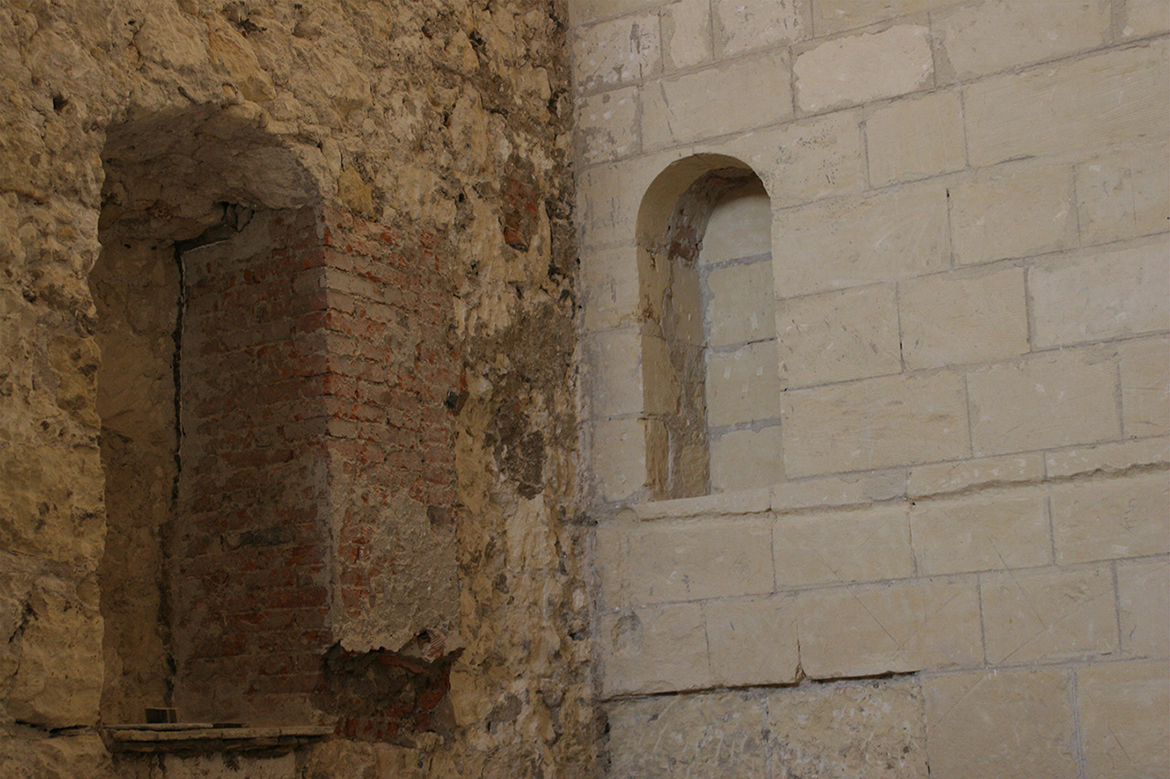
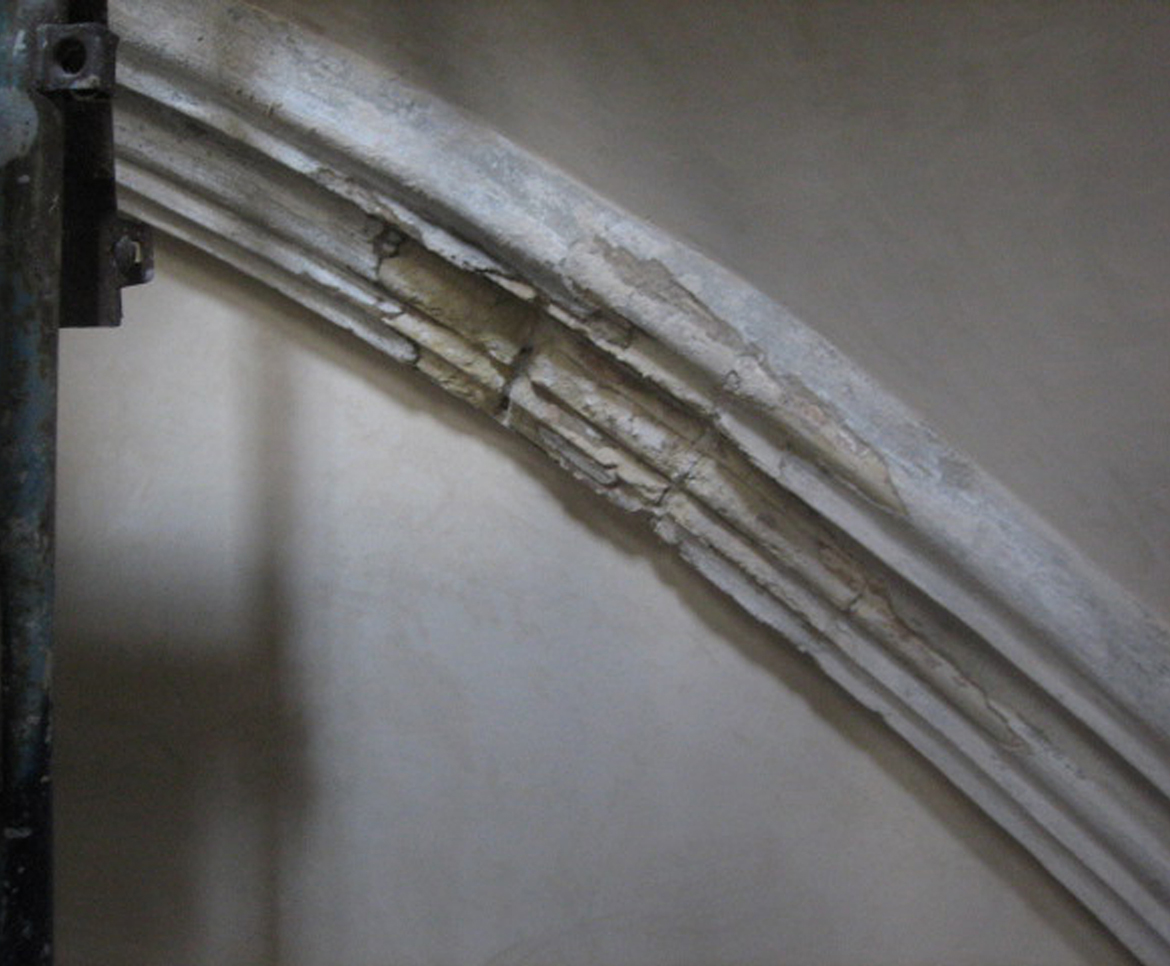
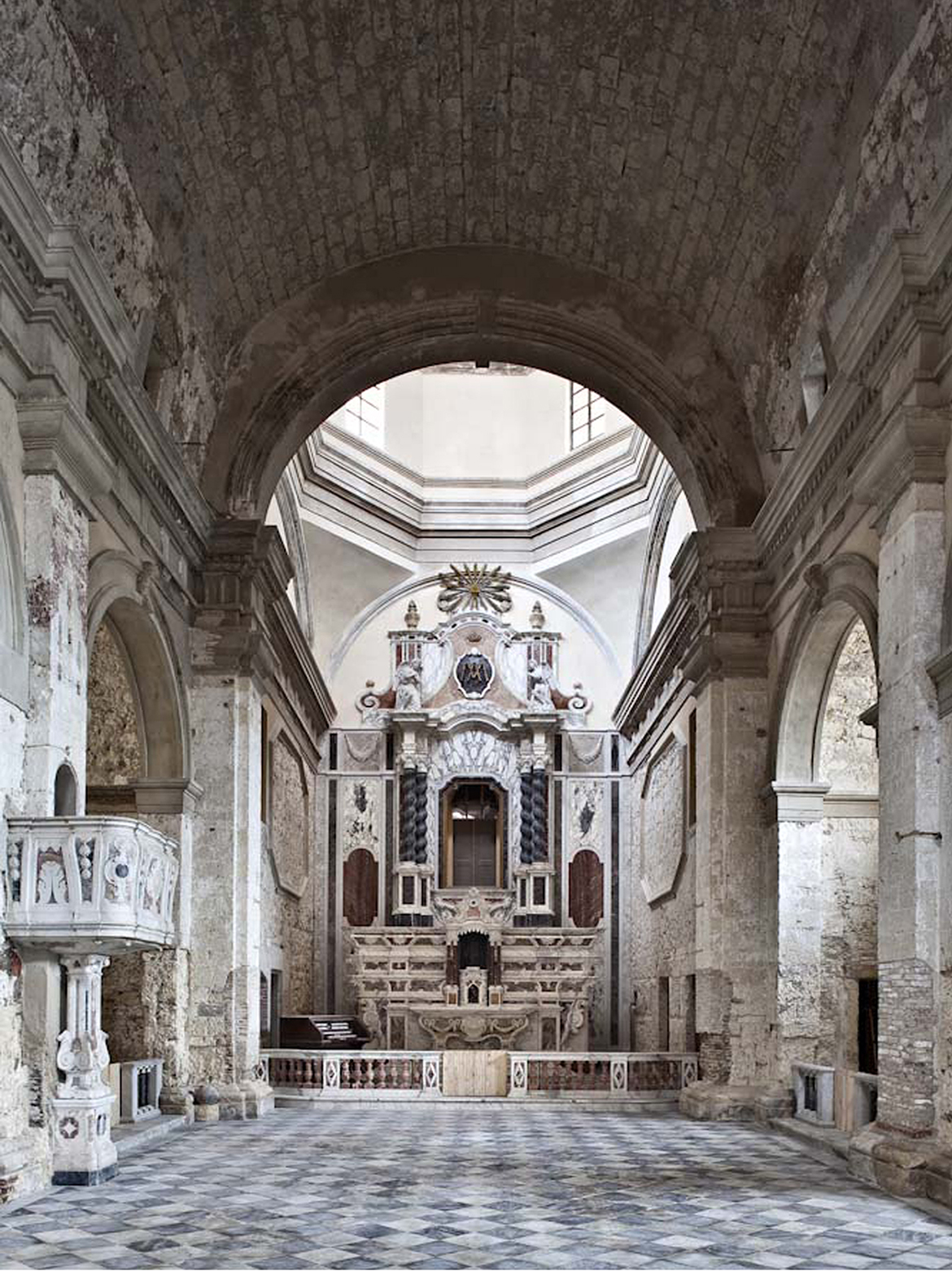
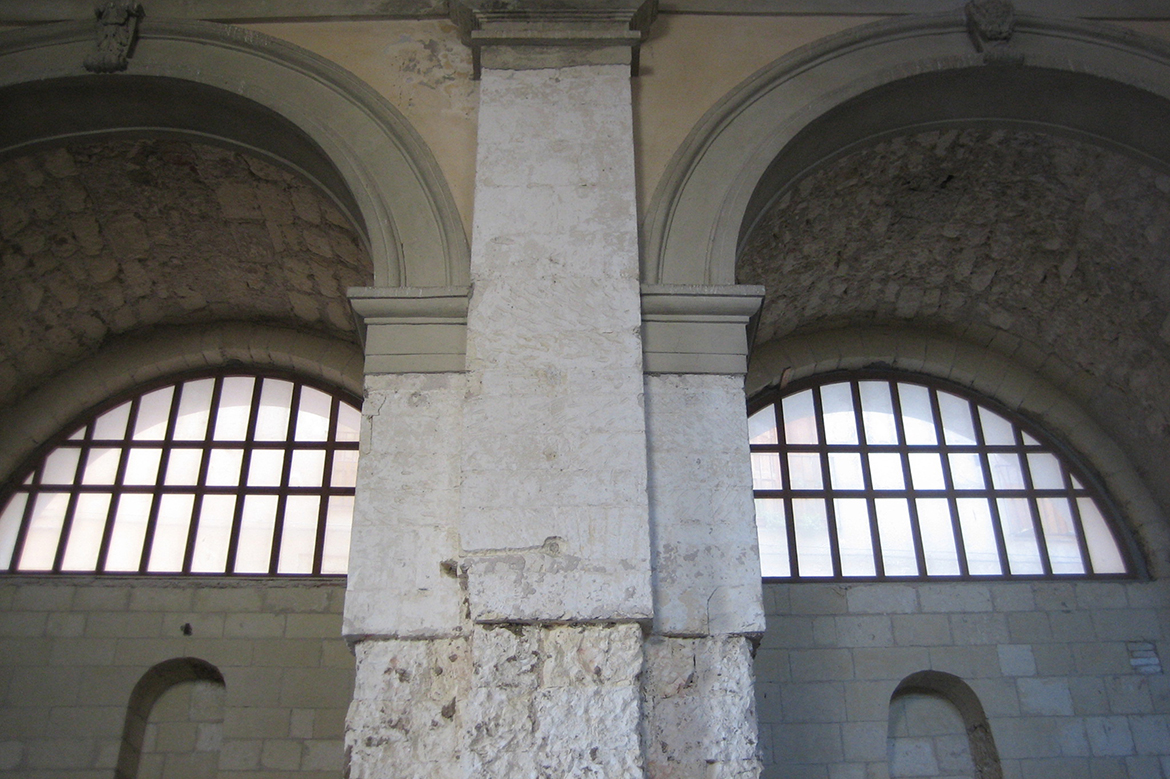
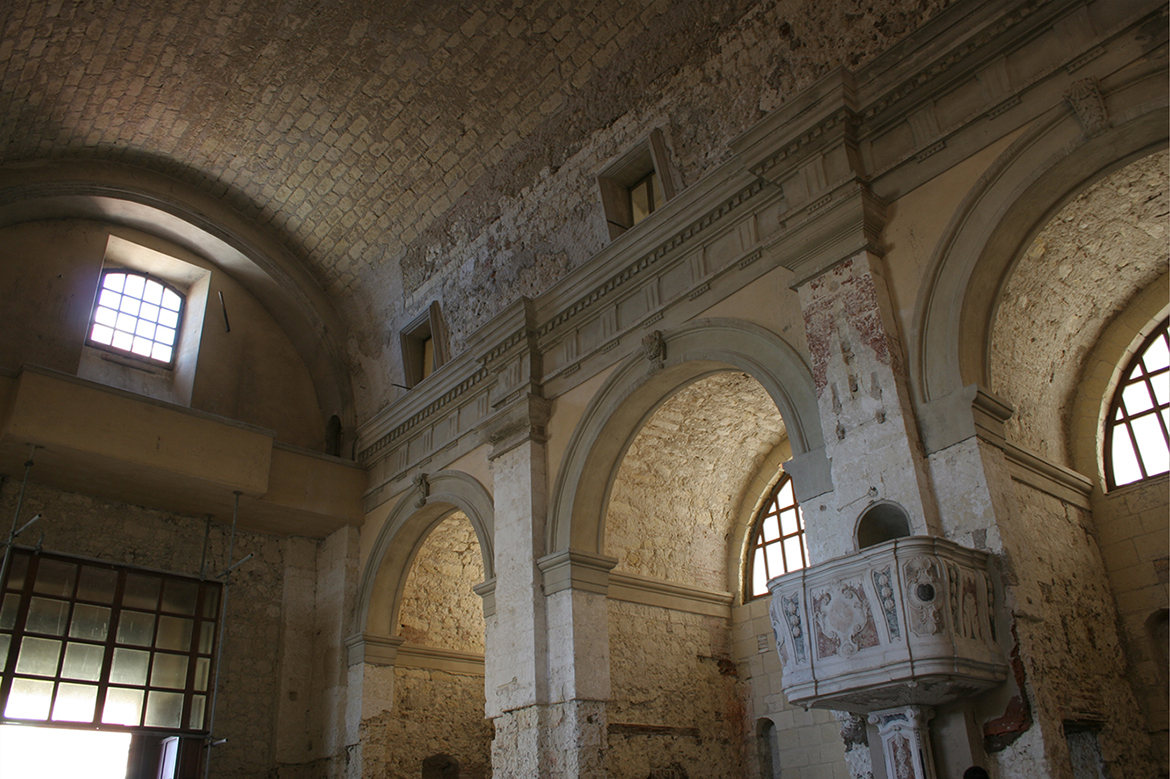
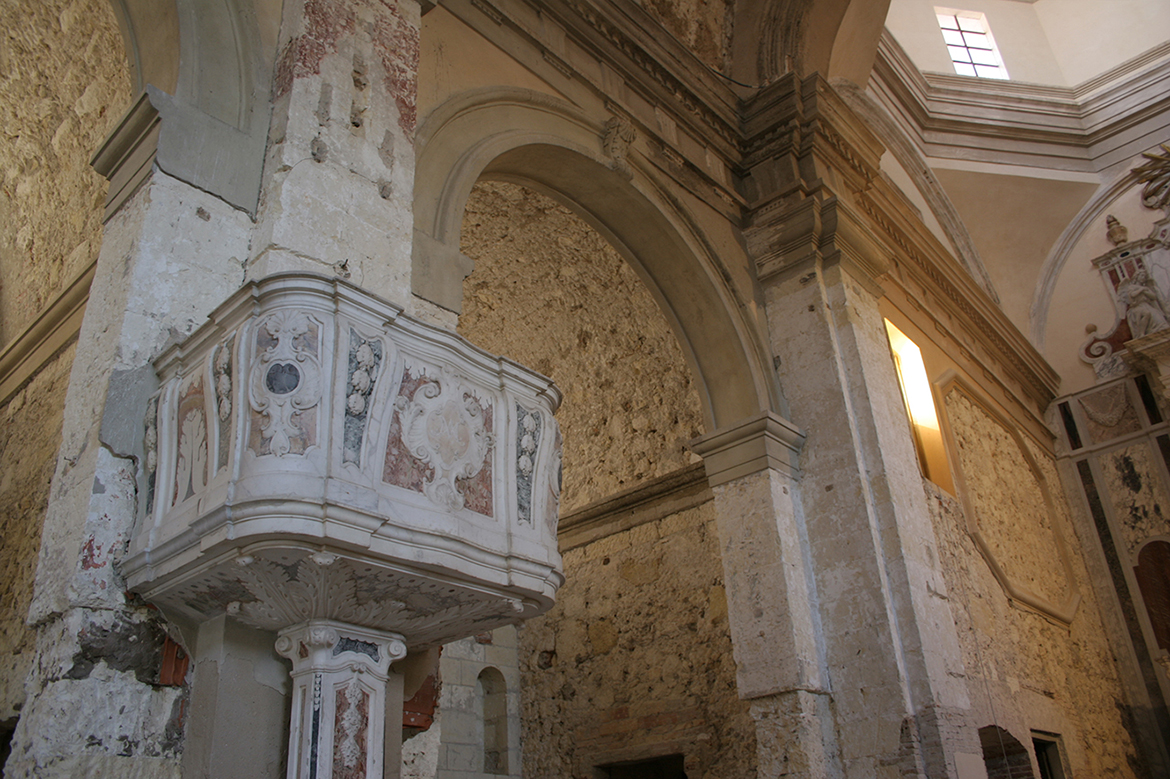
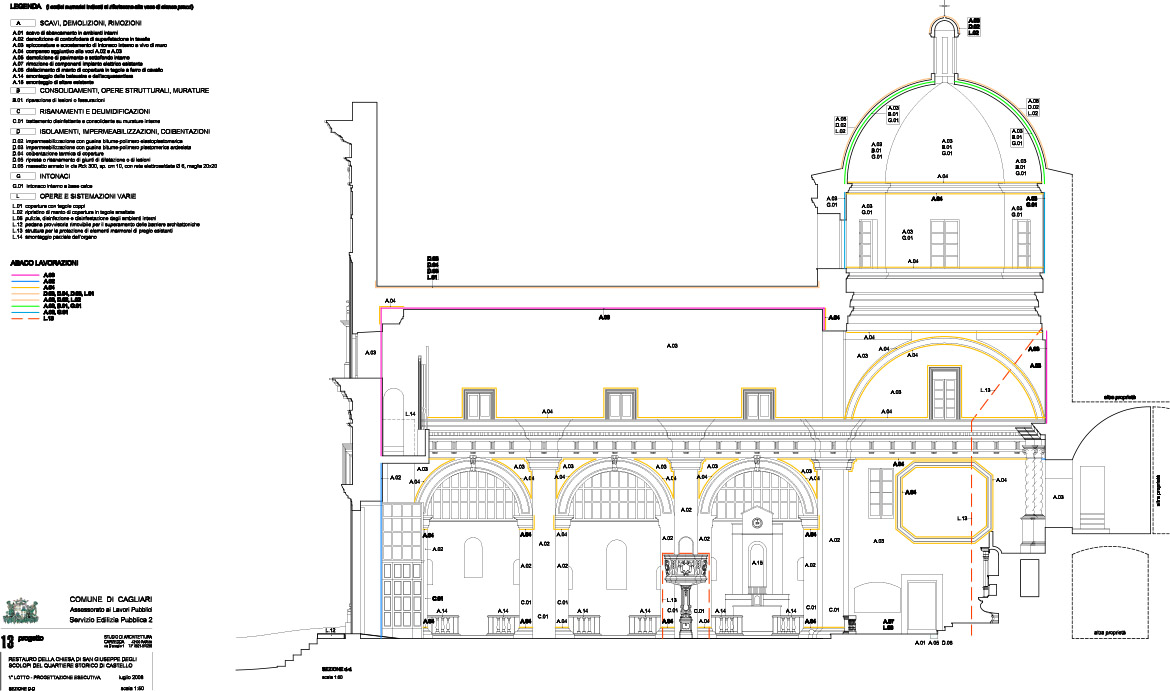
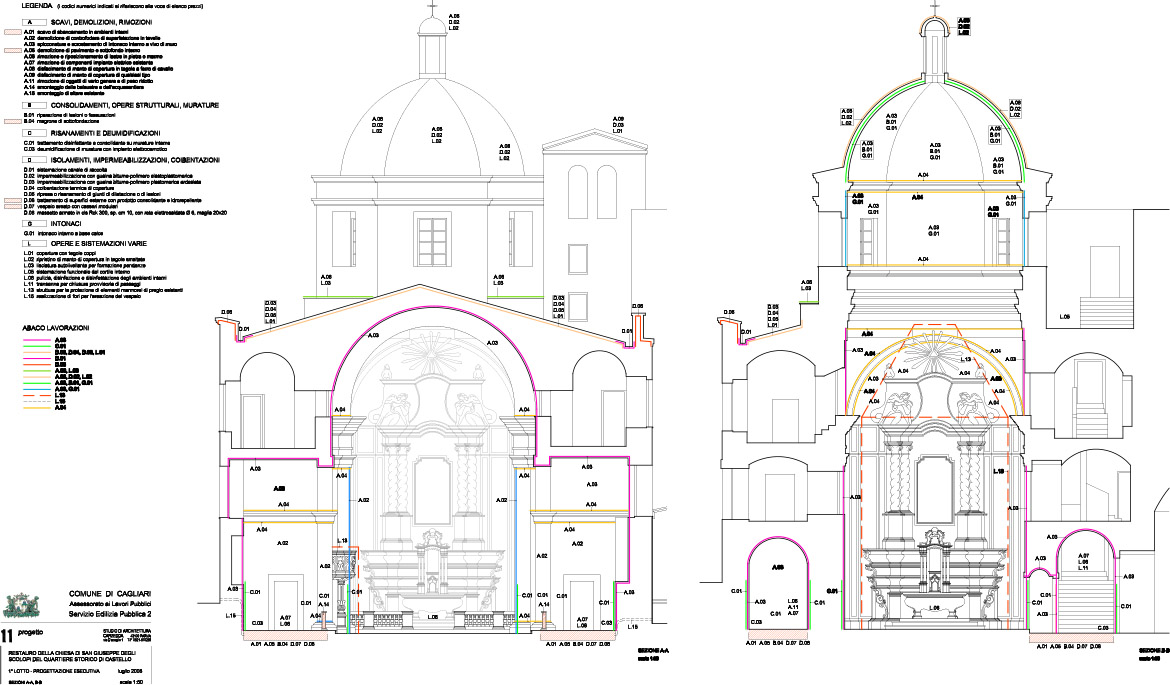
The barrel vault places on trabeations supported by piers with Doric pilaster, in classical style, realized with “Pietra cantone” ( type of calcarenite stone), as the wall structure of the entire perimeter; the trabeations were concealed by clay interlinings, covered by cement render: the ashlars denounced a progressive decomposition, noticeable for the pulverization of surfaces caused by salient damp .
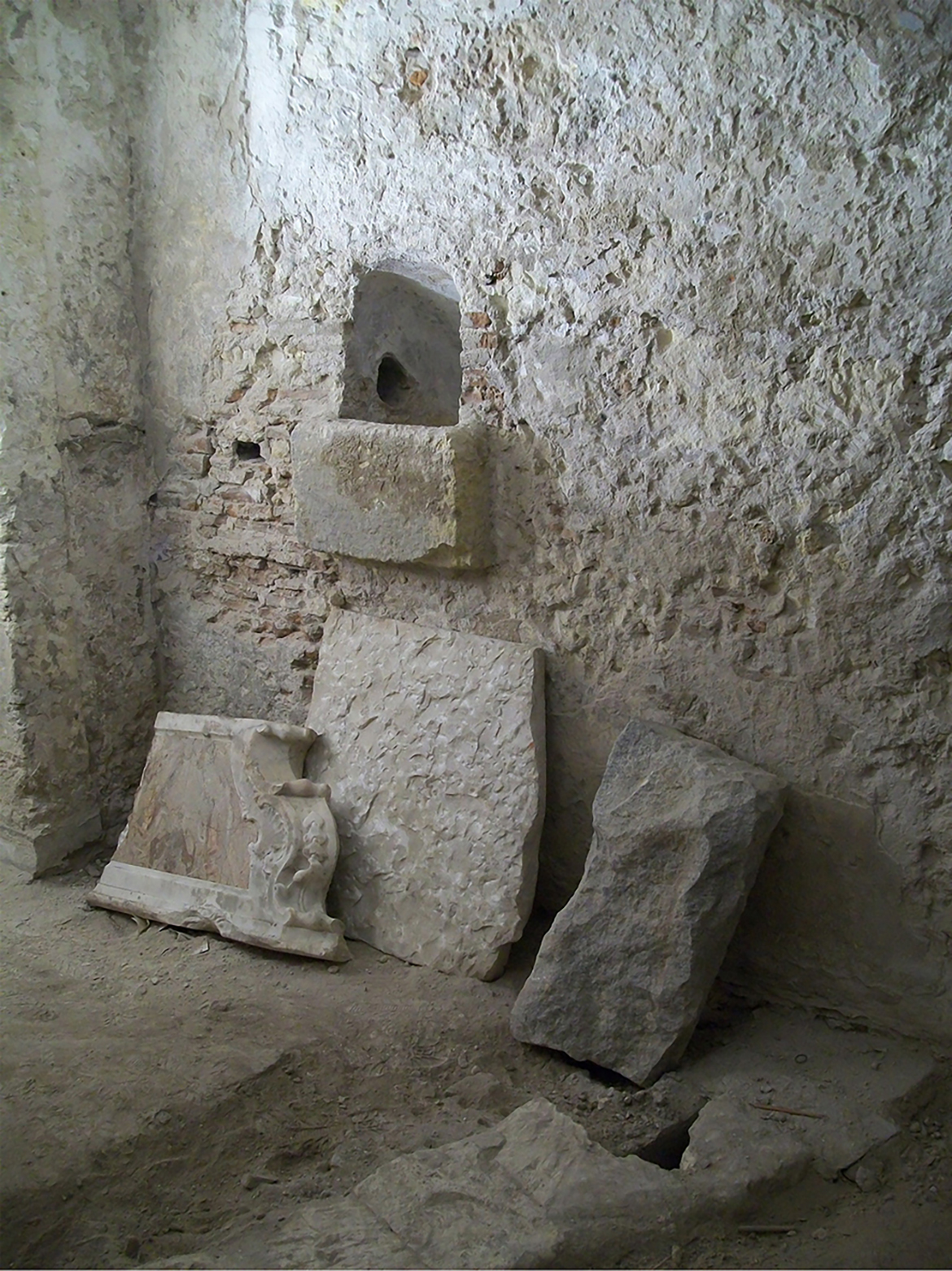
On the inner view of the facade, a spacious wooden mantrap indicates the access to the Church, to its right a marbled stoup, insert in the wall: here again appeared the same phenomenon previously indicated.
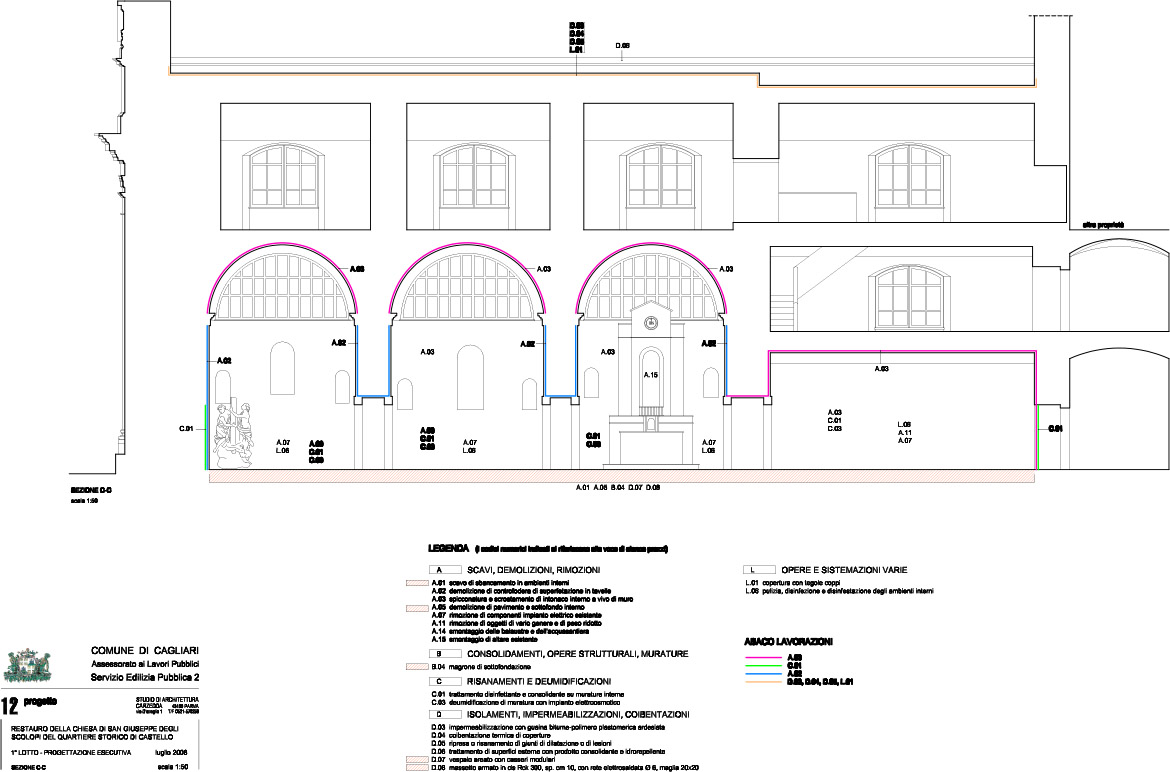
On the two sides of the central extent, three chapels with barrel vault, connecting each others, are arrange in line, defined on the entrance by a round arch, with an ornamental volute on the archstone; on the surface area of the wall of the left side appeared phenomenons of rising damp, and the ceiling of the first chapel presented a clear widespread infiltration falling from covering; also on the right side, the original masonries, hidden by brick walls added in a second moment, high as the springer line of the arches, presented the same problems.
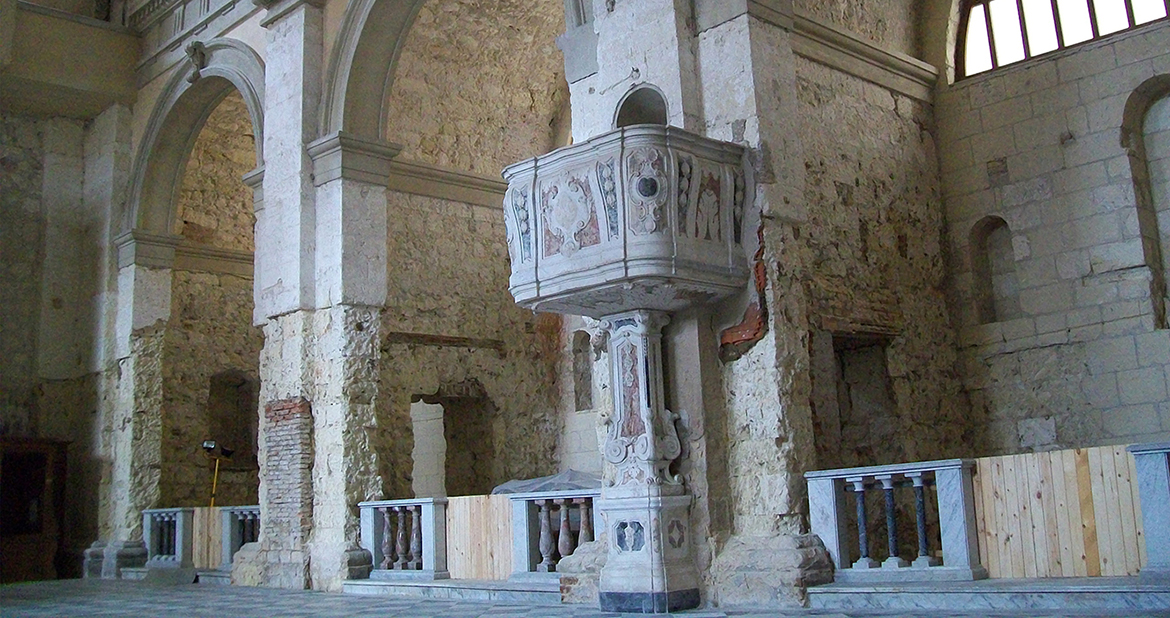
Inside the chapels and in the central extent there were some marbled artefacts and wooden furnitures: a confessional, statues, ornamental fragments, two minor altars, balustrades, pulpits, stylistically similar to the main altar.
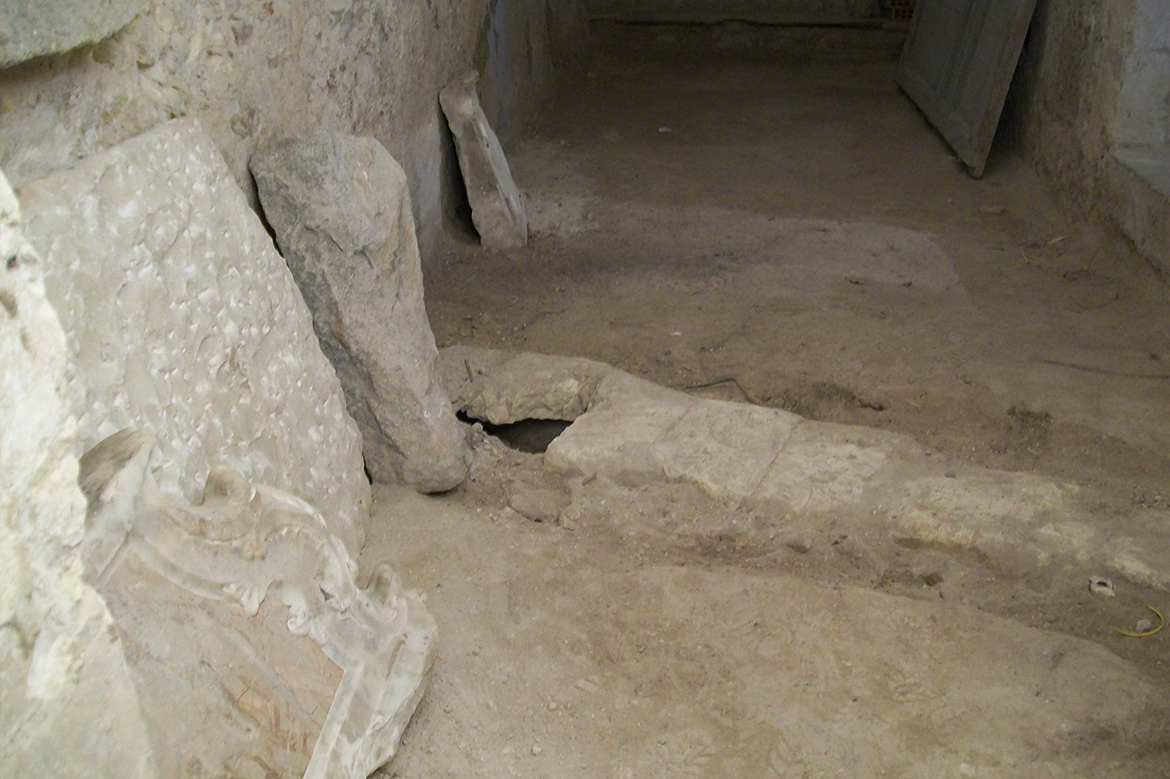
Under the two-coloured marbled plates of the paving, as a fact-finding test, executed next to one pillar of the nave, stressed, the underfloor cement screed resulted without wire mesh and the underlying layer appeared composed by terrain and layer of fill material.
Analysing the method of application of the paving plates, no distinctive traits, which shows valuable characteristic, are present; the plates, remarkably dirty, in the central compartment were concealed by a piled scaffolding, put against the presbytery, and the rich main altar with twisted columns and polychrome marbles is positioned in the bottom of it.
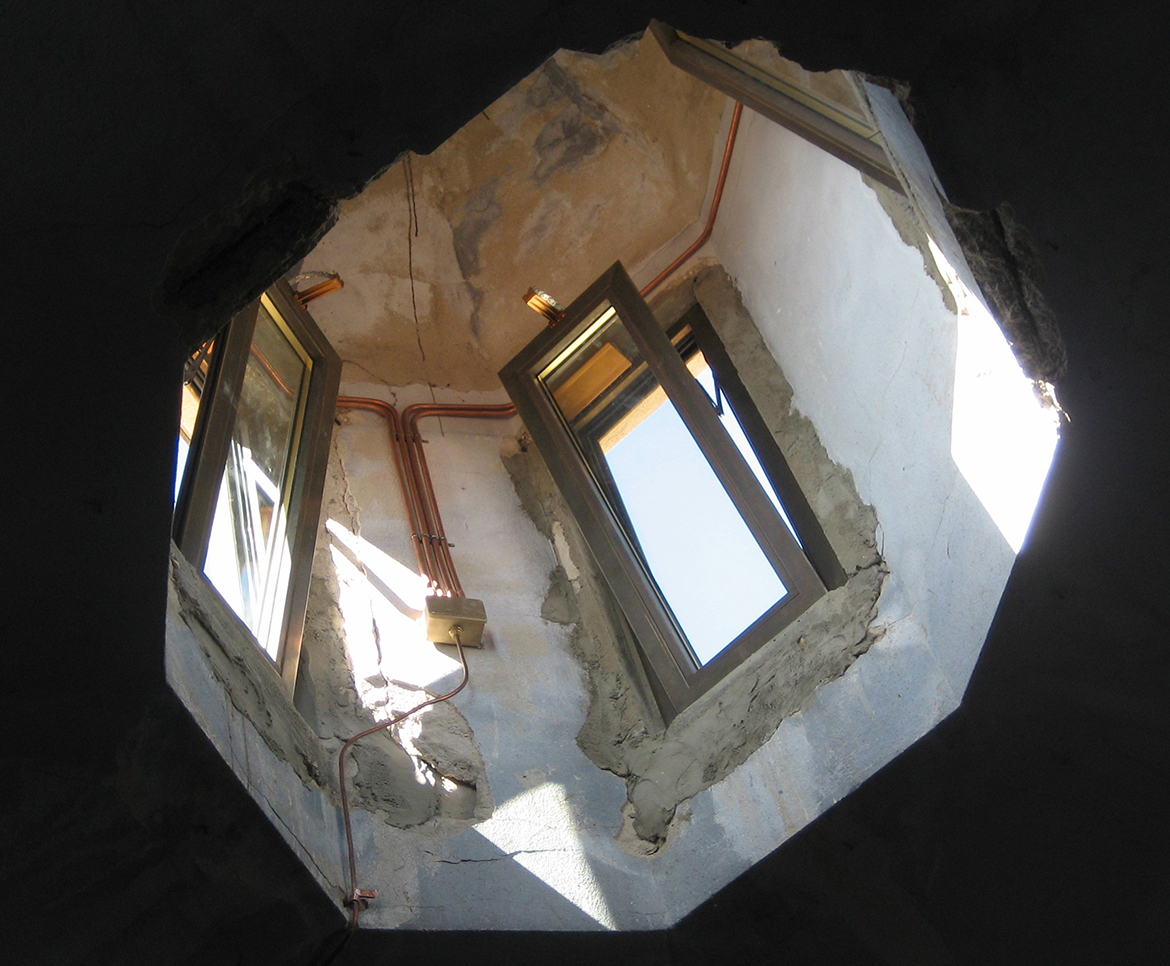
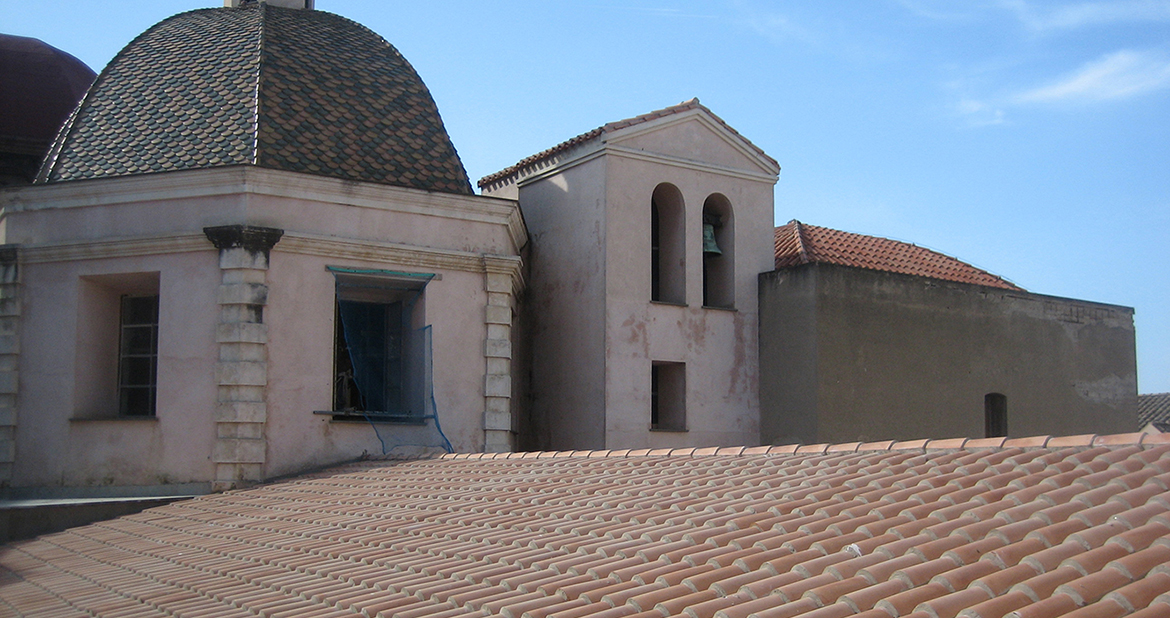
In the upper side of the church, between the two moulding, there are the pendentives, in support of the octagonal tambour, where there are gaps with wooden frames; on the cupola’s surface there are widespread damages and traces of descending damp, the cupola end with an octagonal base lantern, illuminated by four little windows, and closed with temporary frames.
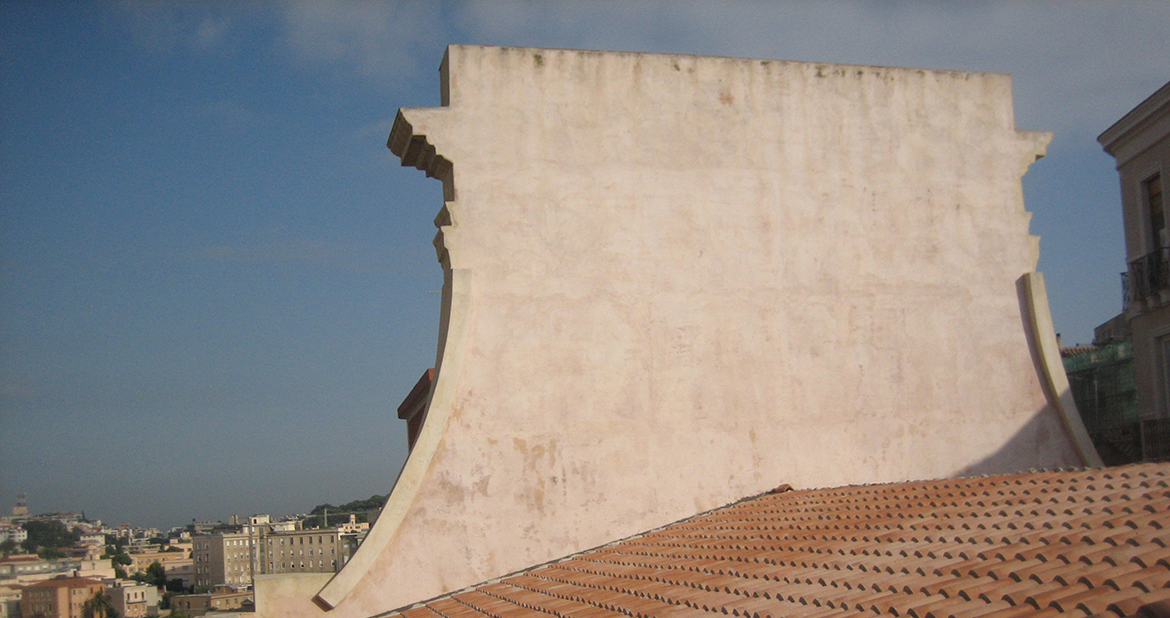
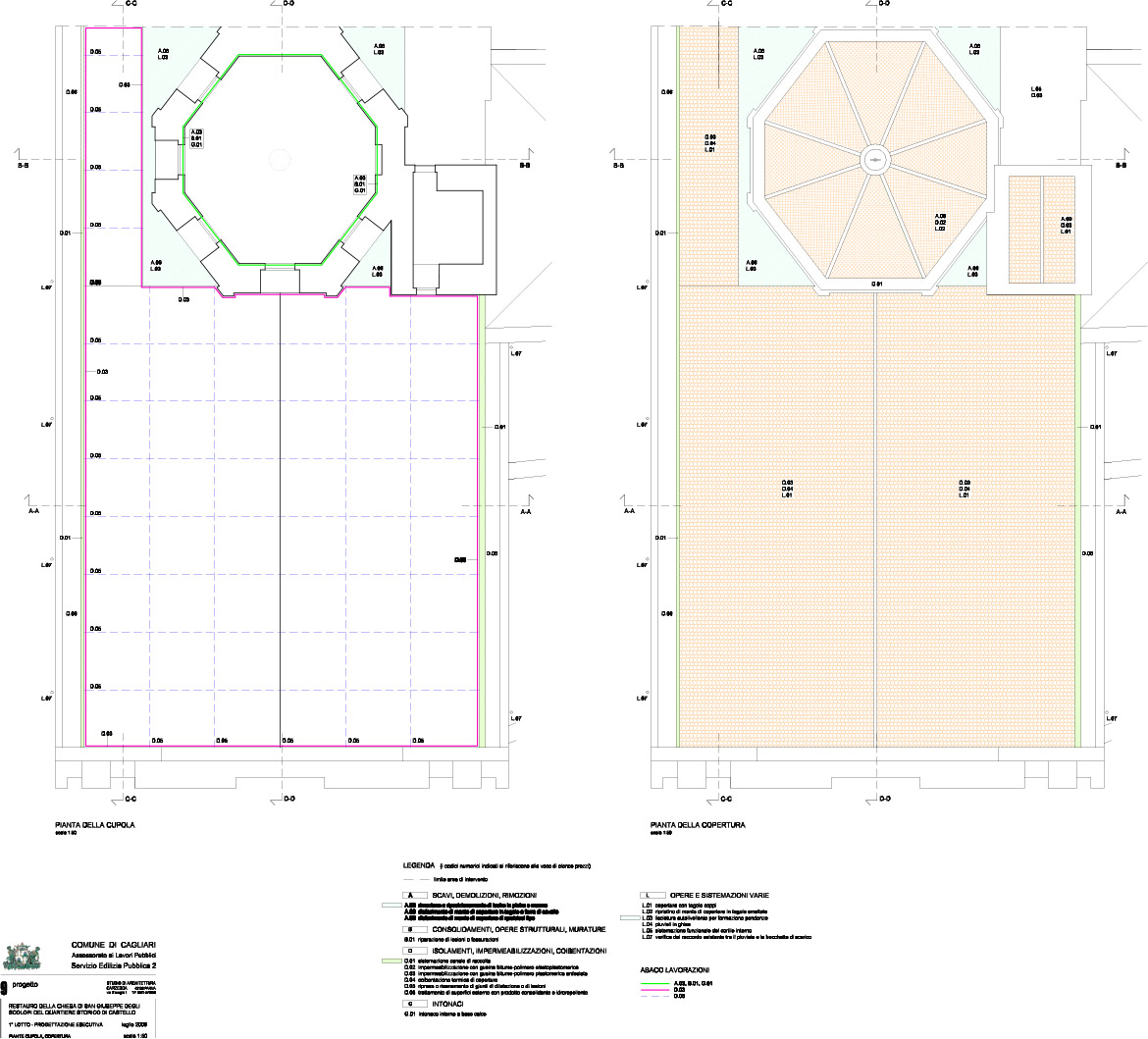
The coverage of the cupola, identical to the lantern ones, has been realized in glazed terracotta shingles.
Gone beyond the last chapel of the right side, a wide staircase permits the access, by means of a long passageway, to the unique locations of the first floor, set laterally above the presbytery; from this point it is possible to climb the masonry stairway and reach the second level rooms, where, on the right side of the first room, the stairs, developed vertically, arrives to the top of the bell tower, and permit the access to an open air inner space, lateral in respect to the cupola and the covering of the nave.
The surface of the nave is realized with reinforced cement screed, divided in several portions by expansion joints, which appeared not continuing and lacking of the necessary adherence; in the points of juncture with the vertical masonry part, the present waterproof sheeting appeared detached and it did not guarantee an adequate surface of adherence.
The electrical system was the unique presents, its shunt appeared in view and partially subsurface, clearly inadequate and lacking of the necessary guarantees, required by current laws.
Refurbishment project: Functionality
One of the primary point that has determined the processing of the first operational lot, concerned the necessity of intervening on the portion of the building, where the indications of infiltrations are predominantly perspicuous, caused by water permeability from the coverage and by signs of the widespread rising damp in masonries.
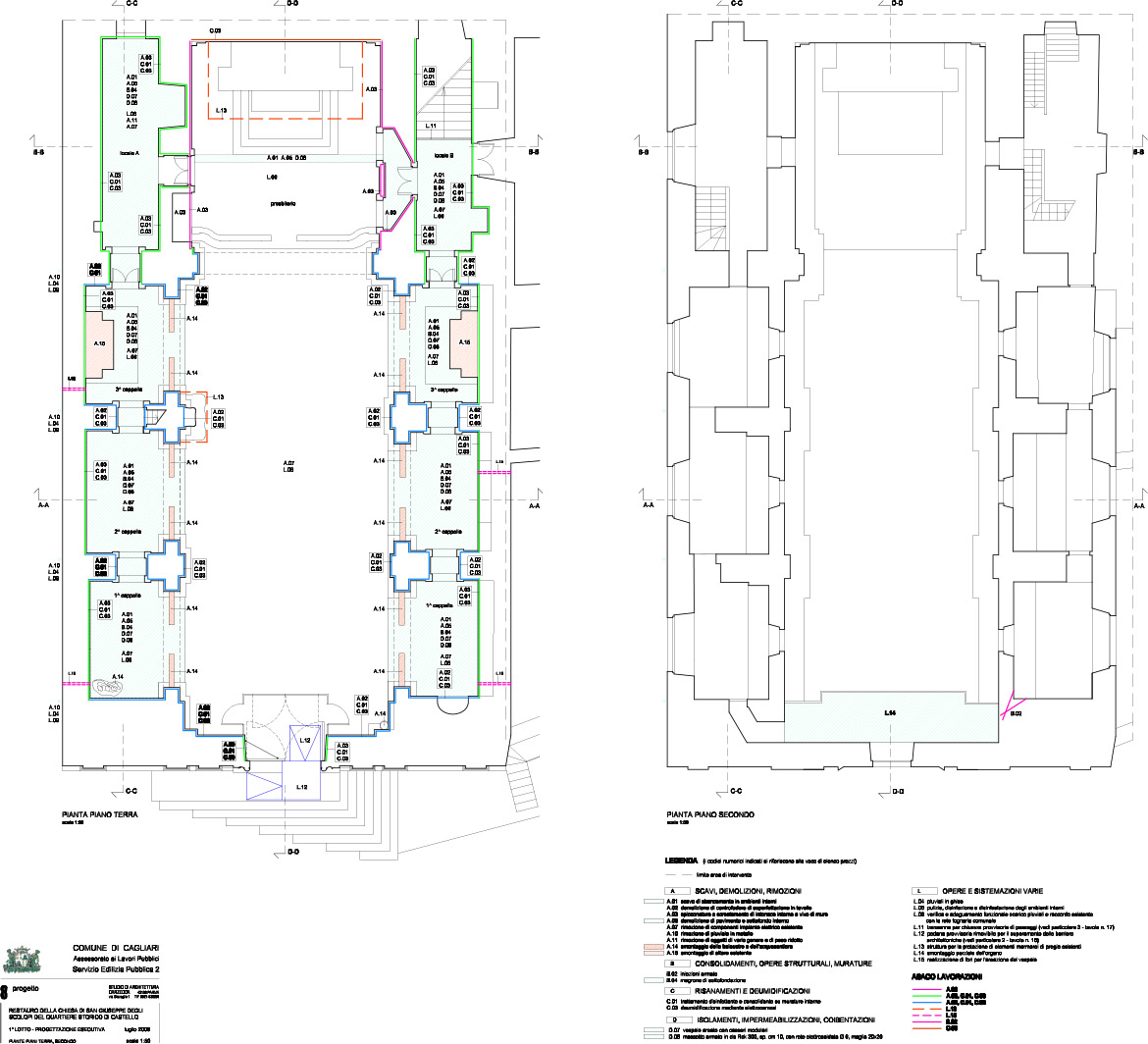
This has determined the choice to delimit the intervention functionally just on the part of the nucleus of the Church, in particular to focus on the inner spaces of the ground floor: in the hallway on the right side of presbytery, it has been planned, for safety reason, to install a provisional barrier adjacent to the stairway, to impede the visitors to access to the upper floors; in the hallway was present also an opening that allows accessing to sacristy: the existing frame is constantly close to avoid in any way accessing to the sacristy, not part of the intervention.
At the conclusion of the works, the nave and the lateral chapels, that will be usable, will allow the opening of the Church to public and its temporary using as space for exhibitions, special events, using provisional solutions to guarantee the adequate safety conditions and to respect the current regulations.
Refurbishment Project: Operative Parameter
Construction Works
The requalification of the whole structure has discovered its concretisation in the first operational lot executed,corresponding with the emptying of rubbles, present in the space on the left part of the presbytery, with the transfer of statues and sculpted frieze from the chapels to the sacristy, with the scaffoldings, up to present piled on the ground inside the nave, which will be assembled and disassembled, depending the necessary operations, and with a disinfection completed with a first general cleaning, indispensable to verify directly the preservation status of the architectural elements and furnitures .
Concerning the marbled objects, it has been programmed to disassembling the balustrade, the stoup and the minor altars, the pipe organ will be partially disassembled. A fixed structure will be realized to protect the major altar and the pulpit, conveniently circumscribed by plastic sheets, throughout the works. It will be necessary to execute a intense cleaning with specific products, to remove the encrustations deriving from organic residues, and an analysis test of the preservation status, pending the next and necessary restoration in ffuture lots.
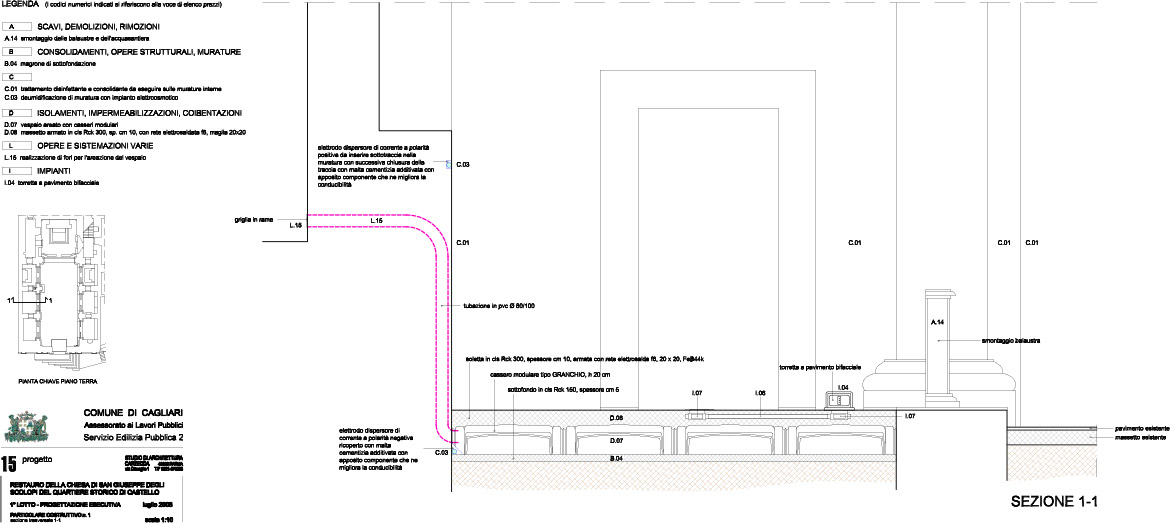
In the six chapels and in the two spaces on either side of presbytery, the Carrara white marble and Bardiglio paving and its underlying screed have been removed, excavation works has been executed, a lean concrete subgrade for regularization, thick 5/10 cm, was provided but not realized, and a dry laying was expected to be put on it, to build a crawl space filled with recycled polypropylene gauge boxes.
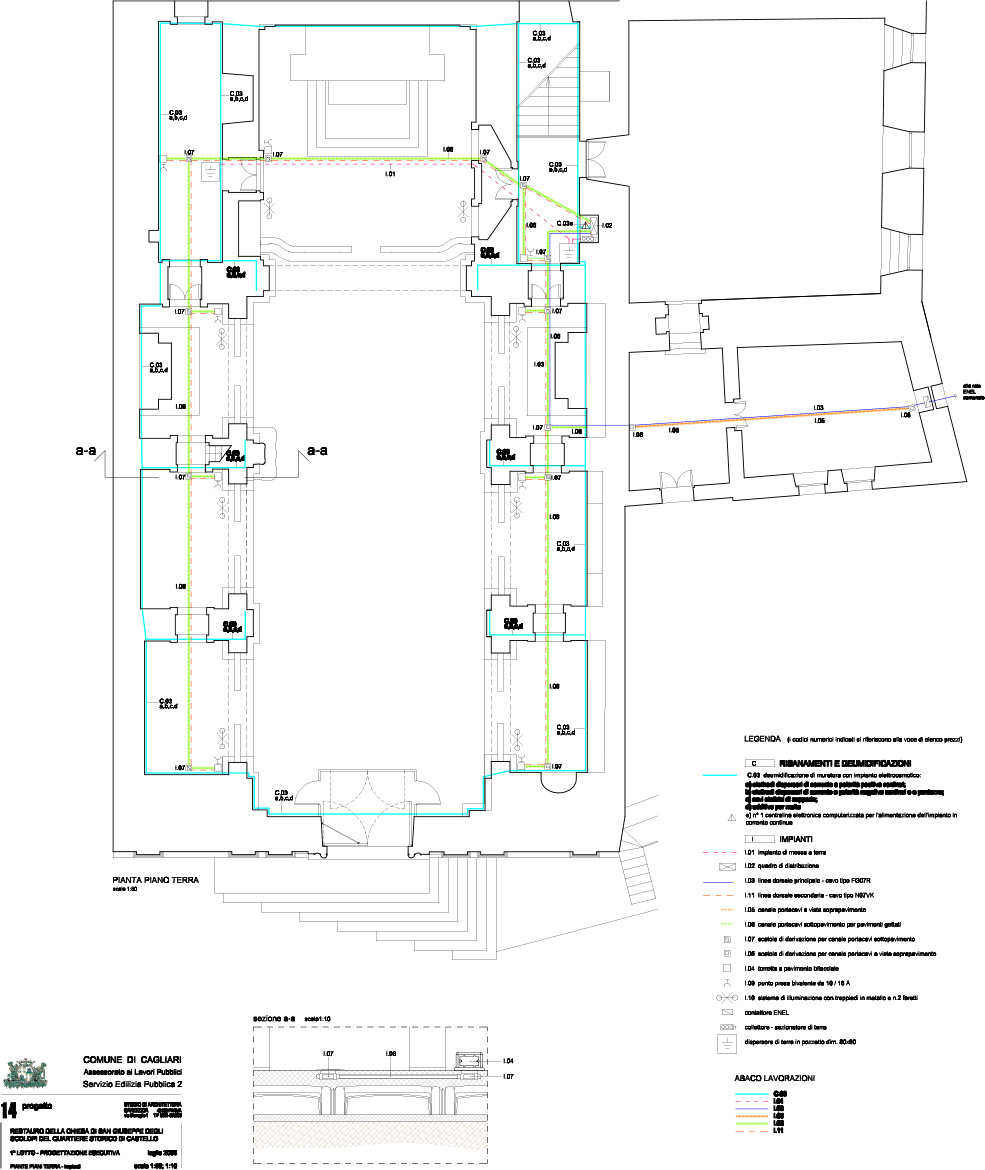
It was also provided the realization of a reinforced concrete base, thick 10 cm, perfectly levelled, containing welded wire: inside the screed should have placed the canalizations, contained cable ducts for electrical system; the screed could allow, waiting for future financing, practicability and visit to the lateral spaces of the Church.
In the central local and in the chapels, by means of the demolition of the clay- bricks interlining, added in a second moment, of the underlying concrete and plaster, it was possible to verify the masonry of the vault and of the wall in its entirety, already object of a partial analysis conduct through cognitive reviews, dated February 2007, useful to write the definitive planning.
This allowed to determine for sure the extent of the decay status and of the damages, underlined during the planning, intervening punctually and precisely in the parts that showed that problems, and their necessary restorations.
The works has proceeded with a treatment of wall surfaces with anti-salt and stabilizing disinfectant products, which guarantee a best cohesion between calcarenite ashlars, in some zones particularly deteriorated, and with dehumidification by means of the introduction of an electroosmotic system, to eliminate widespread rising damp.
The observation of the exposed masonry has allowed the renewal of fissures or damages, noticed during the analysis in the nave and in the cupola, through the fissures’s regularization, dedusting and cleaning with compressed air and following sealing with tixotropic epoxy resin and application of a fibre mesh alkali-resistant glass dressing fabrics as reinforced structural reinforcement, then applying a component cement mortar.
The cognitive reviews dated February 2007 allowed to verify the structural damage presents in the last room of the second floor, on the right side, where the masonry extends orthogonally with the Church main facade’s masonry: in this case it has been chosen to apply a series of crossed inner chain to reinforce the masonry’s corner.
In the matter of covering, for the nave’s ones it has been considered the displacement of the existent expansion joints, by this time crumbling and lacking of the necessary functionality, and its refacing, renovating the slot, where they will be positioned in, inserting PVC and sealant strip; over it, upon application of an adequate primer, a hot application of a waterproof slated sheet and the placement of Sardinian roof tile, proposing again the original aspect of the roof covering.
Regarding the junctions between masonries, before the waterproof placement, the preexisting sheet’s flap will be removed and a part of the plaster will be demolish to allow the application of the new sheet; the collection channels, after an accurate surfaces’ analysis and cleaning, need to be re-shaped through the application of a flexible adhesive mortar, thick 2-3 mm, with the insertion of a network fibre glass, properly defined for the development of the slop, adequate for water rain disposal.
Again, it has been executed an evaluation and a maintenance on the opening or on the sewage pipe, linked to the edge of the external drainpipes.
From Via San Giuseppe’s facade, the last sections in cast iron of the four drainpipes already existent have been removed, because they were insert in manholes, which will be removed , connected to the main drainage system.
The drainpipes’ sections removed, had been integrated with cast iron elements, with elbow pipe in the final part, to allow rainwater draining, directly on the street .
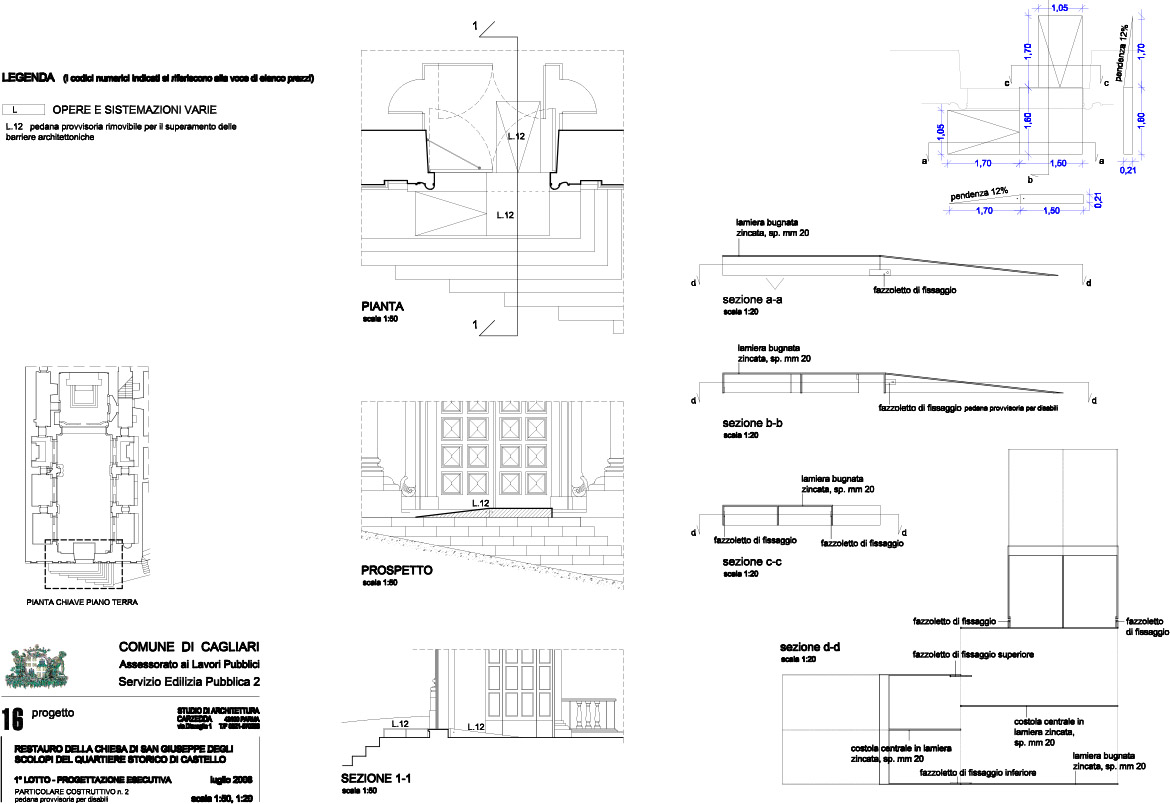
The cancellation of architectural barriers is guaranteed by means of the use of a platform, a galvanized embossed plate, which permits to disables the entrance and the visit of the inner spaces.
System
Considering what has been indicated in the functionality of the planning section, the unique system required is wiring; the extraordinary flexibility, the characterized temporariness are the factors that has determined the adopted project chooses, even if the fruition of the inner spaces was constantly possible, as their partial use, to organize events or temporary occasions.
In the matter of electrical system, it has been expected a configuration just for the ground floor, inserting a provisional switchboard distribution, connected with actual Enel meter, placed in the room, adjacent to the sacristy, inserting also some cable holder ducts, and their junction boxes, supply lines, turret branches, sockets for lighting apparatus from the ground and convector heater or movable and not permanent fans.
Timeline:
2009
Design
2010
Realisation