Alps Villa
Credits
Client
Private
Collaborators
Franco Palmieri
Lucia Fanetti
Paolo Dellana
Giorgia Guseo
Stefano Farina
Roberto Migliorati
Authors
Camillo Botticini Architetto
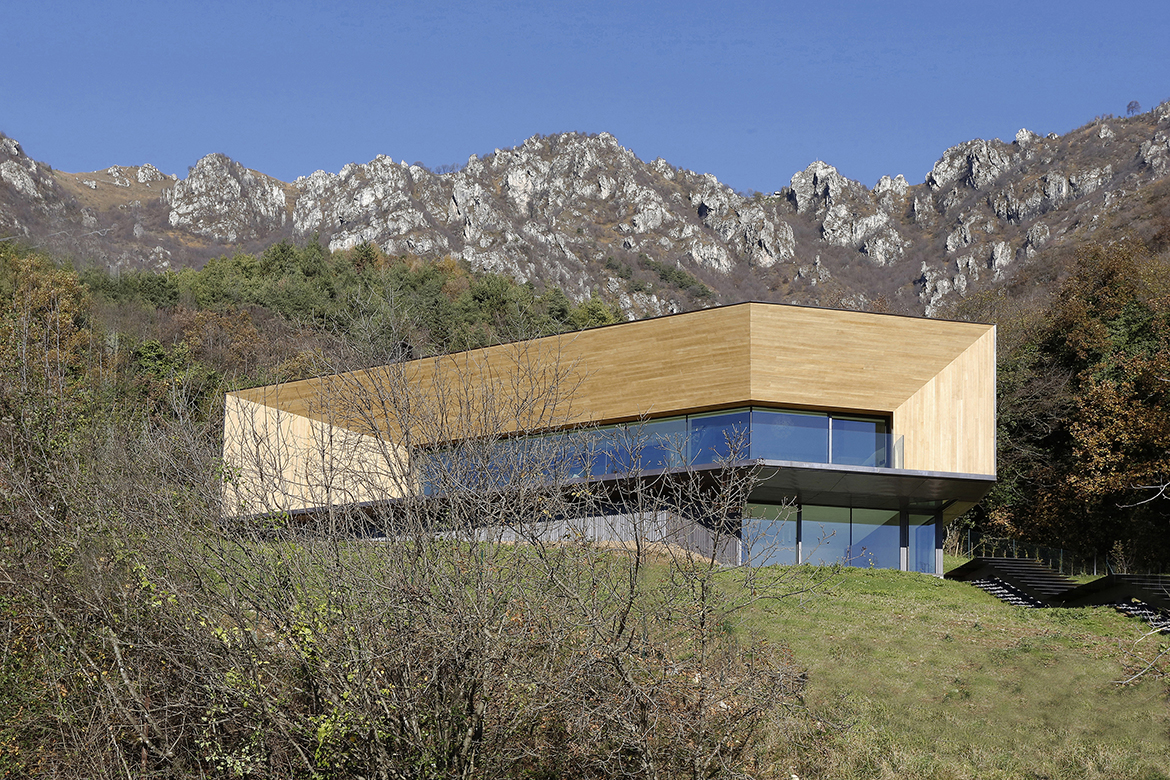
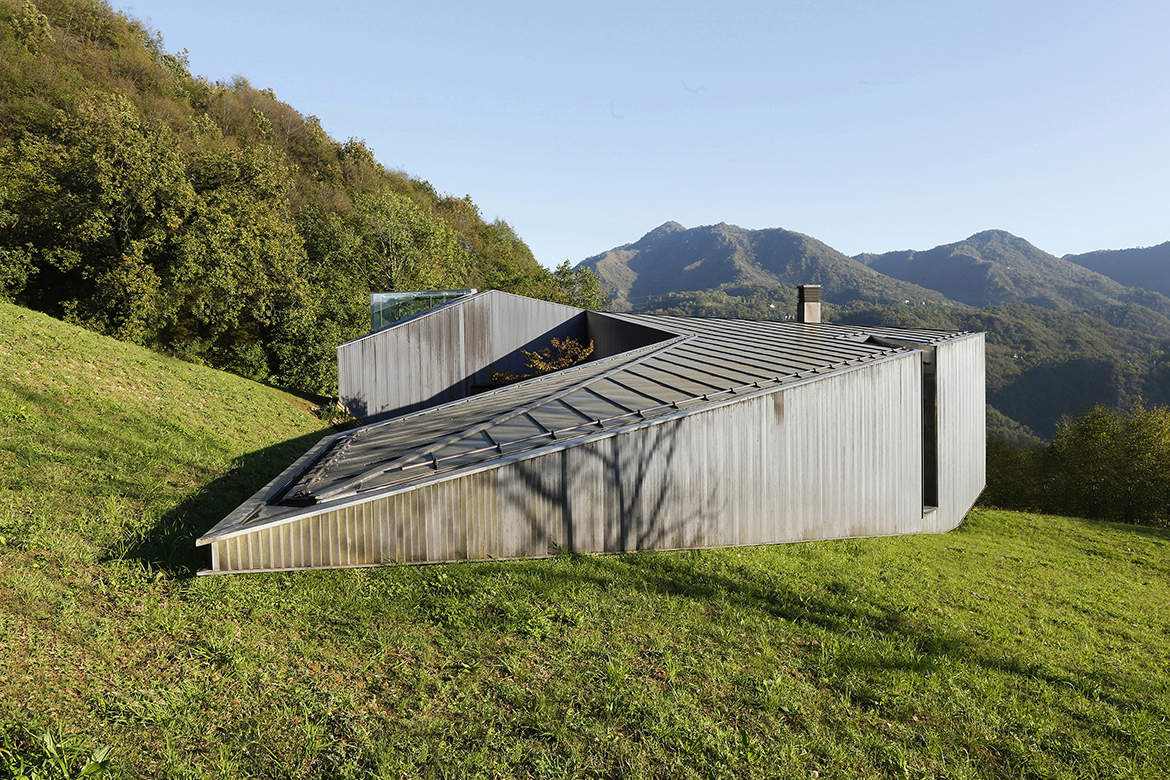
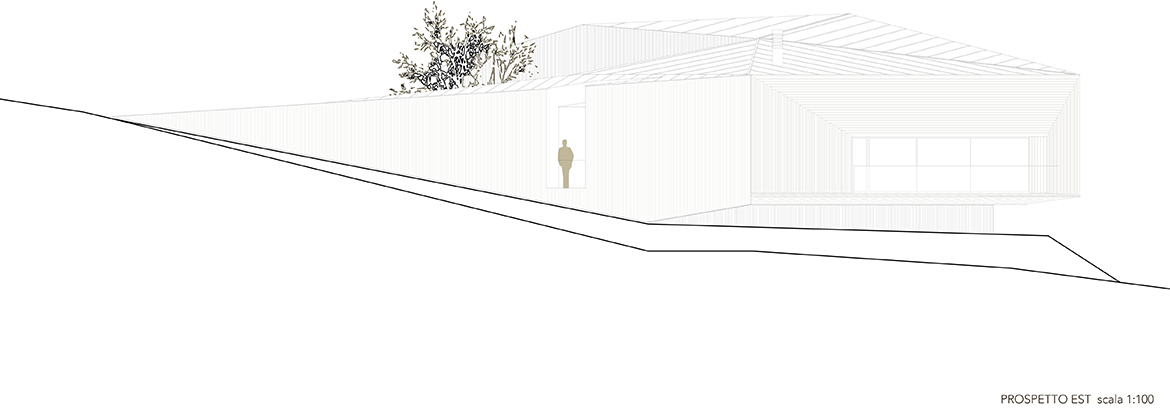
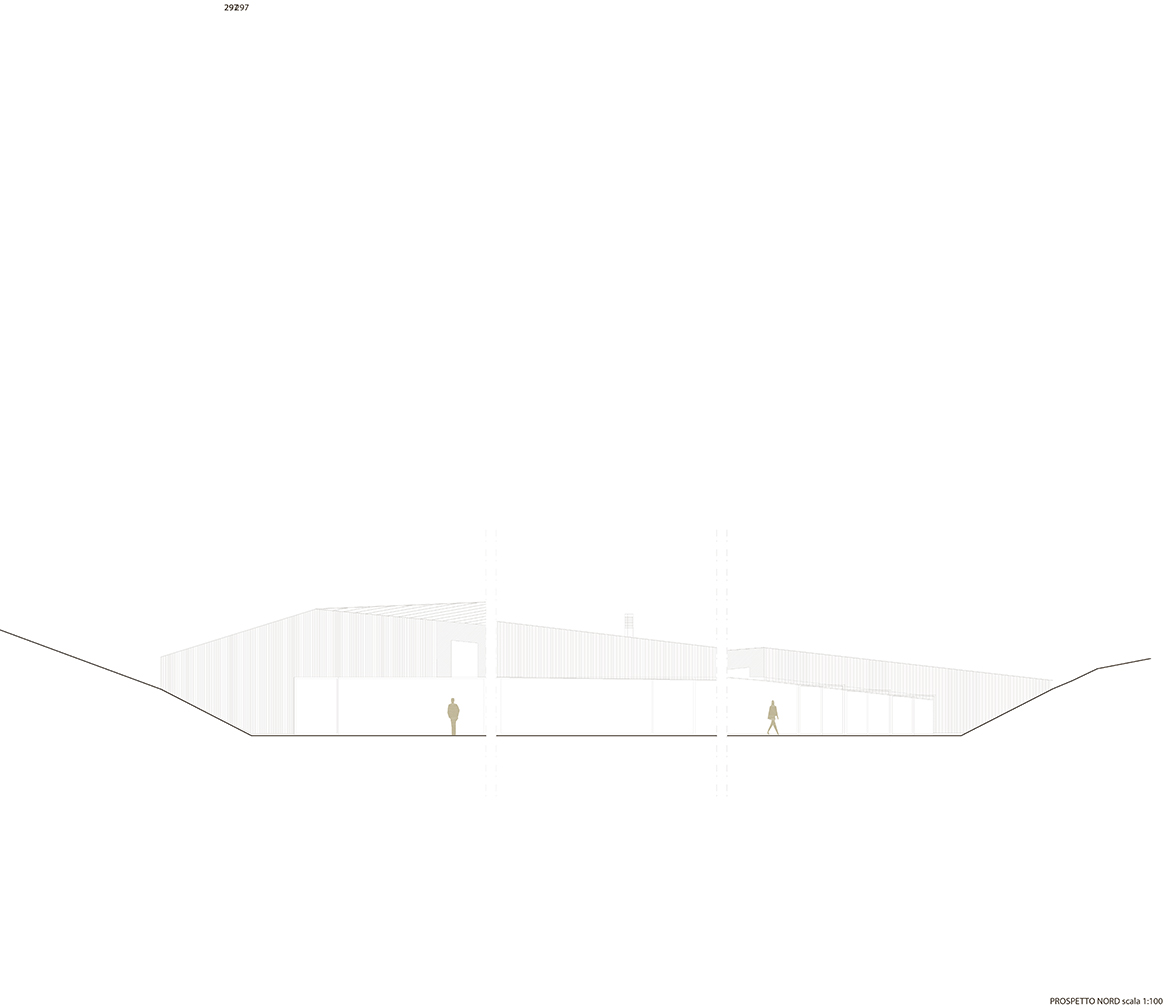
The house stands on a clearing in the trees, 700 meters above sea level, close to the “Passo del Cavallo”, next to a road that connects Trompia Valley and Sabbia Valley on a steep slope. The landscape is characterized by an open valley to the south and a frame of green mountains with peaks of dolomite rock to the north.
Tecnical drawings:
Extended report:
Alps Villa
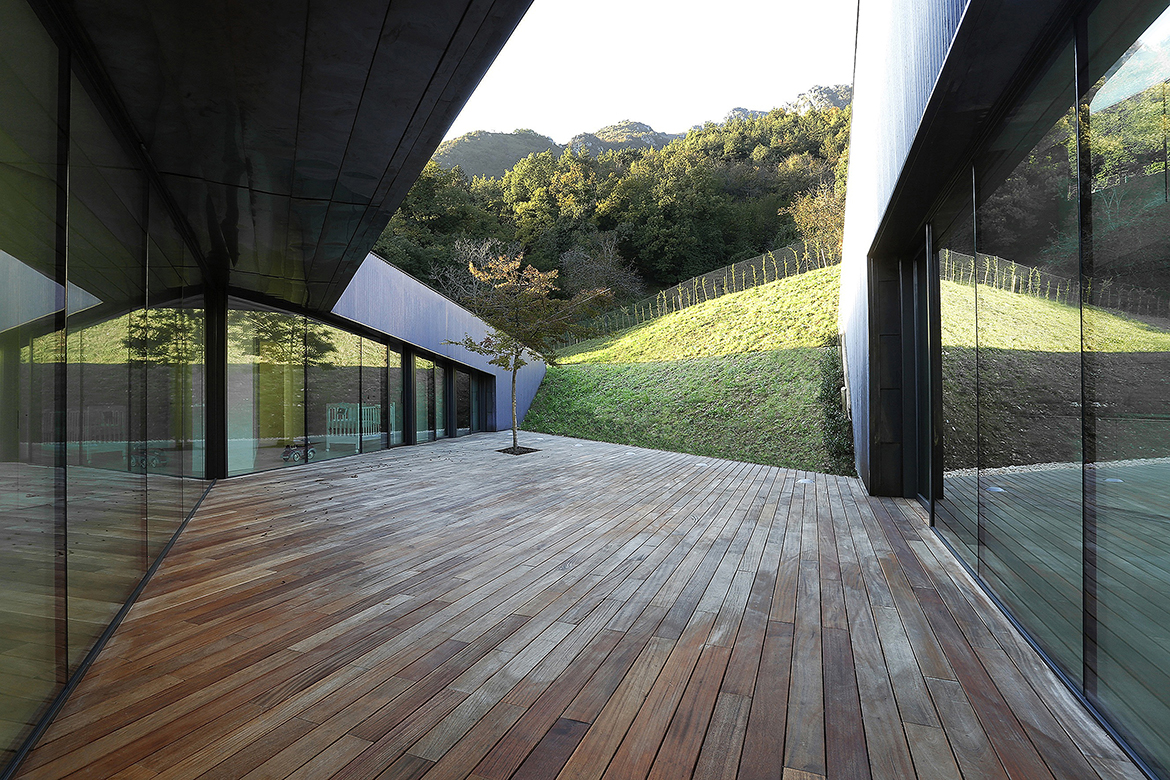
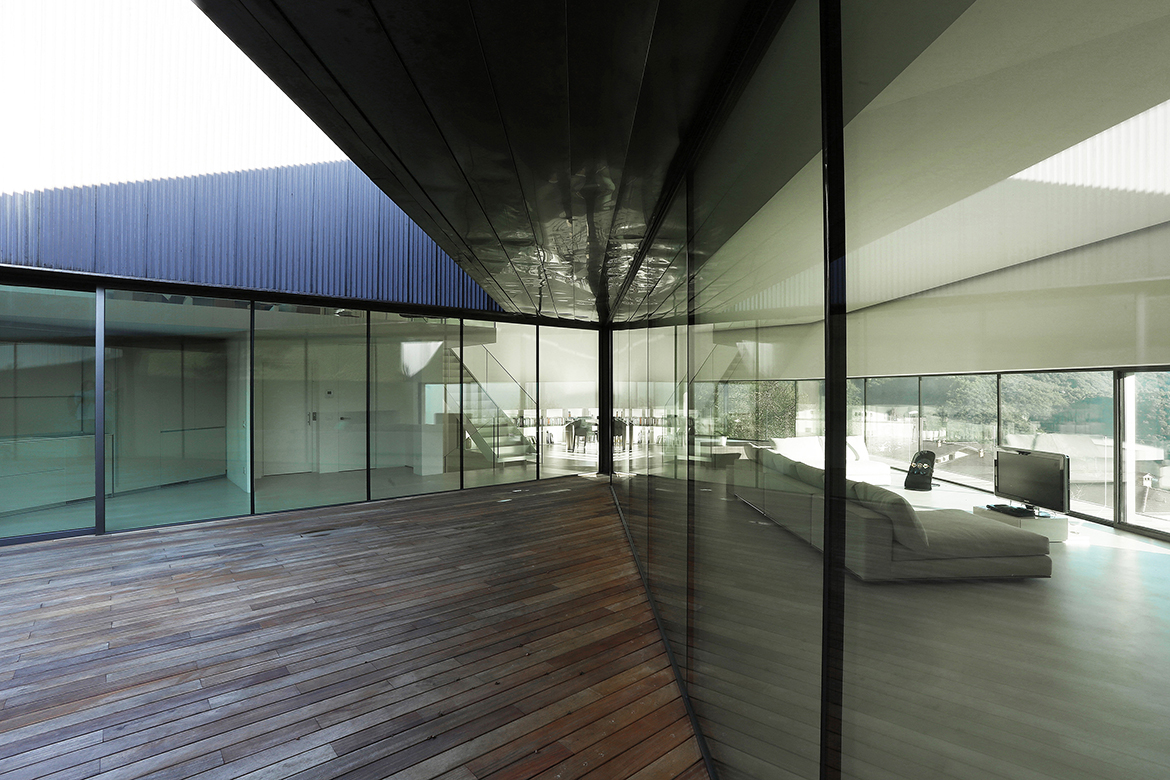
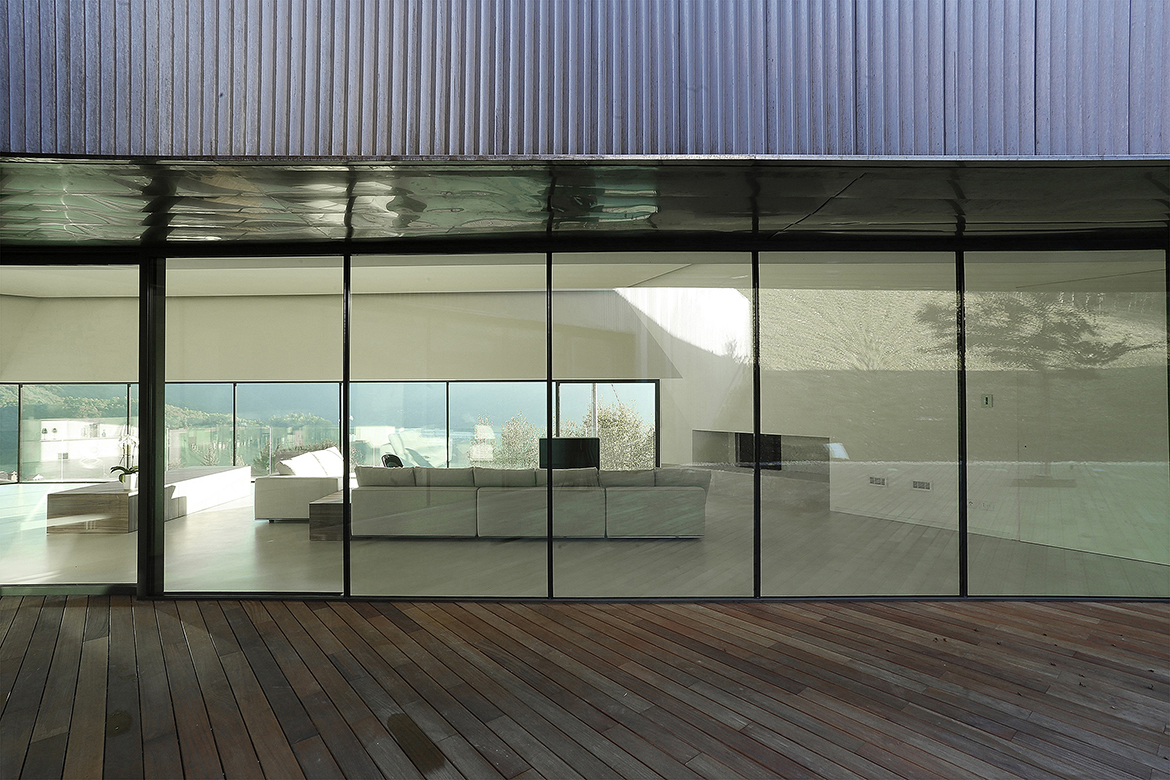
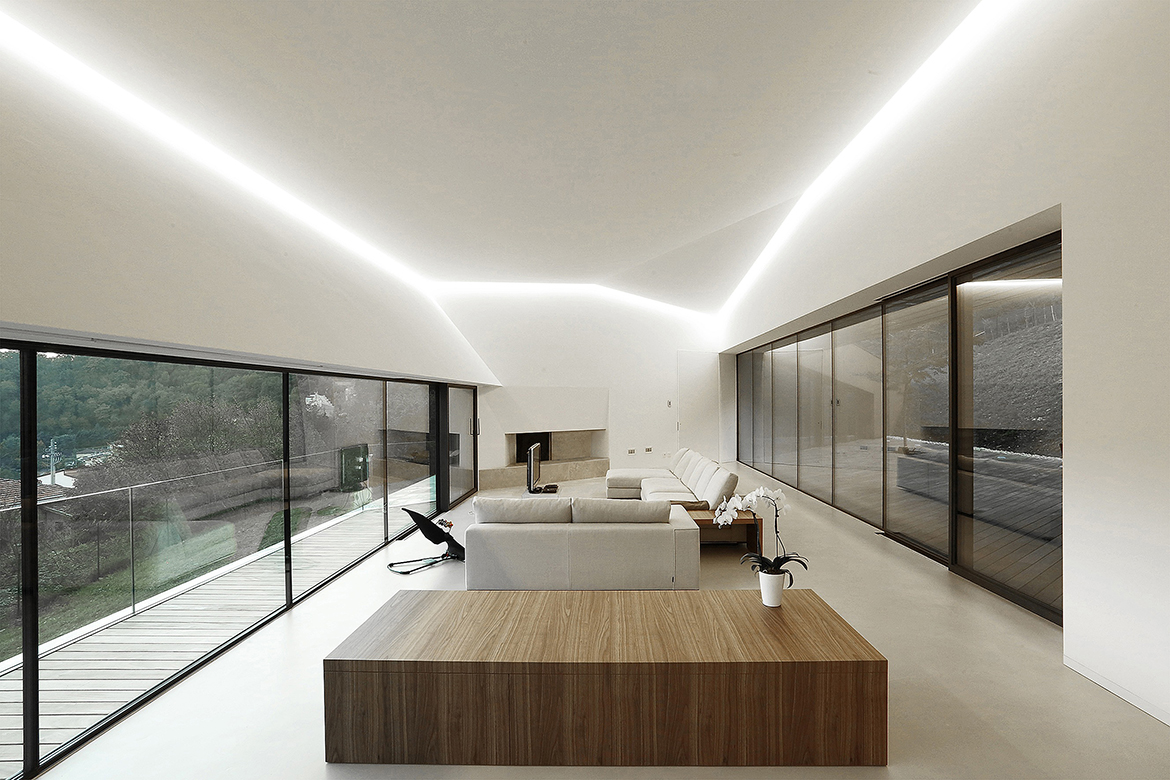
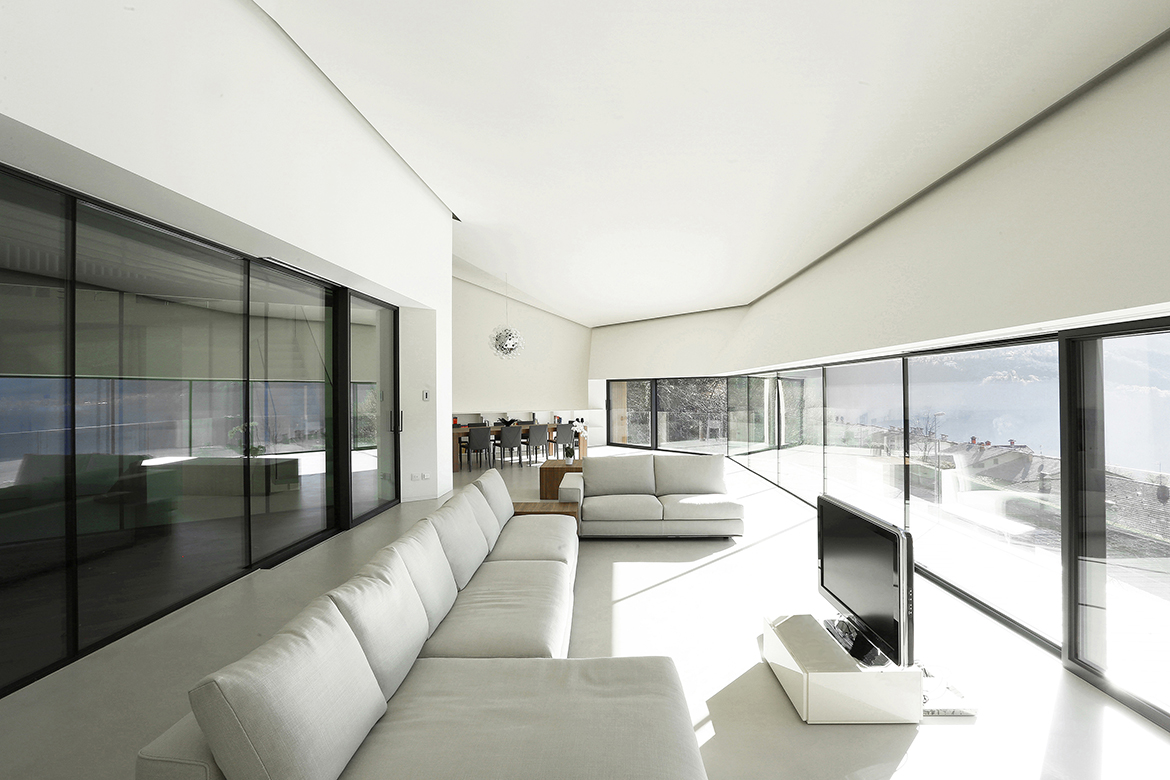
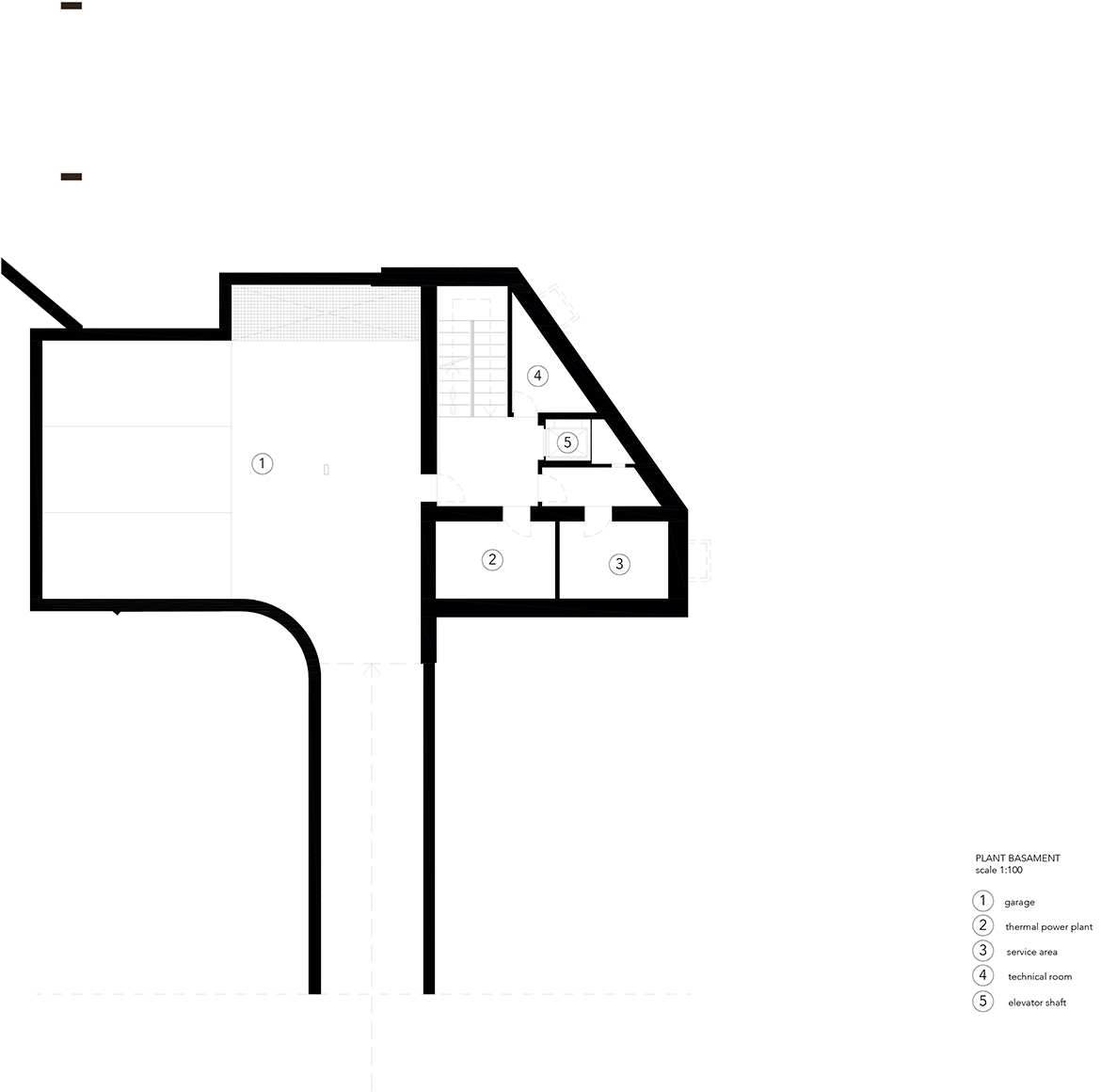
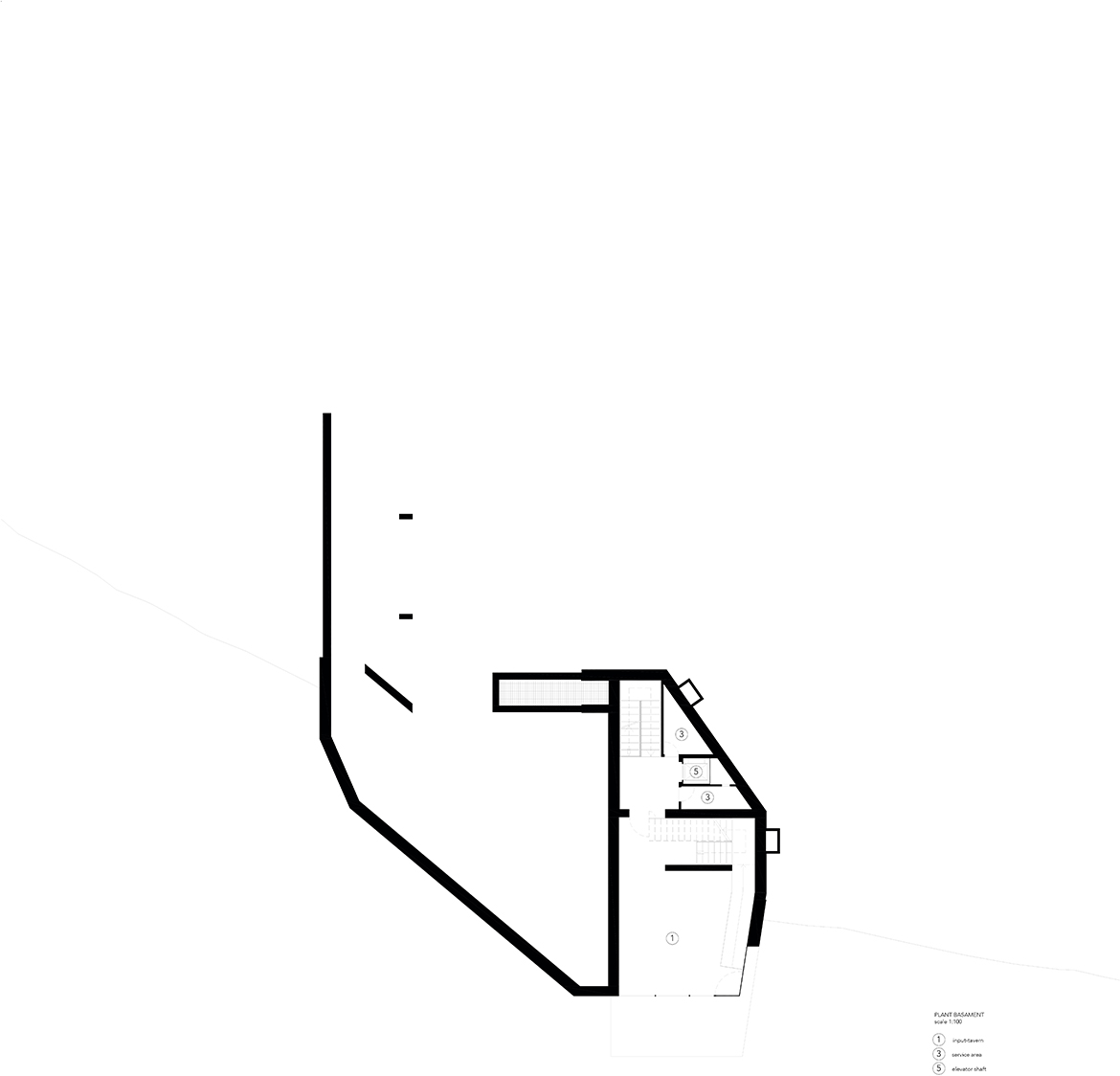
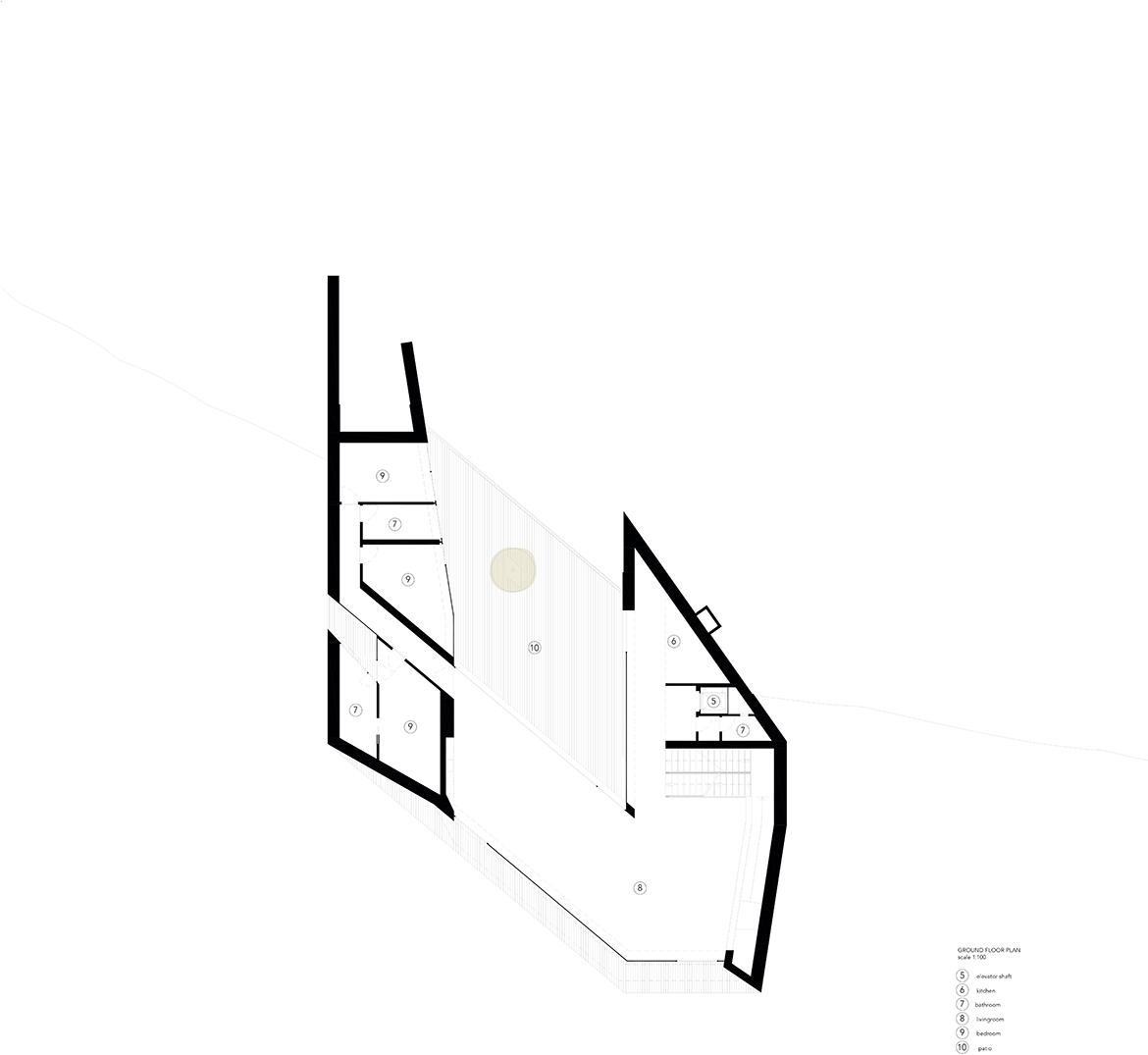
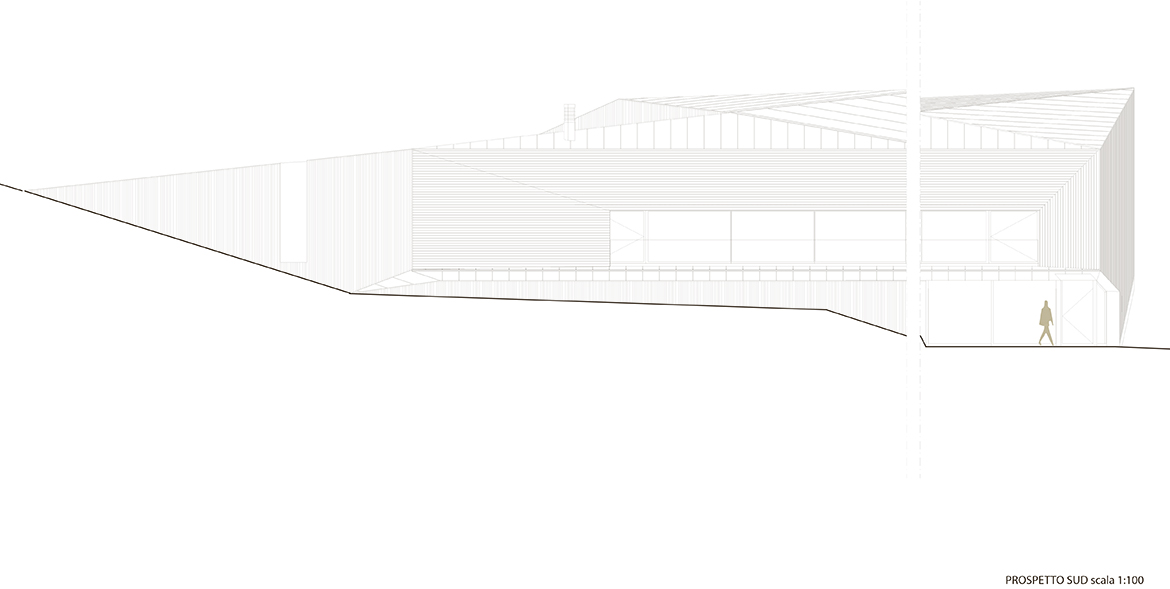
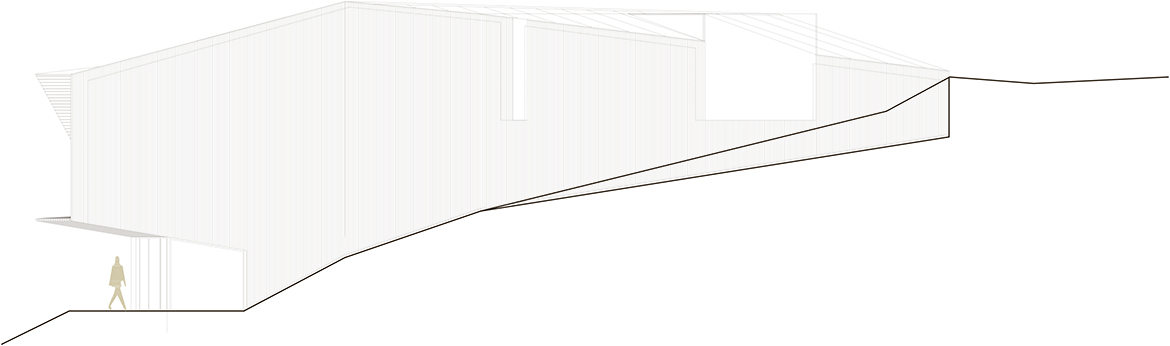
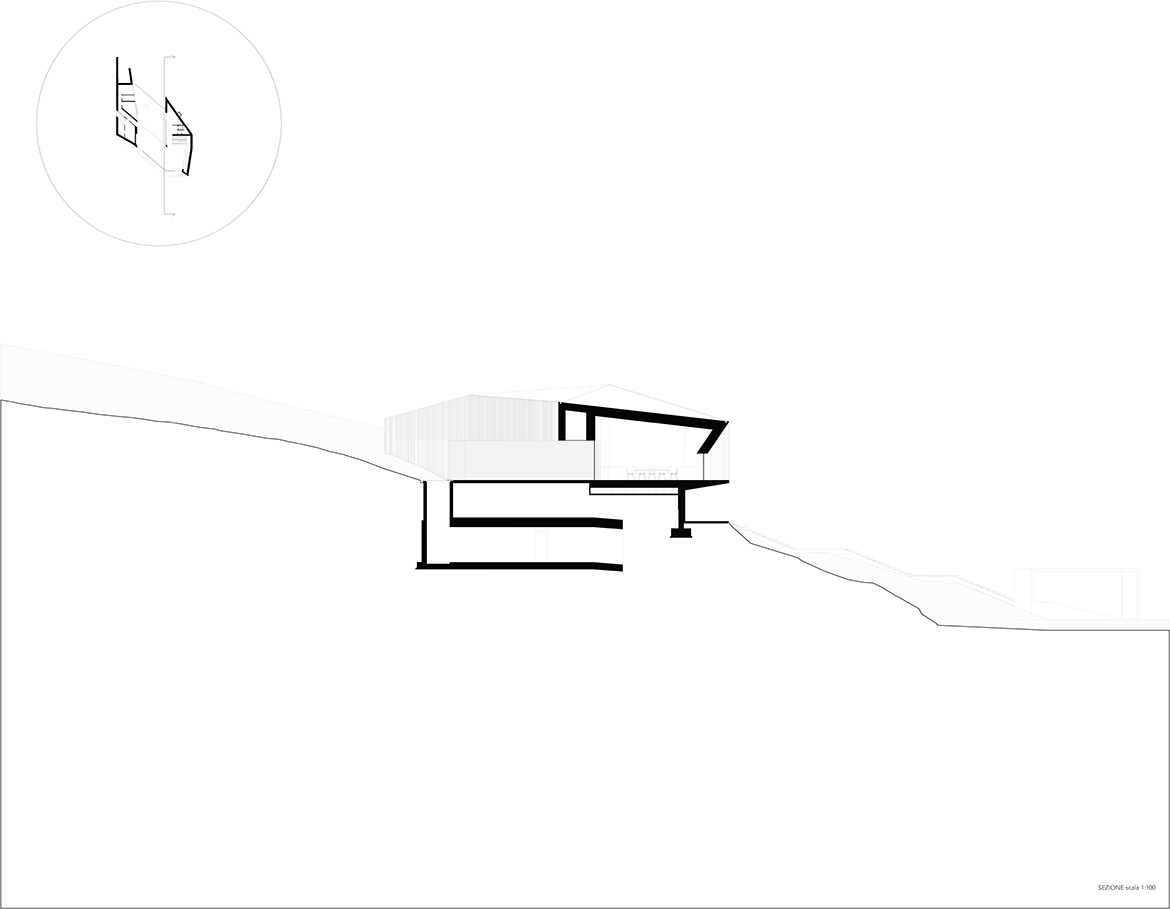
The house has an irregular plan shaped like a “C” with a patio where the fourth side is made from a green plane that delivers the planimetric structure that generates the spaces of the house, creating three bodies with variable height increasing from north-est, where the volume disappears by integrating into the ground. The first body has three bedrooms, two of them with windows facing the patio, through the bathroom; while the third bedroom has a subtracting that opens the master bedroom and its bathroom to the east into the clearing. To the south of the second body with a height between 3.50 and 4.50 meters introduces the living room, and open space suspended between the patio and landscape. Its side closed is characterized by the presence of a fireplace that ends with a the same size the south window. The living room continues with the dining area, to the west with the double height body: a continuous space, characterized by a structured cover consists by triangular planes, inside which is recessed the continuous lighting system.
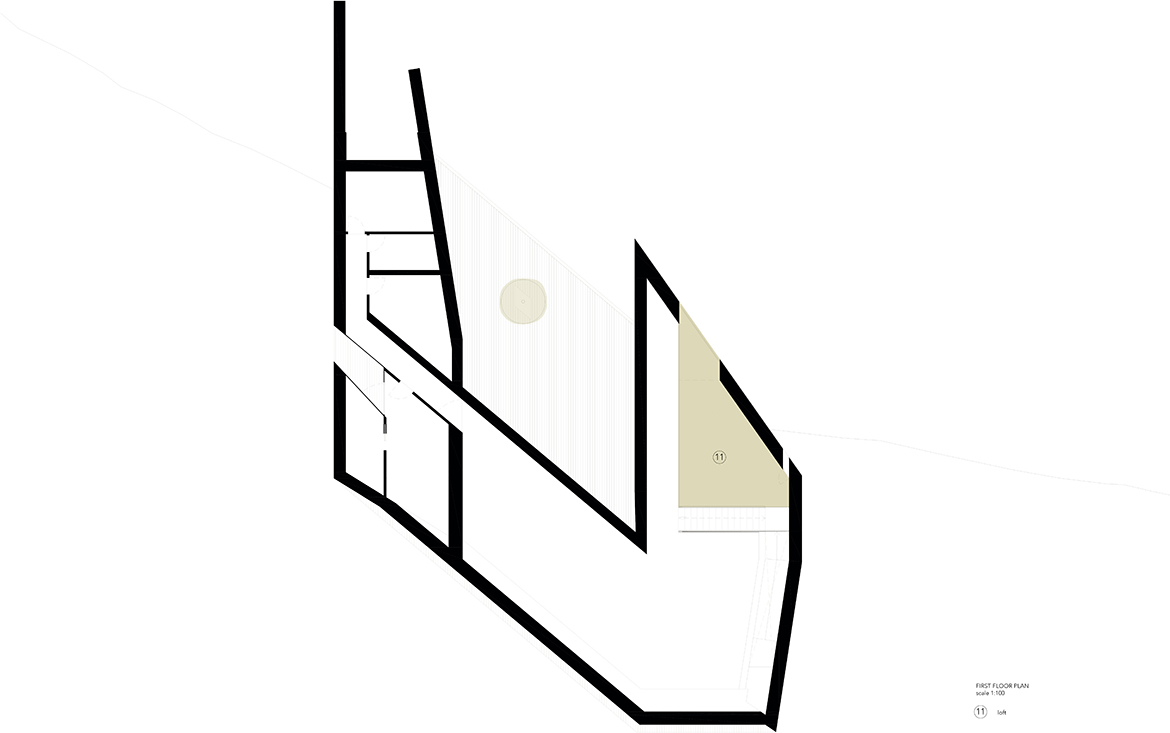
The highest part of the body in the west is characterized by a loft under which it has the kitchen opens to the patio, while above it there is a space for the study.
It creates an integrated fluid area and open to the outside, simultaneously protected, almost closed on the east and west sides (where they open the window as an excavation of the room and bathroom).
The Geothermal system, heat pump, ventilated walls, creating a natural ventilation even though the deep walls (65 cm) that protect against cold and heat (energy italian rating higher than A+ cened) help to build a house with very low heating costs, almost to consumption and zero pollution. We wanted an environmentally friendly home in the building materials and insulation, equipped with ventilated walls, a sustainable home in the settlement balance with the landscape.
Green meadows and trees framing the outer coating in corrugated oxide copper and Accoya wood (patented of undeformable wood of New Zealand pine replanted forest), the only elements that, with the triple room glass, are the artifice in counterpoint that interacts with nature.
The ventilated wall copper is modulated with a slight pleating to vibrate the light on the non-reflecting surface. The wood of the great splay reflects light that is refracted from the south.
The patio flooring made in iroko wood, the large windows integrated into the copper coating defines a space that is enhanced by a green maple that brings in a piece of nature, are not material around which you orient the house.
Inside, the floors are made of resin sand-colored, the walls are in plasterboard painted white and ceilings with recessed lights in the graft cut from the slab-wall, parapet are in glass and the windows made of painted iron have the objective of exalting the space and its continuity, favoring the integration to the site.
Timeline:
2011
Schedule
2013
Construction