Paramount – Alma Residence
Credits
Client
Famiglia Rainer
Collaborators
Peter Pichler
Authors
PLASMA Studio
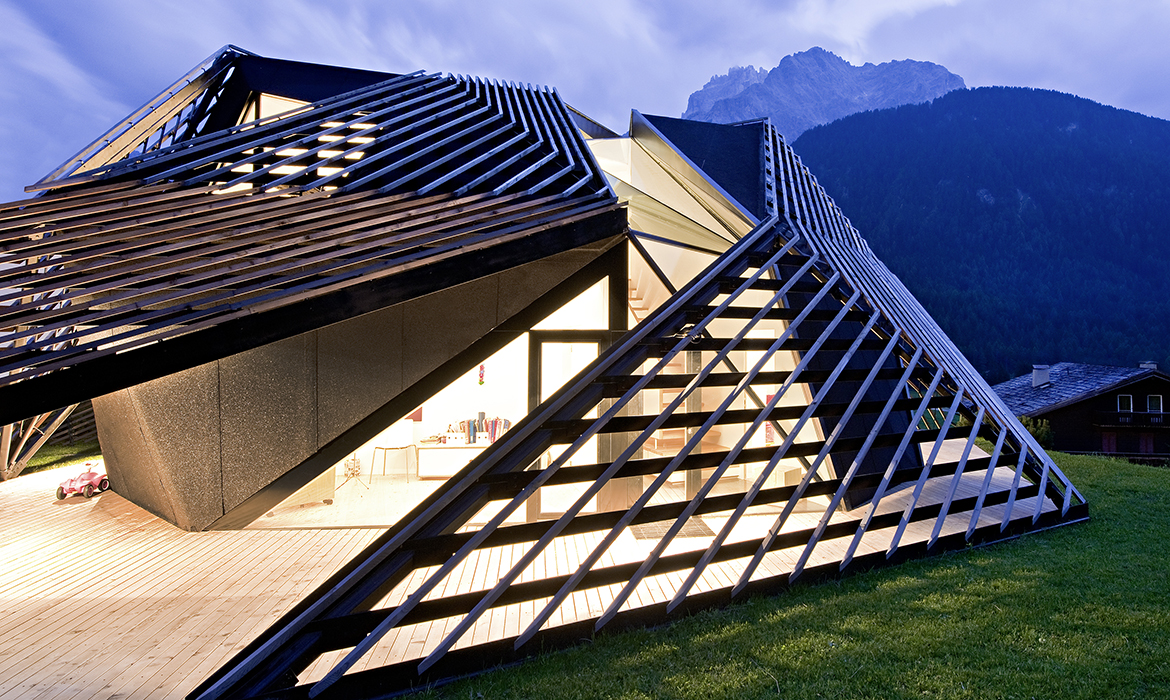
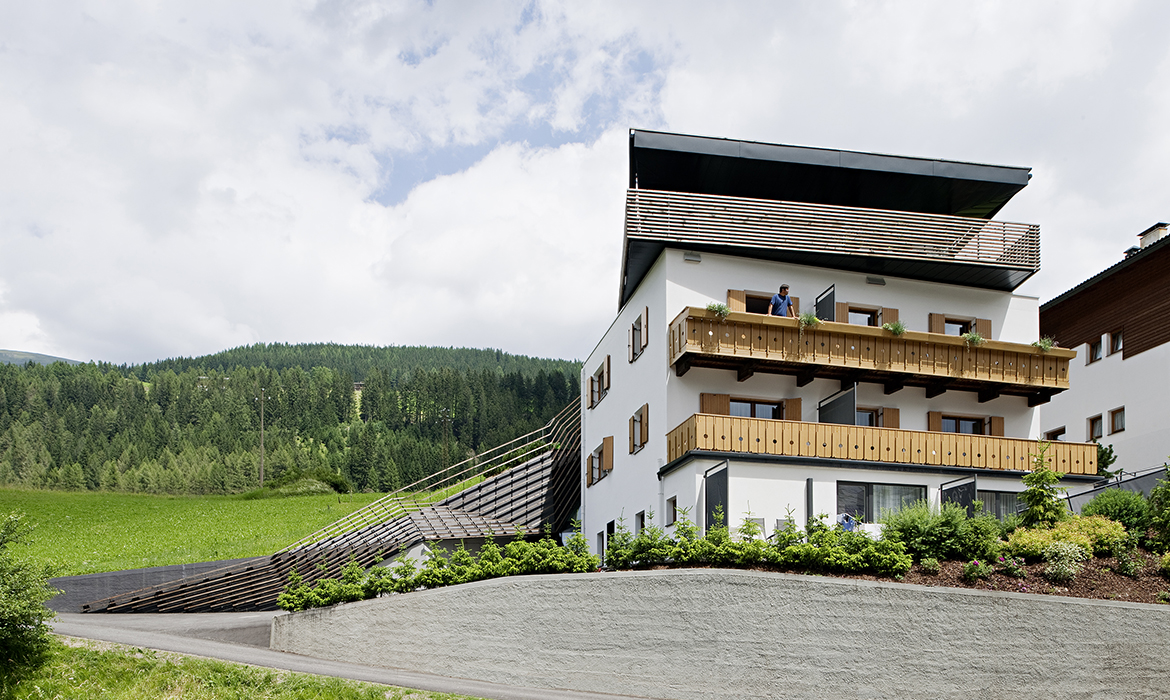
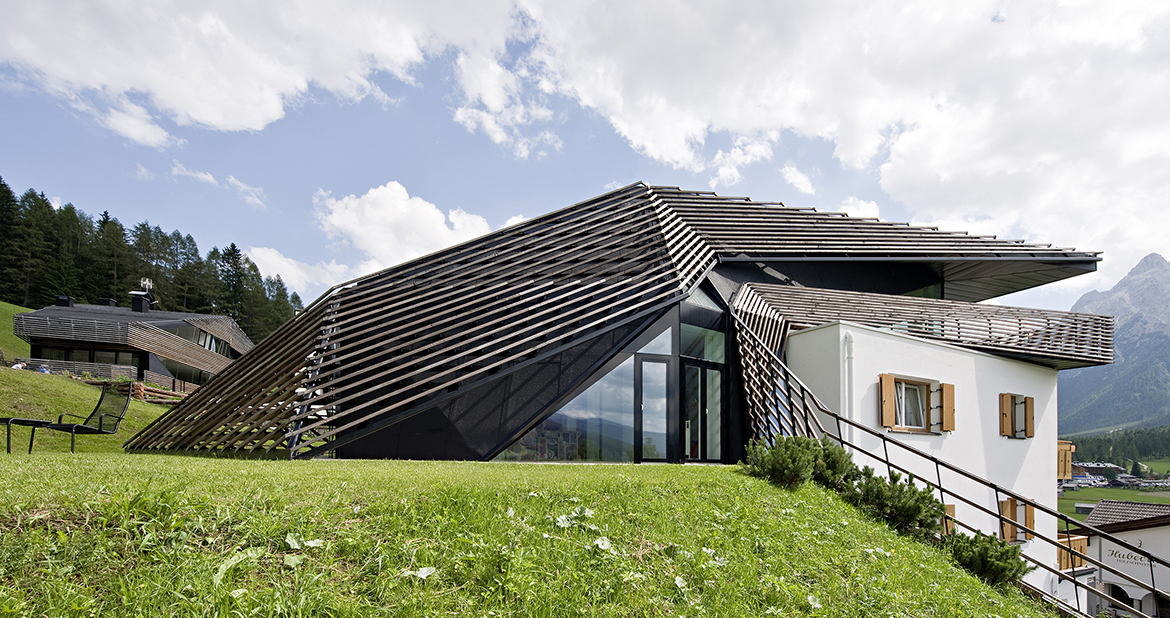
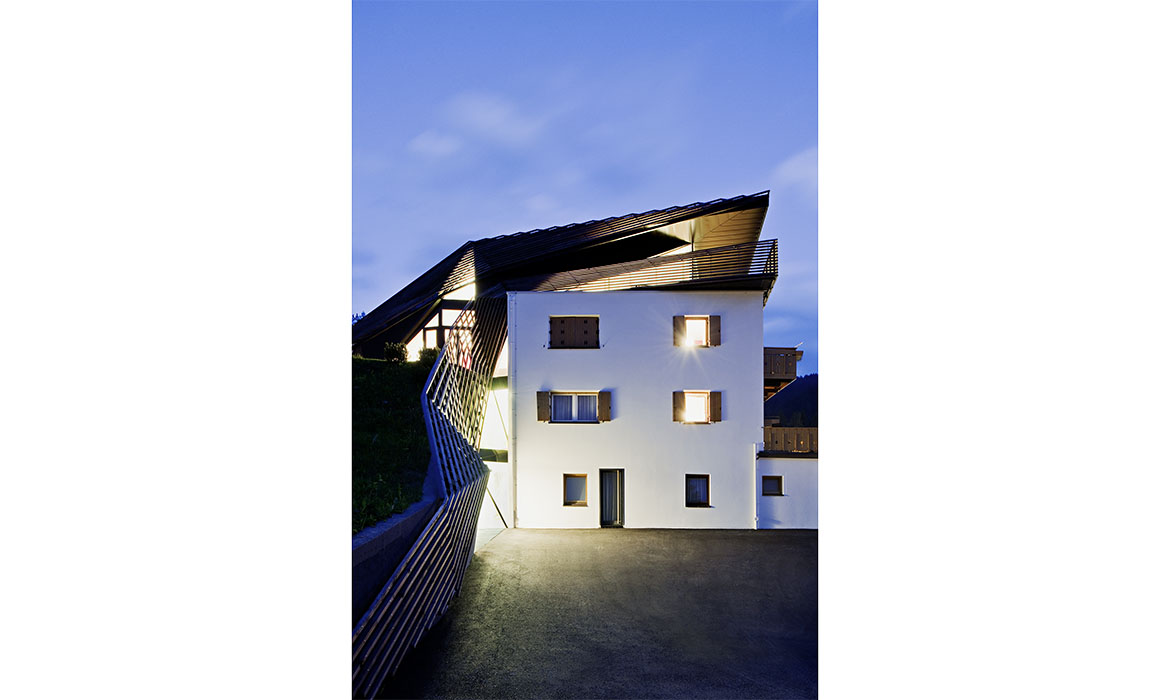
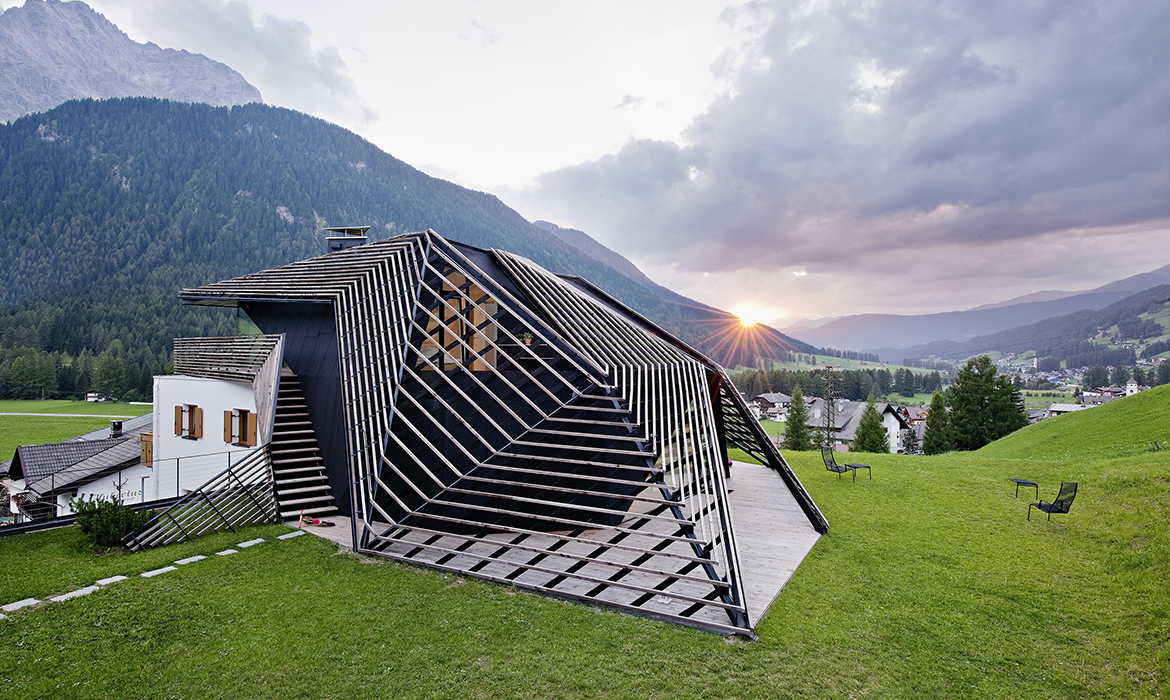
The Paramount, a mini-hybrid residence/private house, was conceived as a light structure on top of the Residence Alma, a Tyrolean guest house with 6 holiday apartments from the 1960s adorned with a pitched roof, so as to occupy as less space as possible and to not affect the surrounding green area.
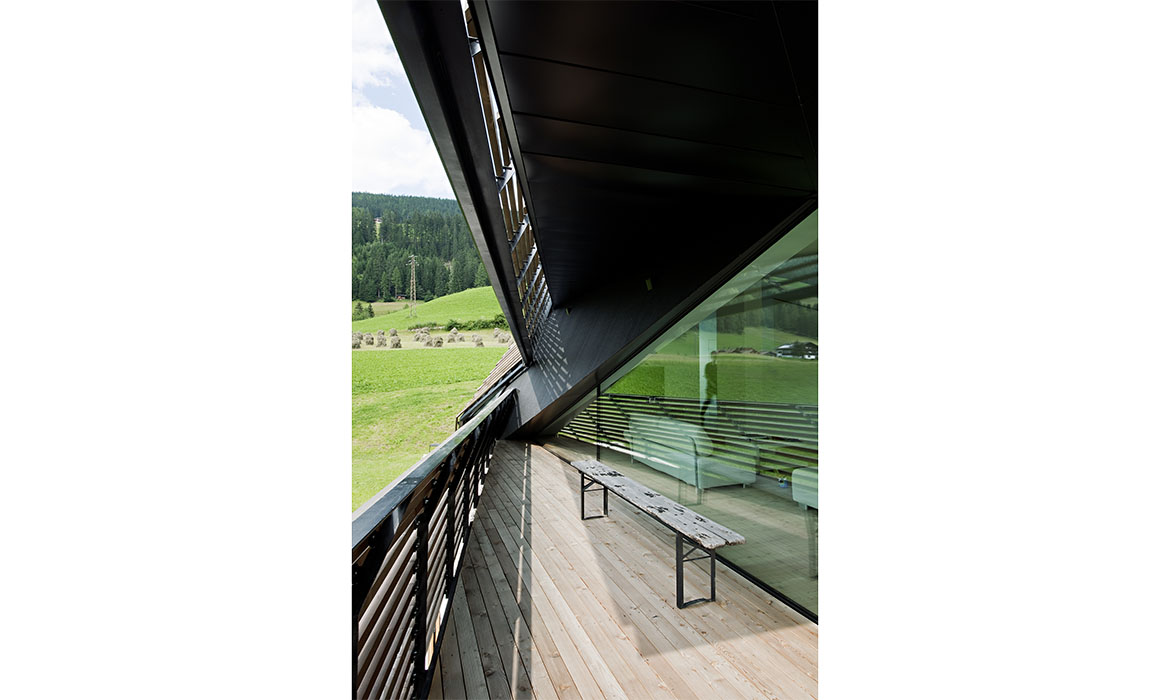
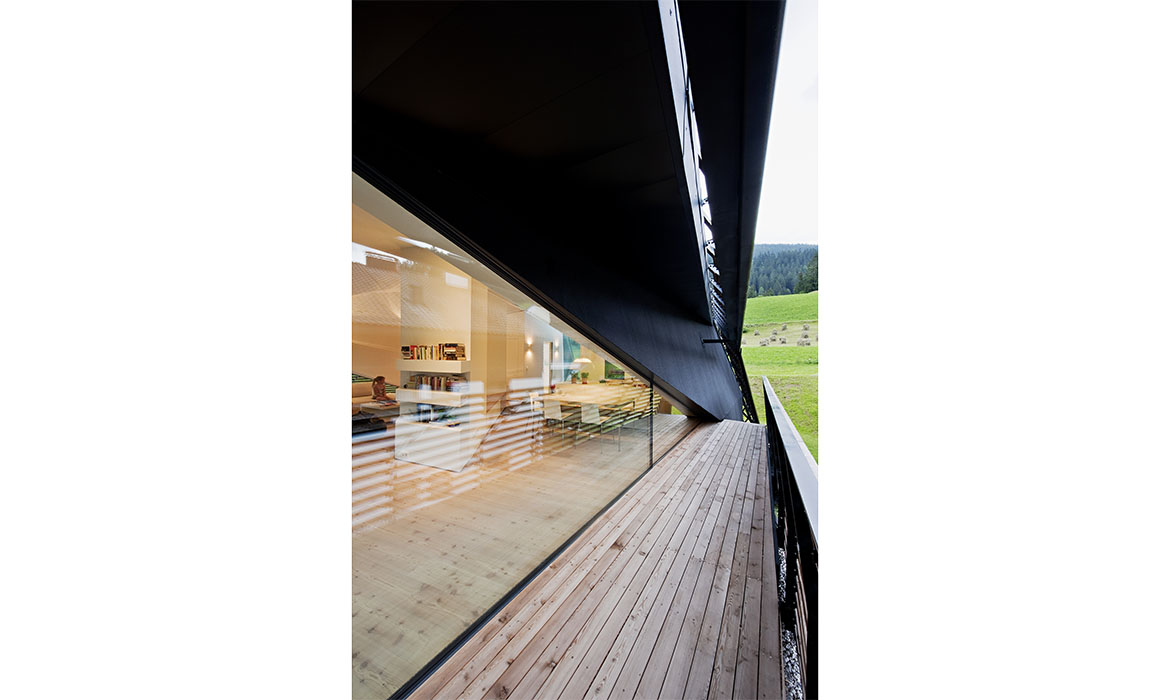
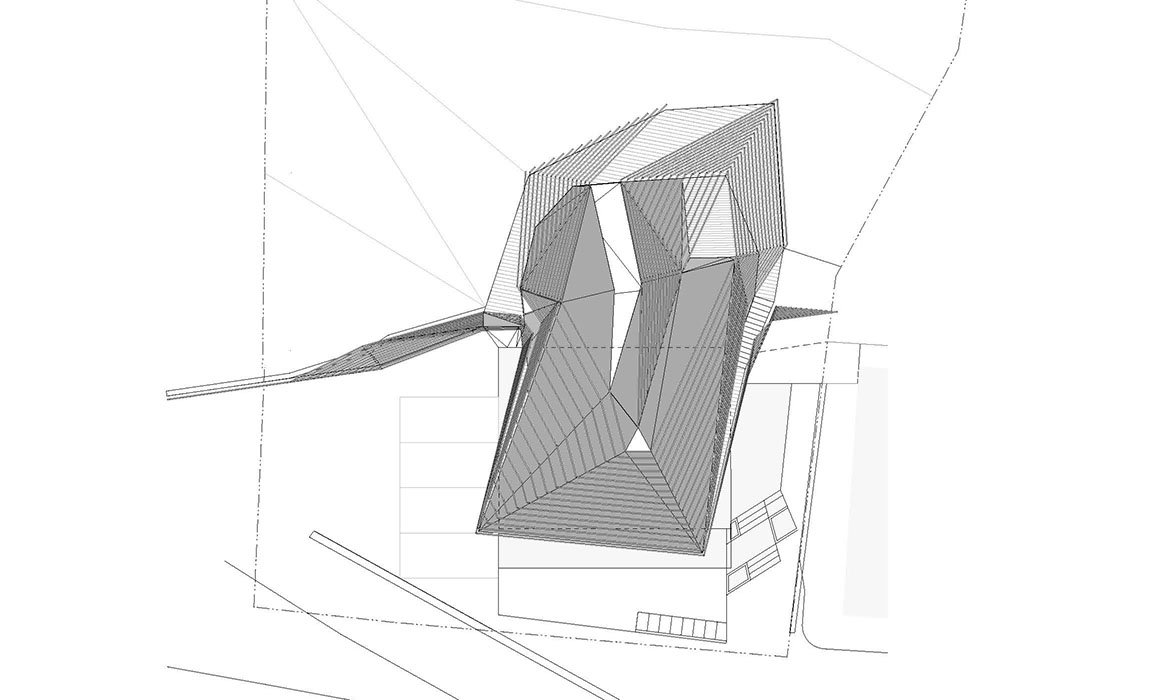
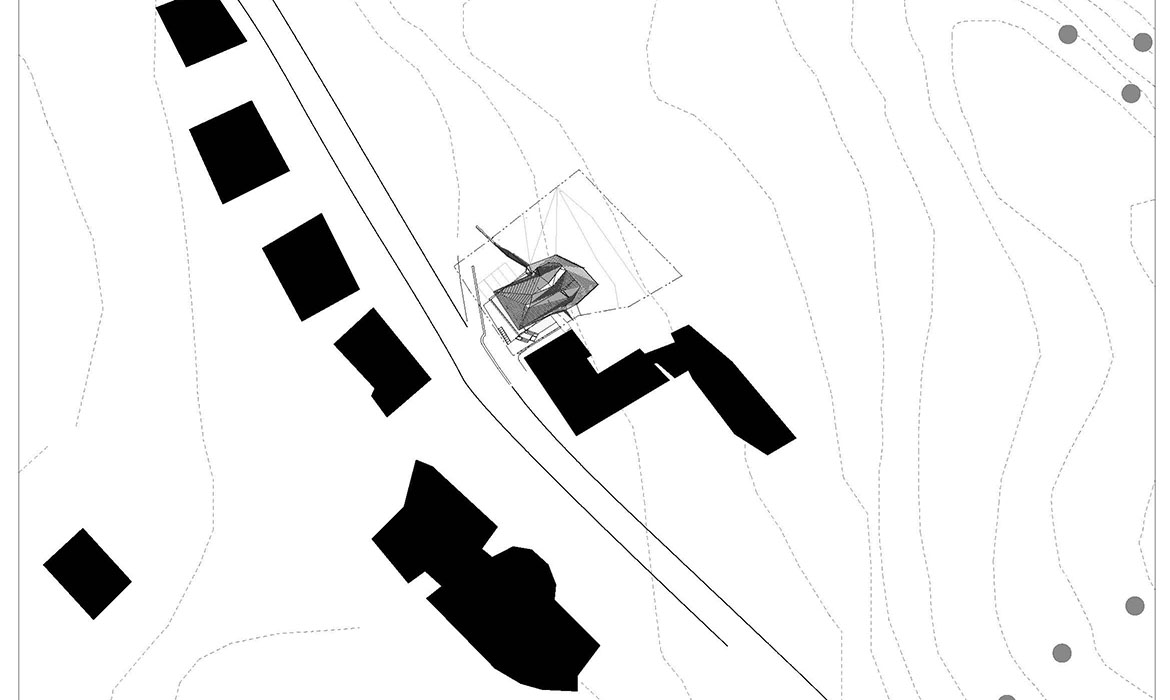
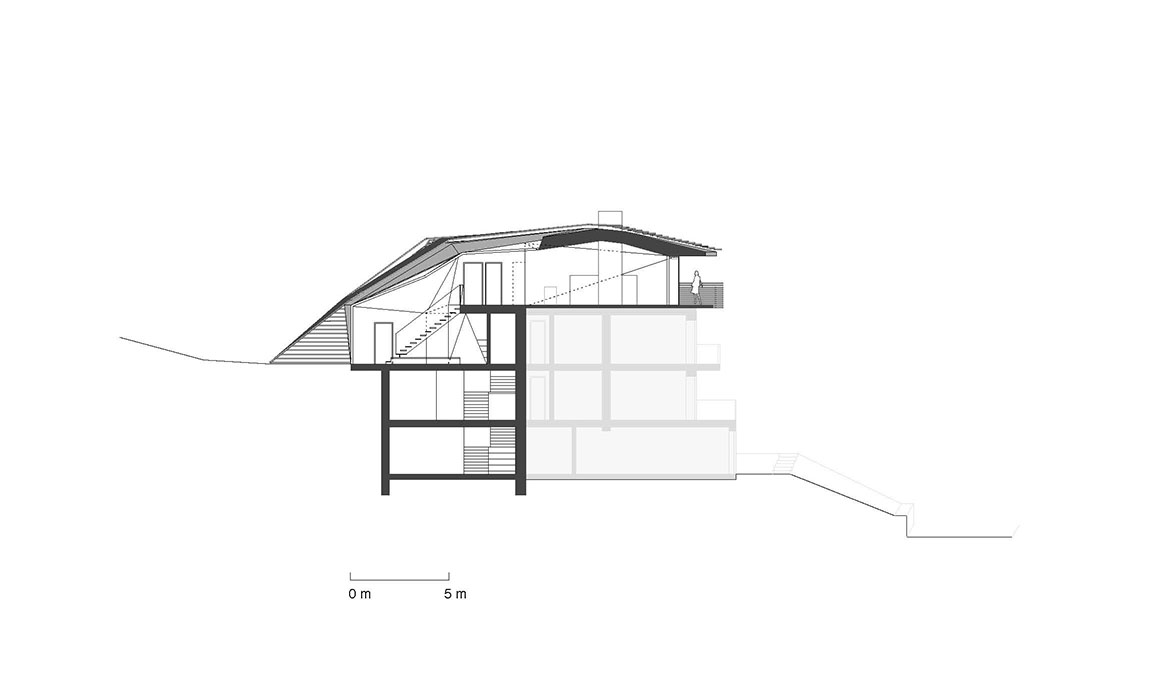
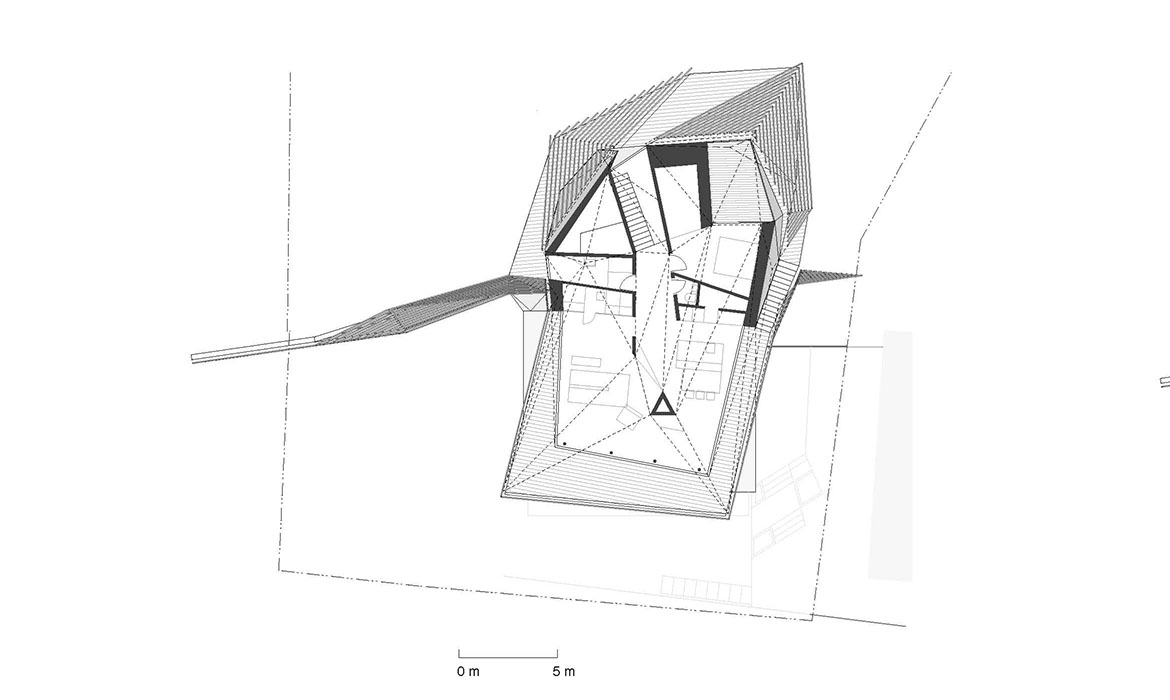
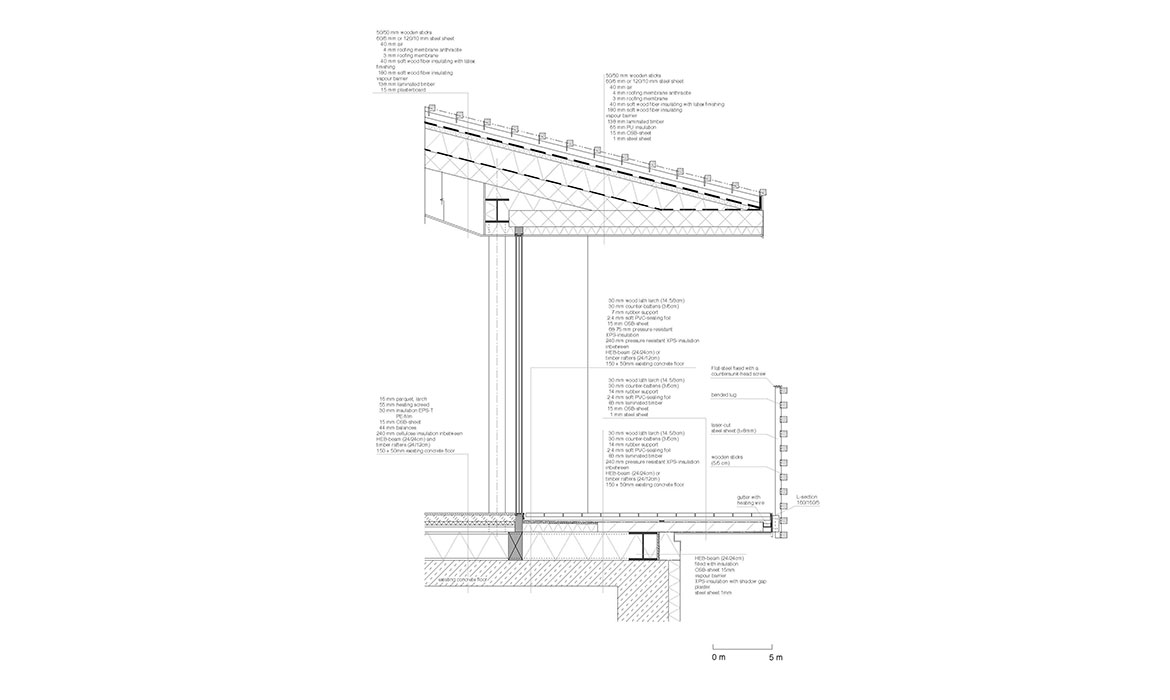
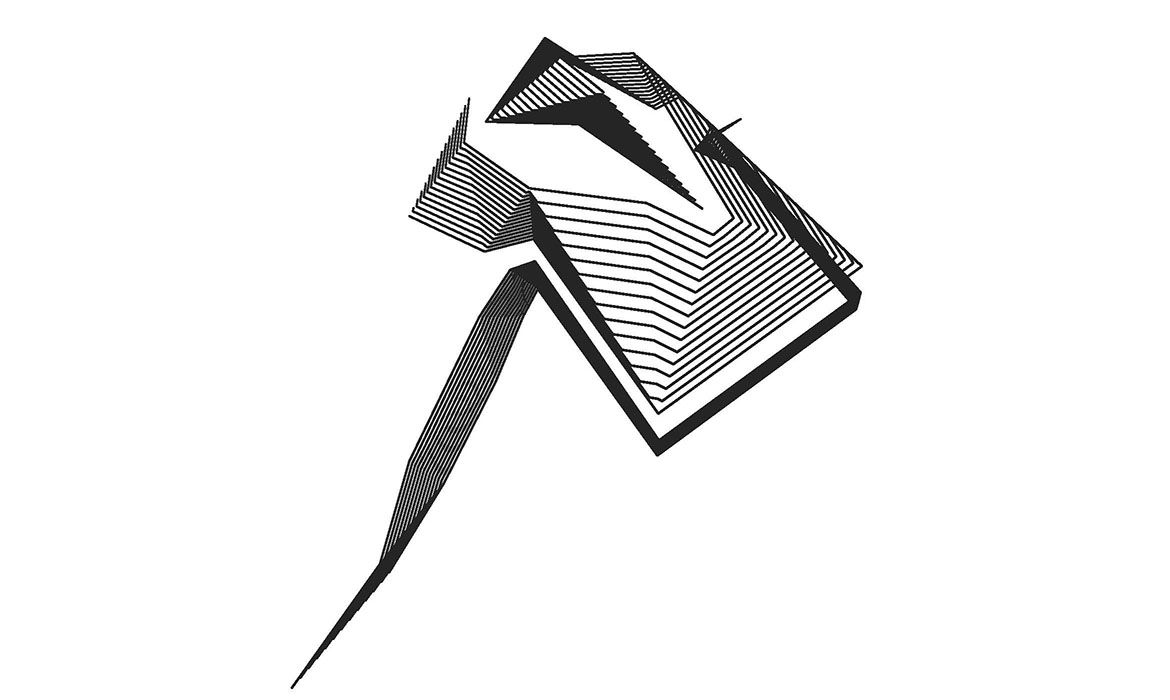
Tecnical drawings:
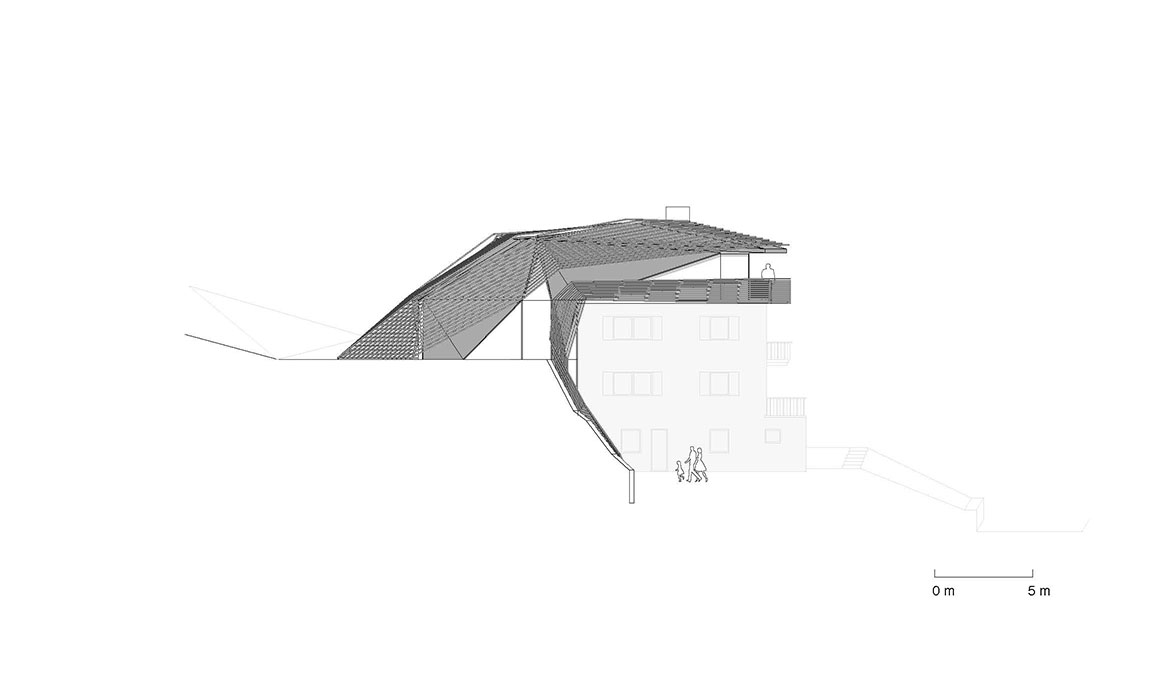
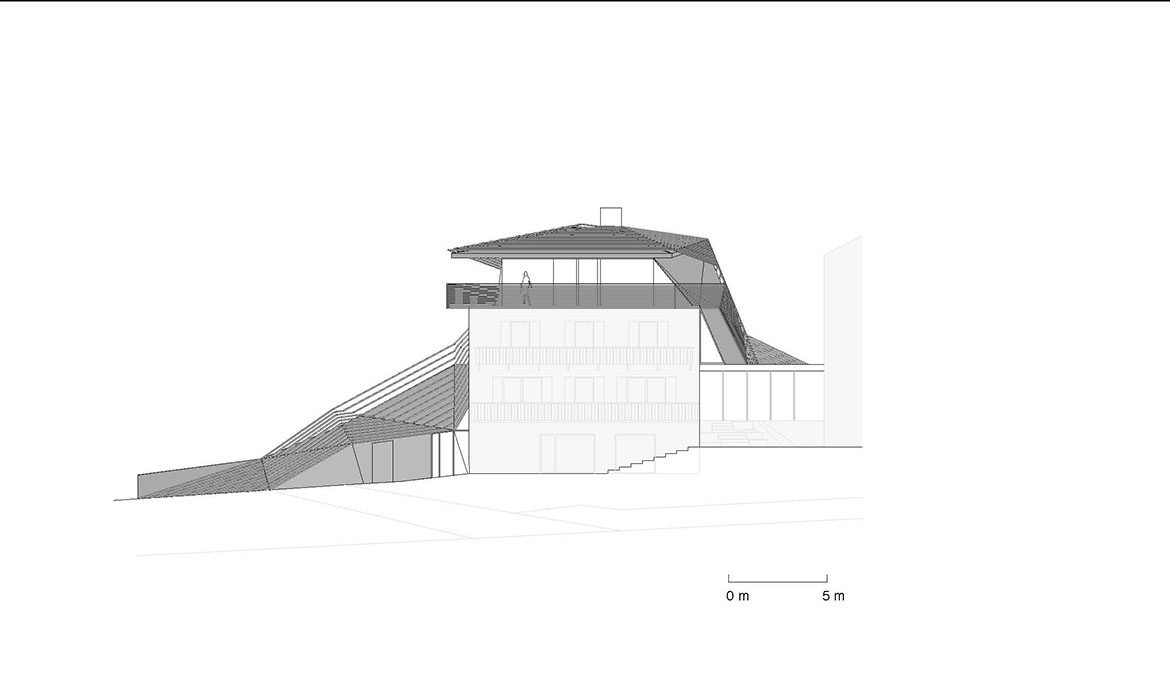
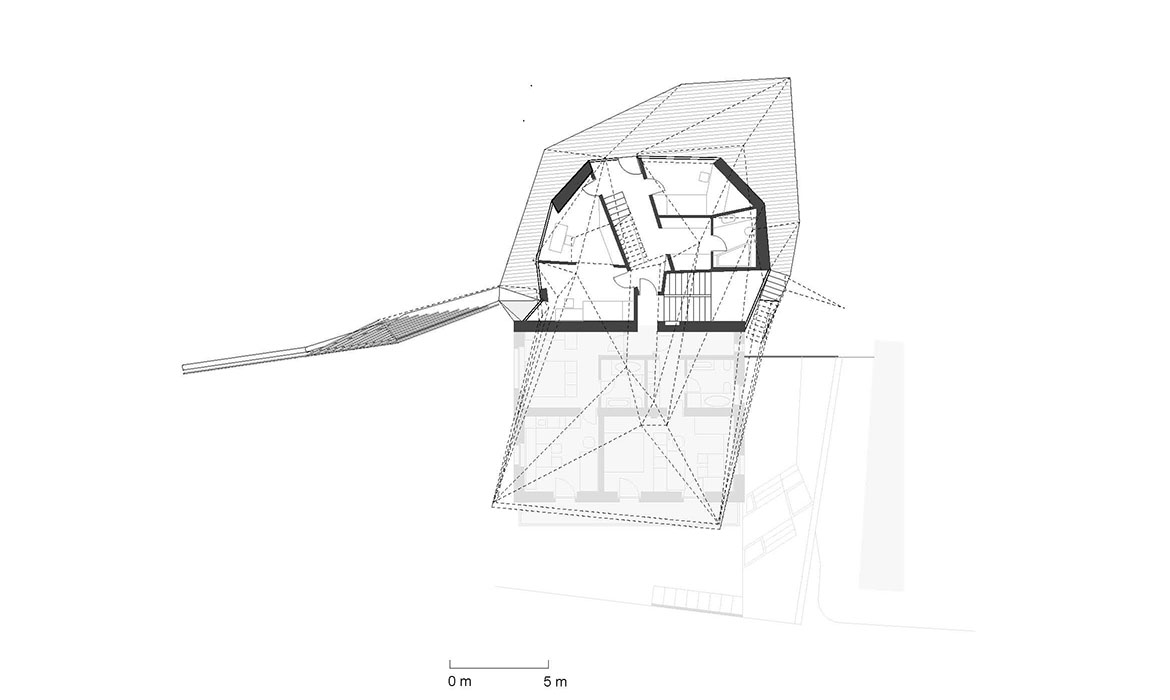
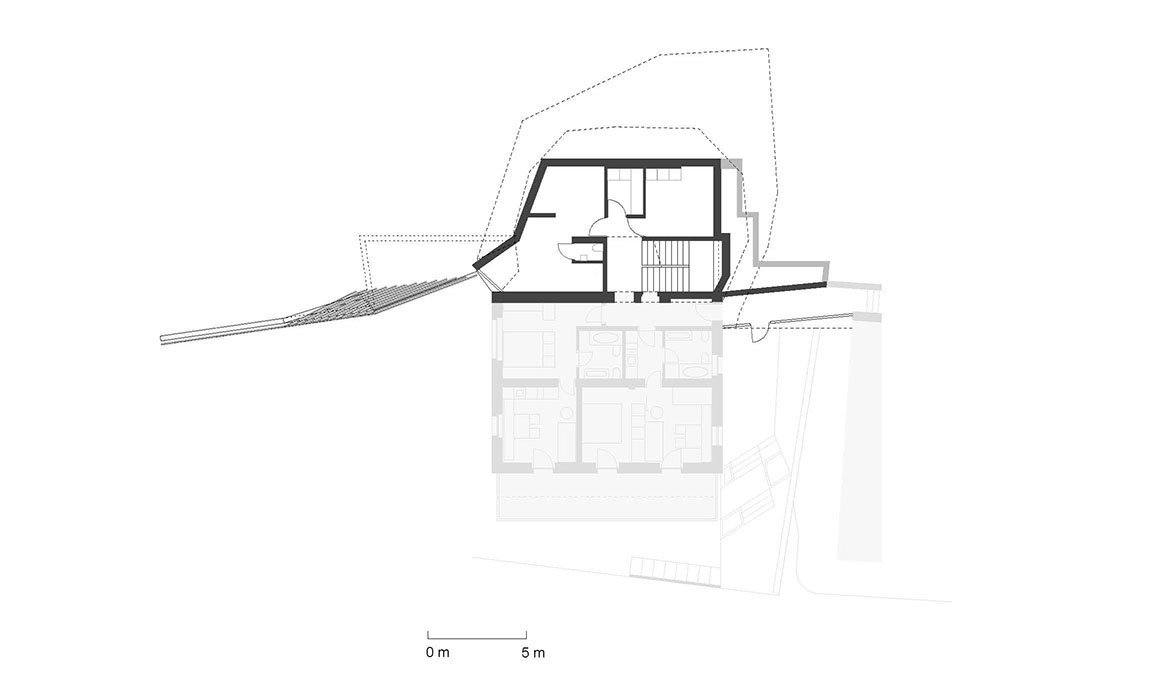
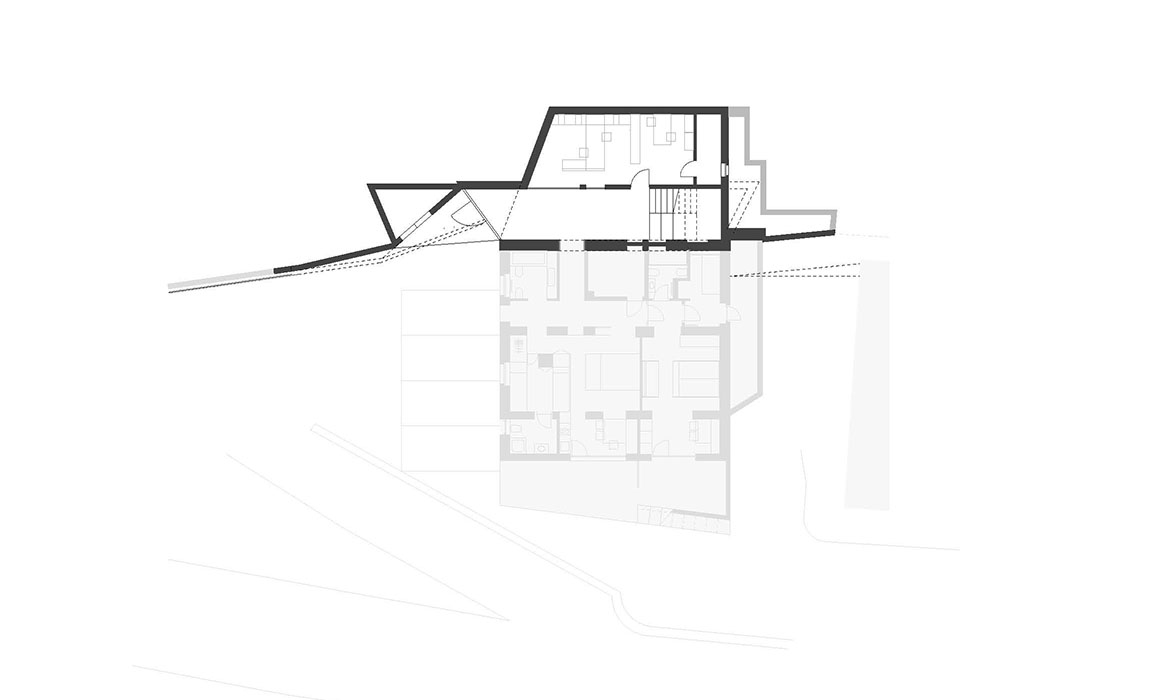
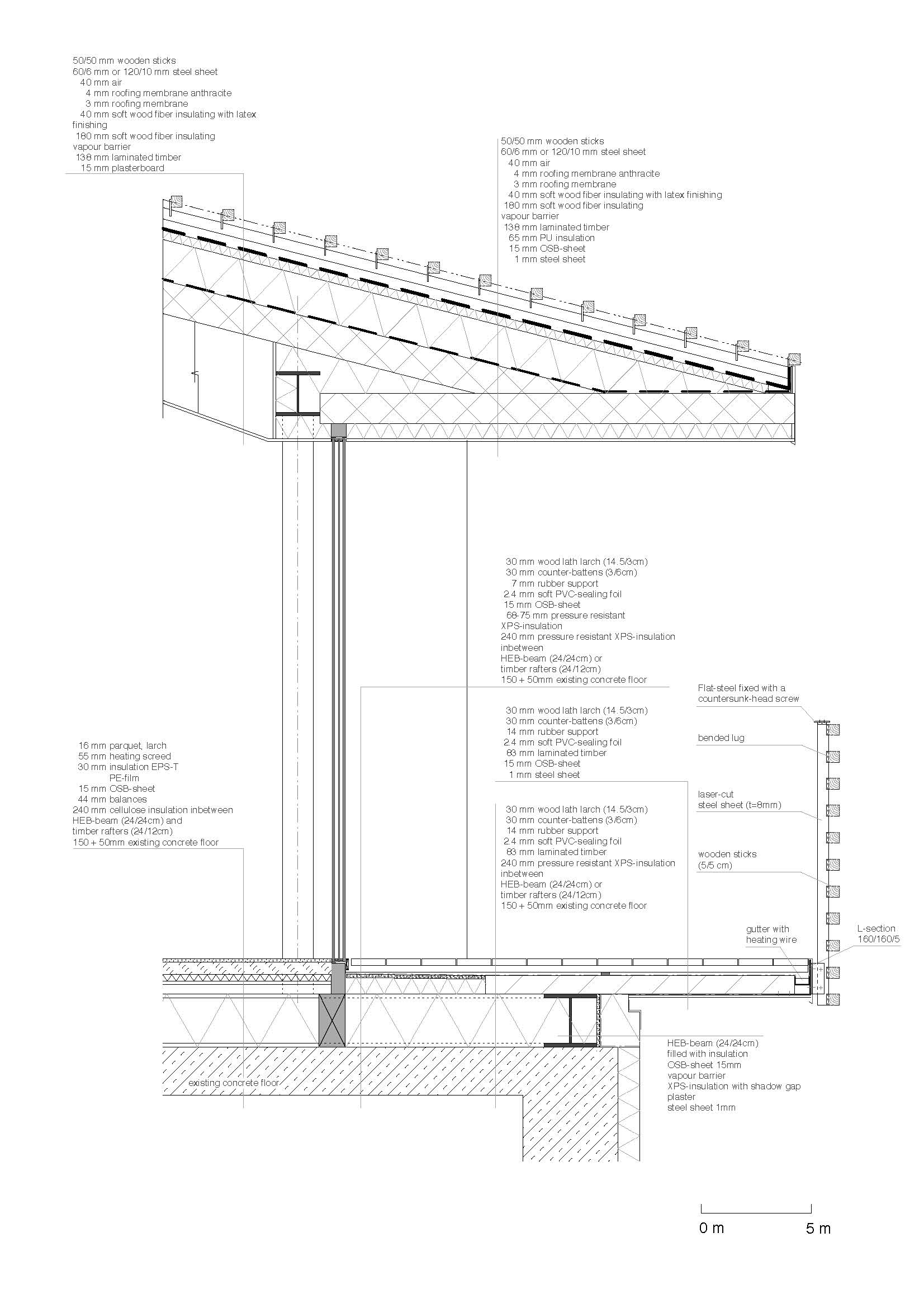
Extended report:
Relazione estesa
The Paramount, a mini-hybrid residence/private house, was conceived as a light structure on top of the Residence Alma, a Tyrolean guest house with 6 holiday apartments from the 1960s adorned with a pitched roof, so as to occupy as less space as possible and to not affect the surrounding green area. The result is an under-utilized roof space, connected by the host’s renovated spine to a ground floor reception and to an architectural office.
Plasma Studio utilized as skin organization a strip section in larch wood, extruding it along two paths. The first stretches across the site, picking up the topography on either end of the building and climbing it to enclose the balconies; here, the edge skirts around the existing footprint, leaving corners exposed. A second path draws the timber skin up from behind, folding around the chimney to return to the ground. Interstitial spaces between the exterior walls and wooden bands swell at ground level to offer sheltered outdoor living spaces.
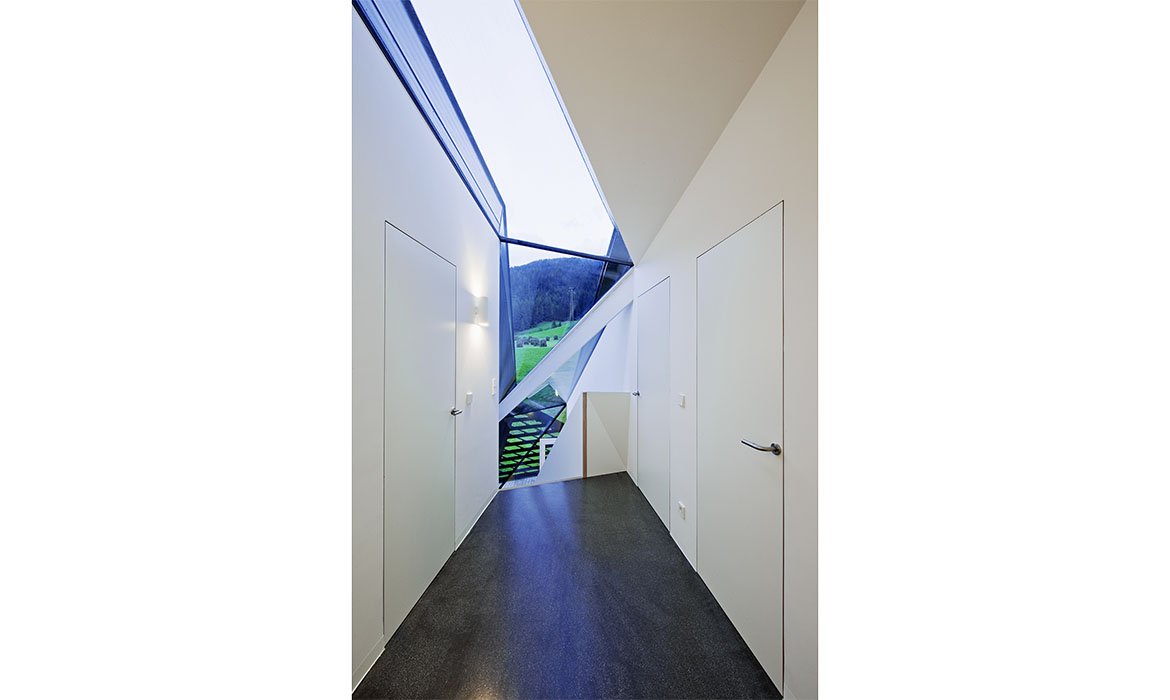
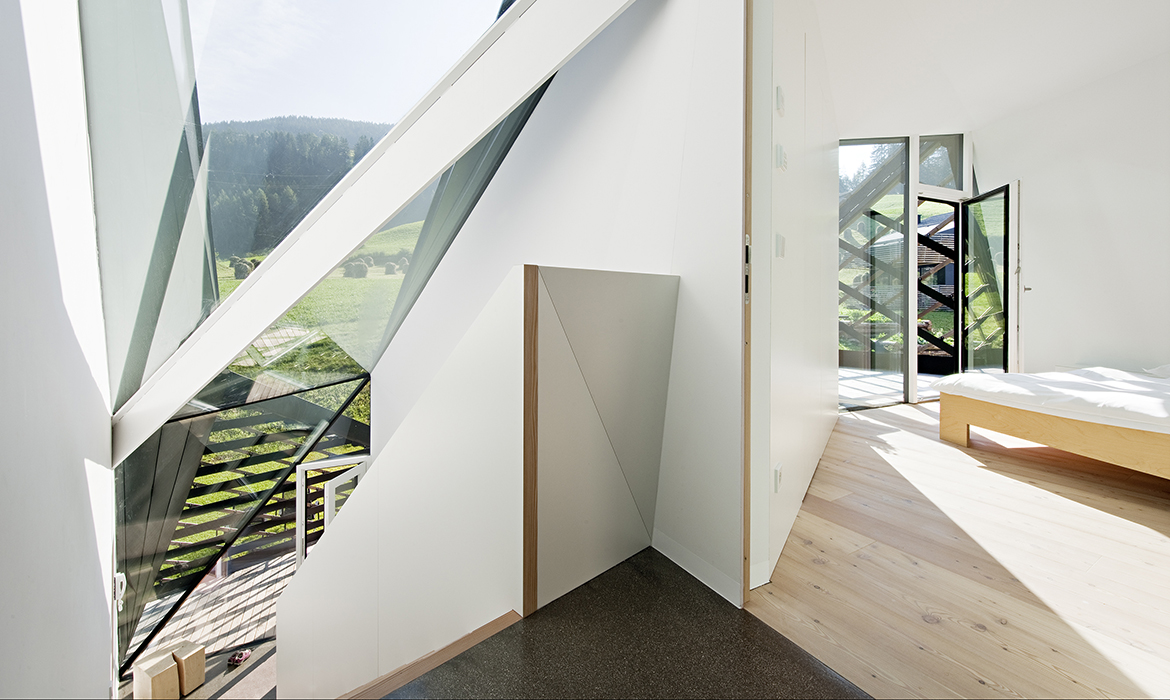
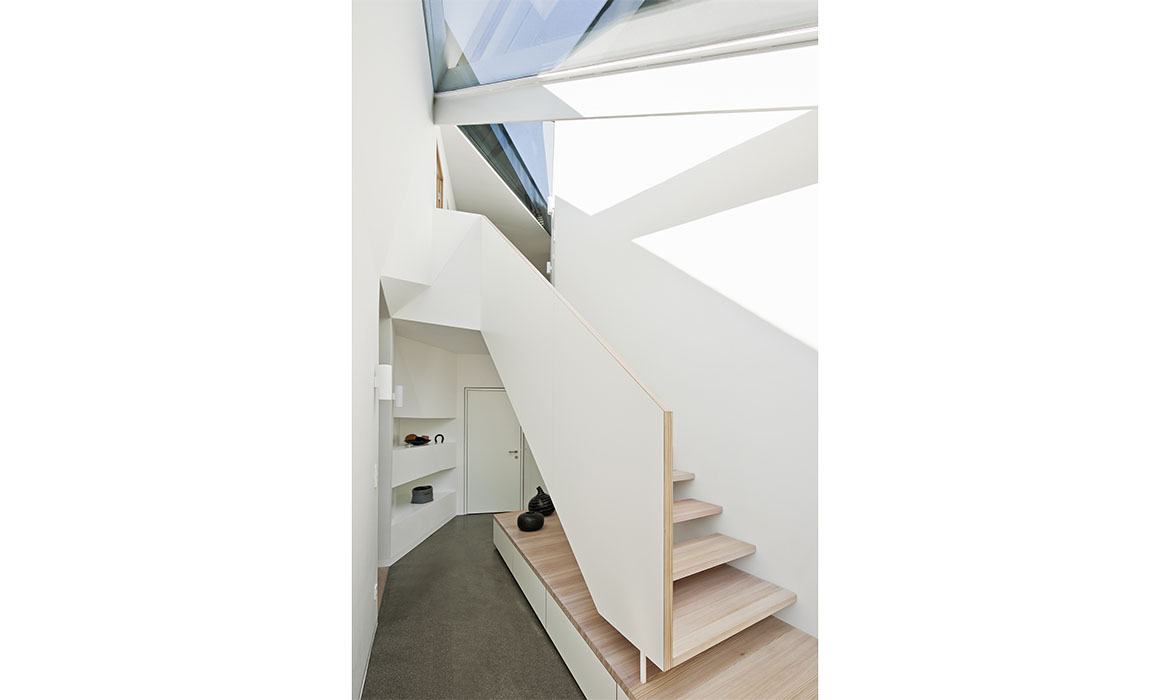
The interior is characterized by a spectacular view of the sky through an incision over the central stair, which allows an immediate reading of weather conditions, collecting precipitation and receiving direct sunlight.
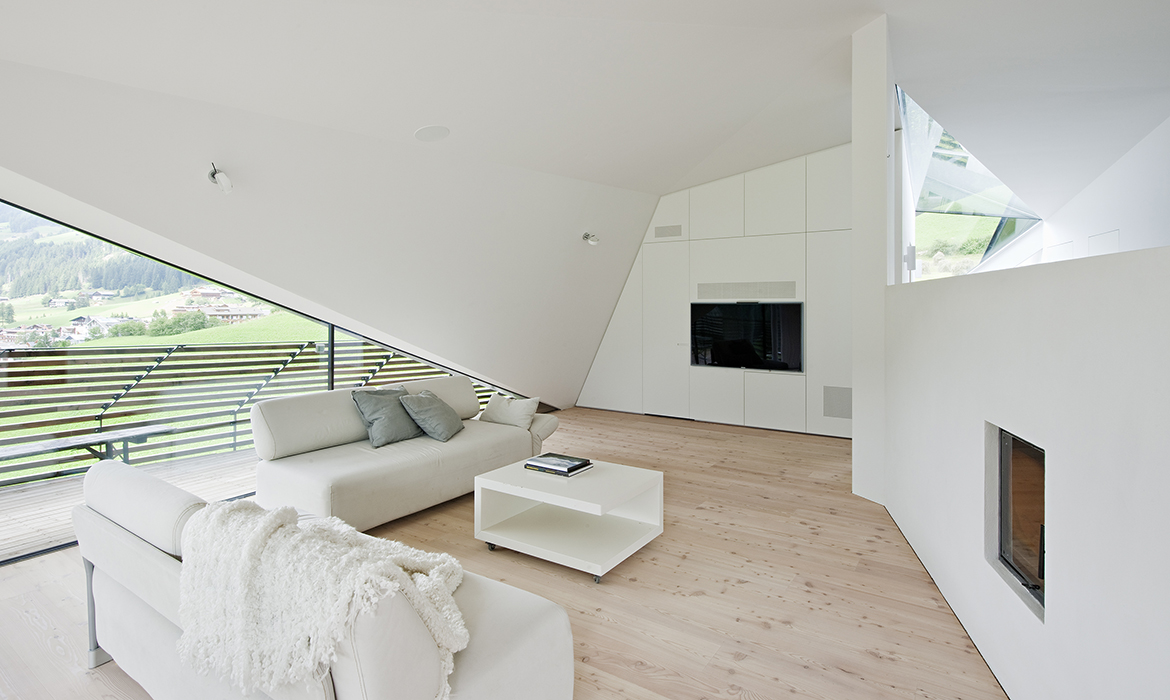
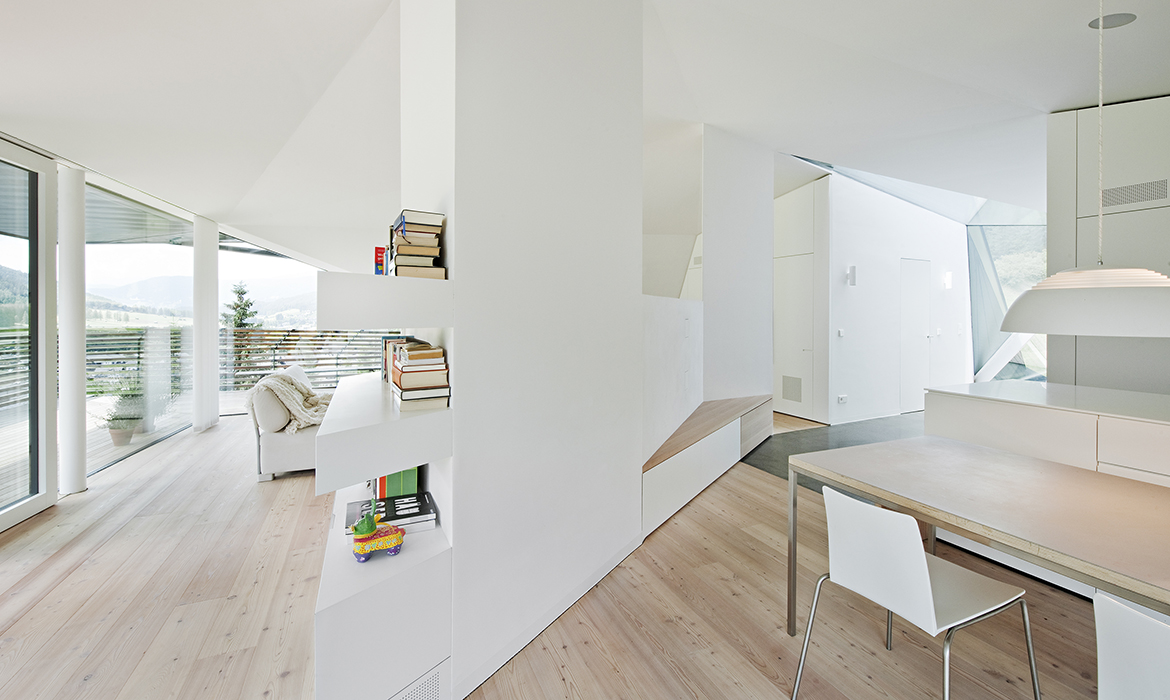
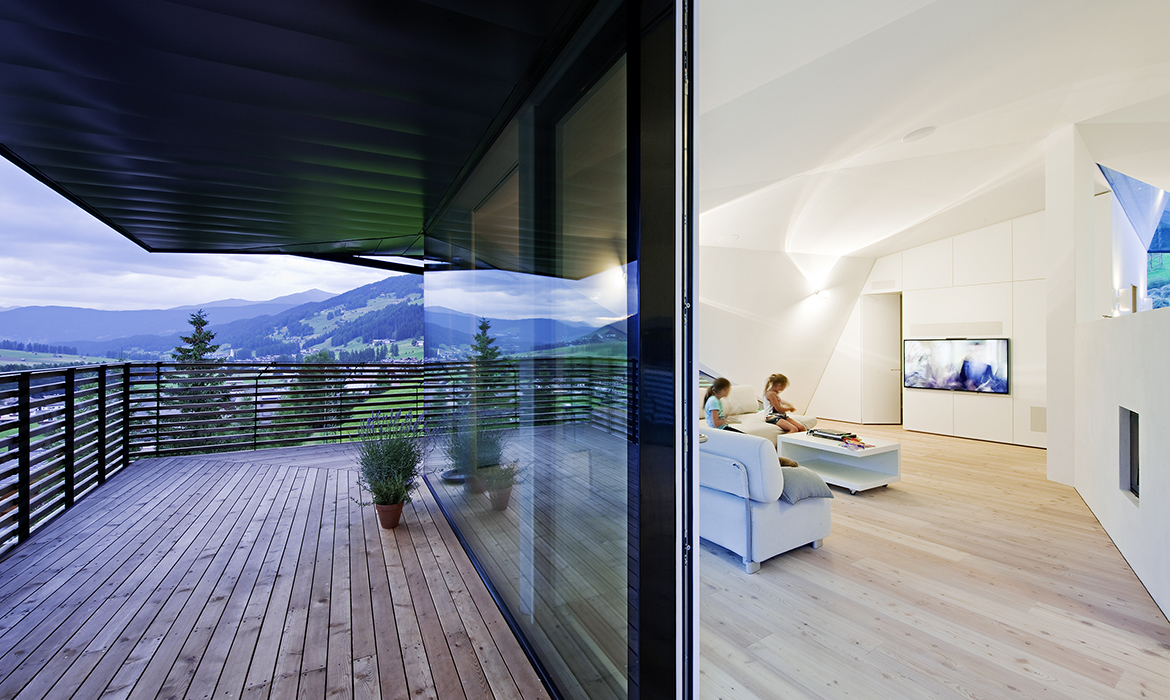
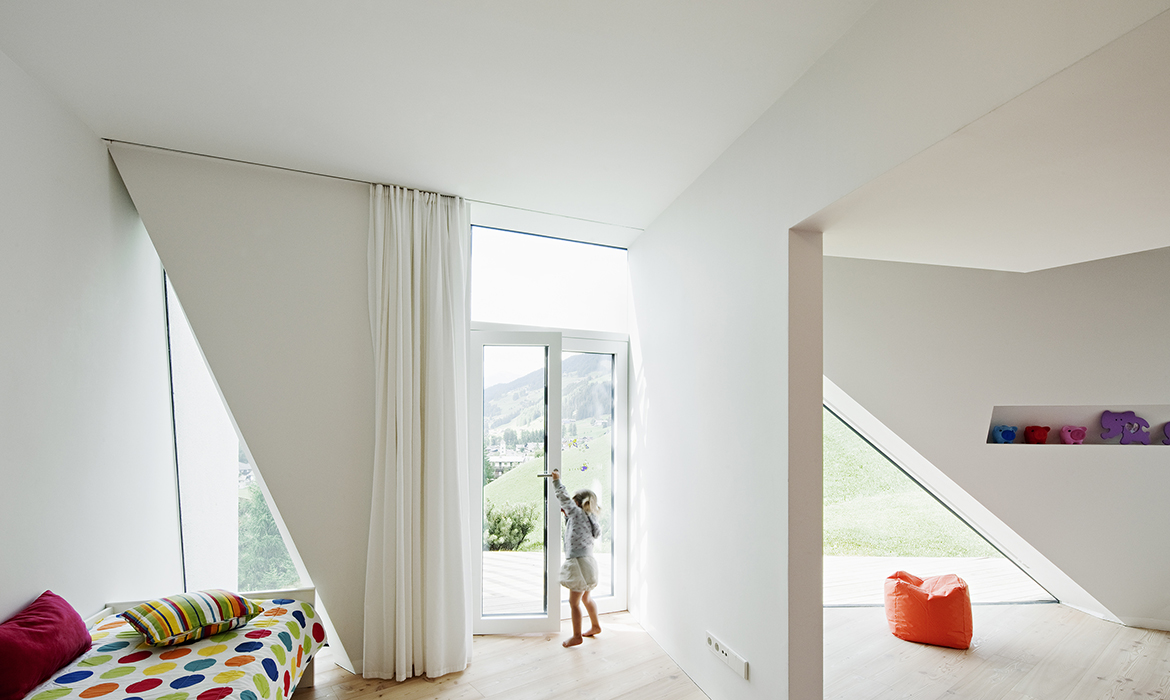
The main living spaces are split over two floors, with first floor bedrooms and an open plan kitchen, dining and family room on the second floor. All living spaces have direct access to the outside through terraces or gardens.
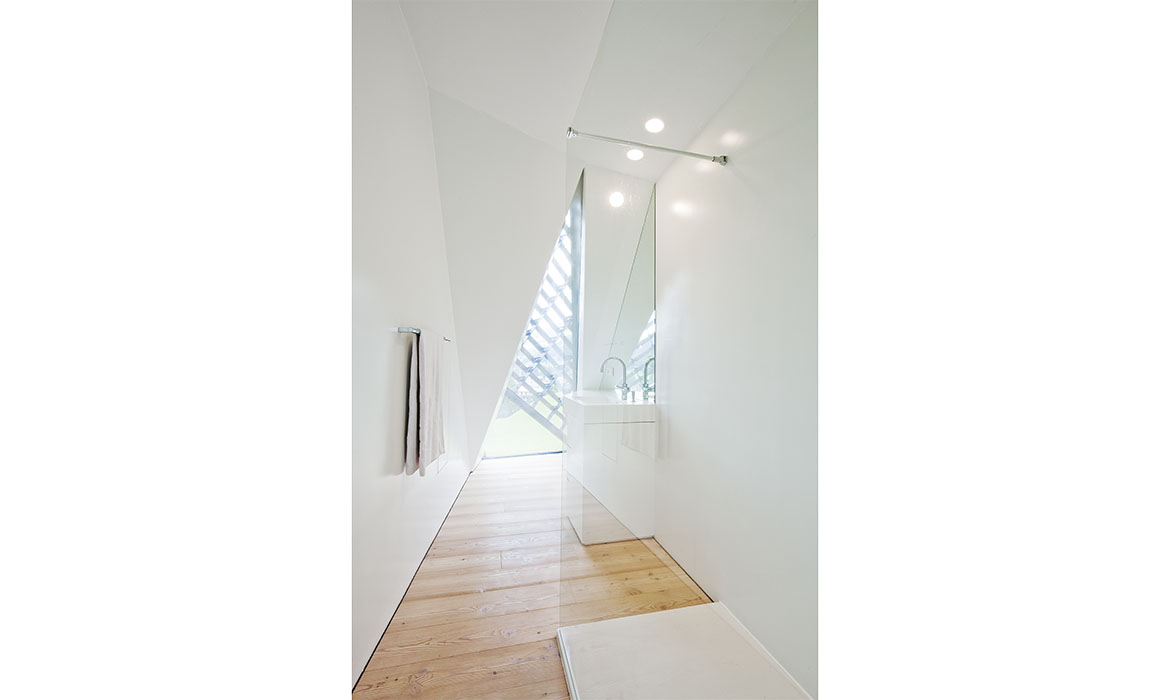
Limited material and color palettes give strength to the space, with splashes of color in the children’s washroom. The otherwise white walls provide a backdrop for an ever-changing display of shadows from the pleated roof above.
As the extension sits within the steep topography, sub-structural elements were developed in reinforced concrete, while the superstructure was built from prefabricated cross laminated timber (CLT) insulated with wood fiber and sealed with black bitumen. The outer skin in larch wood strips on a galvanized steel structure was determined according to cost and aesthetics by the aforementioned parametric model.
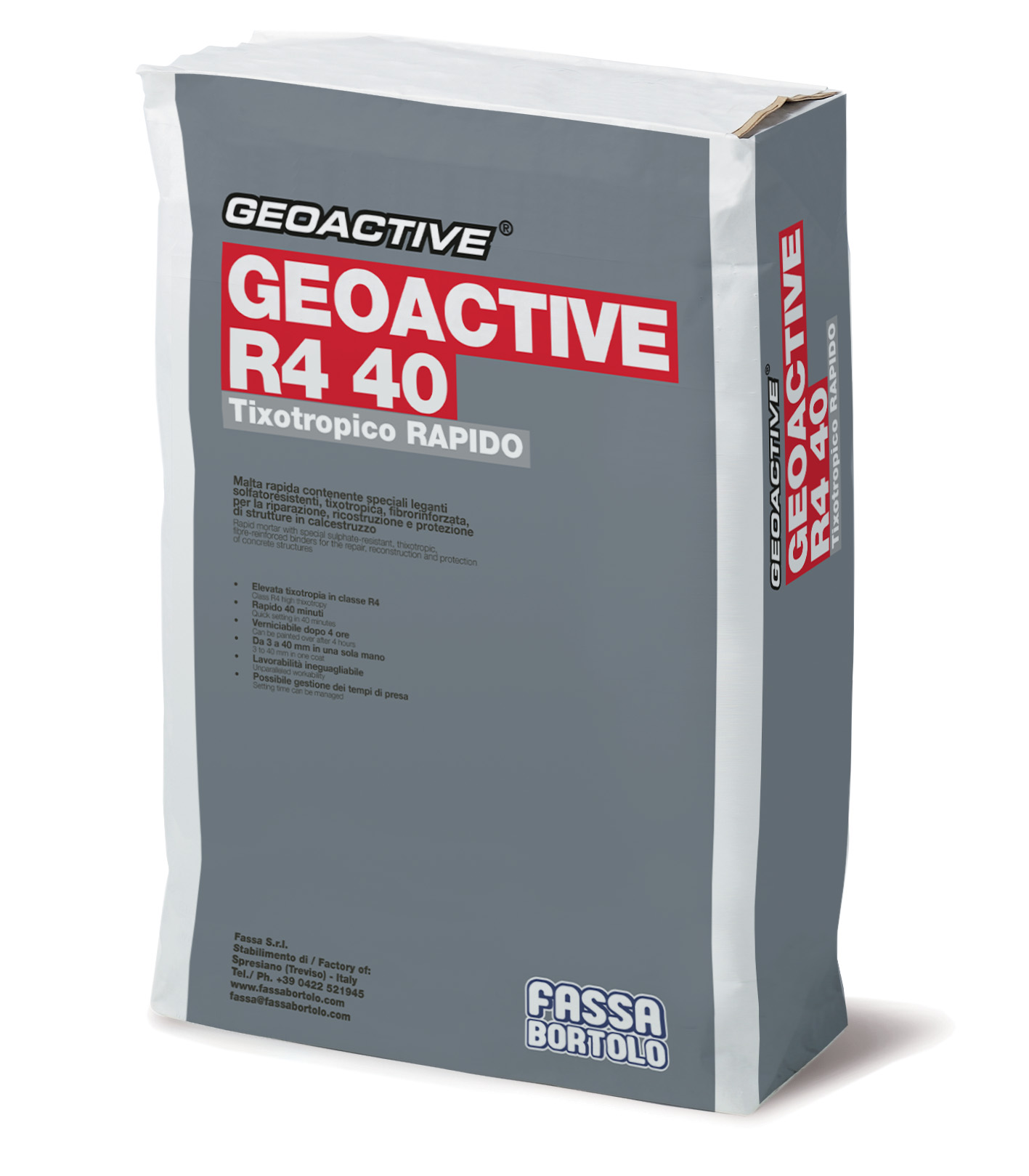
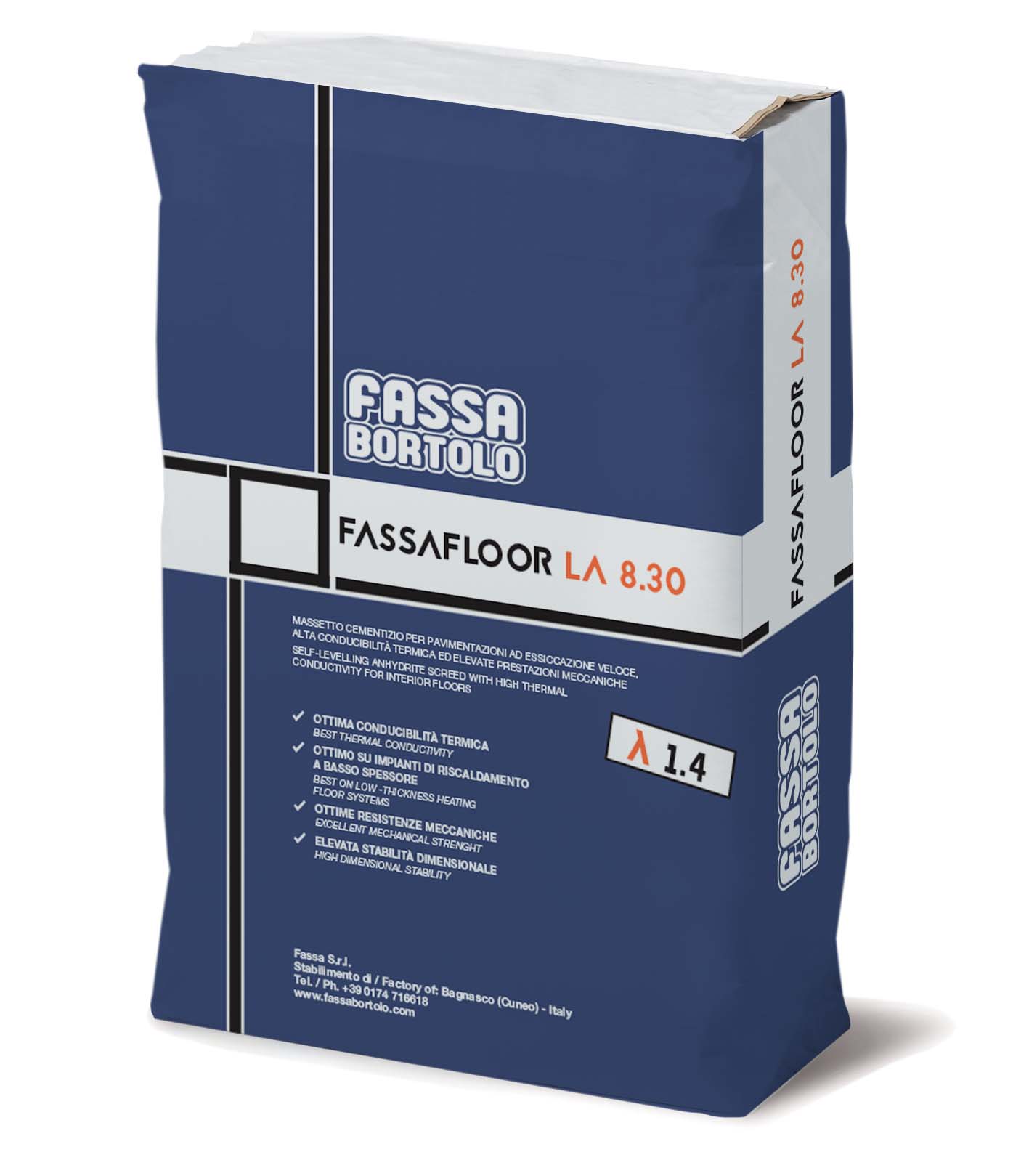
We used the Fassa Bortolo pavement screed as heat accumulator that integrates the underfloor heating. The floor screed works as thermal mass in the light wood structure and therefore serves to increase the thermal capacity of the building. The building is connected to the district heating and we used a system of controlled air ventilation and recirculation.
Through its use of form, materials and views, this addition flirts with its context at three scales. The first with its host: as an addition to the Alma residence, it shares a newly renovated core, carrying the fractal geometry from the roof down to Plasma’s Italian office through the Alma’s skeleton. The second, with its neighbor: the Alma defines the next generation of the family-owned hotel complex, together with the Plasma Studio’s Strata Hotel. And finally, with its terrain: the sculptural addition acts as a mediator between the existing house and the surrounding topography, extending from the landscape like a lichen.
Timeline:
2011-2014
Realizzazione