Parco Buitenschot
Credits
Client
Hoofddorp, Amsterdam, Paesi Bassi
Collaborators
Tno
Witteveen & Bos
Nijmeijer & Mocking
Authors
H+N+S landscape architects, Paul de Kort
Buitenschot is situated in Hollands largest Lakebed polder, the Haarlemmermeer. This fifth runway, built in 2003, is in close vicinity of living quarters and an industrial area of Hoofddorp, the largest settlement in the Haarlemmermeer.
Tecnical drawings:
Extended report:
Relazione estesa
Buitenschot is situated in Hollands largest Lakebed polder, the Haarlemmermeer.
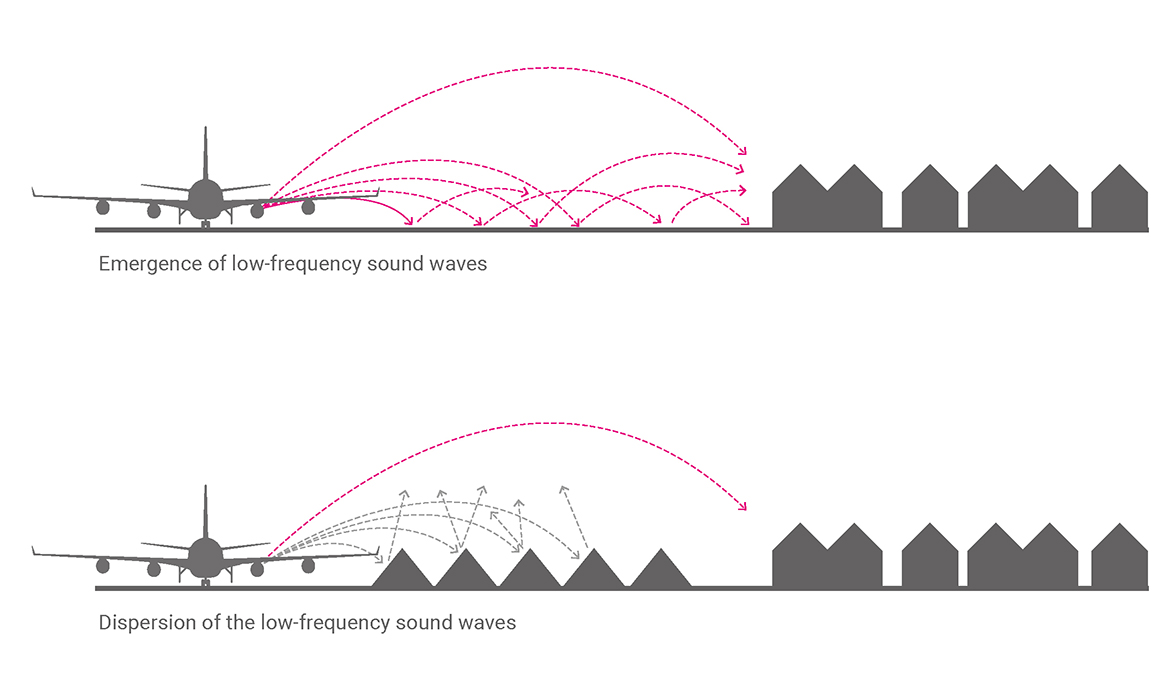
This fifth runway, built in 2003, is in close vicinity of living quarters and an industrial area of Hoofddorp, the largest settlement in the Haarlemmermeer. The low frequency ground noise produced by the taking off of planes was so high that neighbours complained. To make full use of this new track an agreement between people living there, government and the aviation sector was made to reduce the sound by 10 dB.
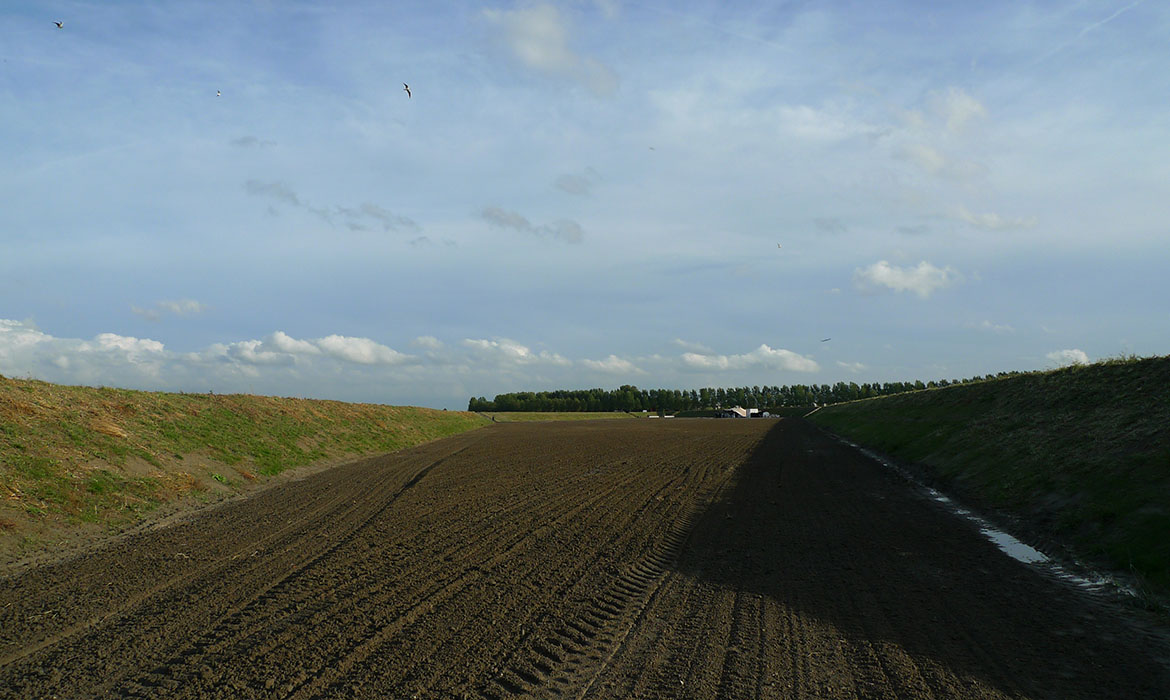
The source of inspiration for the plan was the observation of inhabitants that the ground noise seemed less annoying after the ploughing of the heavy sea clay of the lake bed. It works because the low frequency sound waves are dispersed by the ploughed clay. We decided to mimic the effect.
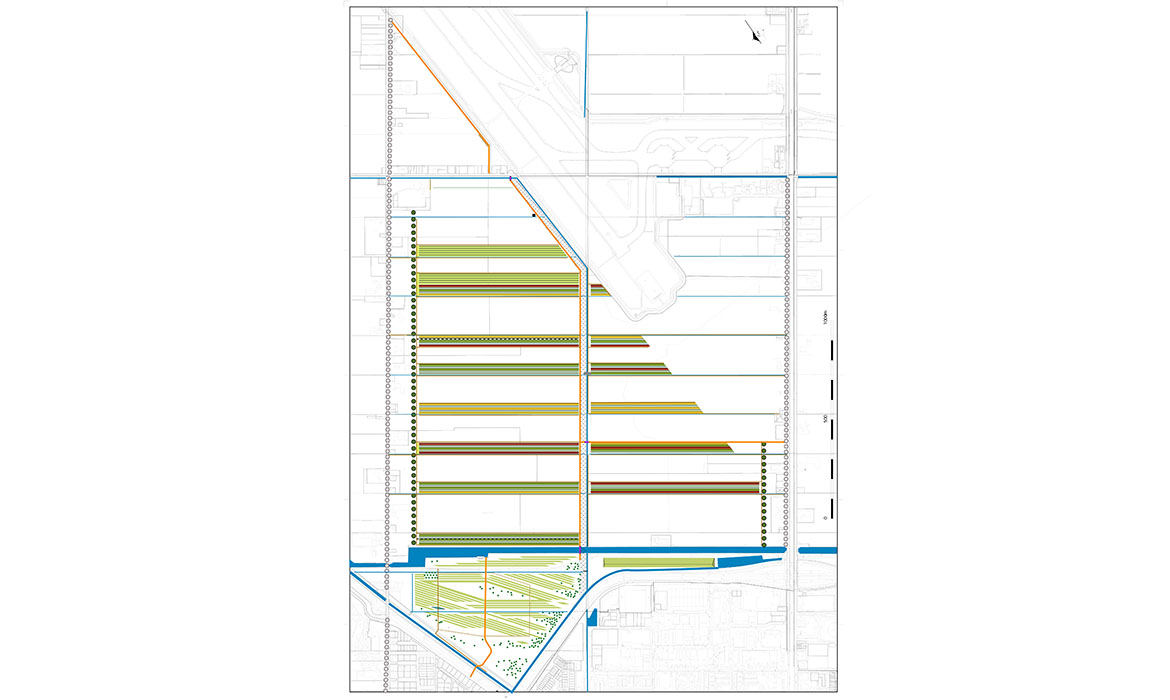
First there was a landscape design for a bigger area.
It was necessary to use the area of Buitenschot,to reach 10 dB reduction.There already was a design for the park in that area. An enrichtment of Buitenschot was reached by combining function of park with a noise reduction task.
The Land Art artist Paul de Kort suggested that we look into the forms that sound itself is able to produce in a fluid. The Chladni patterns are named after the physicist E. Chladni.Each frequency has a specific patterns that are sometimes strikingly different.
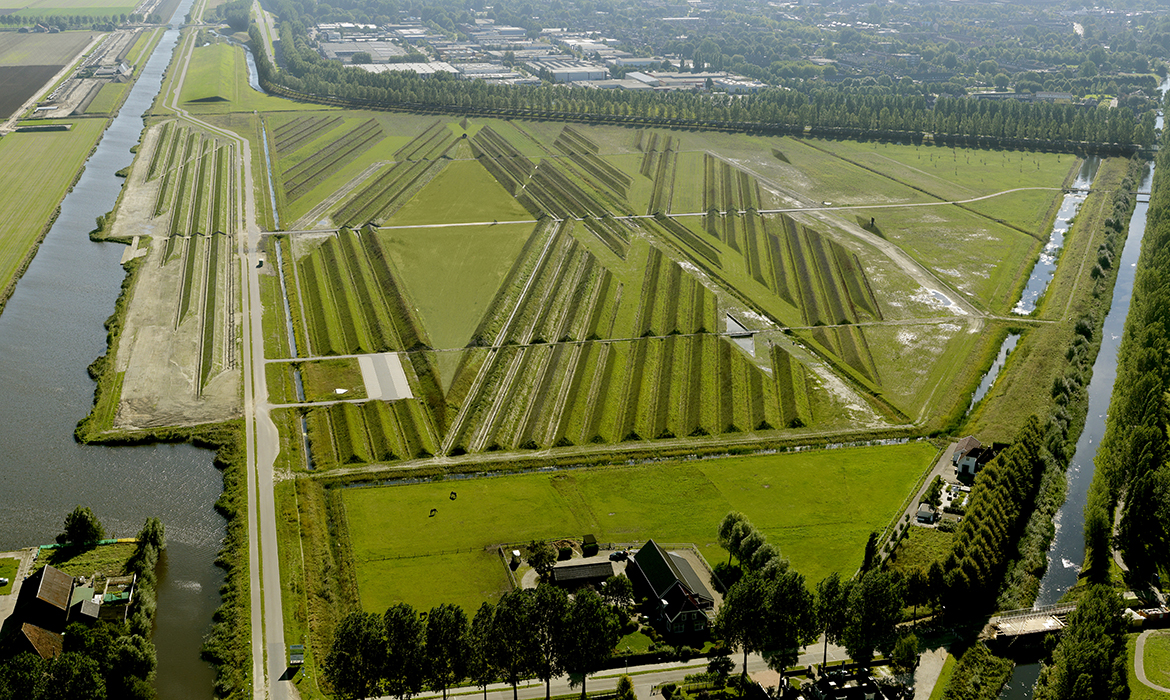
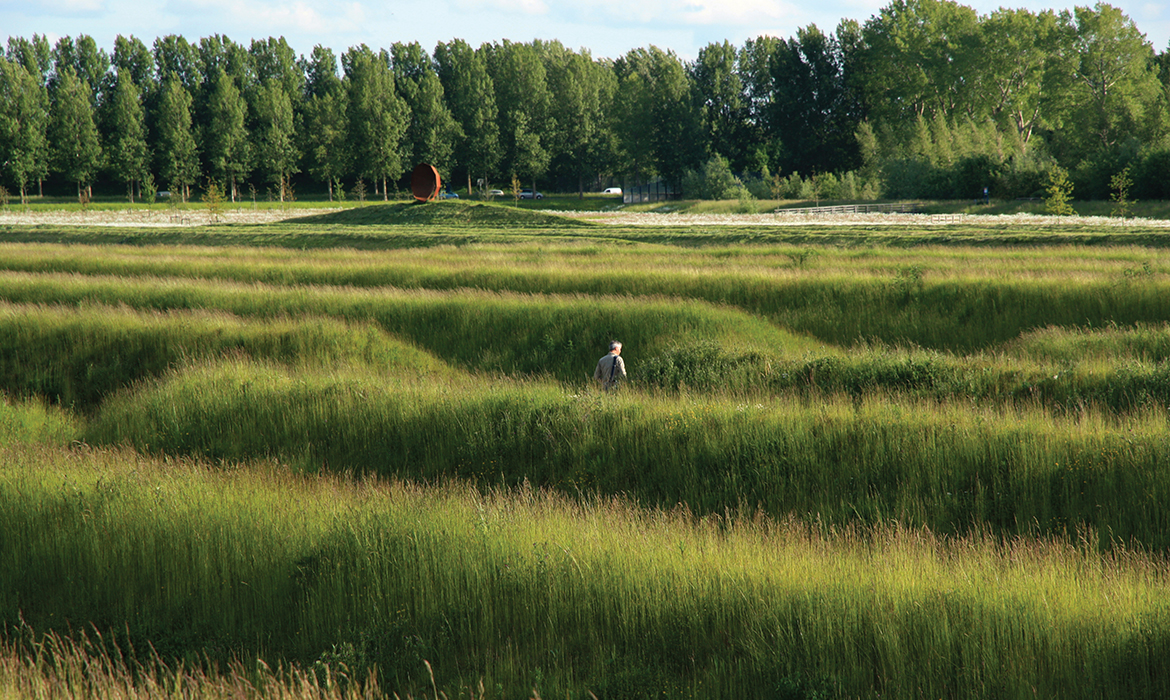
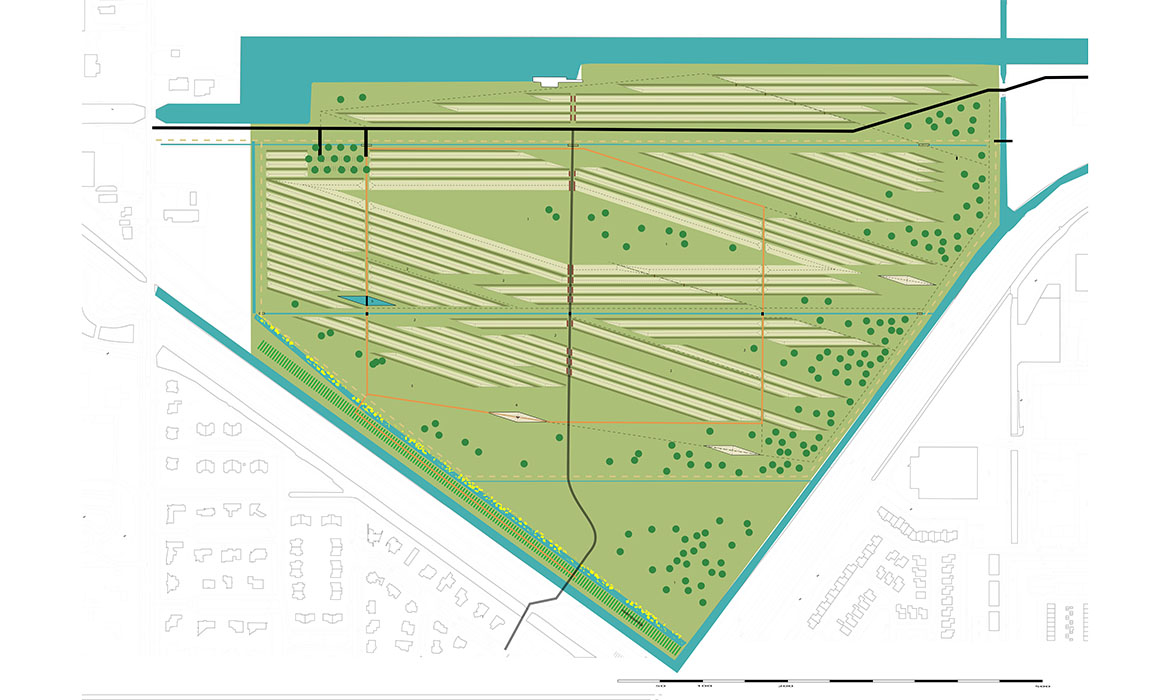
Combining the two programs lead to a public maze, a noise labyrinth. This configuration alone contributes 4 DB reduction.
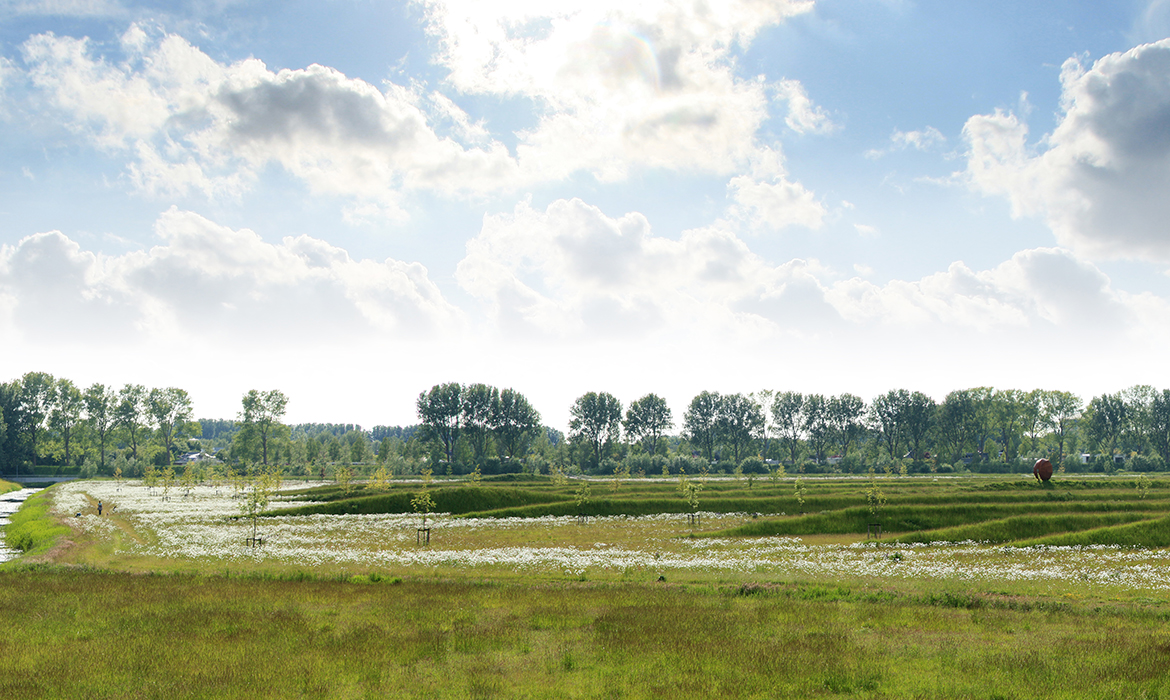
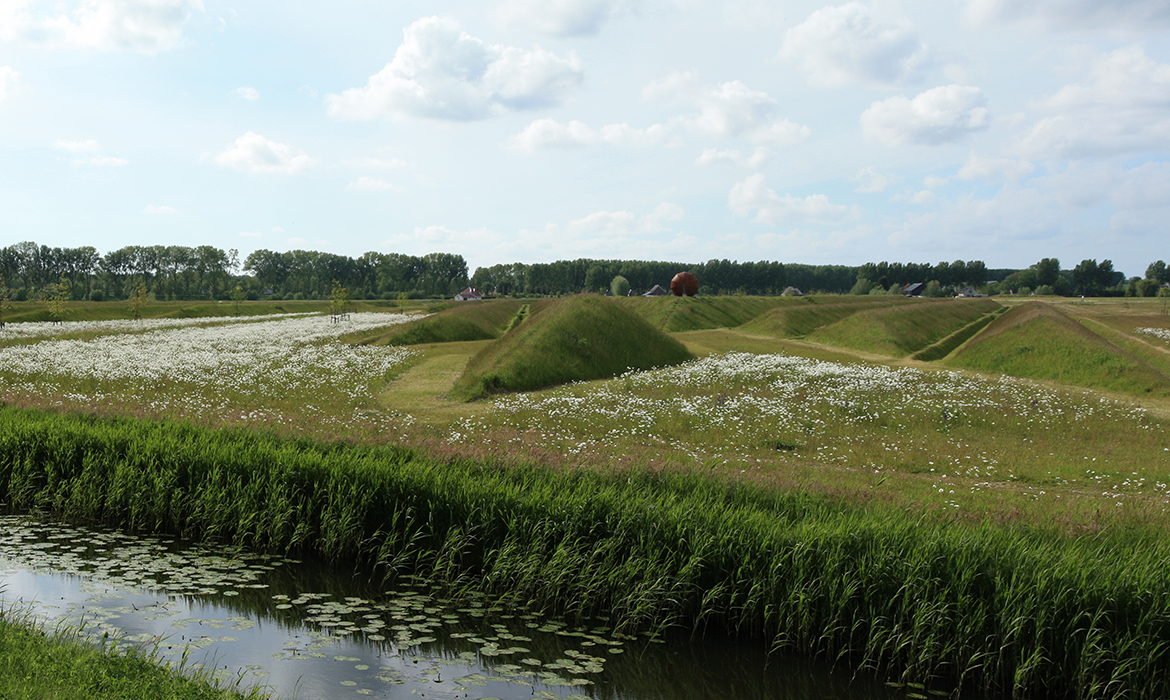
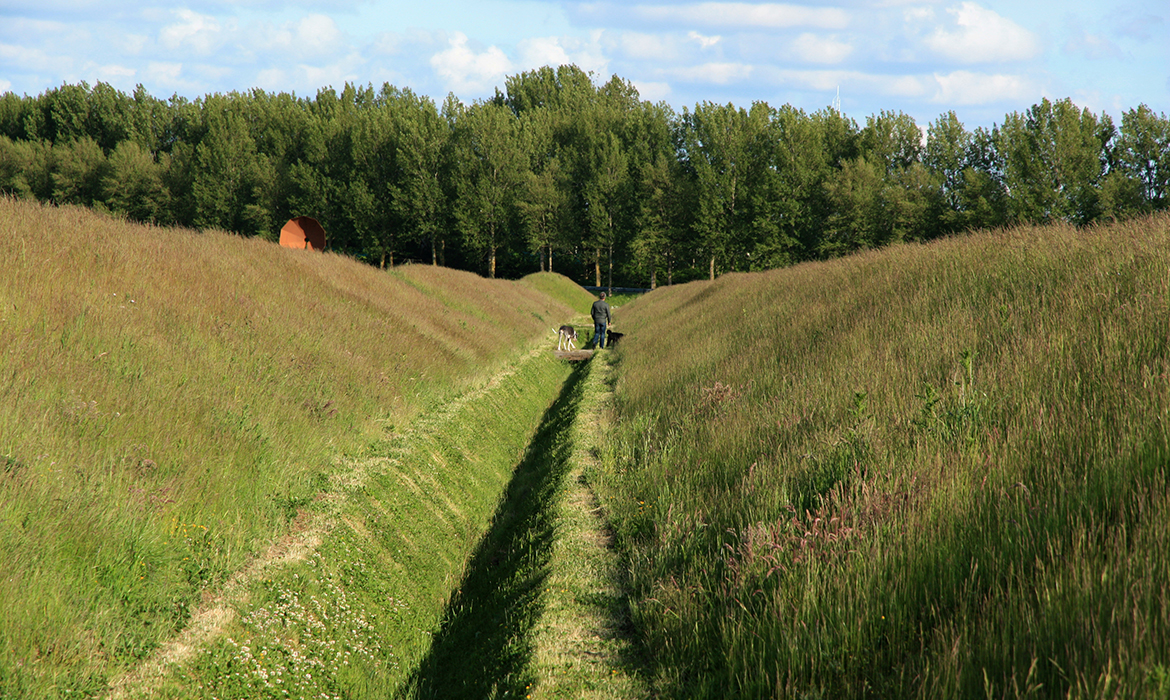
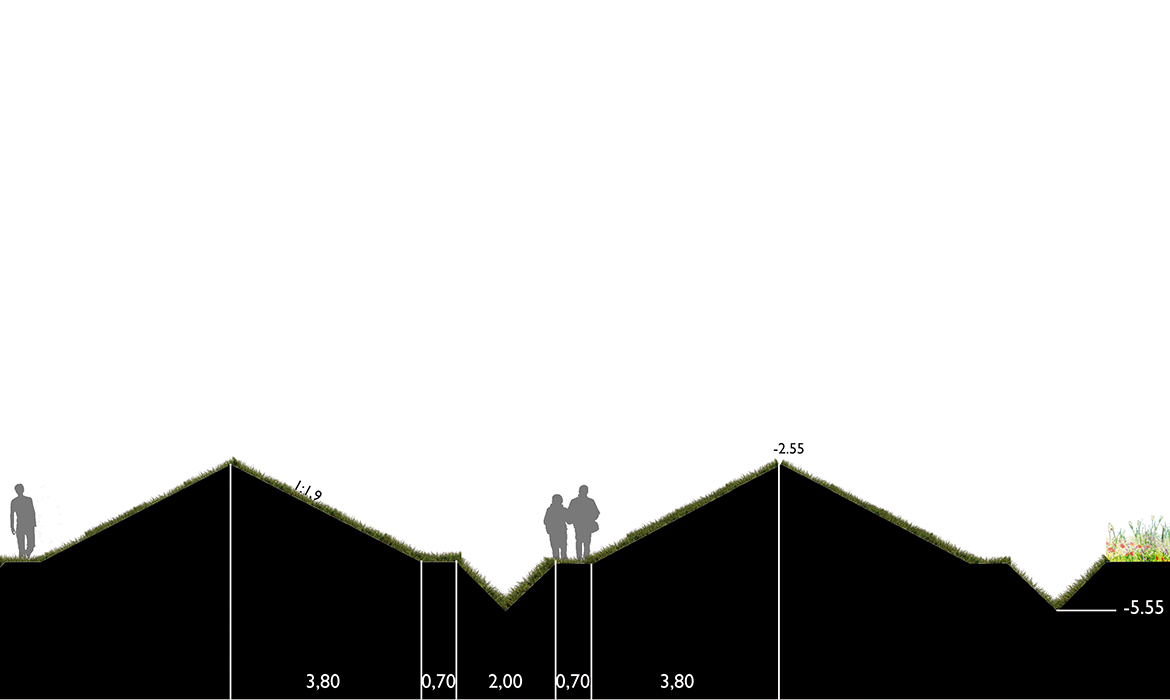
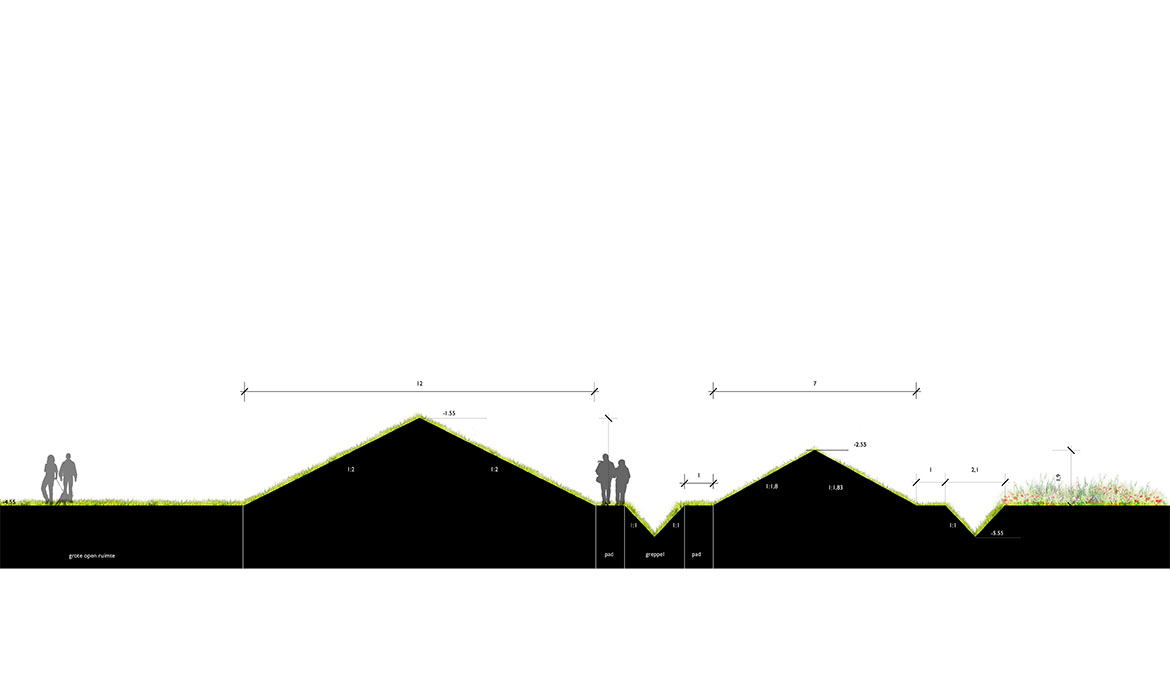
The ridges are 2 meters high and the ditches 1,1 meter deep equipped with walking paths on both sides.
There are two bigger public spaces next the more intimate smaller spaces in the maze.
In between the ridges gravel is spread out and drainage is arranged. Water will be carried to the ditches of the polder landscape. It’s important to get rid of water in the landscape rather quickly. Water attracts birds and they should be banned in the airport region by meaning of security. Keeping the forms angular is also important to maintain maximum possibilities for noise reduction. The ditches are not only for draining the park but play a role in the noise dispersion.
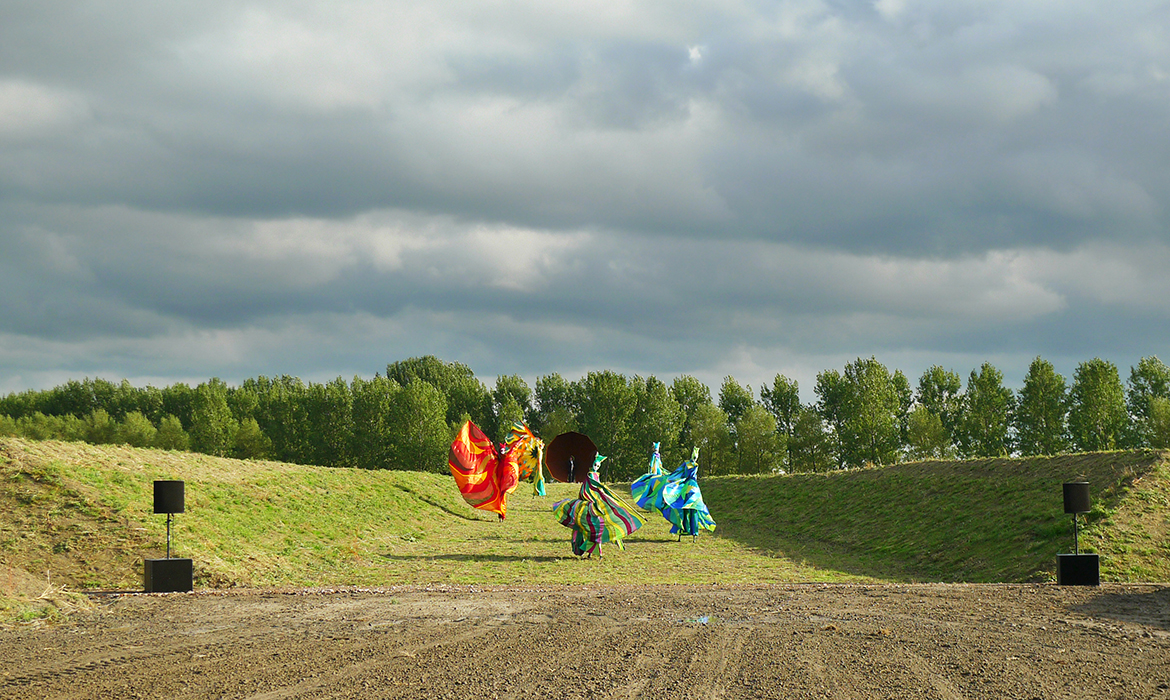
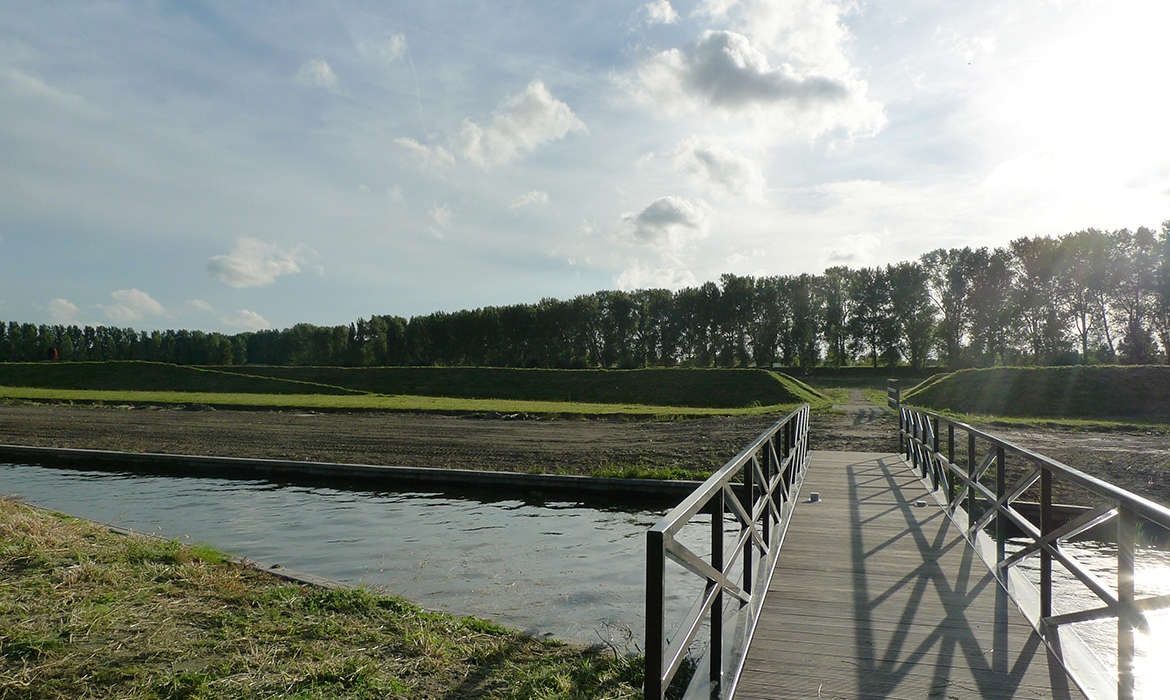
Paul de Kort designed two art works in the park. Chaldnipond is a diamond shaped noise interference pond with a bridge. Under the bridge a mechanism is attached that produces waves ,the fluid echo’s of the low frequency sound.
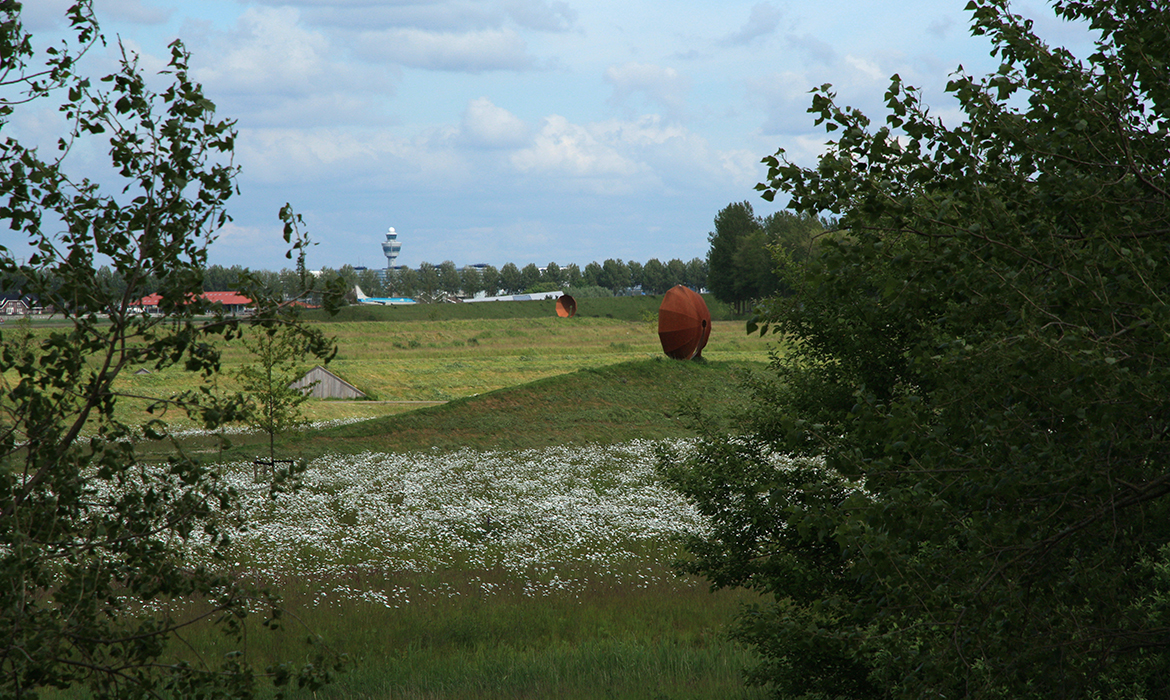
Listening Ears, refers to parabolic devices used around the English coast to listen out for incoming enemy aircraft. Visitors can stand nearby the two steel dishes of 3.5 meter high and hear the faraway sound amplified.
Park Buitenschot adopts a bicycle path that had already been constructed. A cut-off has been made through the pattern of ridges.
The maintenance aspects of the park are formative for the park experience:
Intensive maintenance on the ridges and the event pastures, the rest is extensively mowed as meadowland.
Together with test ridges in the bigger planarea there is already a reduction of 5 db.
Timeline:
2010-2012
Progetto del parco
2012-2013
Costruzione