Social housing in Sa Pobla
Credits
Client
Public
Collaborators
Authors
Pep Ripoll
Juan Miguel Tizón
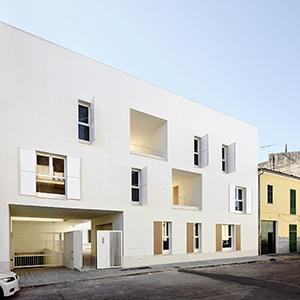
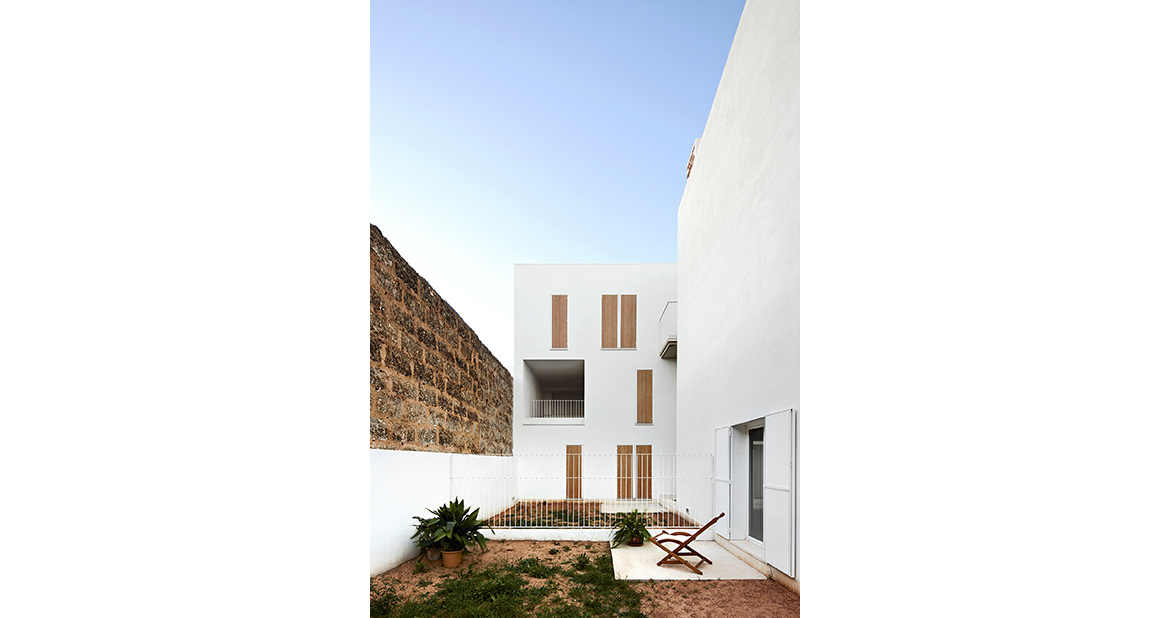
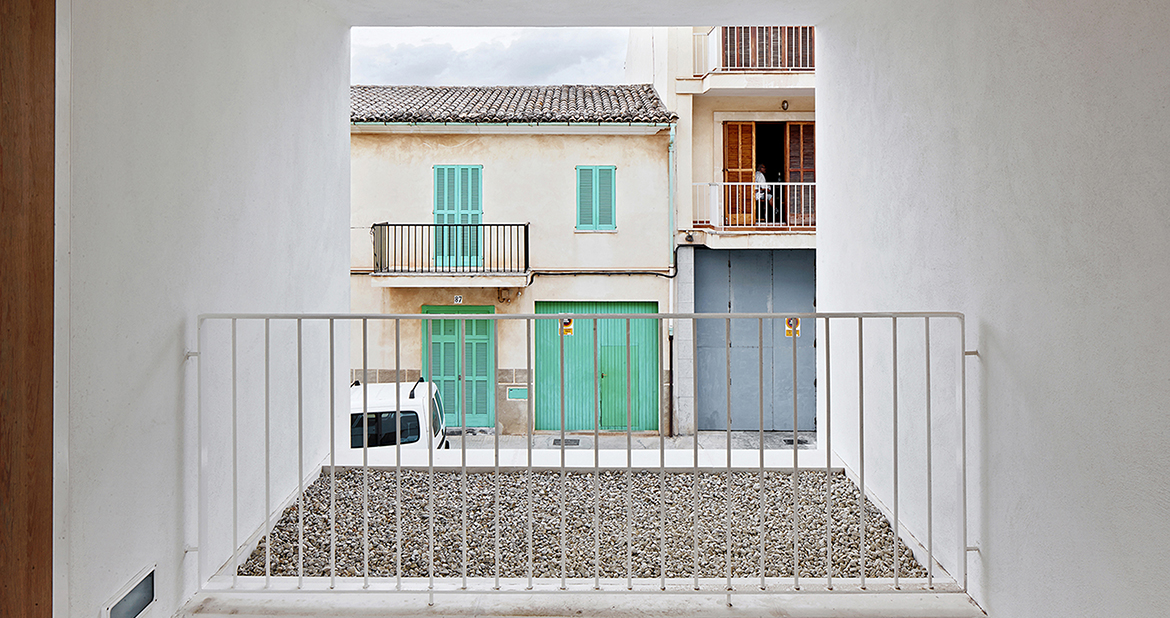
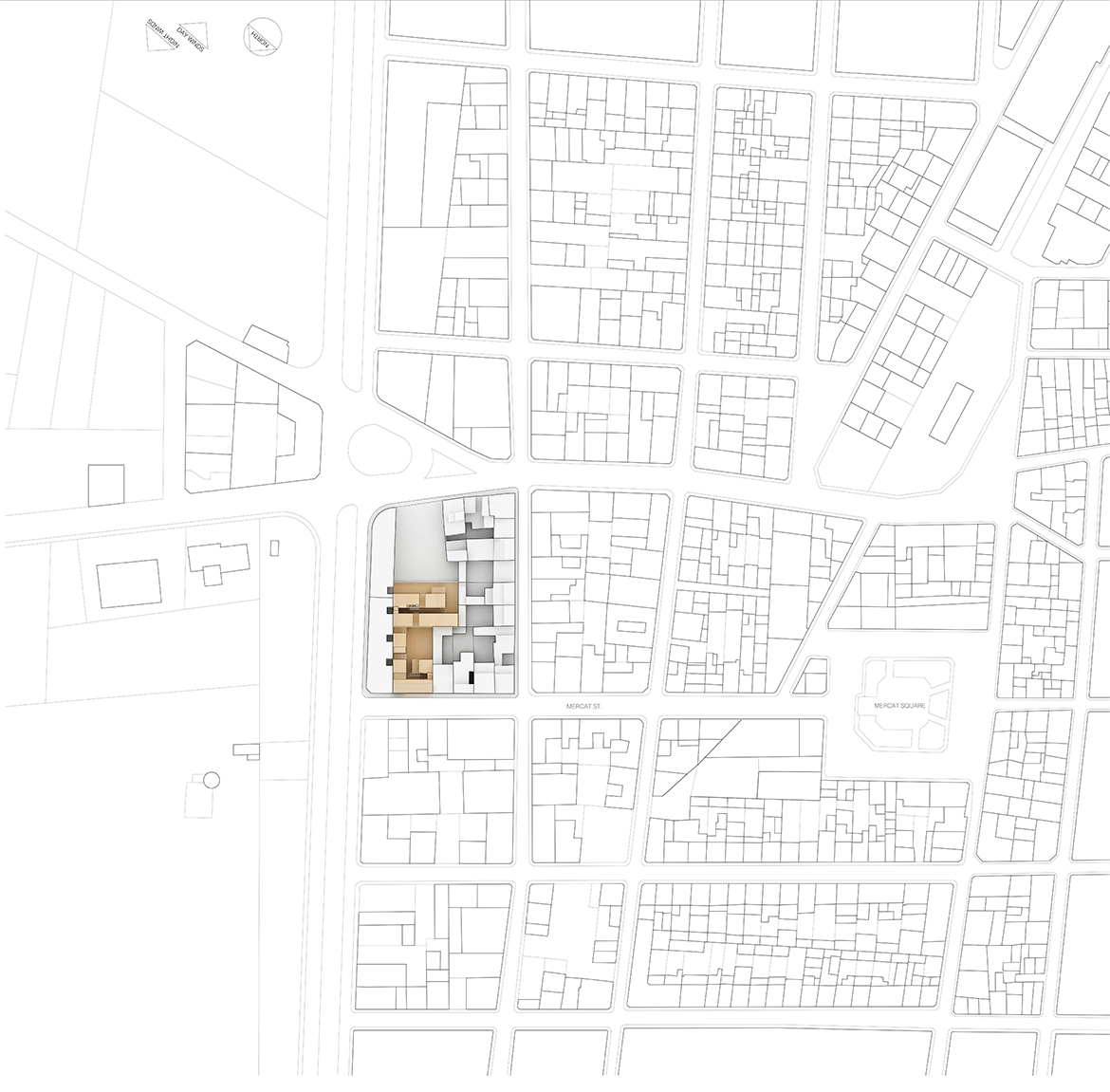
The project consists in the construction of 19 Social Housing units in a plot located in the fringe of the urban fabric of ‘Sa Pobla’ (a small town in the Mediterranean island of Mallorca) From the beginning we understood that the elements to develop the project were the features that tell us about the climate, the context and the way people live in this area (the courtyards, the filters, the light and shadow, the ventilation, the configuration of the plots, the small scale of the buildings)
Tecnical drawings:

Extended report:
HOUSING AGGREGATION
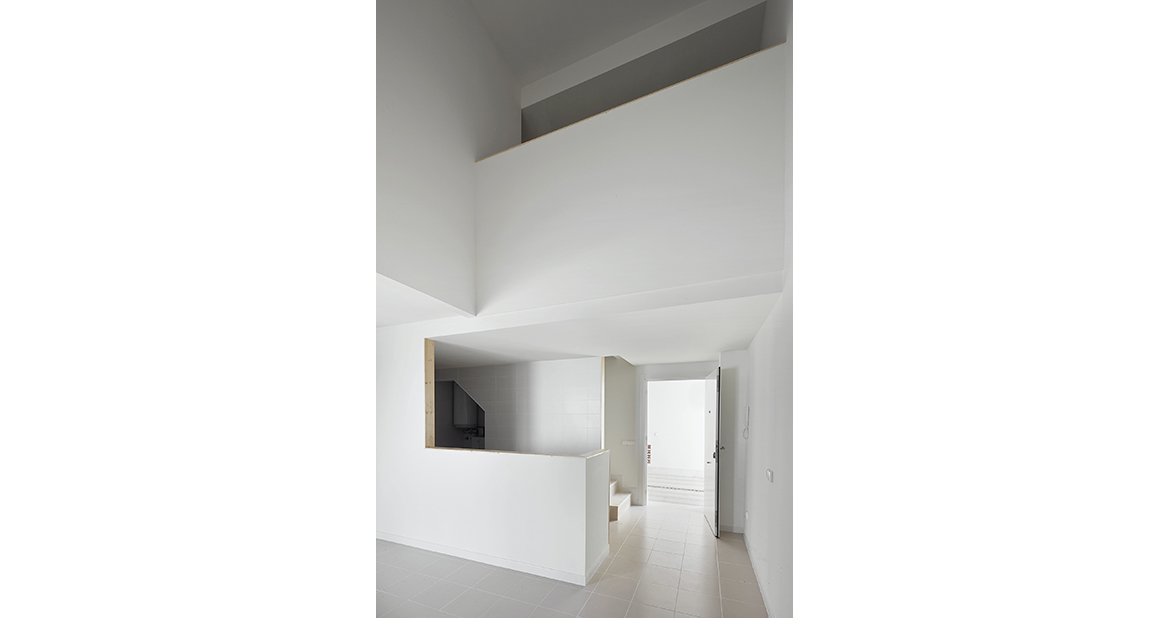
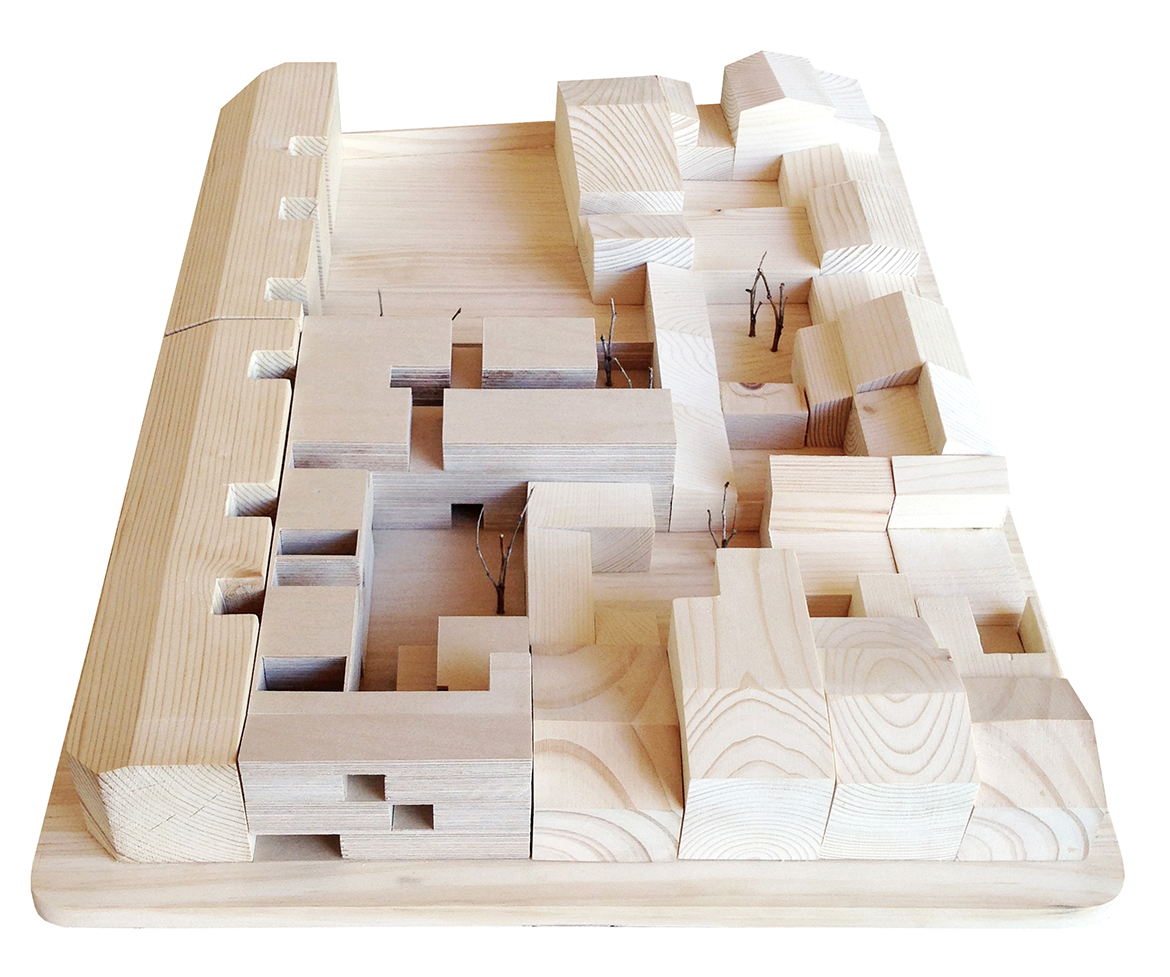
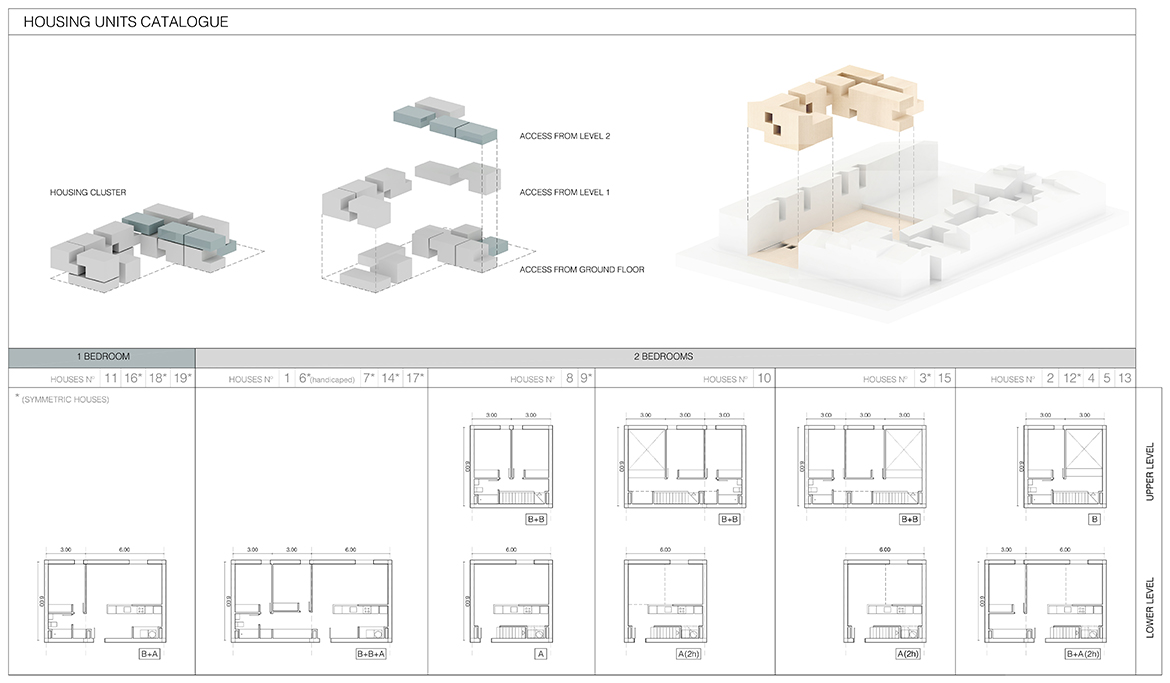
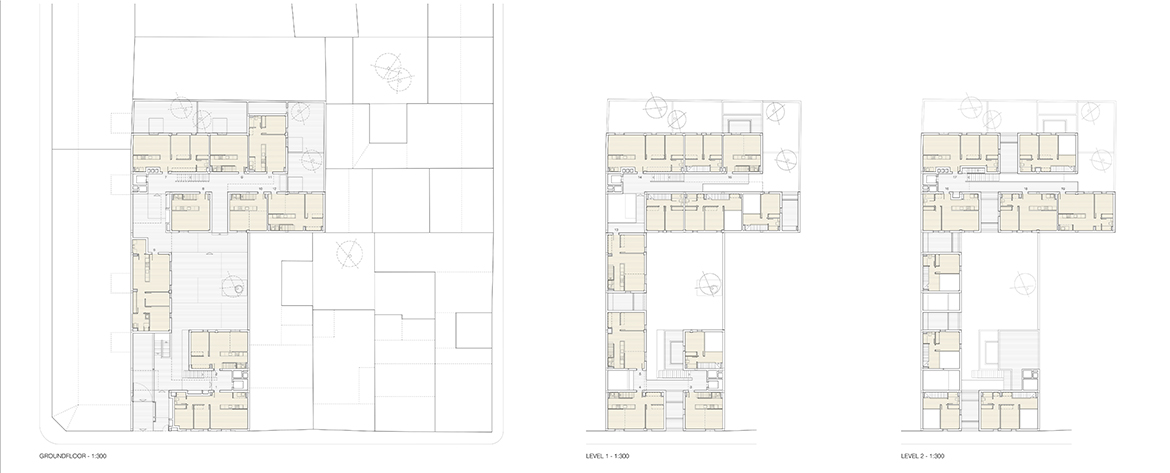
The aim was to create a building that could blend with the existing urban escape. The concept of aggregation of housing units allowed us to develop the idea in an appropriate scale. For that, we developed a catalogue of houses that were grouped three-dimensionally creating a complex adapted to the diversity of situations that the programme, the context and the L-shaped plot required. The different housing units were generated from main space of single or double height (module A: living-dining-kitchen) to which other smaller spaces are added (modules B: bedroom-bathroom / bedroom-storage). This modular system sets the basis of the development layout.
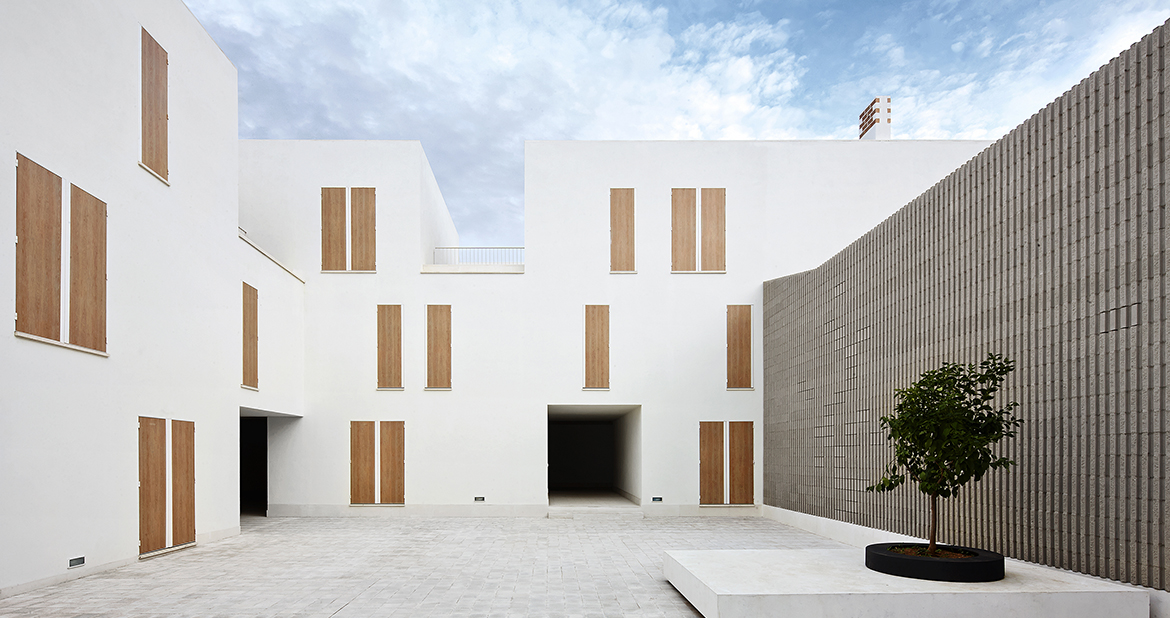
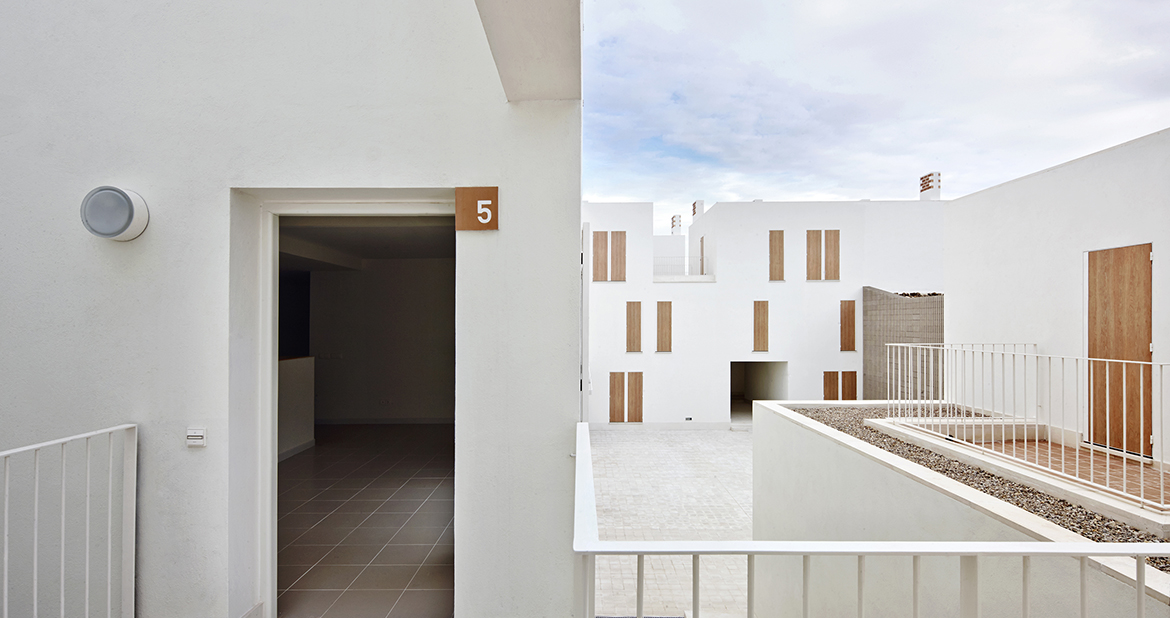
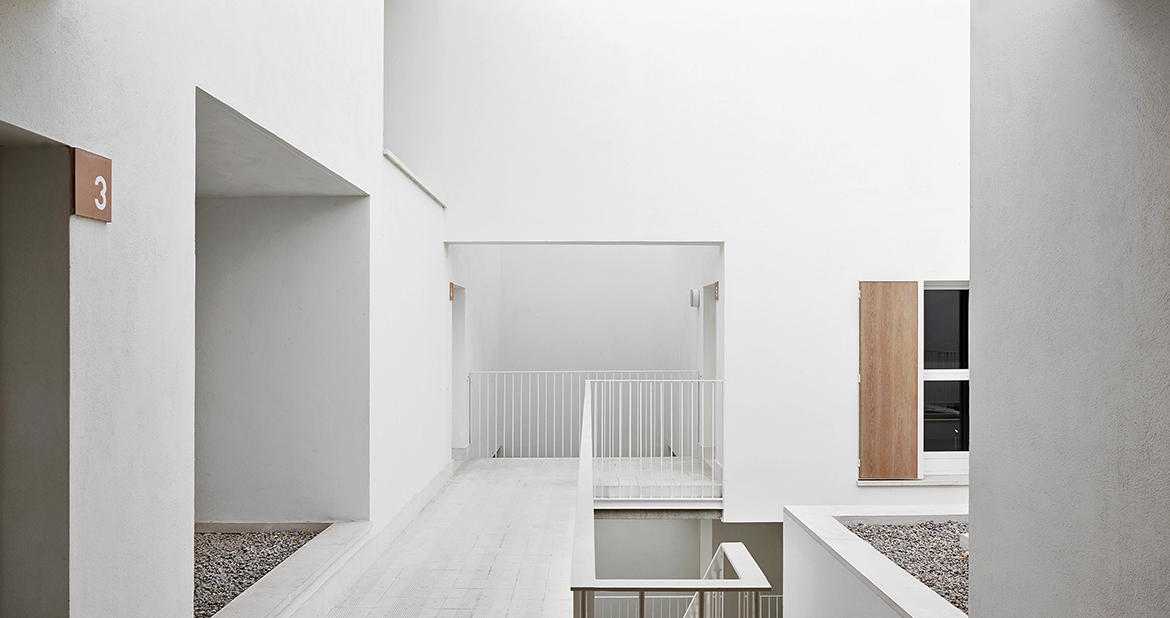
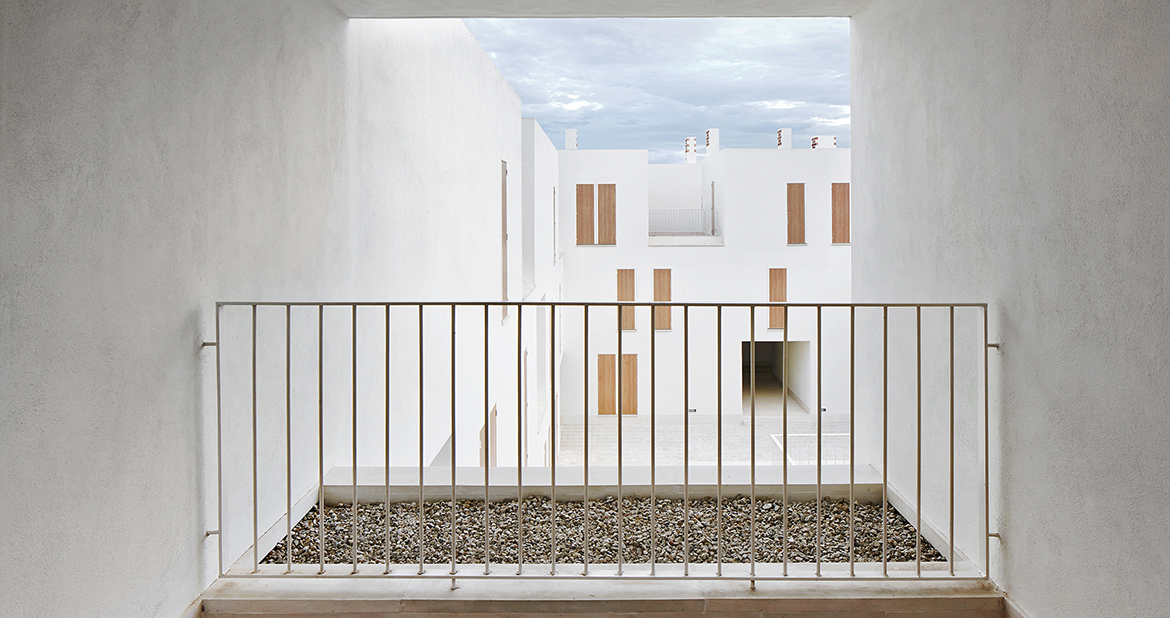
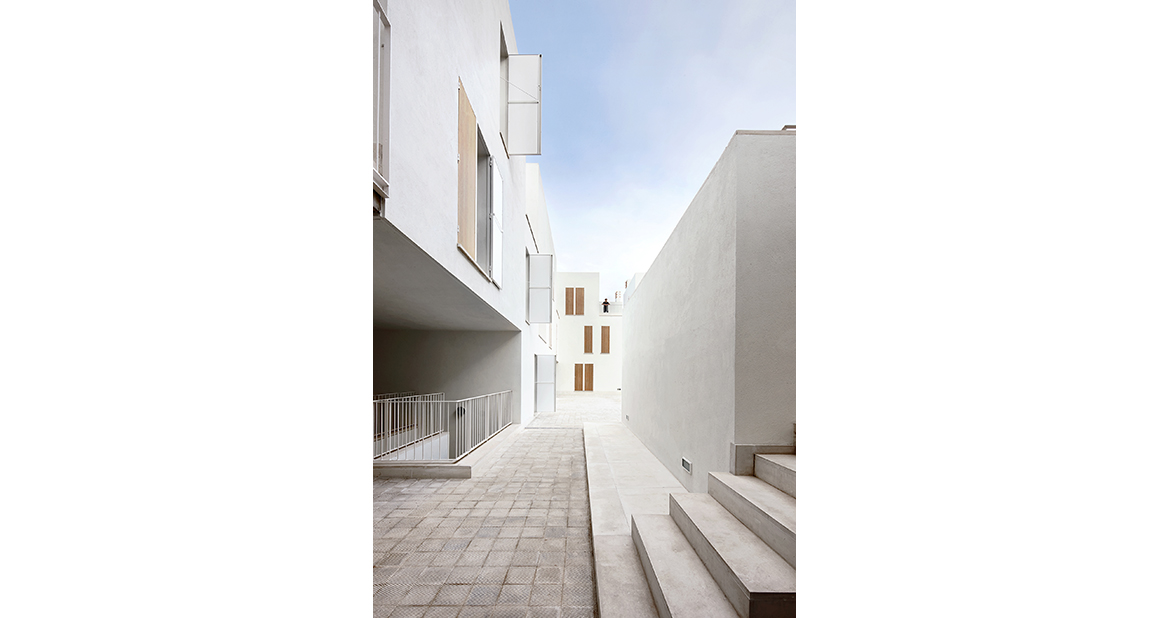
The complex encloses a central courtyard that organizes the public areas like a ‘piazza’. A network of walkways connects each house with this ‘piazza’ and highlights the variety of spatial conditions as well as the different views.
SUSTAINABLE DESIGN
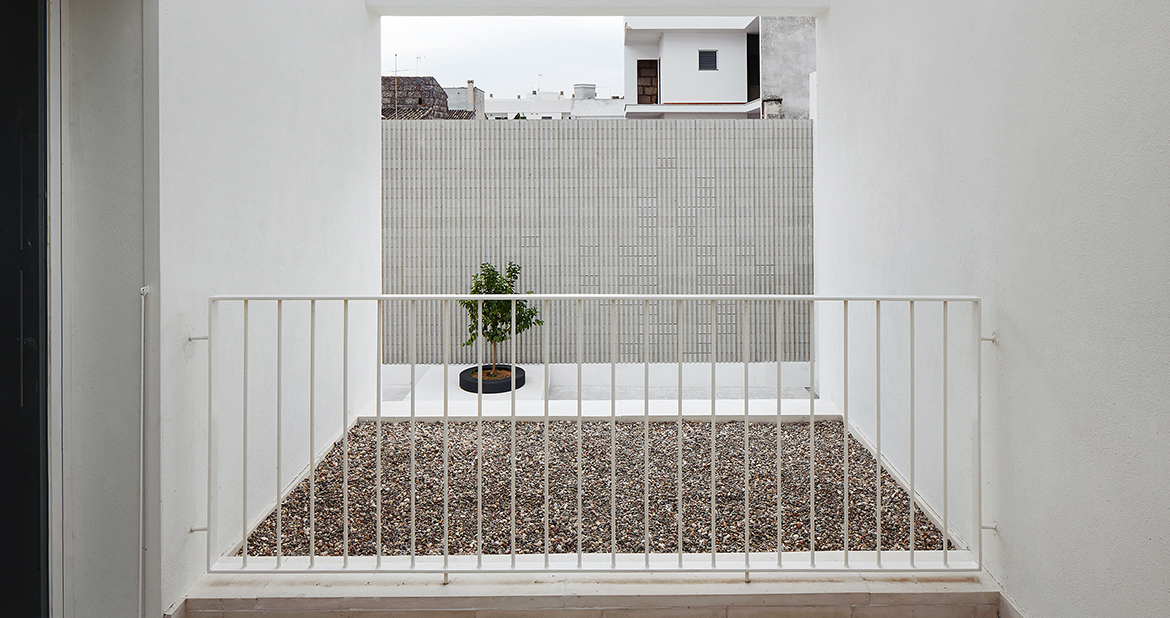
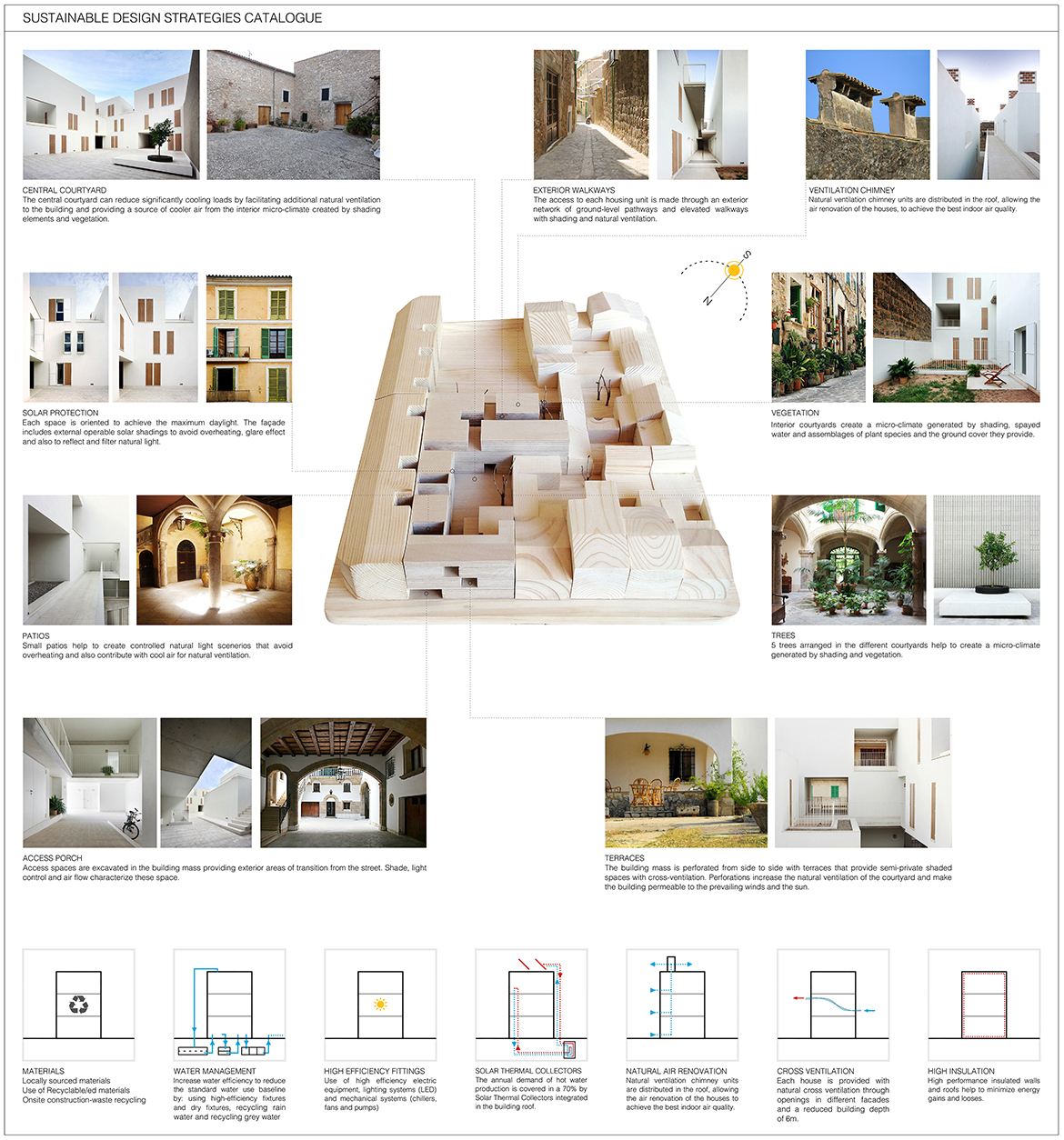
Sustainable design was approached in respect to the context. The project utilizes traditional passives strategies such as good orientation and daylight, shading elements, cross ventilation, vegetation, courtyards and use of exterior space that create a building that is permeable to the Mediterranean wind and sun. These strategies were reflected in the spatial configuration of the building.
The passive strategies helped to match the low construction budget and to reduce future maintenance costs for the low-income rental tenants. The passive strategies were also implemented with the best housing standards of high thermal insulation, high efficiency building facilities and solar collectors.
MATERIALS
One of the main strategies of the project was to establish a careful dialogue with its context. The spatial values of the project were implemented throughout the use of raw materials that contribute to anchor the project to its surroundings. All the materials of the project were locally sourced.
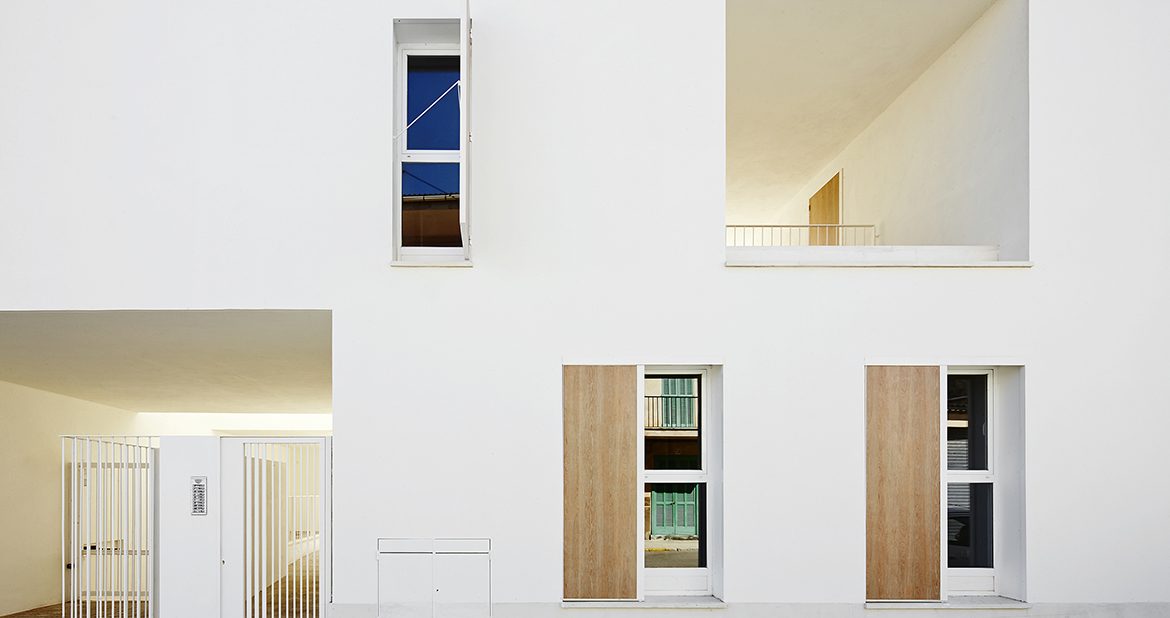
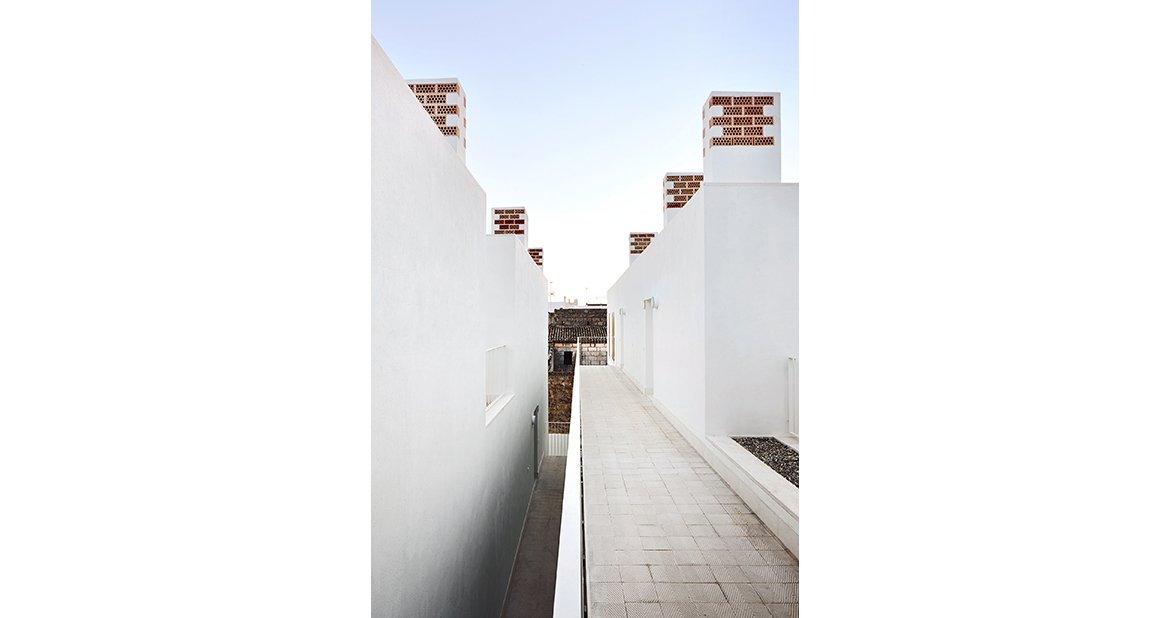
The white coated surface of the facade provides unity to the complex throughout a continuous material that puts in value the space. In contrast, the exposed materials balance these spaces (concrete structure/slotted concrete blocks/perforated ceramic bricks/hydraulic concrete tiles paving) creating textures and material qualities that relate he project to the context. The use of window shutters in the houses, so characteristic in the area, is reinterpreted in the project using colourful wooden panels.