Carmen Martín Gaite
Kreditpunkte
Kunde
Charles III University of Madrid
Mitarbeiter
mace management services
r.úrculo consulting engineers
valladares engineering
vega sustainability engineering
Autoren
Estudio Beldarrain
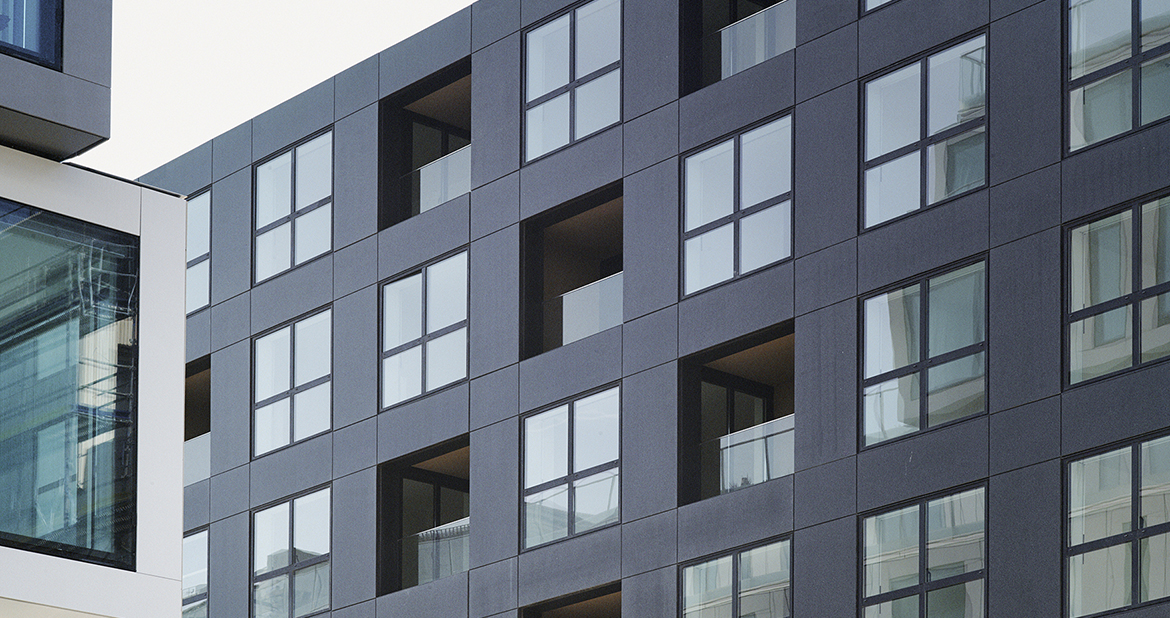
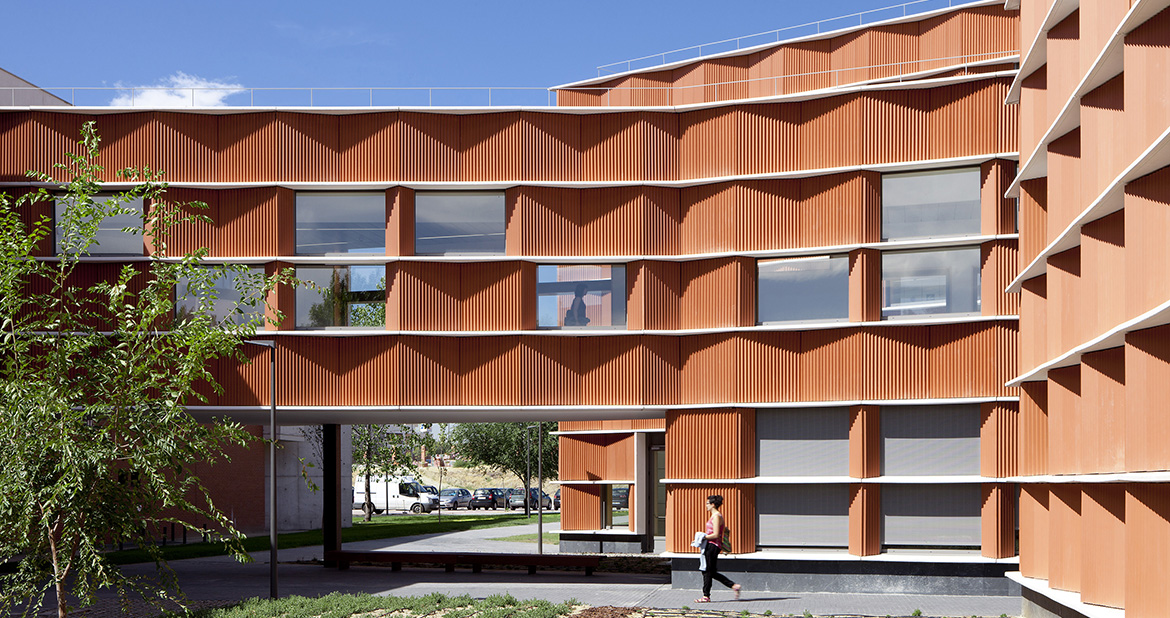
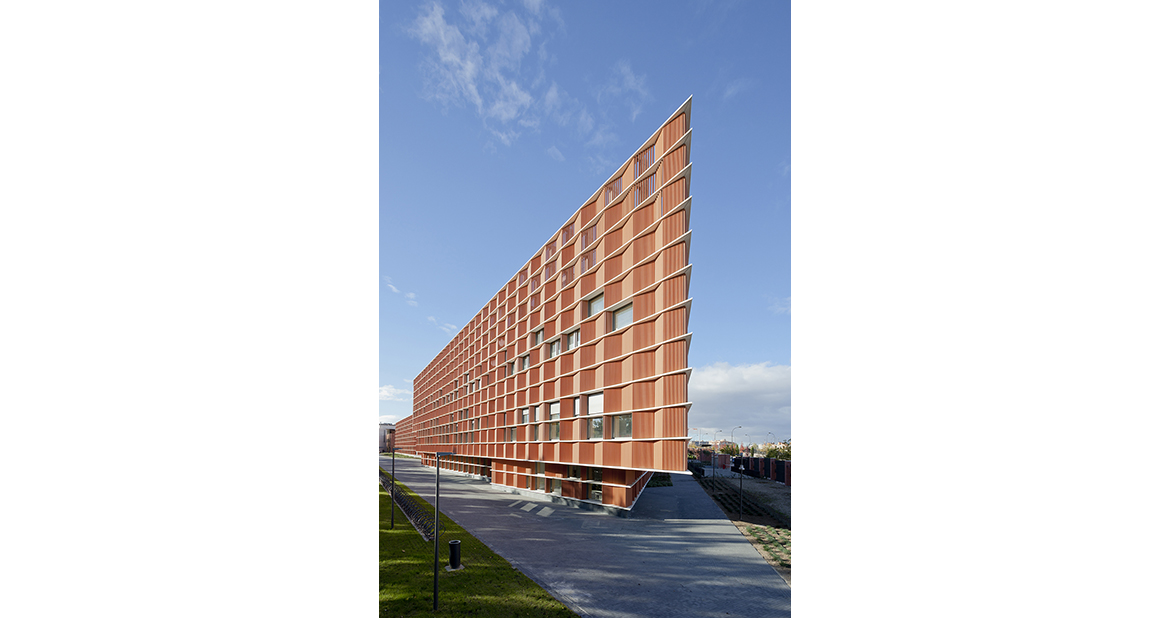
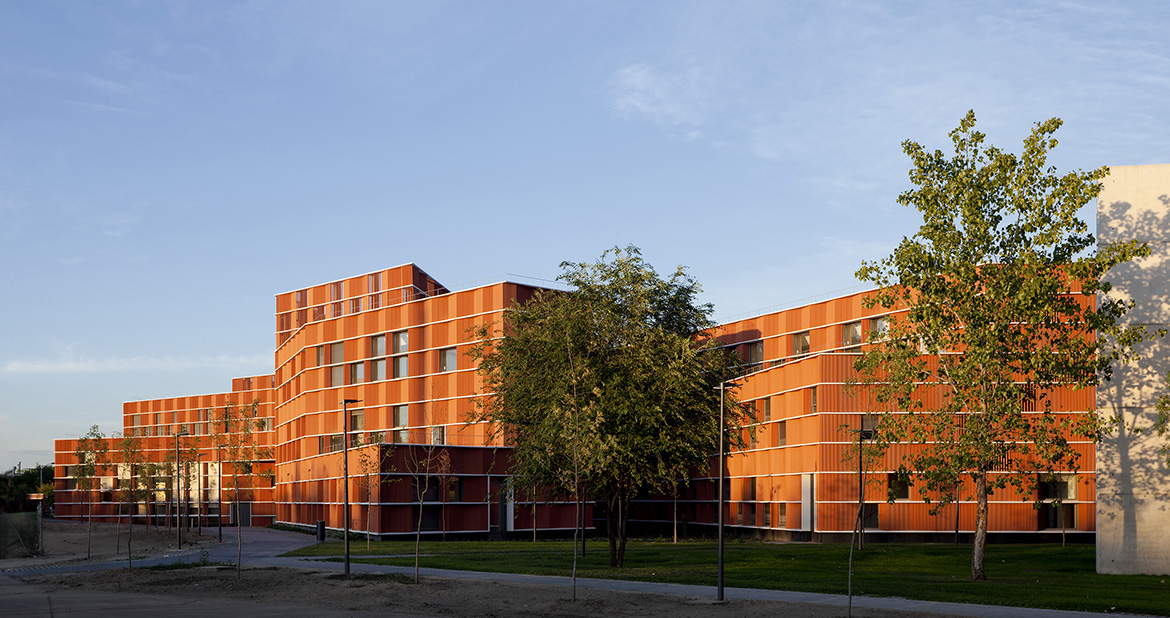
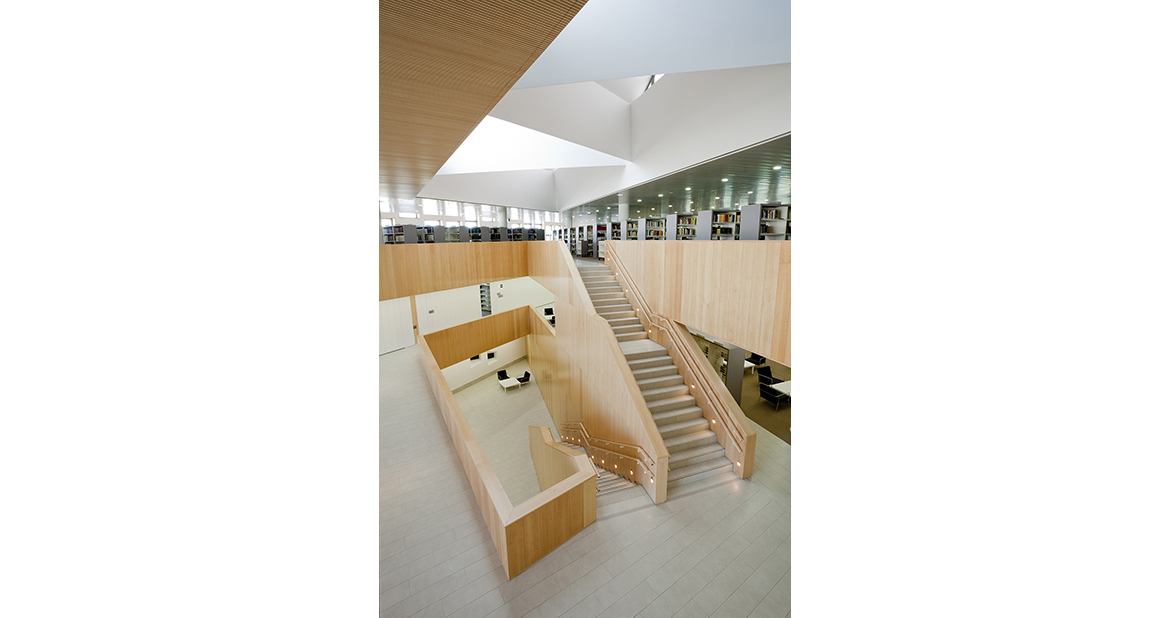
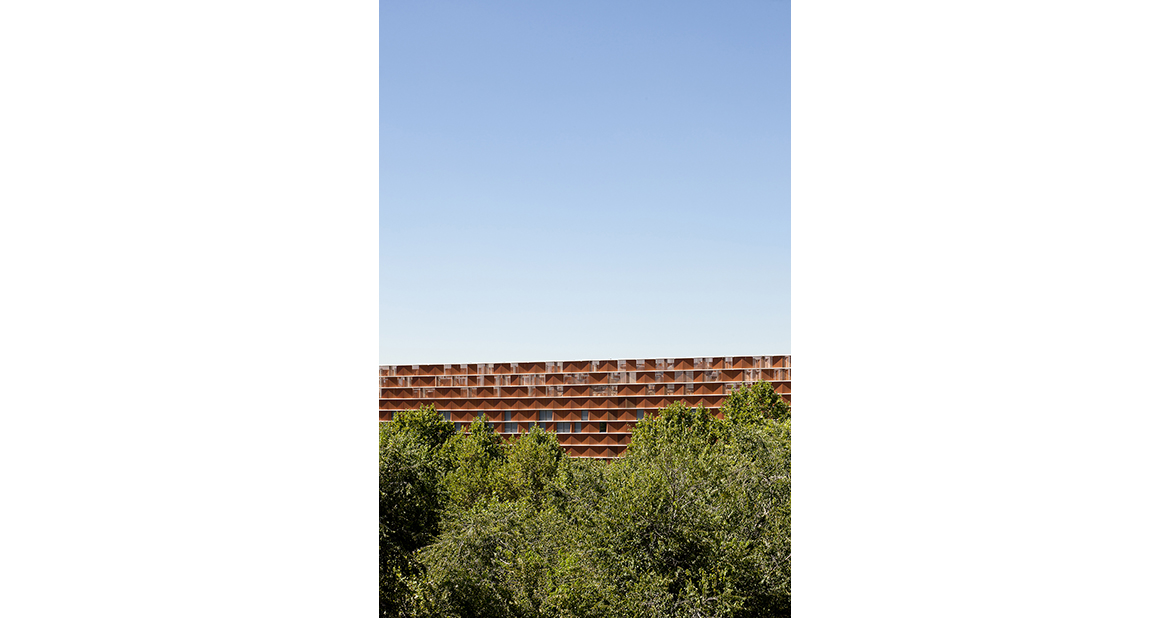
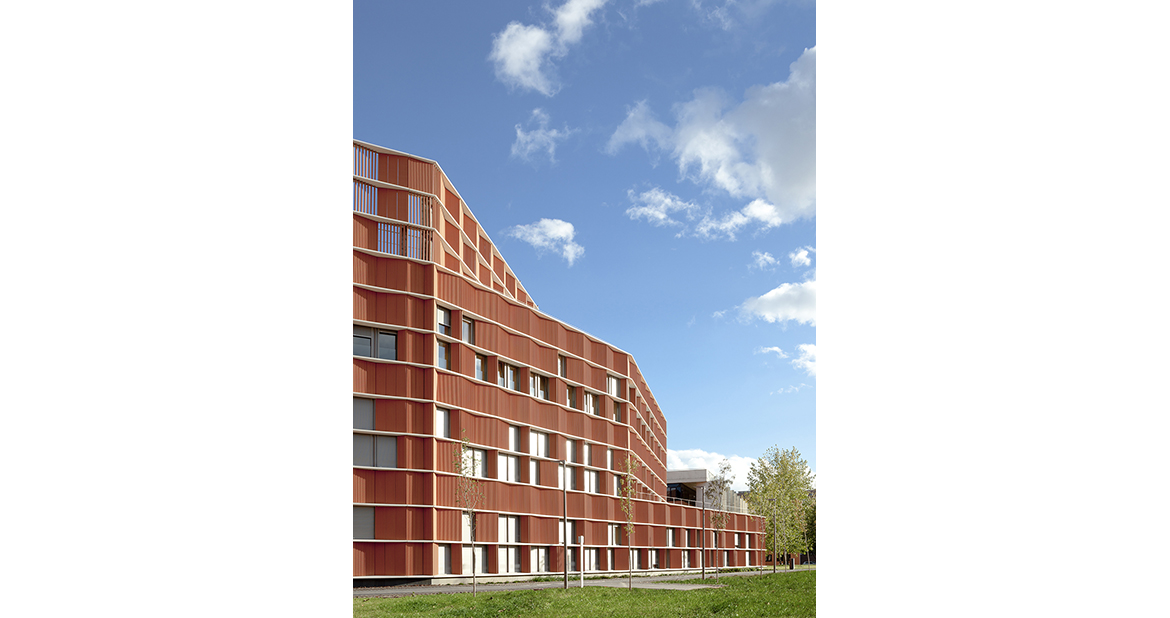
The building Carmen Martín Gaite is the first one of the Getafe Campus extension of the Madrid Carlos III University. Its design is sustained on the engagement with innovation and sustainability, as well as on the conviction that these two go hand in hand.
Technische Zeichnungen:
Erweiterter Bericht:
Carmen Martin Gaite
building CARMEN MARTIN GAITE
The building “Carmen Martín Gaite” is the first one of the Getafe Campus extension of the Madrid Carlos III University. Its design is sustained on the engagement with innovation and sustainability, as well as on the conviction that these two go hand in hand.
During the project and construction phases, countless sustainability measures have been incorporated, with the result that a degree of excellence has been achieved that had not been reached in Spain until now by an educational centre. The building “Carmen Martín Gaite” is the first one of its kind to obtain a LEED Certificate and it has been in the highest grade: LEED PLATINUM.
SUSTAINABLE SITE
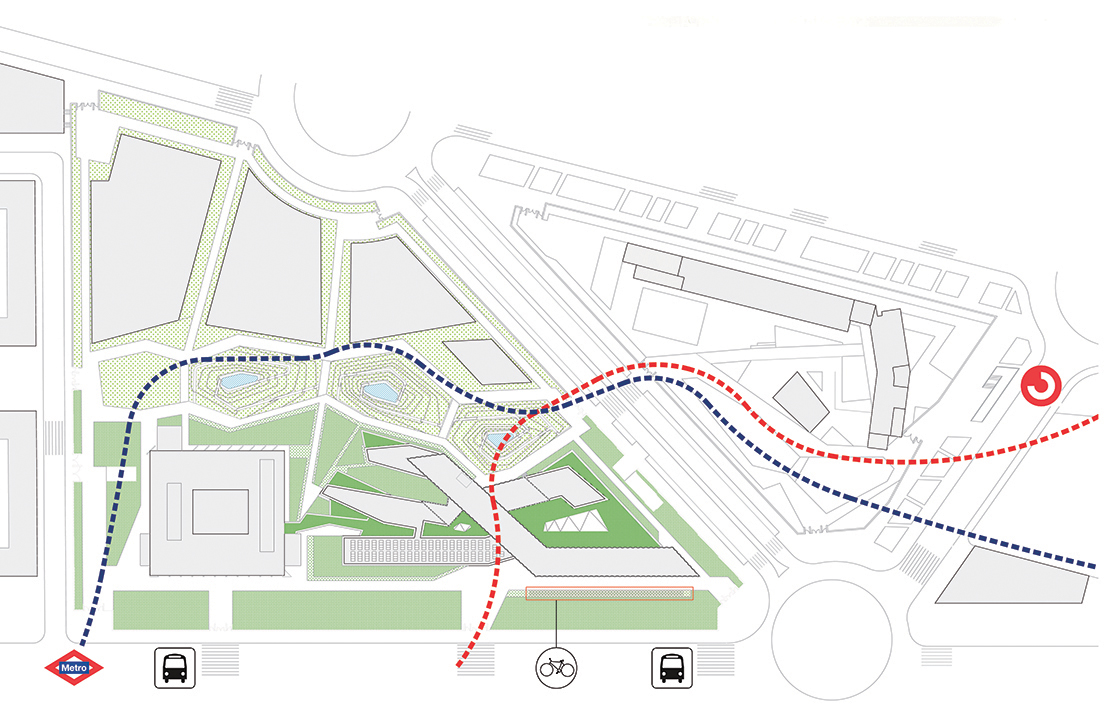
– Promotion of public and alternative transportation.
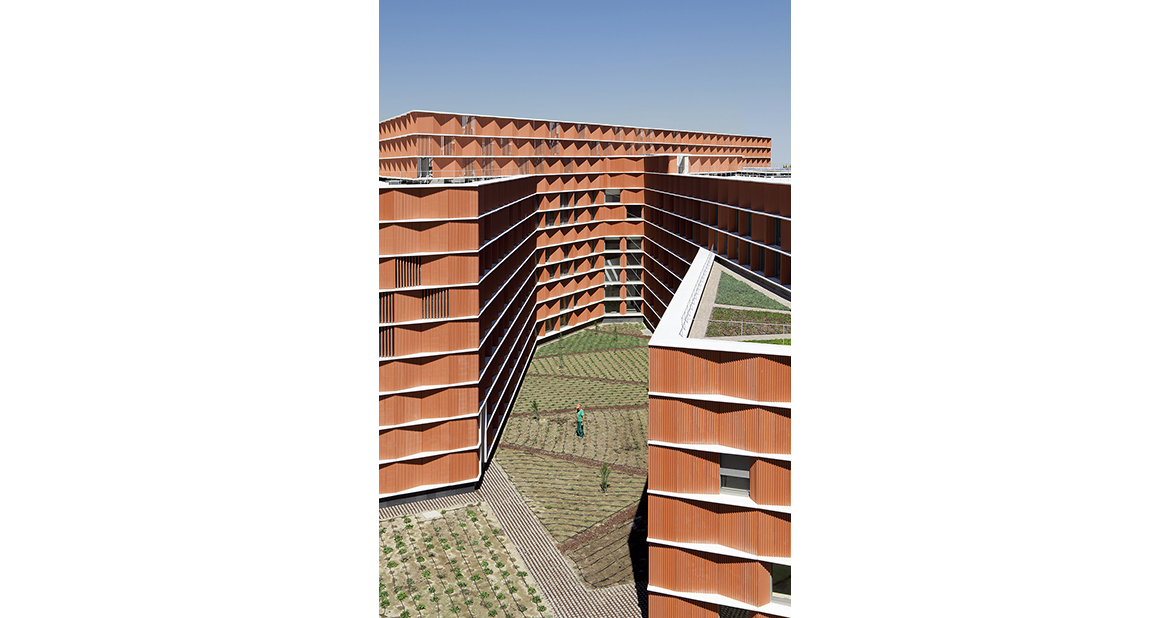
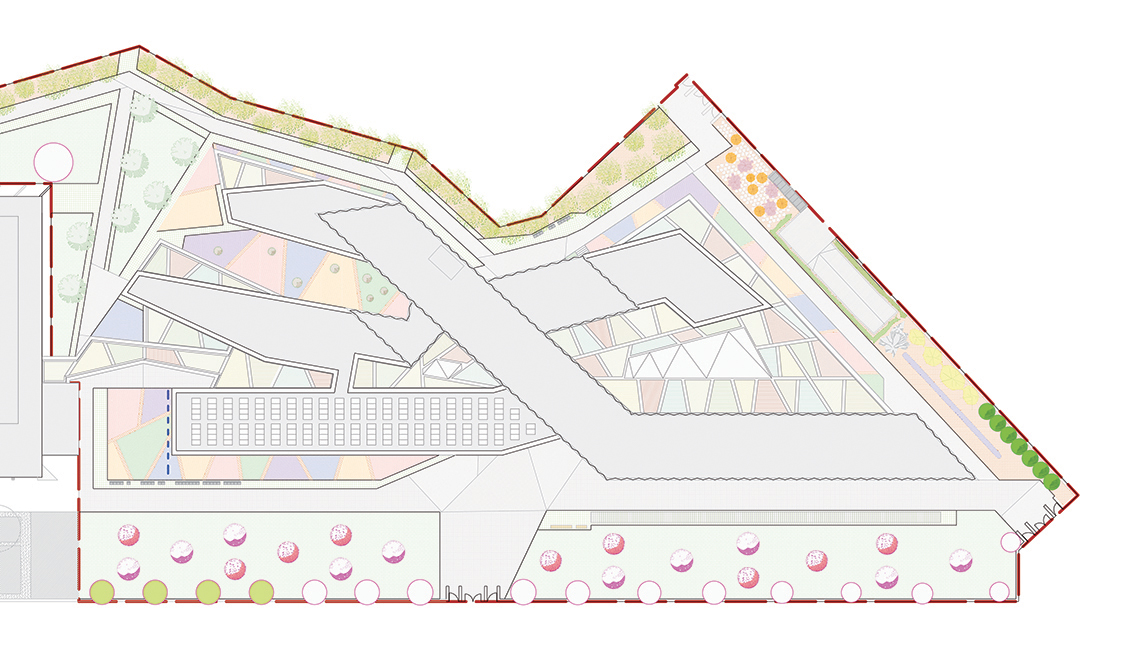
– Maximized and vegetated open spaces.
– Permeable surfaces.
– Native vegetation.
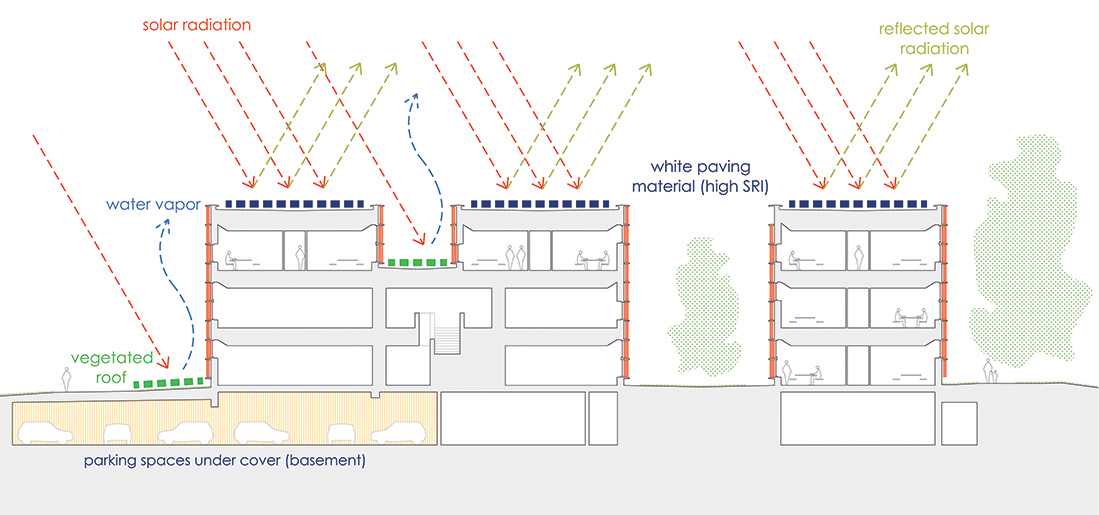
– Reduced heat island effect.
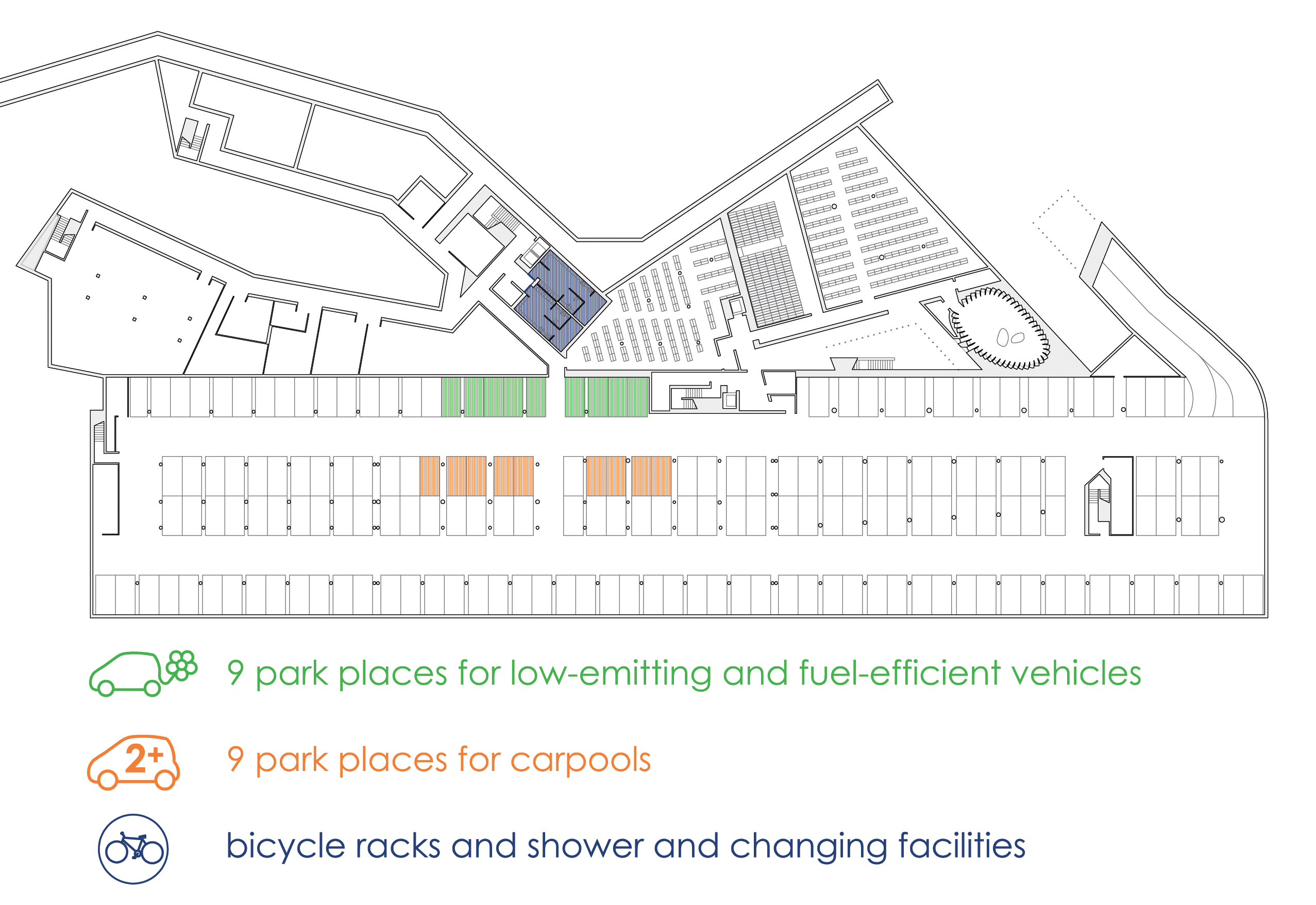
– All parking spaces under cover.
– Vegetated roof surfaces.
– White top roofs pavement (high SRI).
WATER EFFICIENCY
– High-efficiency fixtures.
– Landscaping with low irrigation requirements.
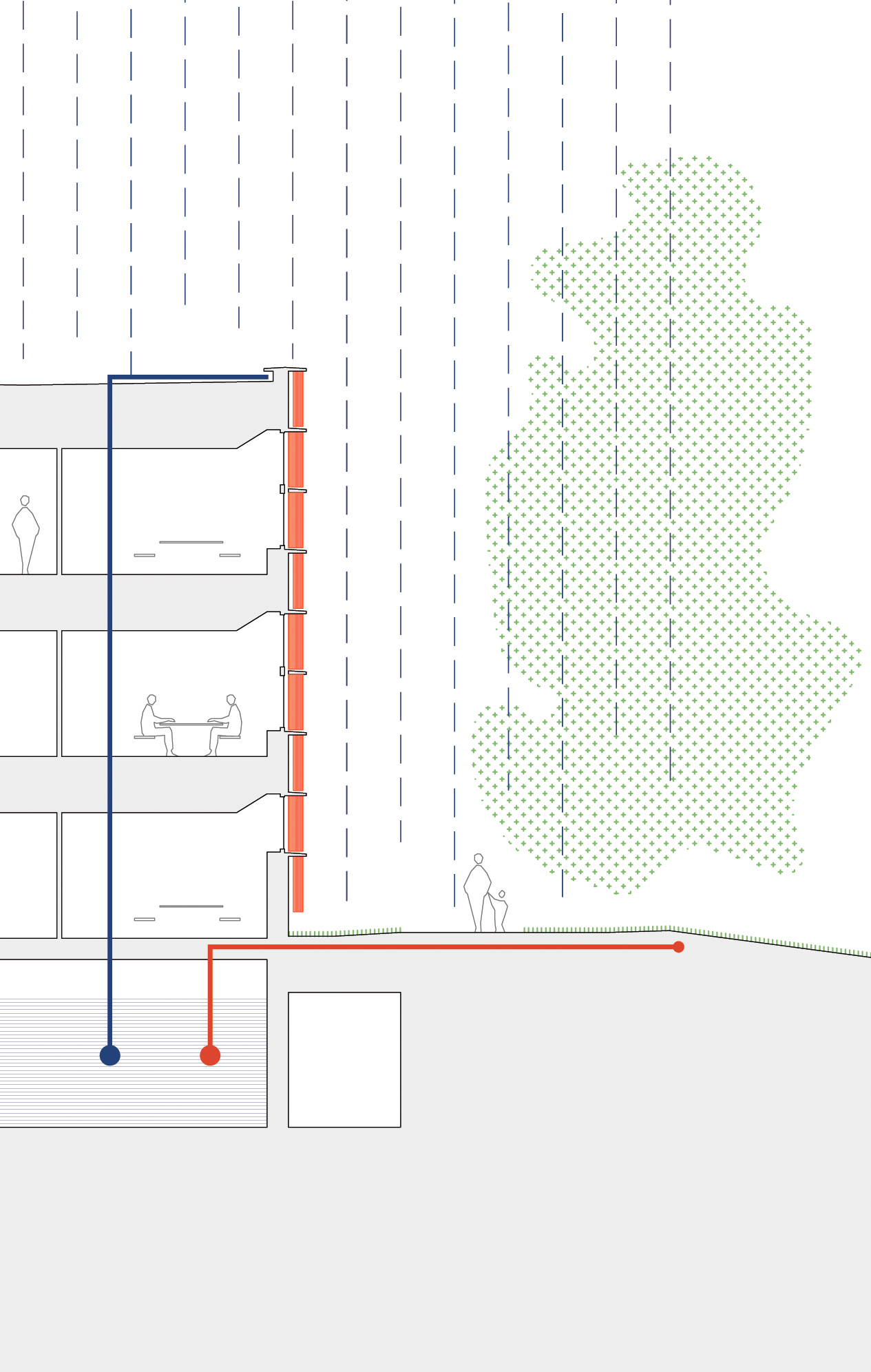
– No potable water is used for irrigation. A 375 m³ cistern on basement collects rainwater from roofs.
INDOOR ENVIRONMENTAL QUALITY
– Ventilation systems designed to increase the standard outdoor air ventilation rates.
– Greater thermal indoor comfort.
– Spaces organized to maximize cross-ventilation.
– Personal thermal and lightning control by occupants.
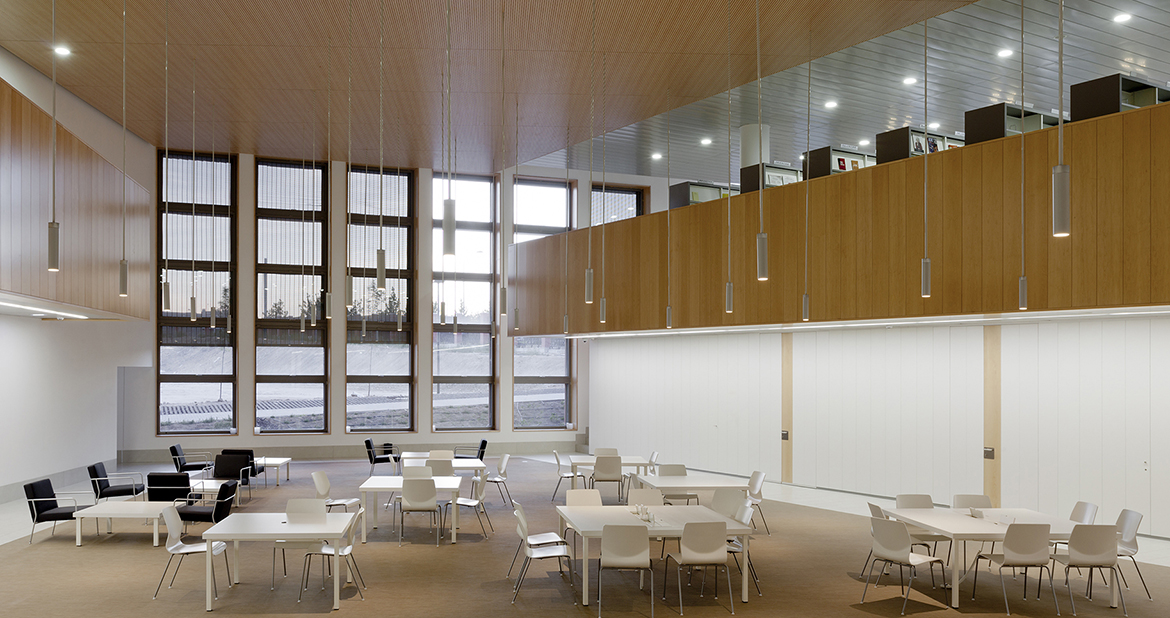
– Views to the exterior and daylighting.
– All adhesives, sealants, paintings and coatings used with low VOC emission.
MATERIAL & RESOURCES
– 75% construction and demolition debris diverted from disposal in landfills.
– All the excavated soil was reused for fillings.
– During construction and before occupancy, a minimum indoor air quality (IAQ) performance was established.
– 5 easily accessible areas of the building are dedicated to the collection of materials for recycling.
– 40% of used materials are local to support the local economy and reduce transportation.
– All wood-based materials with FSC certification.
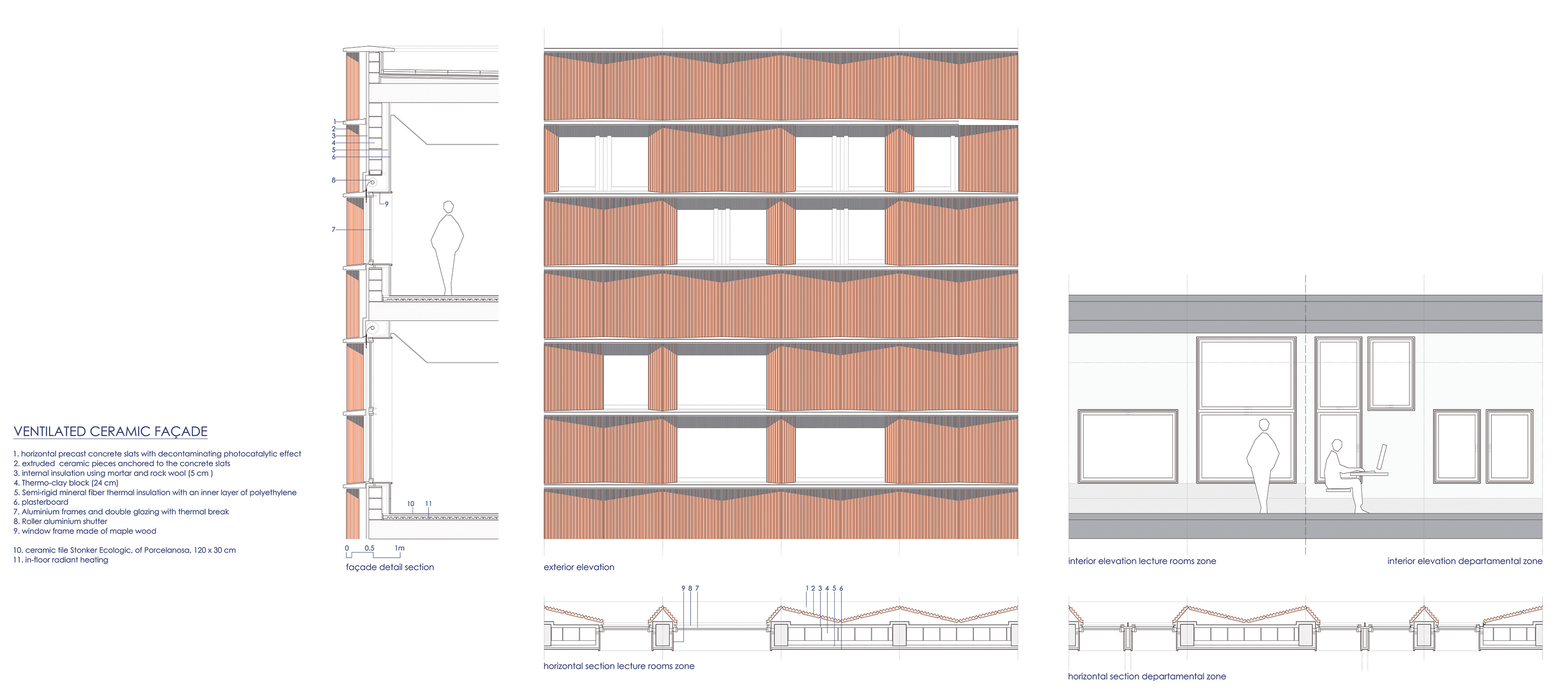
– The horizontal precast concrete slats have a photocatalytic component with a decontaminating effect in the environment of the building.
– Use of recycled content materials
– Exterior lightning designed to improve nighttime visibility through glare reduction and reduce development impact on nocturnal environments.
ENERGY & ATMOSPHERE
– 30% reduction of energy consumption compared to other buildings of the campus.
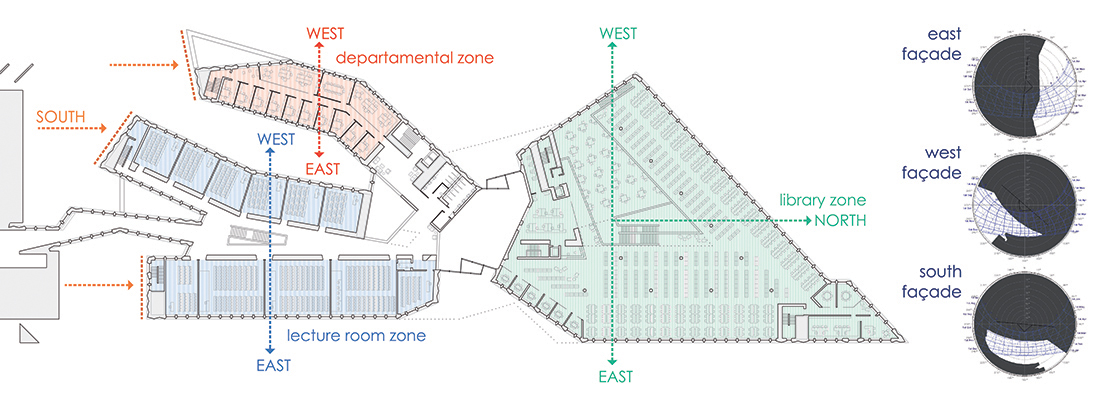
– Study of sunlight simulation based on the orientation, occupation and use of each zone.
– Heat recovery systems to reduce the energy consume of the Air Handling Unit.
– Free cooling that uses the cool outdoor air as a free cooling source.
– Control systems that disconnect the system to avoid unnecessary energy consumption.
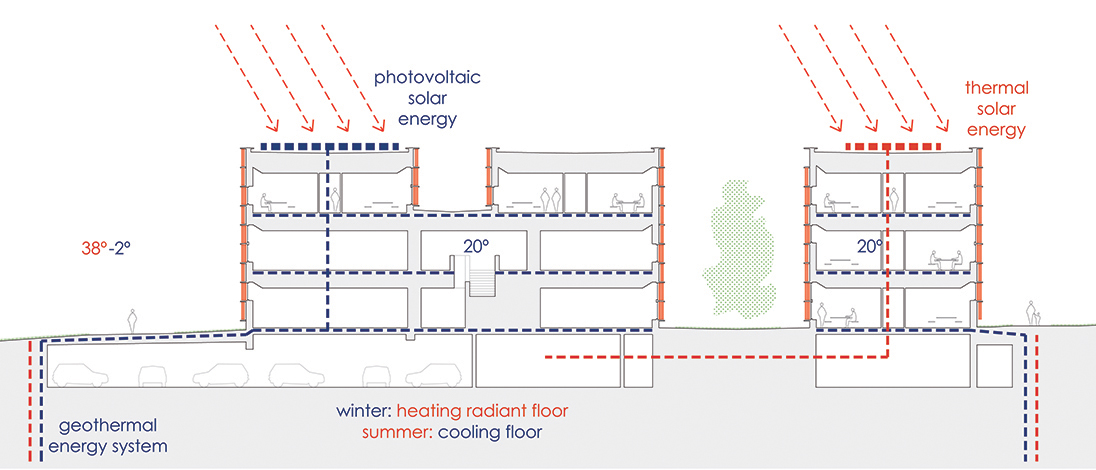
– Geothermal system with 40 vertical earth loops of 125m depth.
– Photovoltaic solar energy for the building’s energy own consumption.
– Thermal solar energy for heated water.
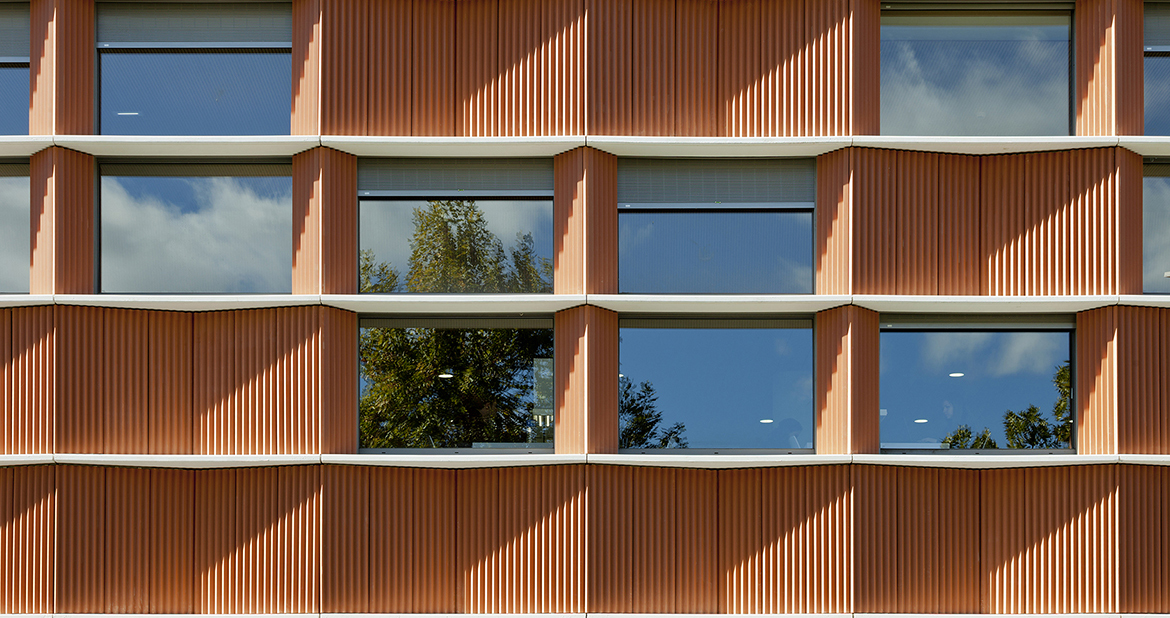
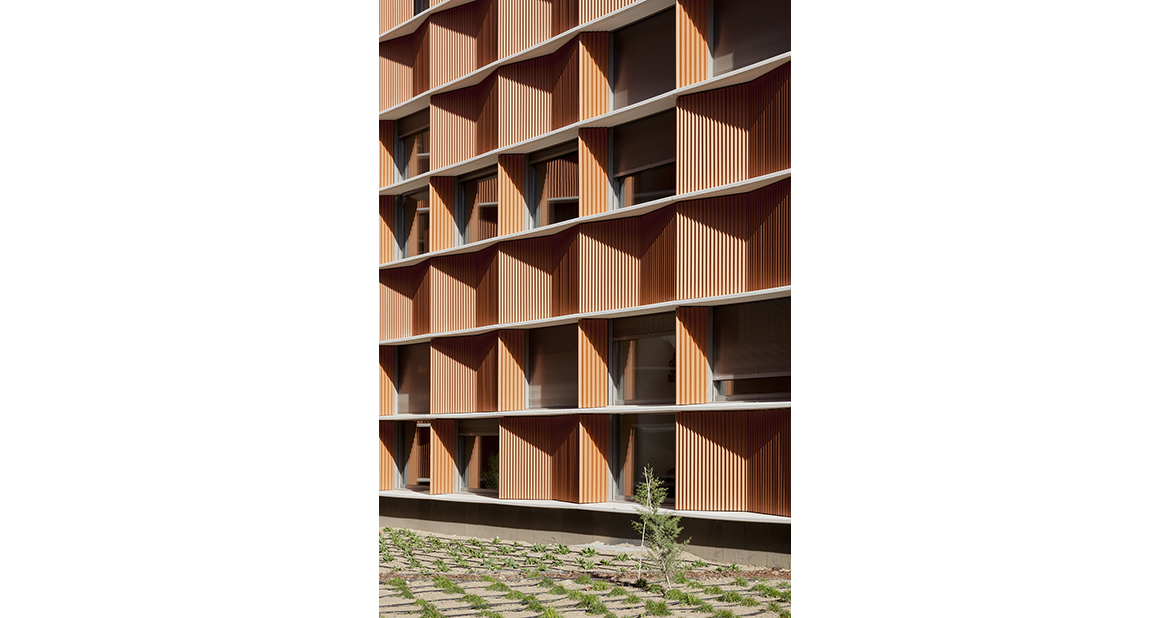
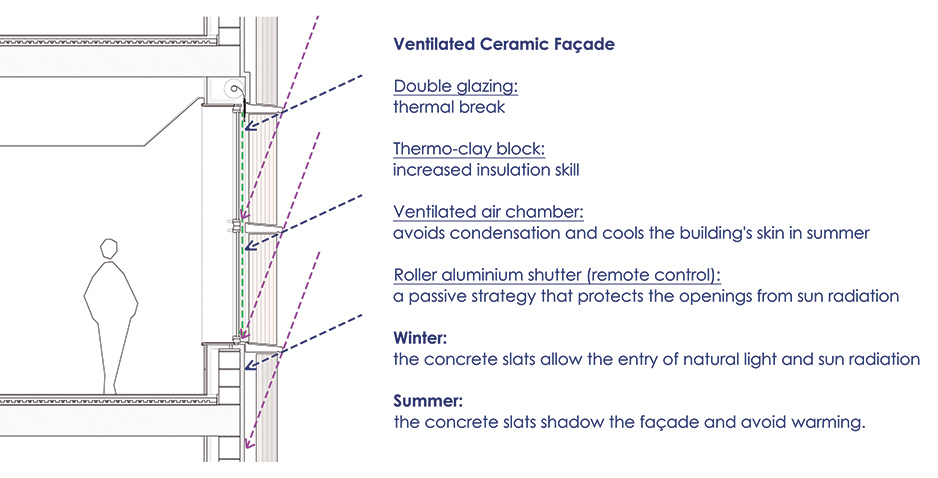
– Ventilated Ceramic Façade as passive strategy of consumption reduction.
Zeitleiste:
2008
Design
2011
Construction