School building
Kreditpunkte
Kunde
Canton of Graubünden construction authorities
Mitarbeiter
Ferruccio Badolato
Steffano Crameri
Vineet Pillai
Andreas Wiedensohler
Autoren
Pablo Horváth
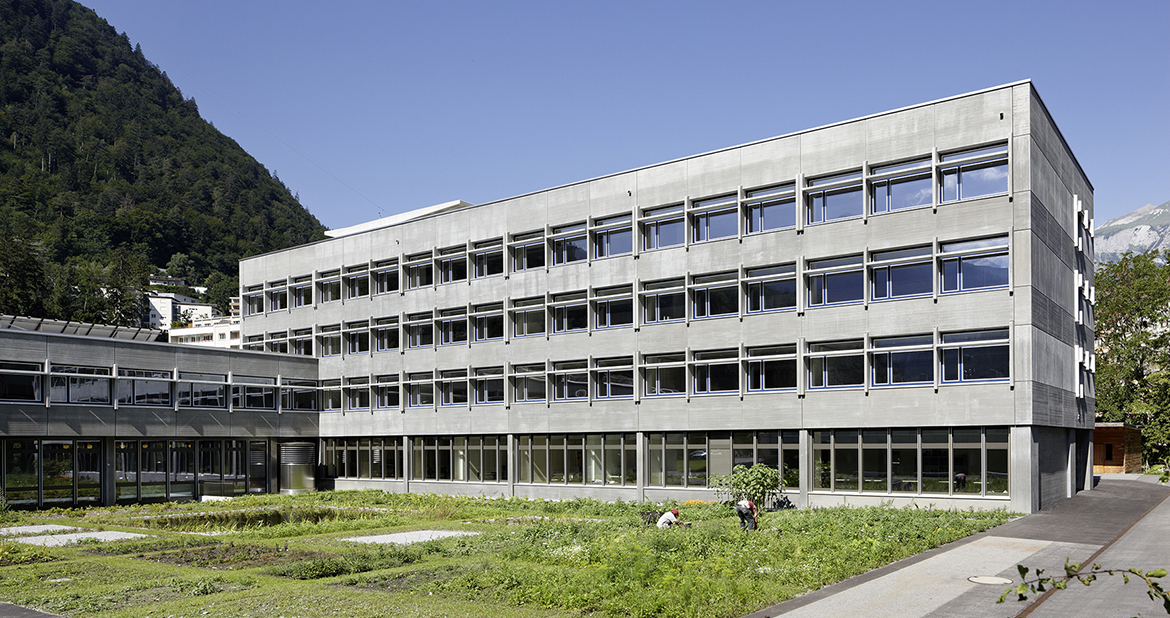
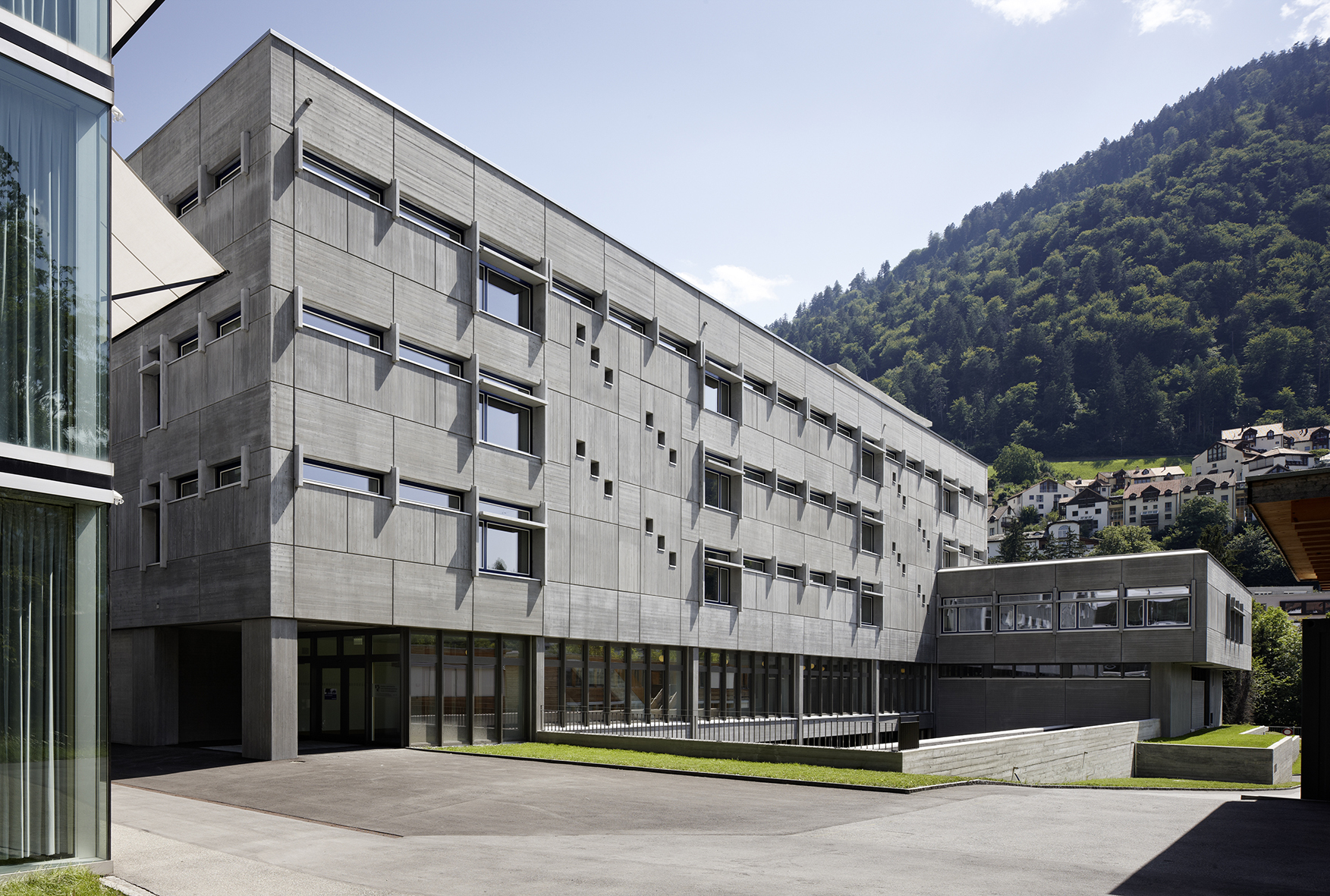
The canton grisons guideline was an extensive head technological redevelopment, that is to say the school buildings transformation from the sixties into the present, to keep the minergie standard in the future and to satisfy all the today’s instructions and norms.
As an unique example, the former teacher-training college presents itself as a built replacement of the post-war modernism in grisons.
Erweiterter Bericht:
Interpreting original redevelopment
The canton grisons guideline was an extensive head technological redevelopment, that is to say the school buildings transformation from the sixties into the present, to keep the minergie standard in the future and to satisfy all the today’s instructions and norms.
As an unique example, the former teacher-training college presents itself as a built replacement of the post-war modernism in grisons.
The chosen way we followed records the architectonical and three-dimensional qualities of the existing school building.
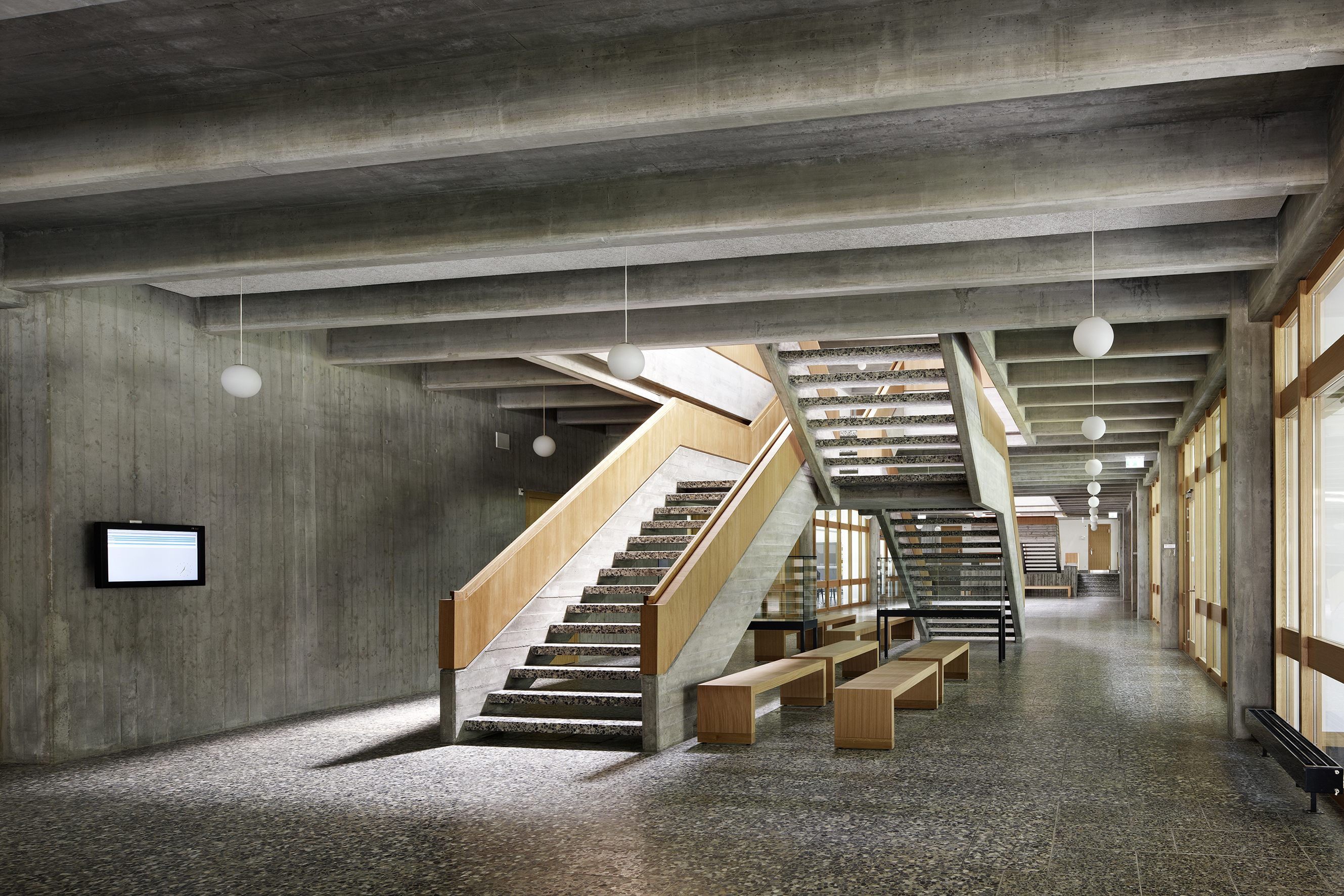
It was the aim to transport the concrete structures strong architectonical expression into the present and to satisfy the statically, building physically and operational requests with it.
The most important starting point was, to reach the material presences existence once more again.
The interpreting original redevelopment makes it possible to bring two contradictory requests together: to receive the constructions character and expression and to combine it with the claims of the technical requests.
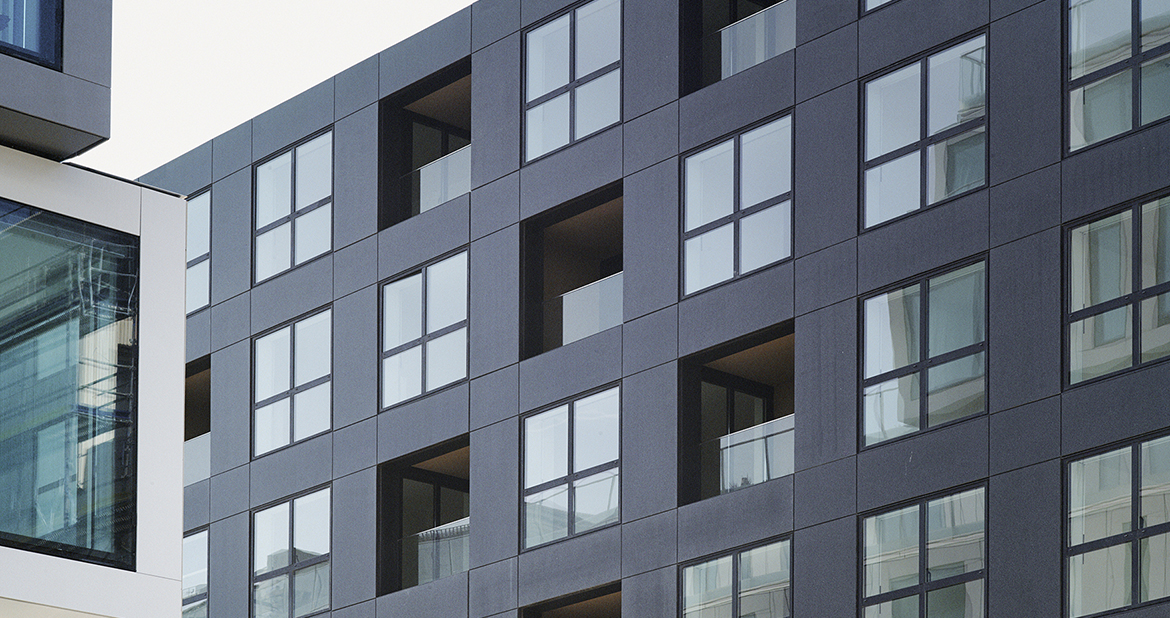
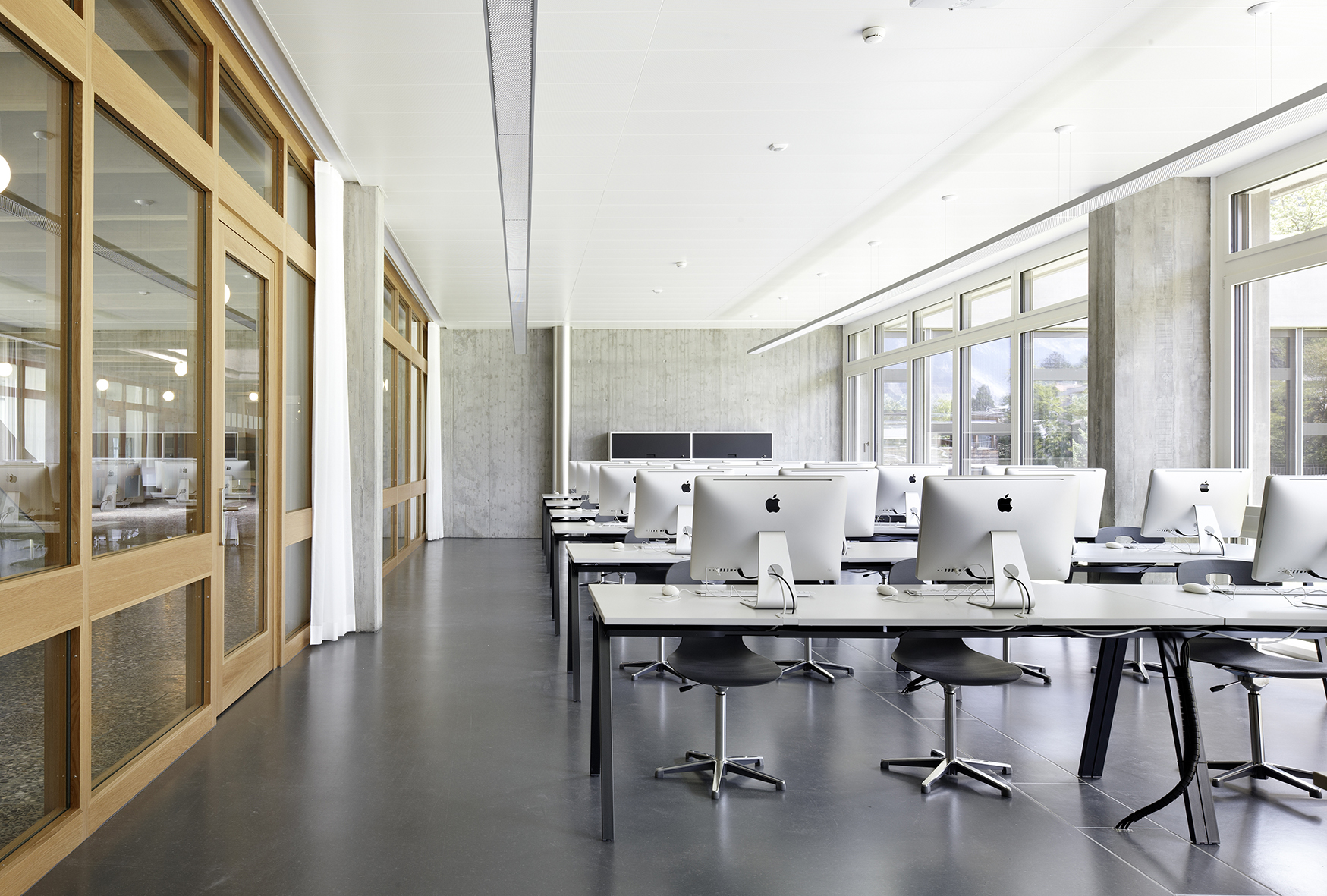
The original building was stripped down to it’s core structure, which was prevailed. Meeting the requirements of the suisse Minergie standards a new build-up was applied. Glass fiber elements covered with prefabricated concrete modules resembling the initial design oft he building. Where possible existing Materials and structures were prevailed and restored. The old windows were exchanged with endurable timber-metal windows keeping the proportional appearances of the old ones. Finding thermical weaknesses in the original structure accompanying the building process with regular thermical scans helped improving the insulating qualities oft he newly applied shell. All classrooms were equipped with a controlled airing – system minimizing the loss of energy extremely.
Climate Chur:
The climate is warm and temperate in Chur. Chur has a significant amount of rainfall during the year. This is even true for the driest month. According to Köppen and Geiger climate is classified as Cfb. In Chur the average annual temperature is 9.2 °C. The average annual rainfall is 1130 mm. The driest month is February with 60 mm. With an average of 139 mm most precipitation falls in August. The warmest month of the year is July with an average temperature of 18.3 °C. January has the lowest average temperature of the year. It is only -0.3 °C. The difference in precipitation between the driest month and the wettest month is 79 mm. During the year the average temperatures vary by 18.6 °C.
Zeitleiste:
2008
Planning
2010
Realisation