40 Housing Units
Crediti
Cliente
ICF Novedis
Collaboratori
Bollinger+Grohmann
Franck Boutté Consultants
LBE
JP Tohier & Associés
Autori
LAN
The environmental strategy developed as part of our ongoing reflections about the nature of cities, and it had an early impact on the project, not so much because we needed to satisfy certain regulatory criteria, rather because we wanted to merge a desire for architecture with sustainability, with an eye to savings and to known or contingent uses.
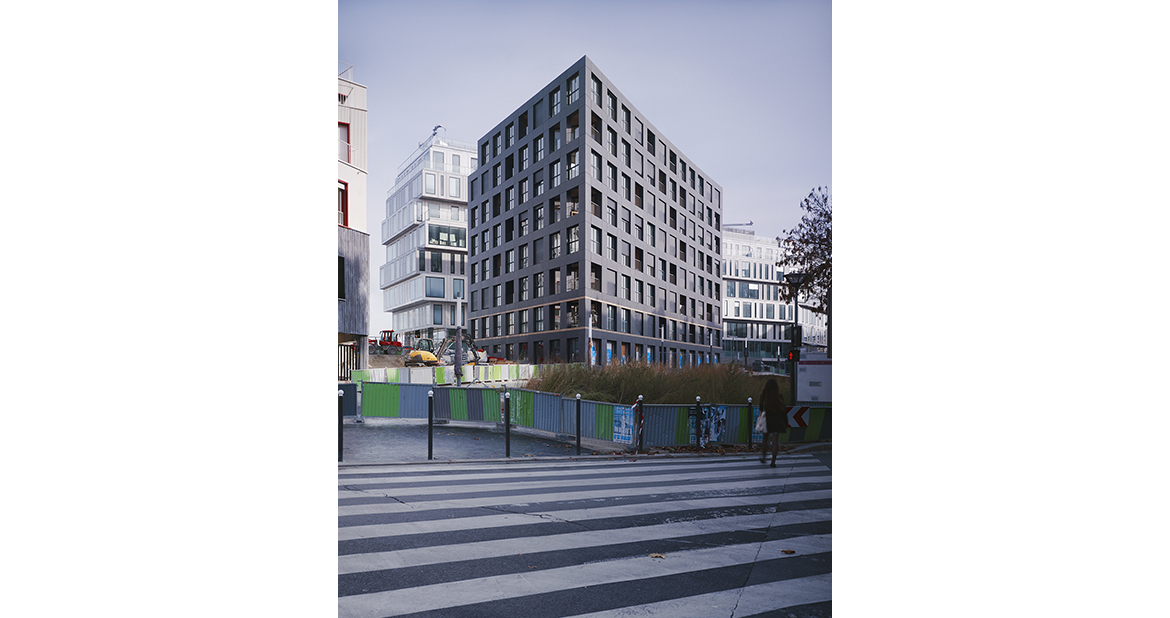
Our proposal pays homage to Paris by employing an architecture that inserts itself into the city’s own logic, but which also responds to current and future challenges.
Disegni tecnici:
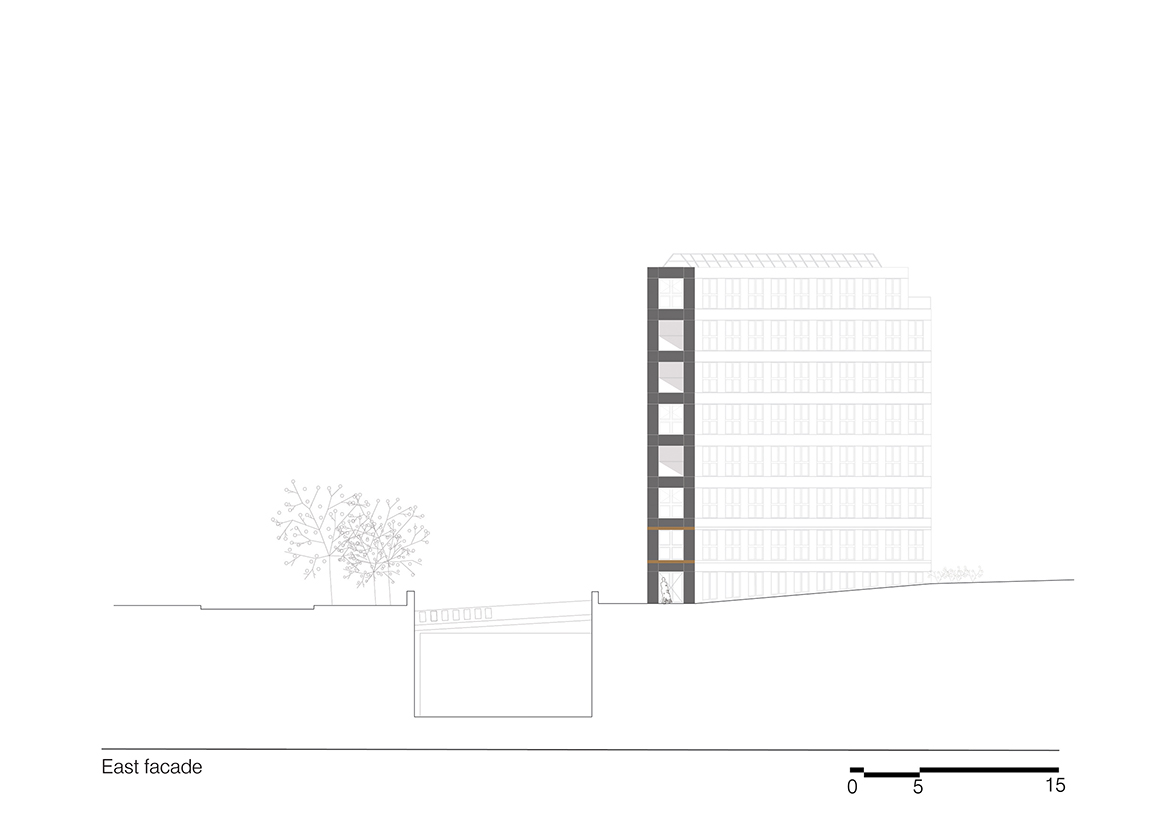
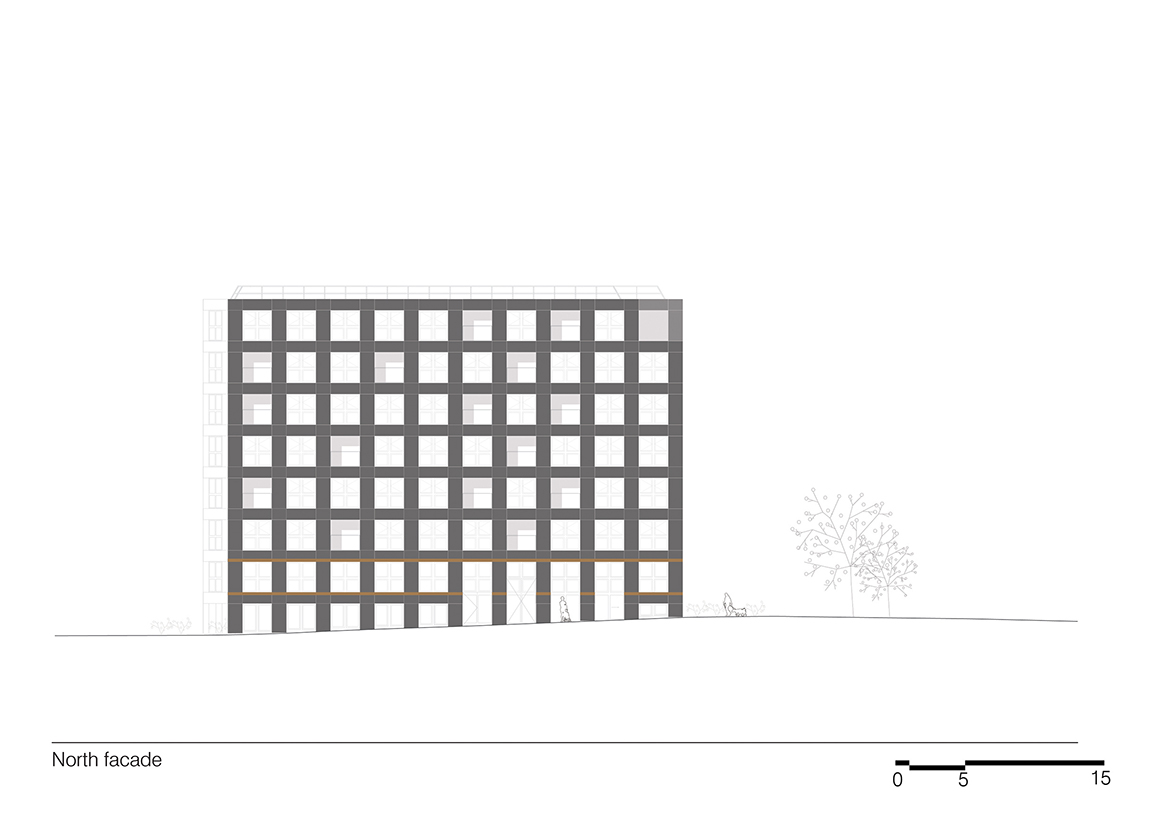
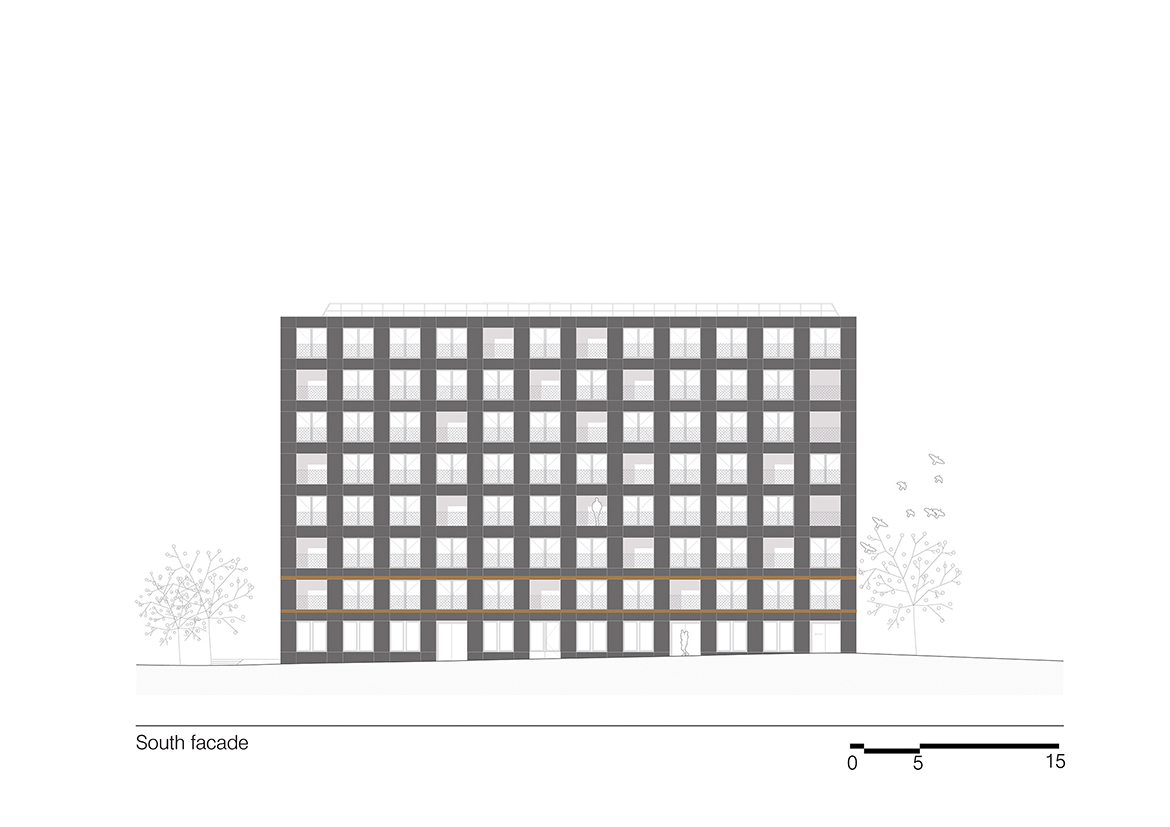
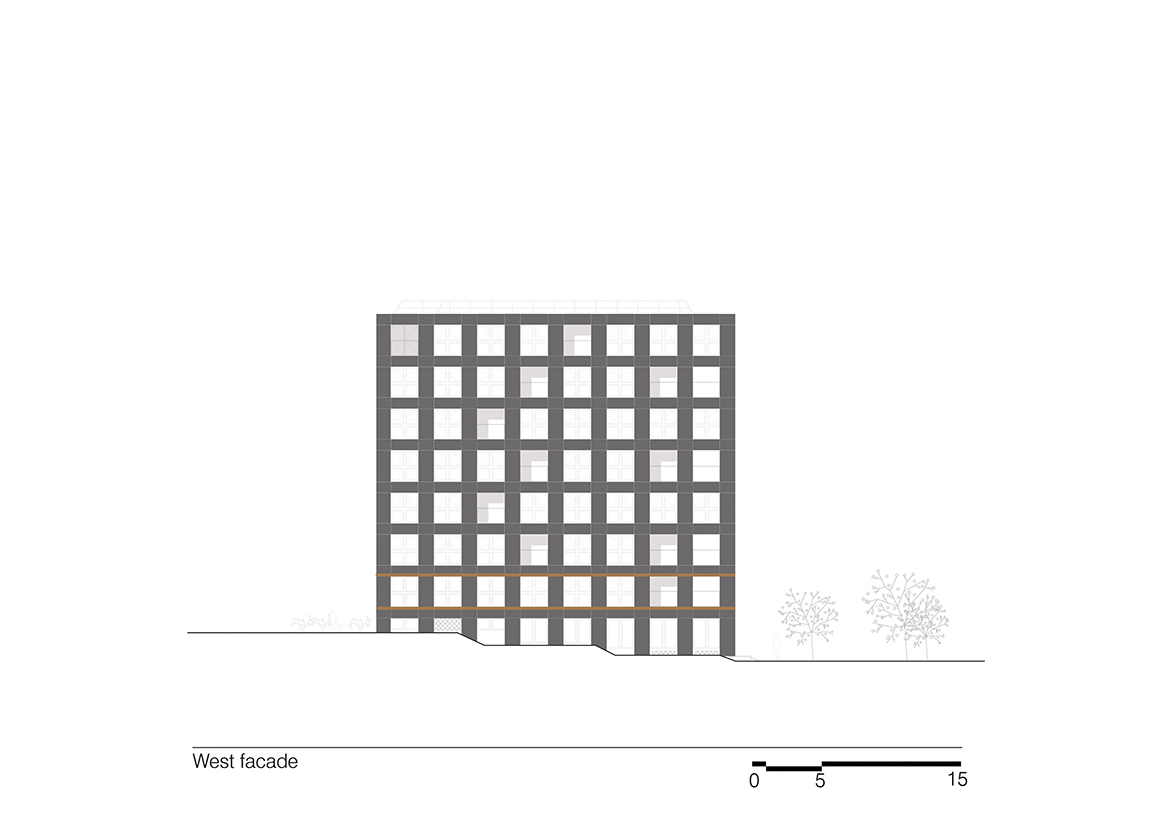
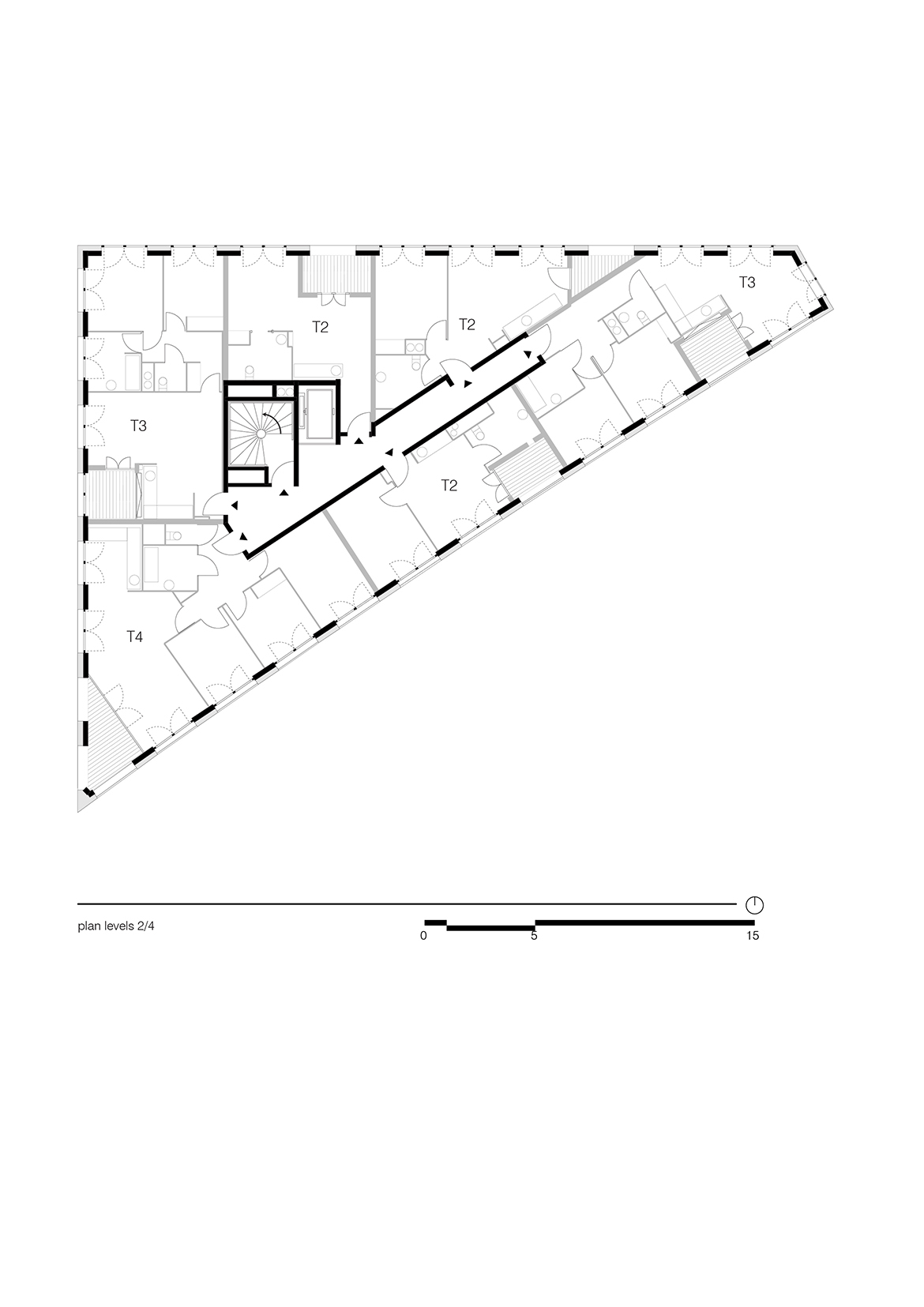
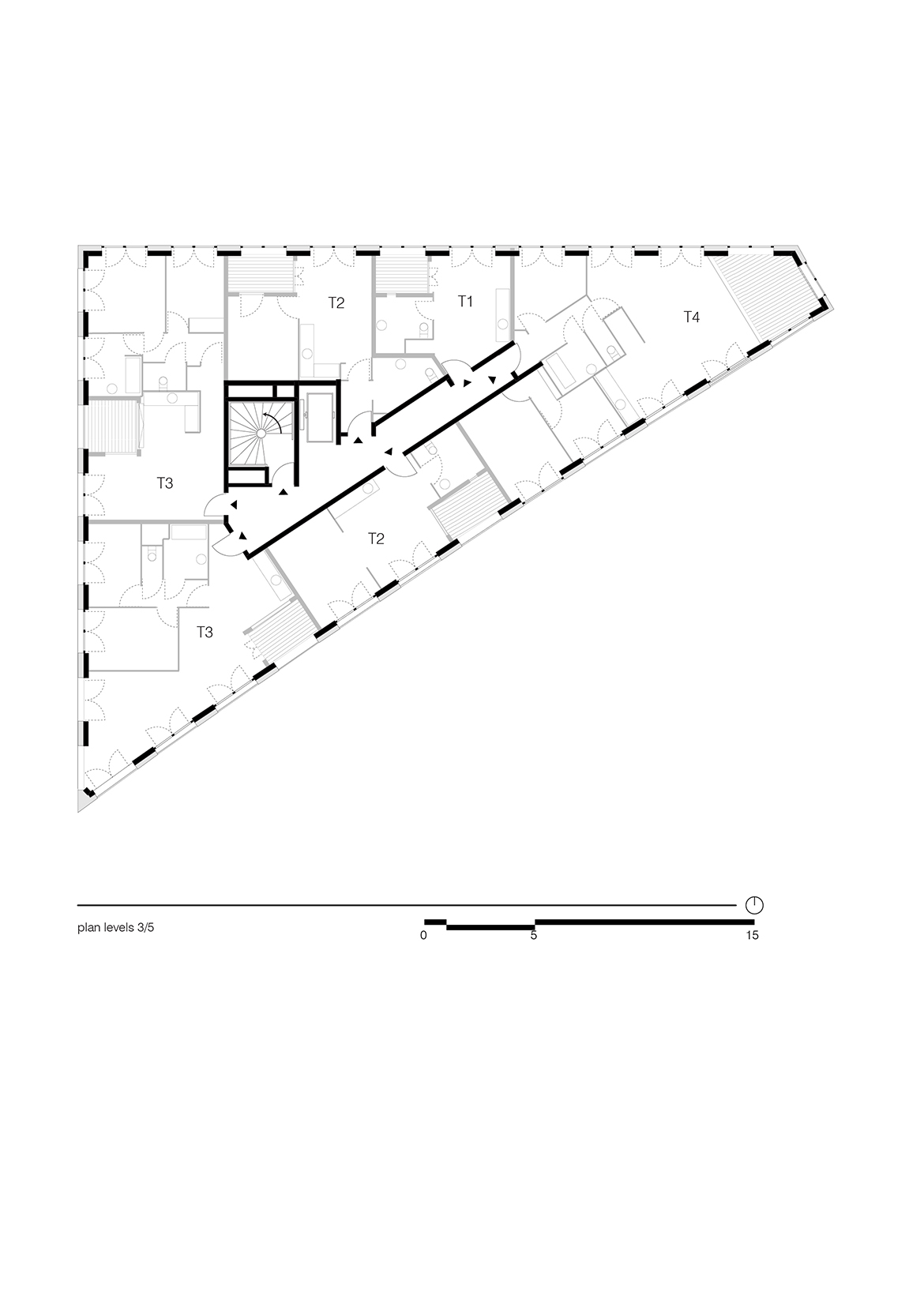
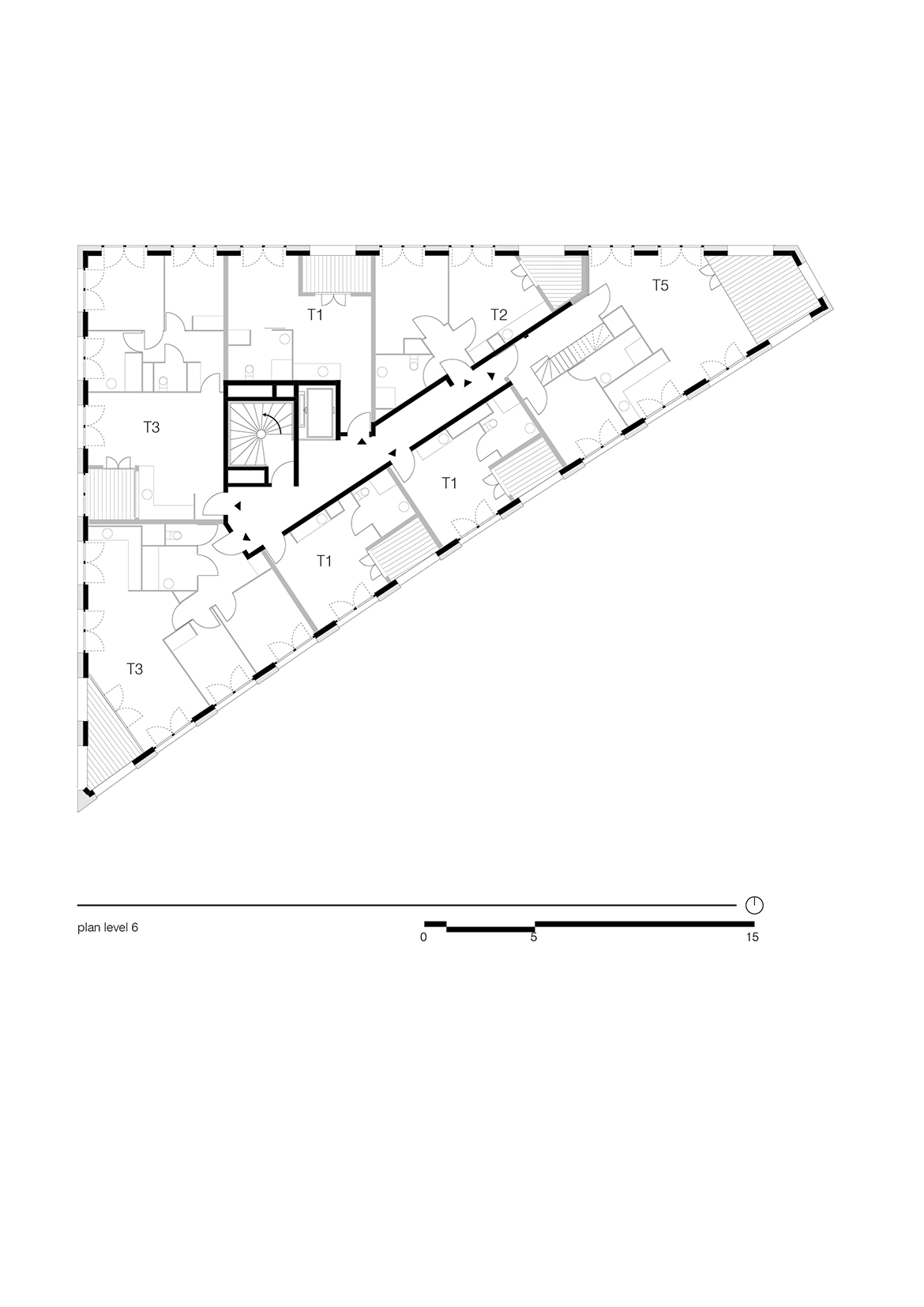
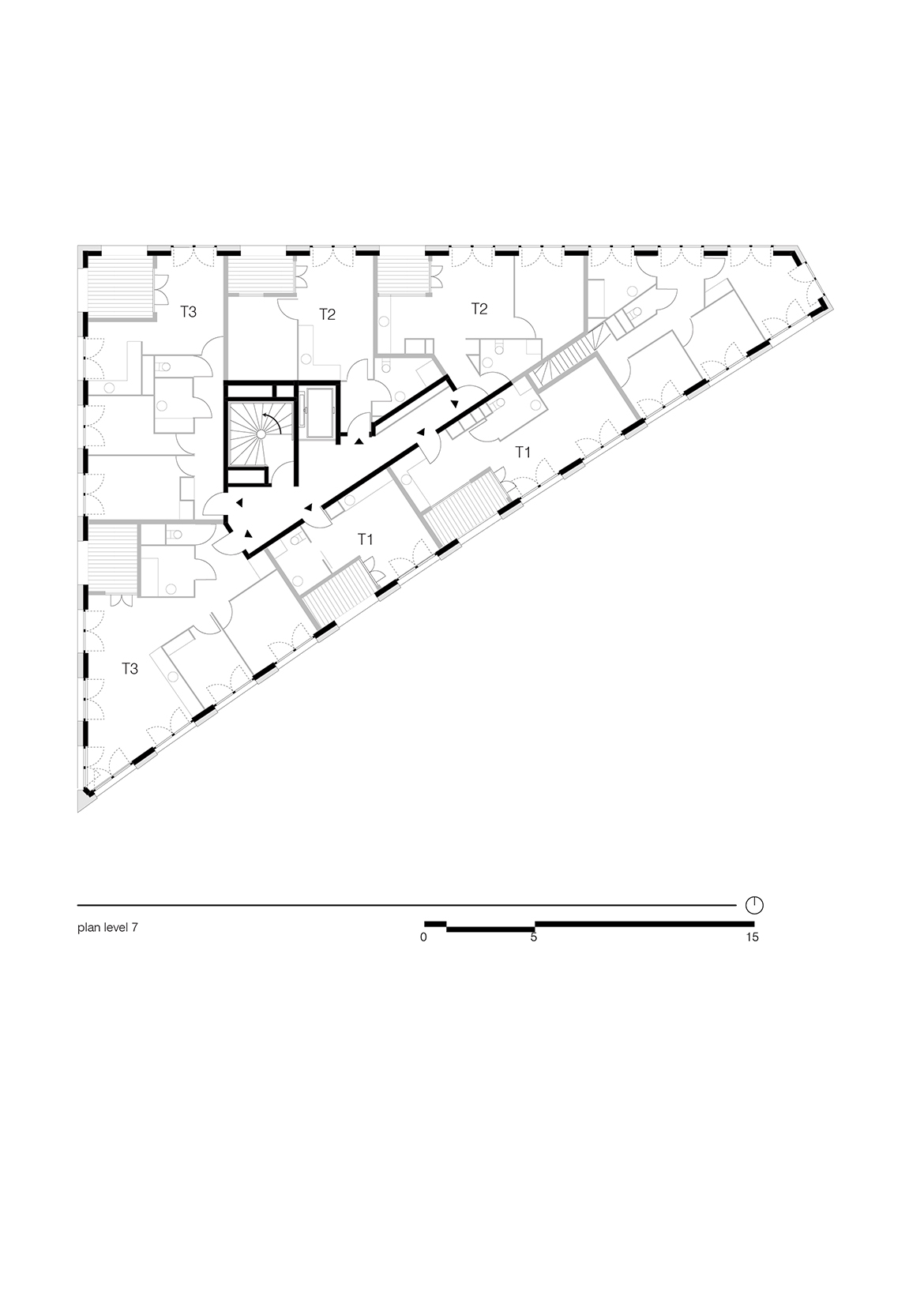
Report esteso:
General, technical report for the building
The environmental strategy developed as part of our ongoing reflections about the nature of cities, and it had an early impact on the project, not so much because we needed to satisfy certain regulatory criteria, rather because we wanted to merge a desire for architecture with sustainability, with an eye to savings and to known or contingent uses. Our proposal pays homage to Paris by employing an architecture that inserts itself into the city’s own logic, but which also responds to current and future challenges.
The high level of density which characterizes the city prompted us to consider the role played by empty space, especially in terms of the relation between public and private spaces. We believe that the right density is not just a simple ratio, rather that particularly satisfying relationship between fullness and emptiness.
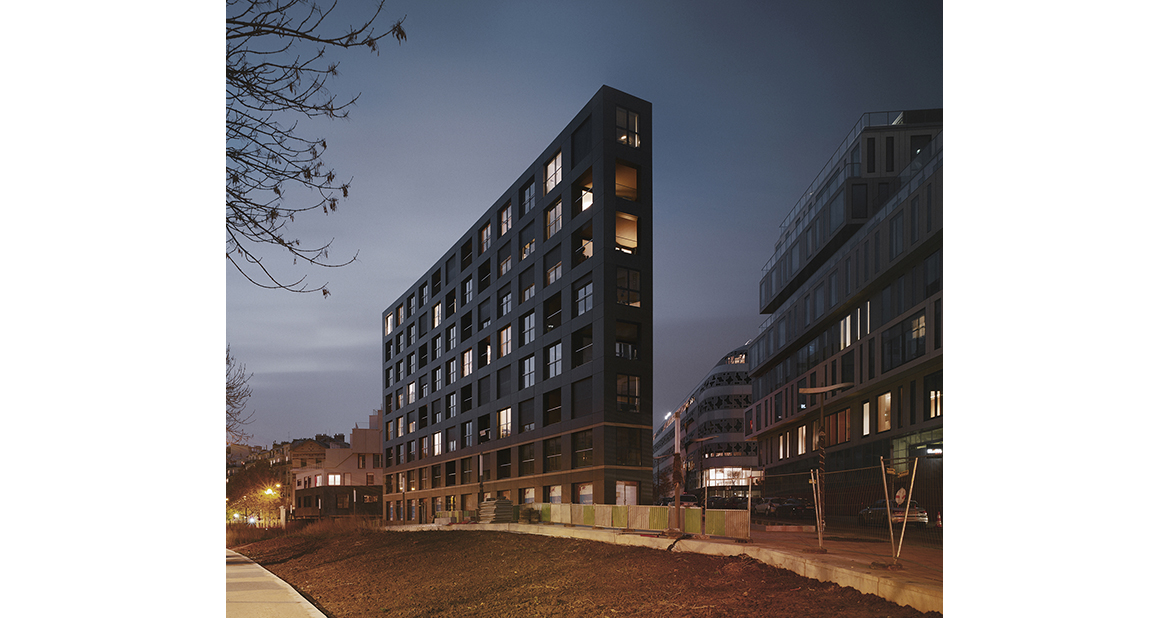
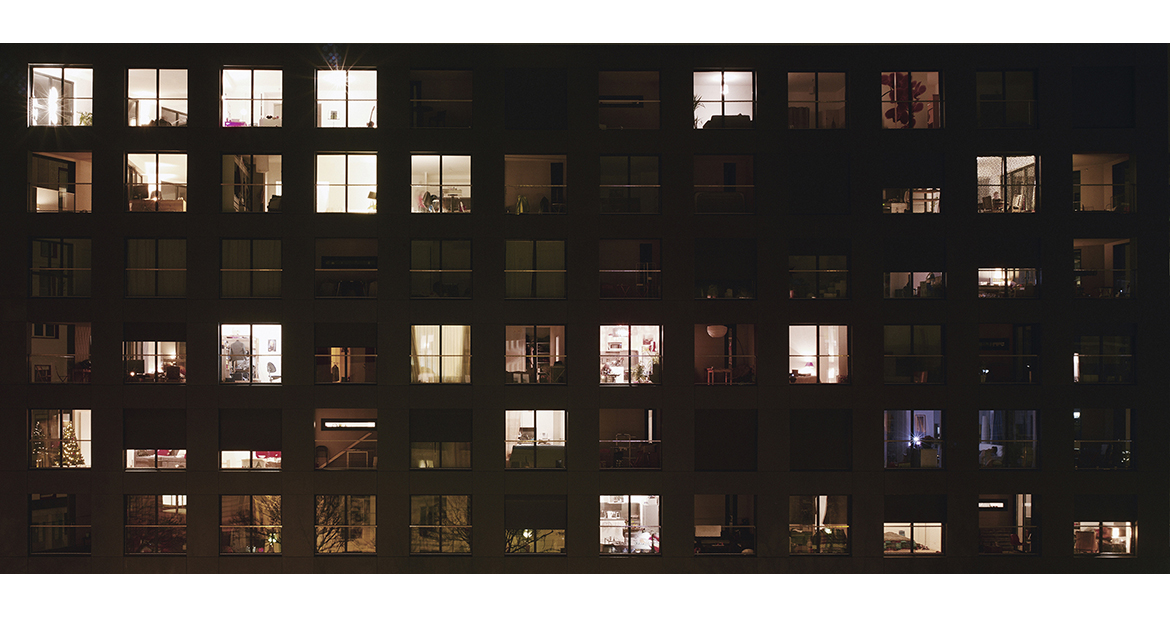
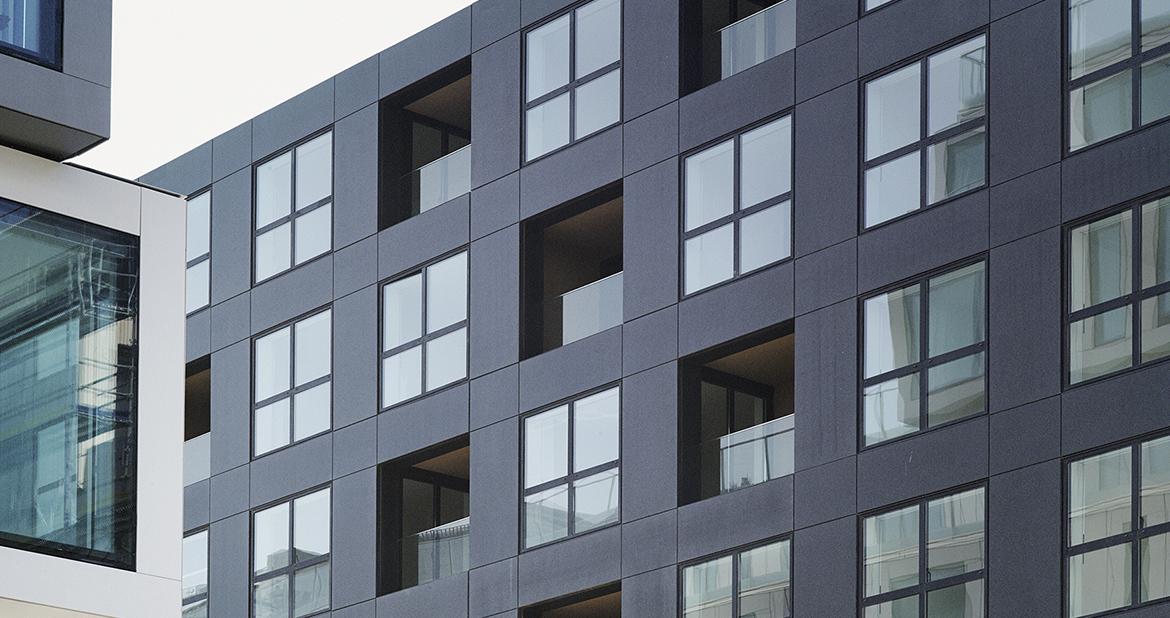
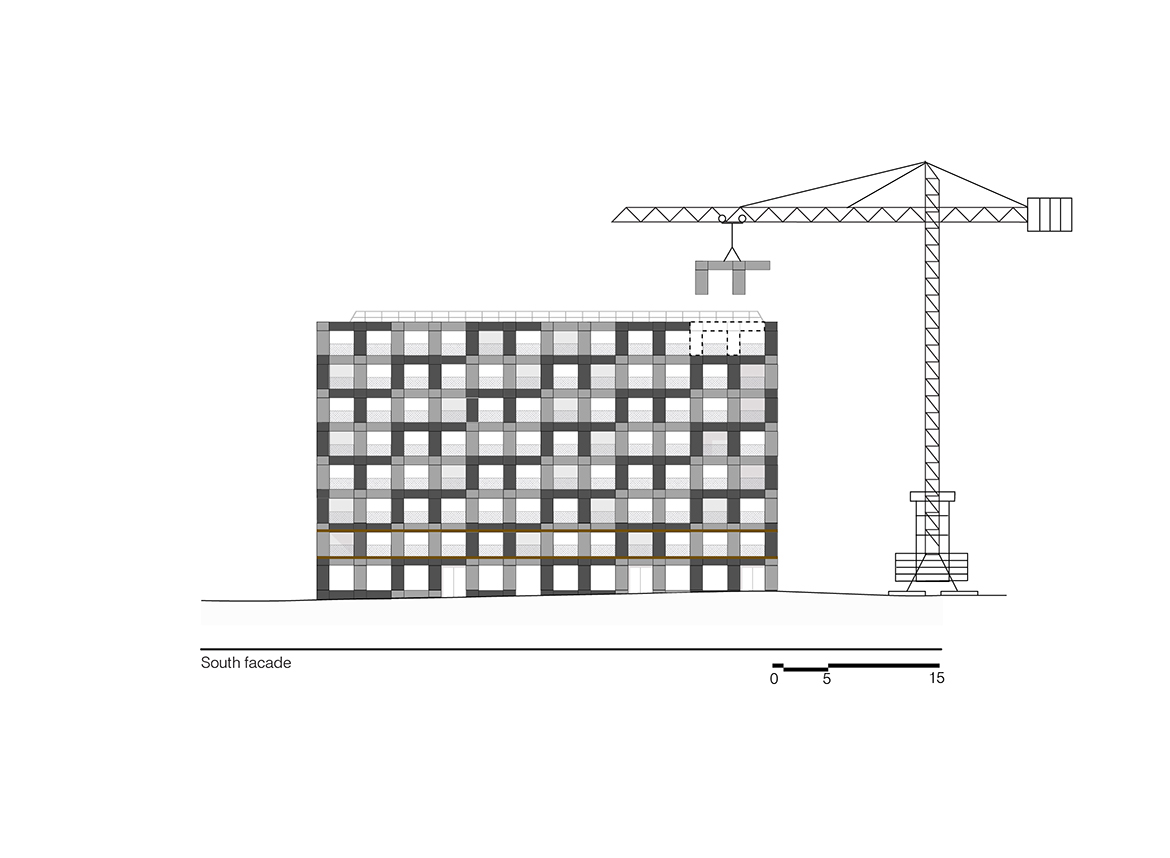
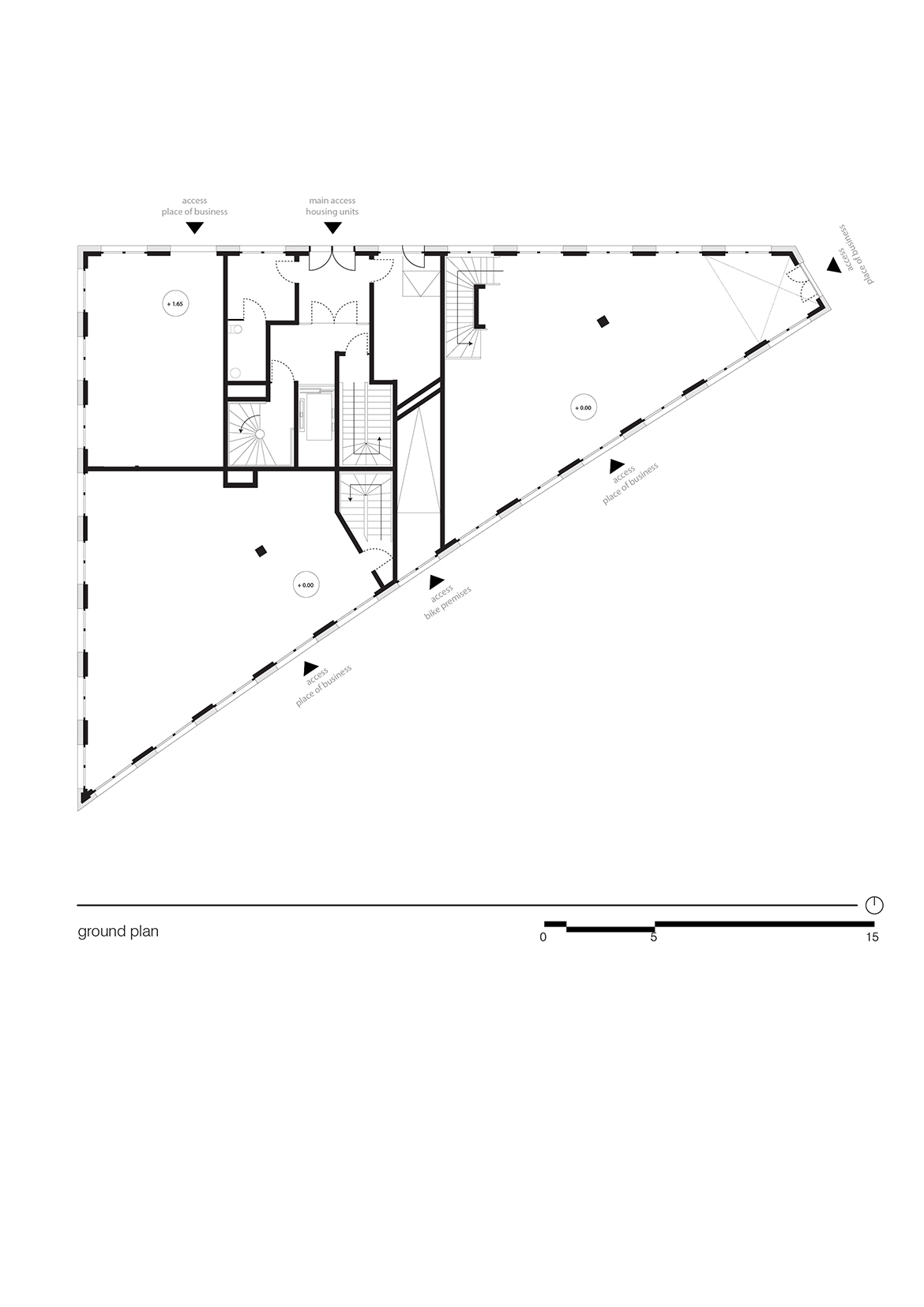
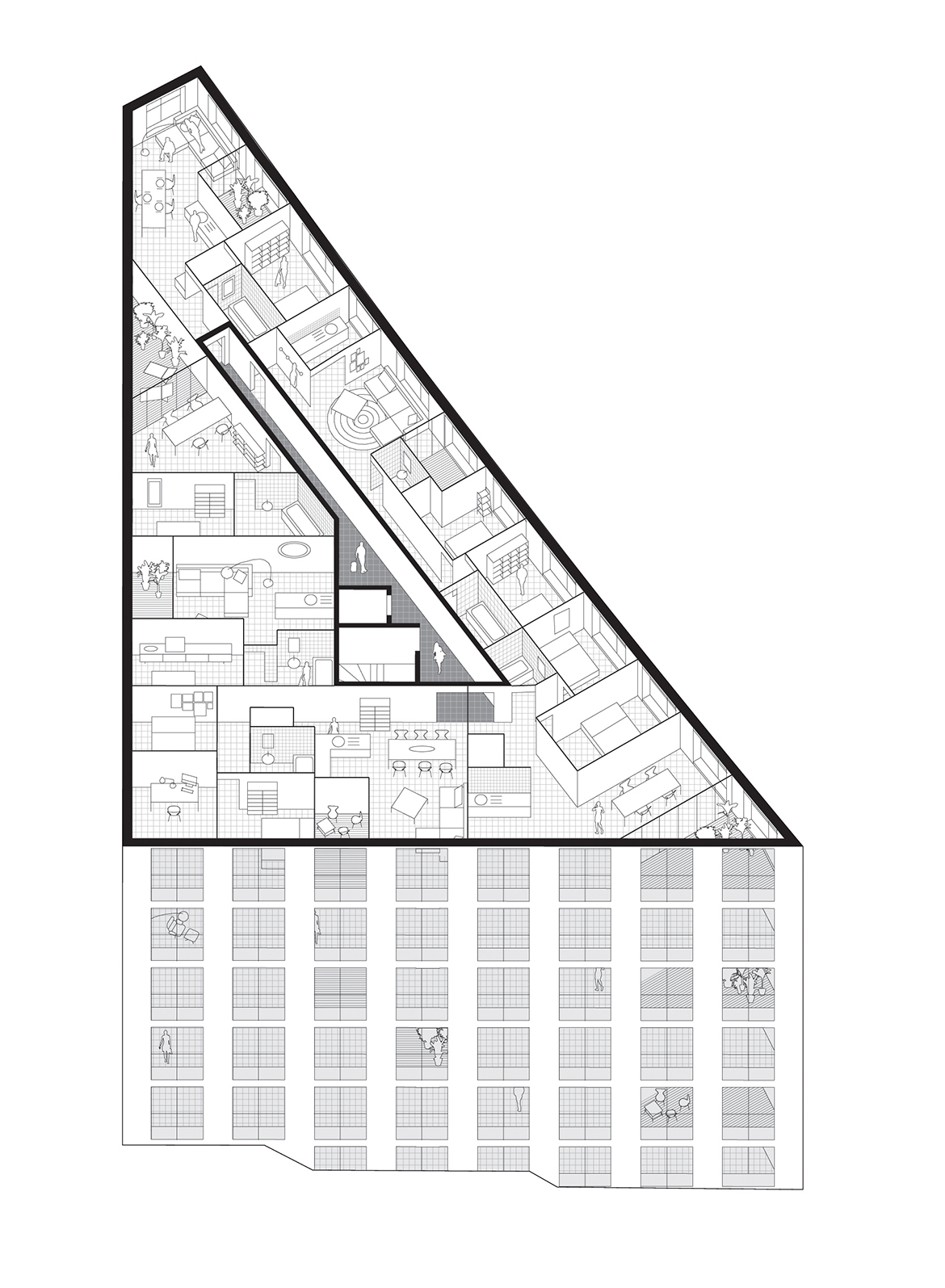
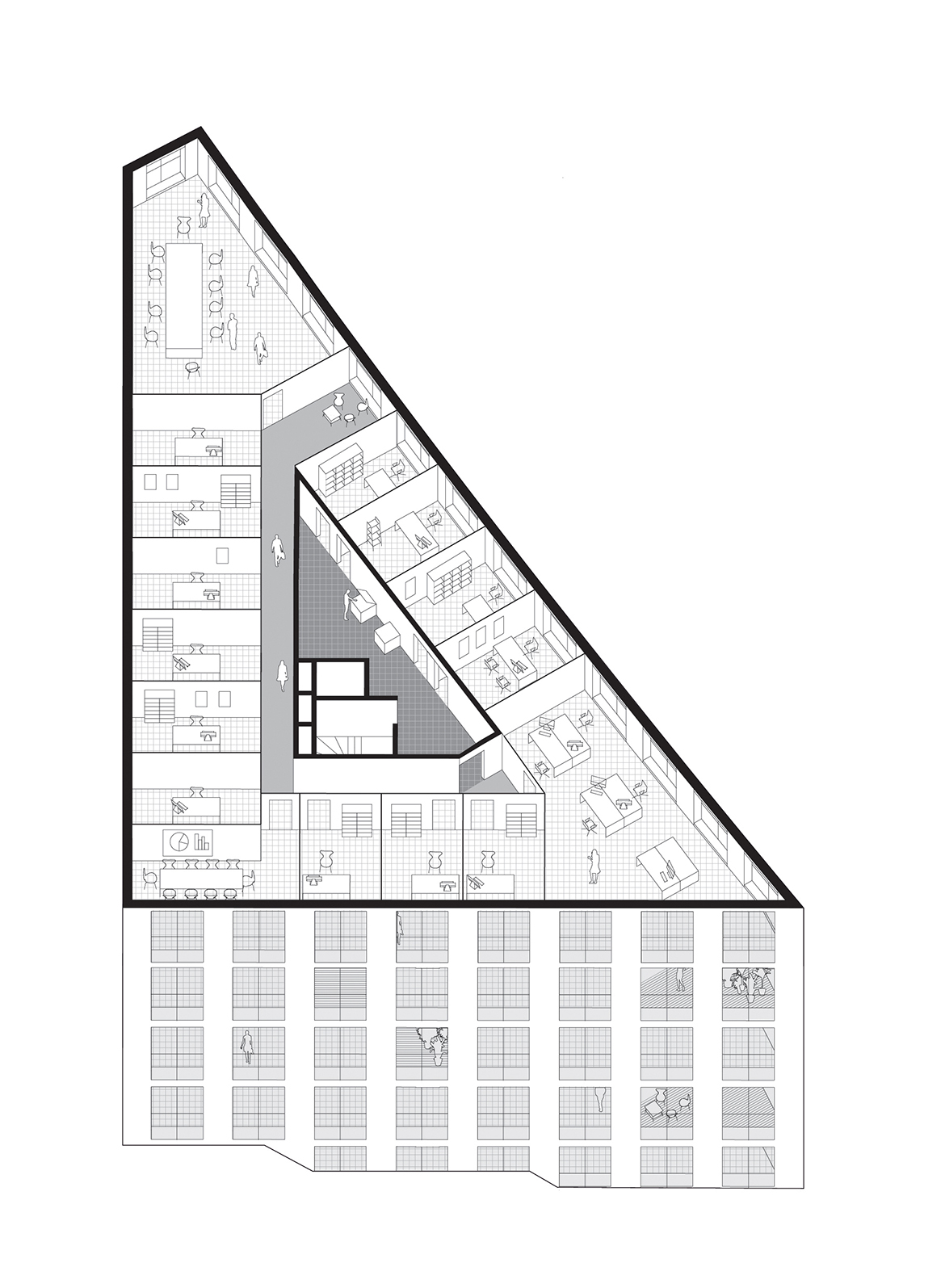
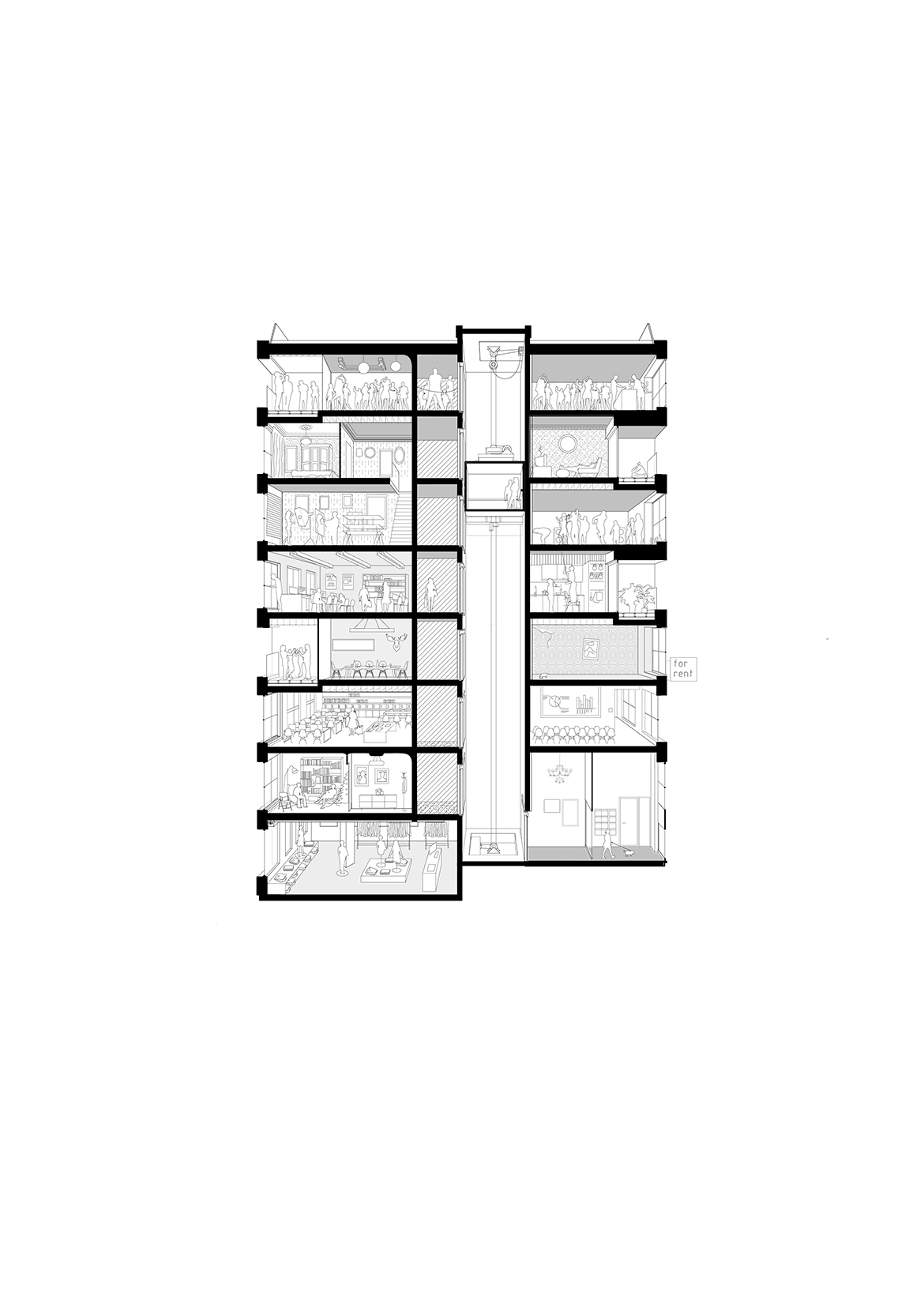
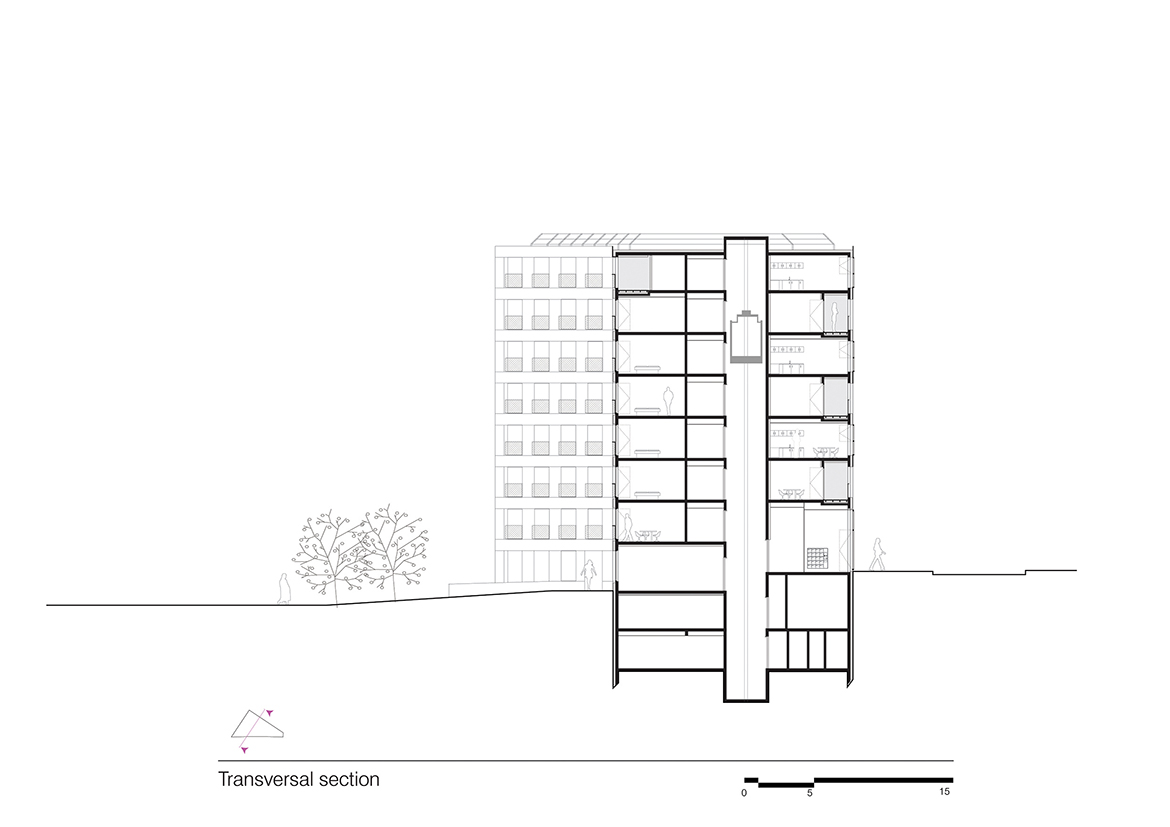
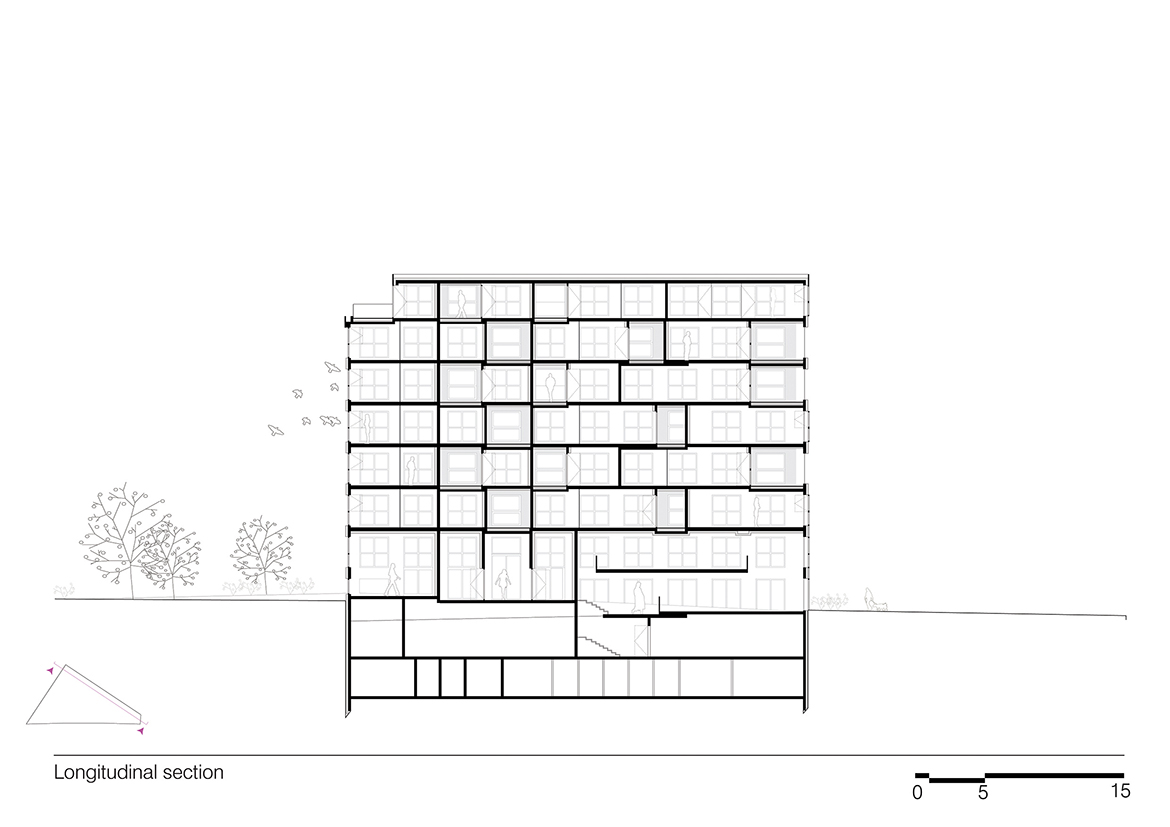
Emptiness becomes an abstraction in this project. While its volume fully exploits all the site’s possibilities, the project’s flexibility introduces the idea that emptying architecture of its program allows the building to generate potential, which will accompany the city’s evolution and more readily respond to changes in usage. The project aims to exceed the original commission by providing a ready reversibility between residential and office spaces. Not only does the configuration of the load-bearing structure facilitate the modification of the interior layouts, but the dimensions and regularity of the façade openings create an overall image of the building that does not over-determine its allocation.
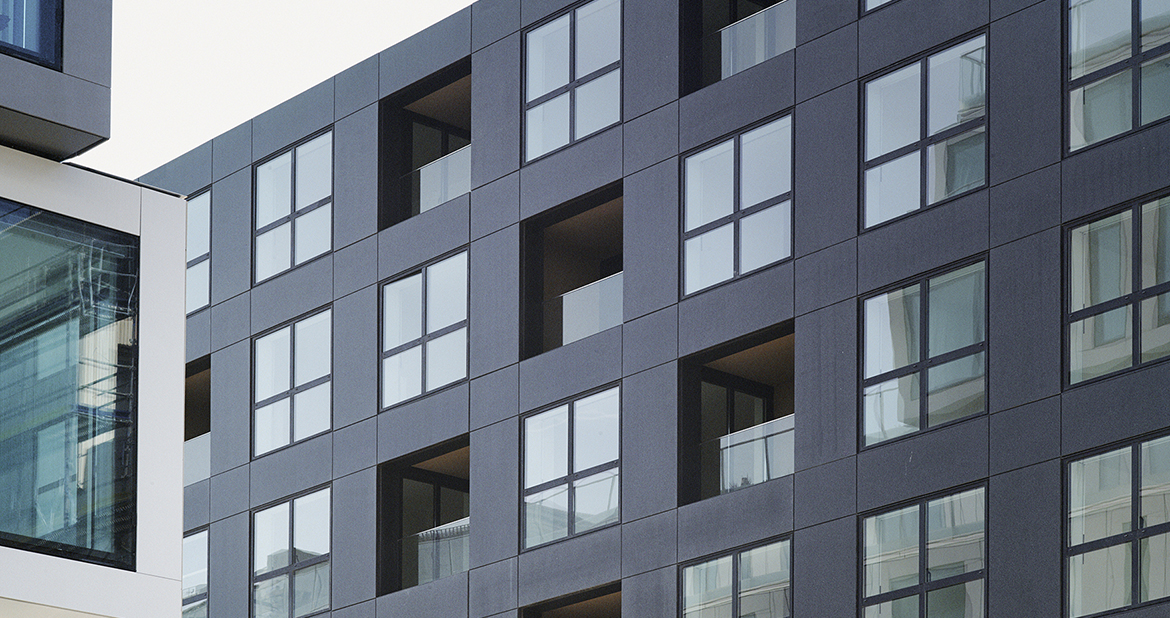
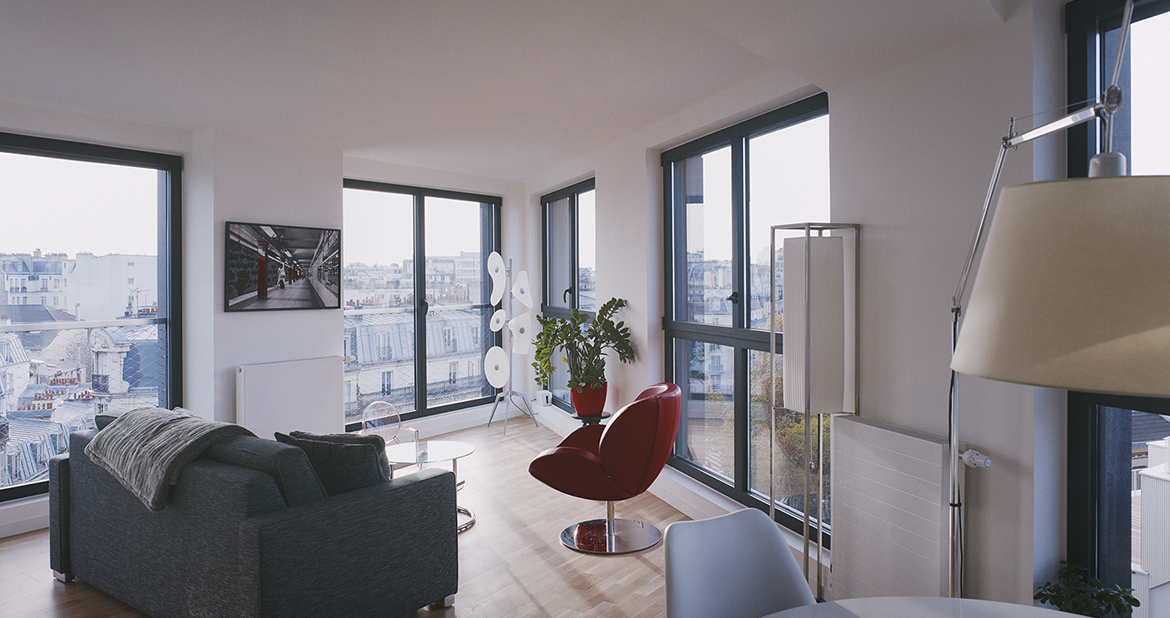
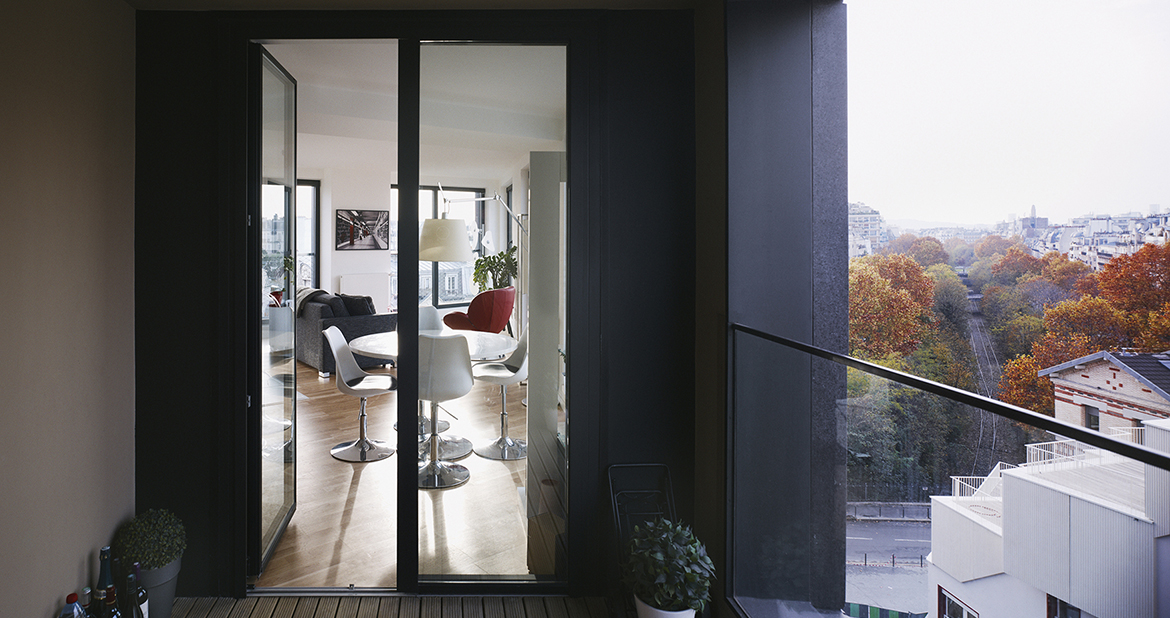
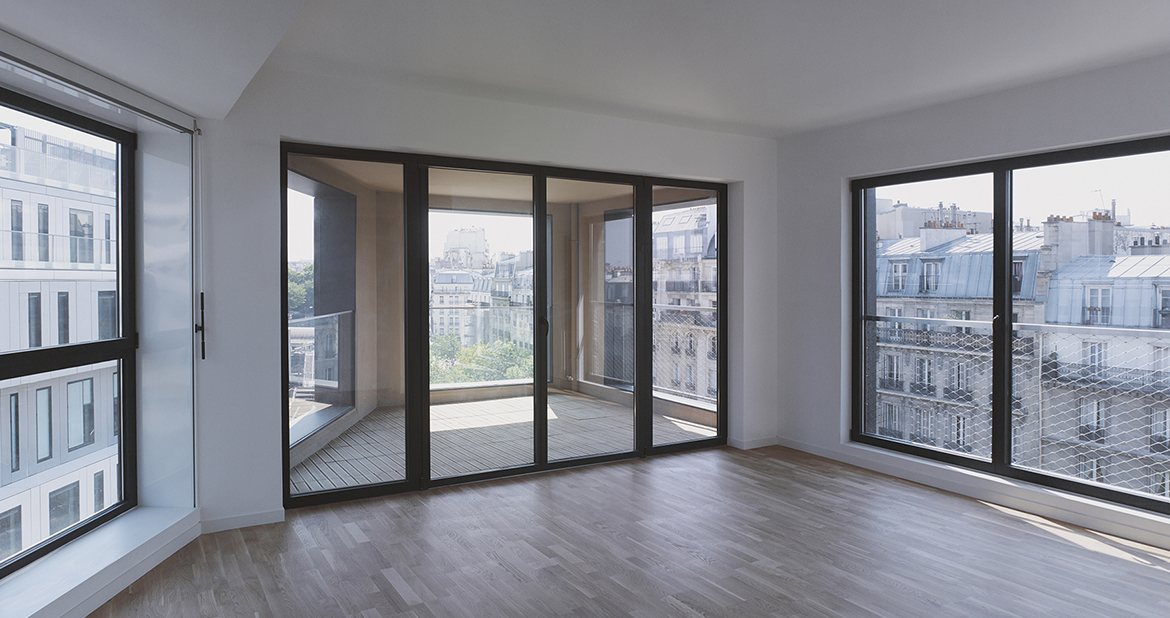
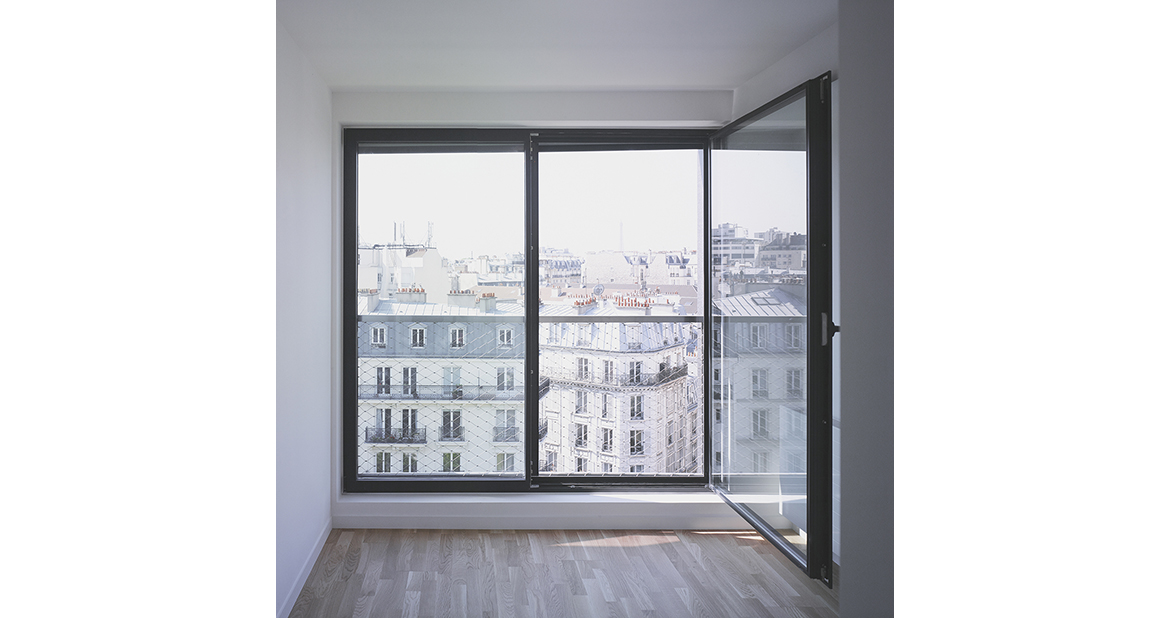
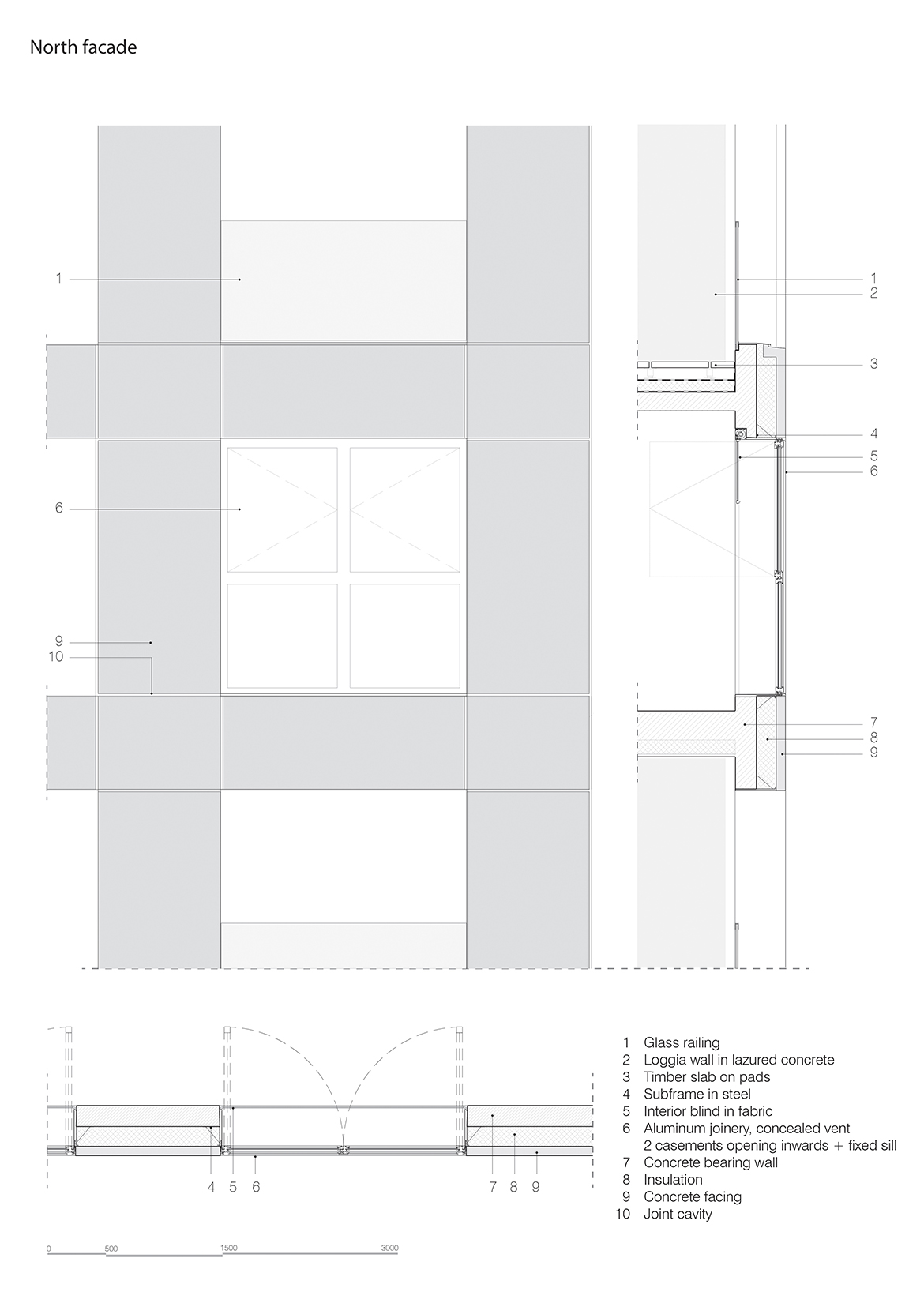
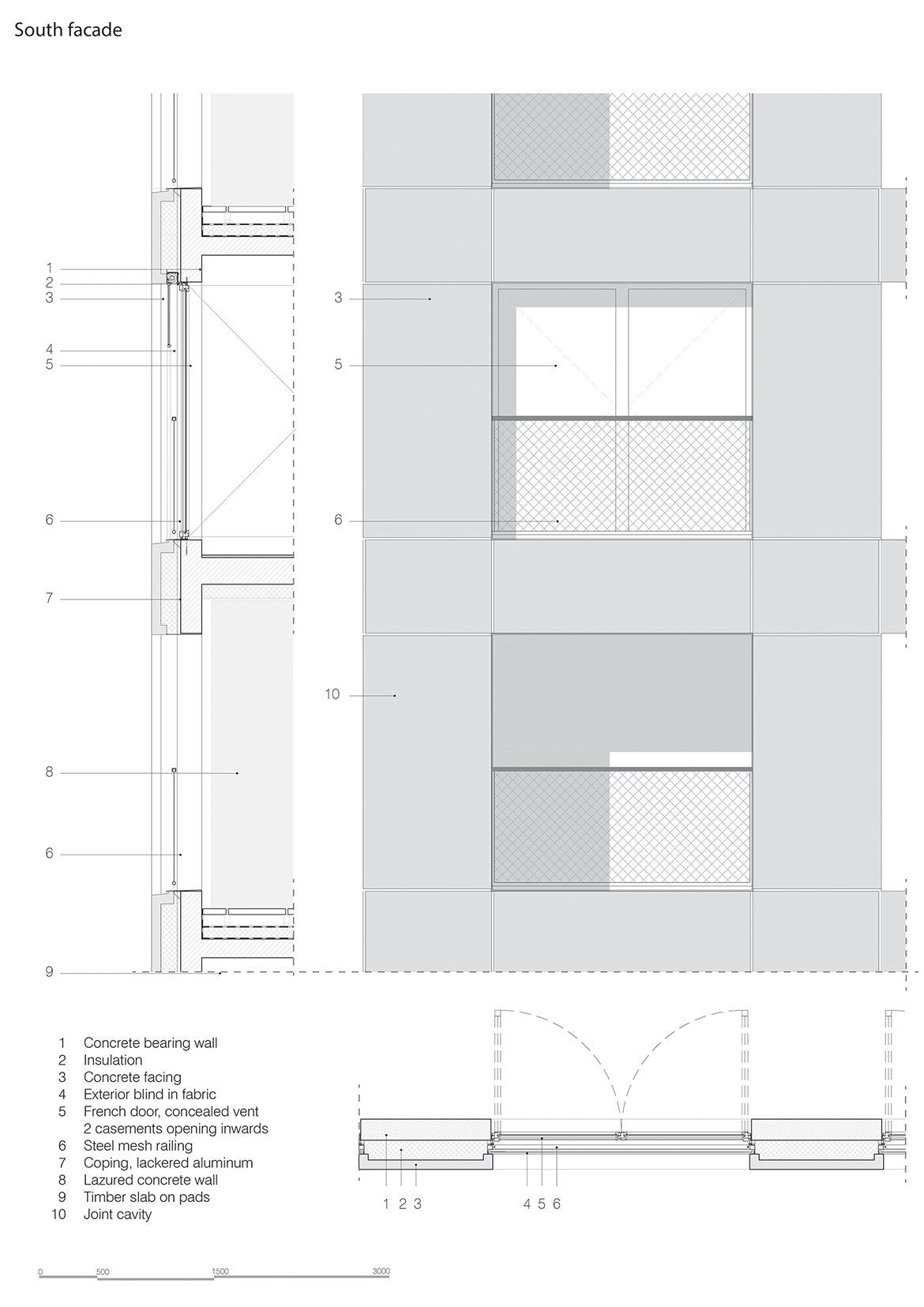
The mostly glass facades (with an exposure index of > 15%) increase the quality of use in terms of natural light and views, while the architectural distinction between the northern and southern facades compensates for the differences in needs for privacy and natural ventilation. The interplay of variations expresses itself in the windows’ positioning across the facade, which creates a projected shadow within, in the positioning of the stores, as well as in the materiality of the railing. The solar gain on the residential windows is less than 0.45 to the north and 0.25 elsewhere. Most of the apartments have a dual orientation, and are organized around a large loggia, which improves ventilation by allowing air to penetrate the building’s interior uniformly. The dual flow air handler also creates energy savings by using a high performance exchanger to recover heat from the air vented from the kitchens and bathrooms.
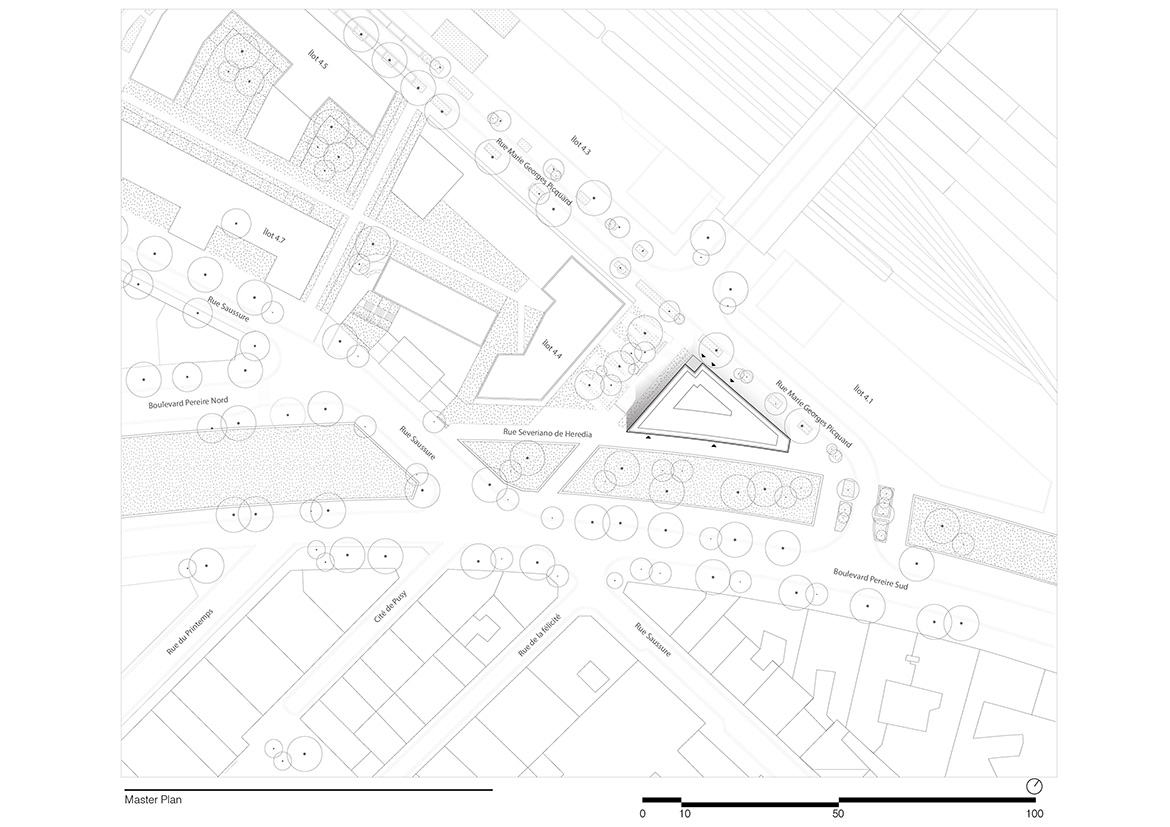
The building is the perfect extrusion for the triangular parcel, and its compactness limits the exchanging surfaces. The materiality, the choice of frames, and the thermal bridges all contribute to the building’s energy performance. The frame’s heat transfer coefficient is 1.4W/m².K, while that for the building is 0.831W/m².K. The project is Habitat & Environnement BBC Effinergie 2011 certified (CEP ≤ 65kWh/m²/year) and satisfies the requirements of the Paris Climate Plan (CEP ≤ 50kWh/m²/year).
Cronologia:
2010
Planning
2014
Completion