The Great Wall of WA
Crediti
Cliente
Privato
Collaboratori
Kristina Sahlestrom
Edward Birch
David Mitchell
Sarah Foletta
Autori
Luigi Rosselli Architects
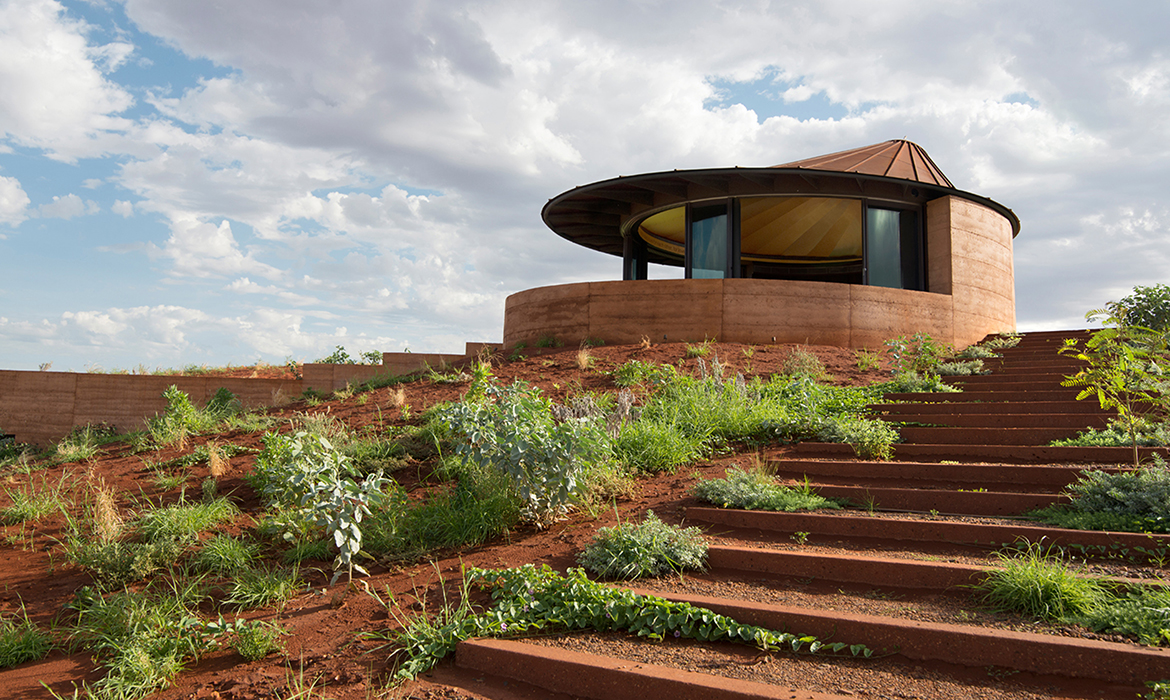
The Great Wall of WA is located on a remote cattle station in Western Australia, in a rugged landscape that created testing set of design parameters to encapsulate in this unique project to provide cattle musterers’ accommodation. The client required 12 compact units that are maintenance free and energy efficient.
Disegni tecnici:
Report esteso:
Relazione estesa
The Great Wall of WA is located on a remote cattle station in Western Australia, in a rugged landscape that created testing set of design parameters to encapsulate in this unique project to provide cattle musterers’ accommodation. The client required 12 compact units that are maintenance free and energy efficient.
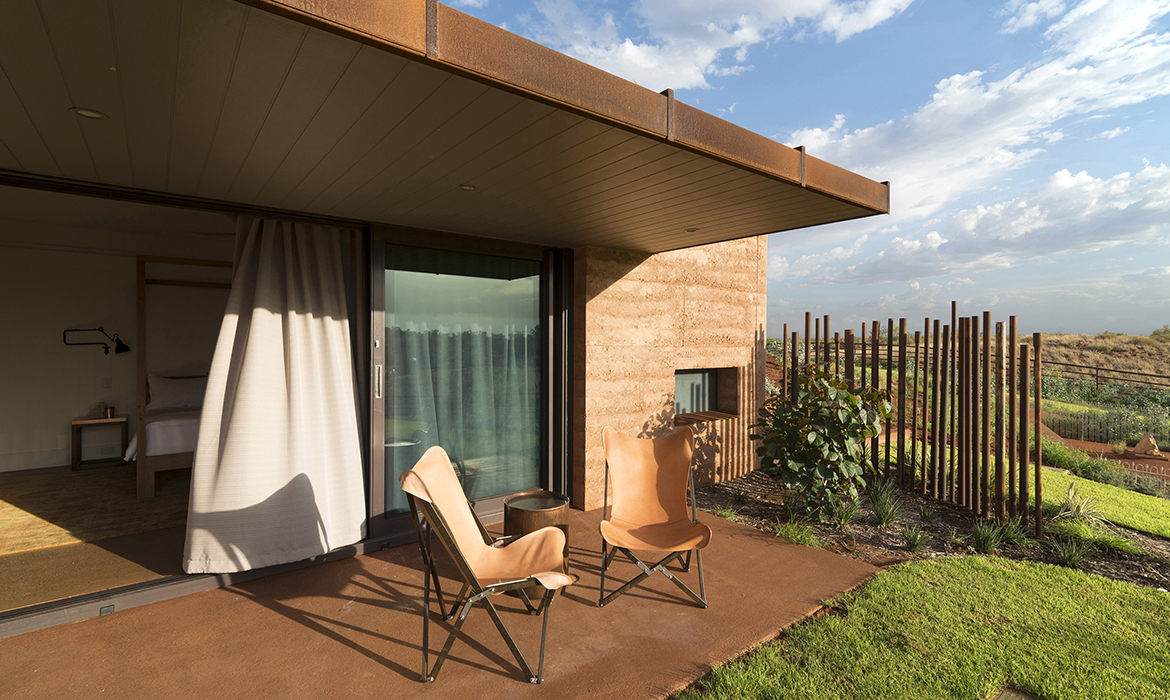
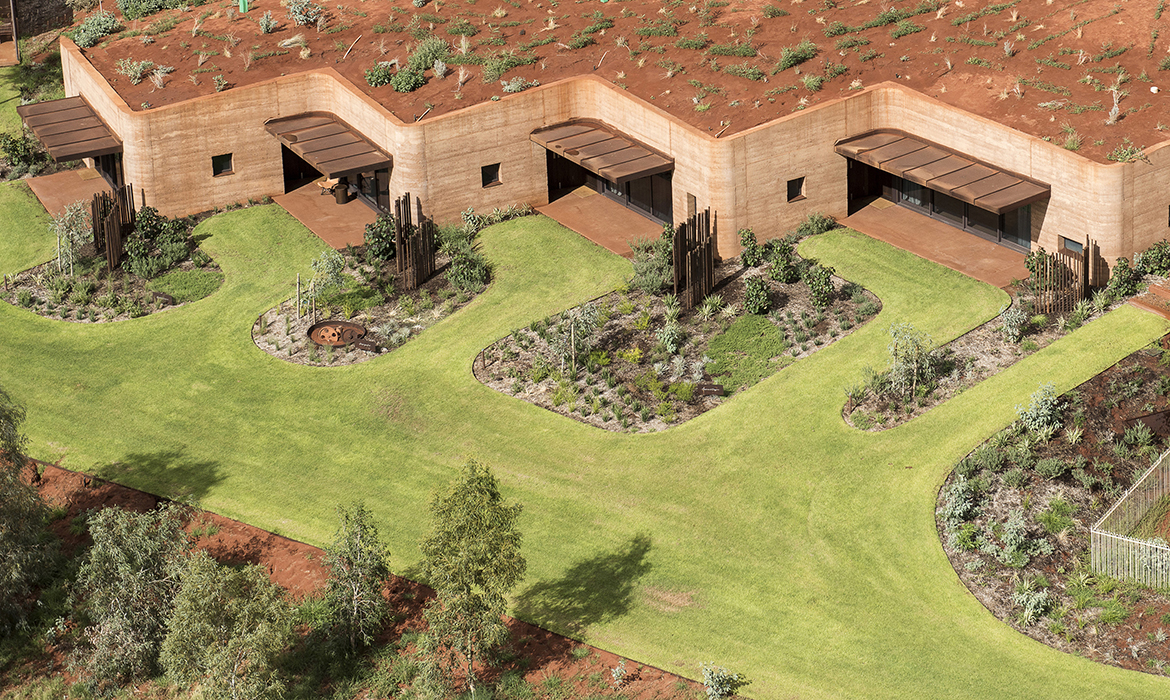
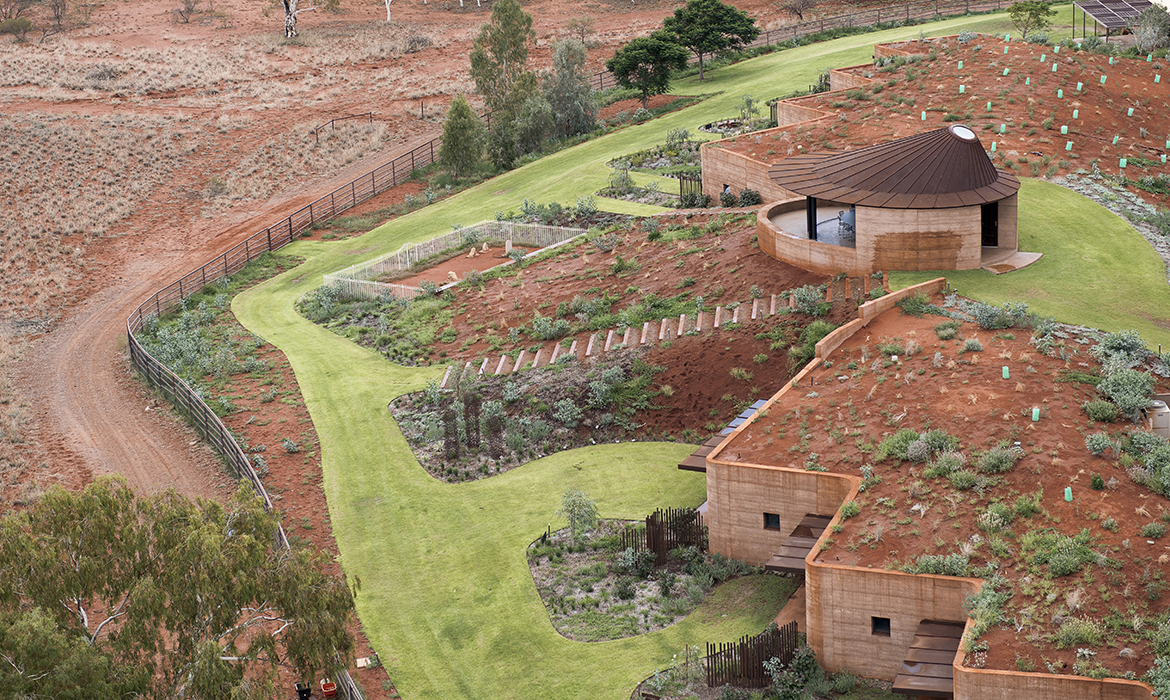
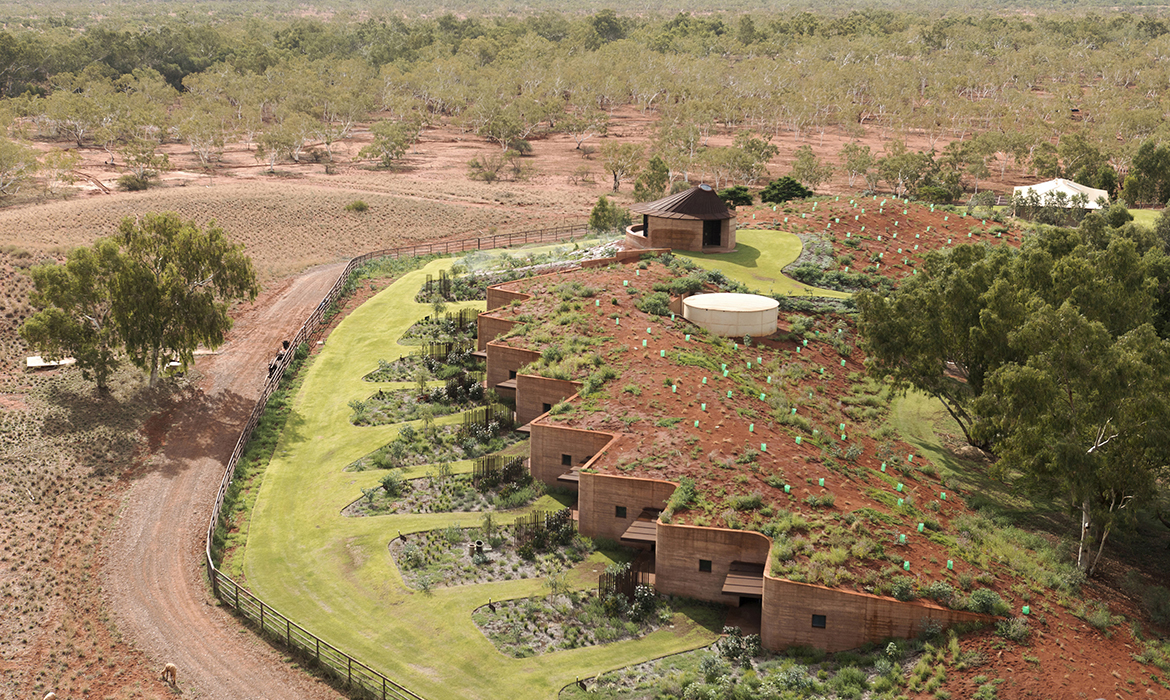
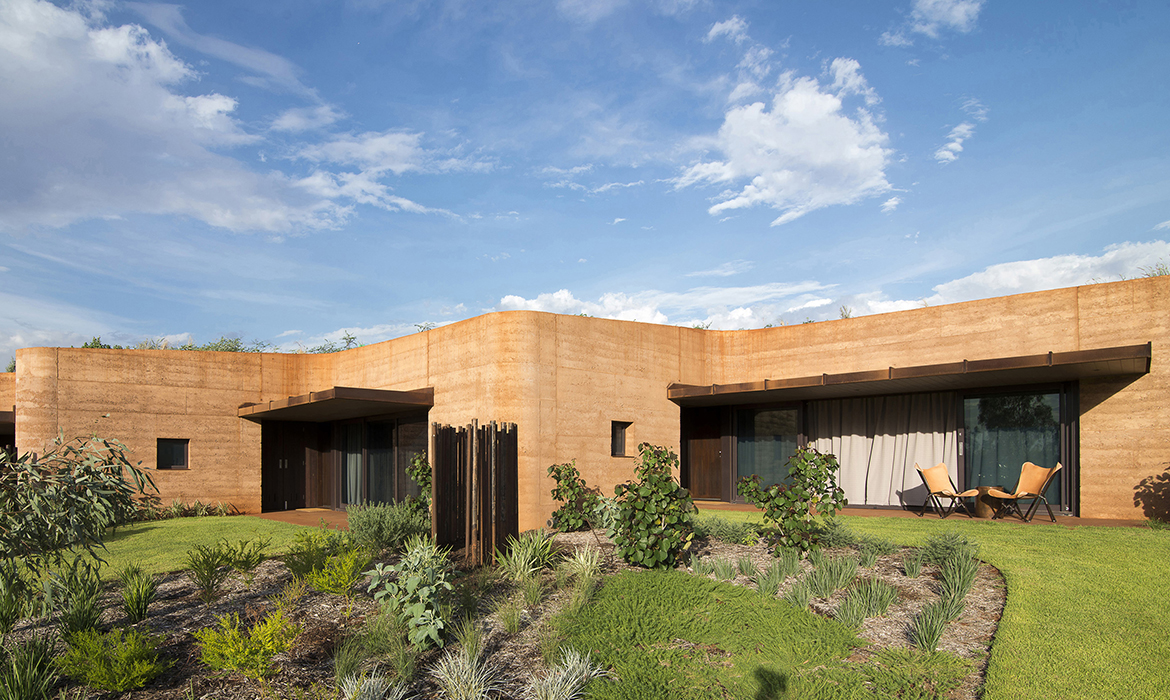
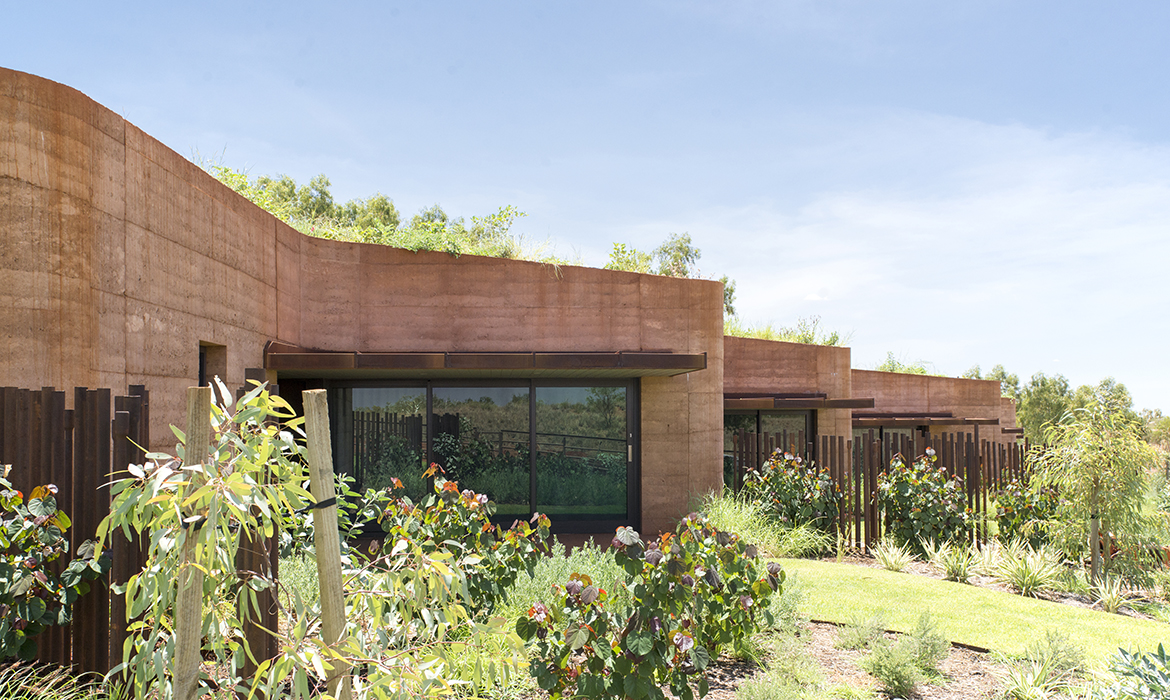
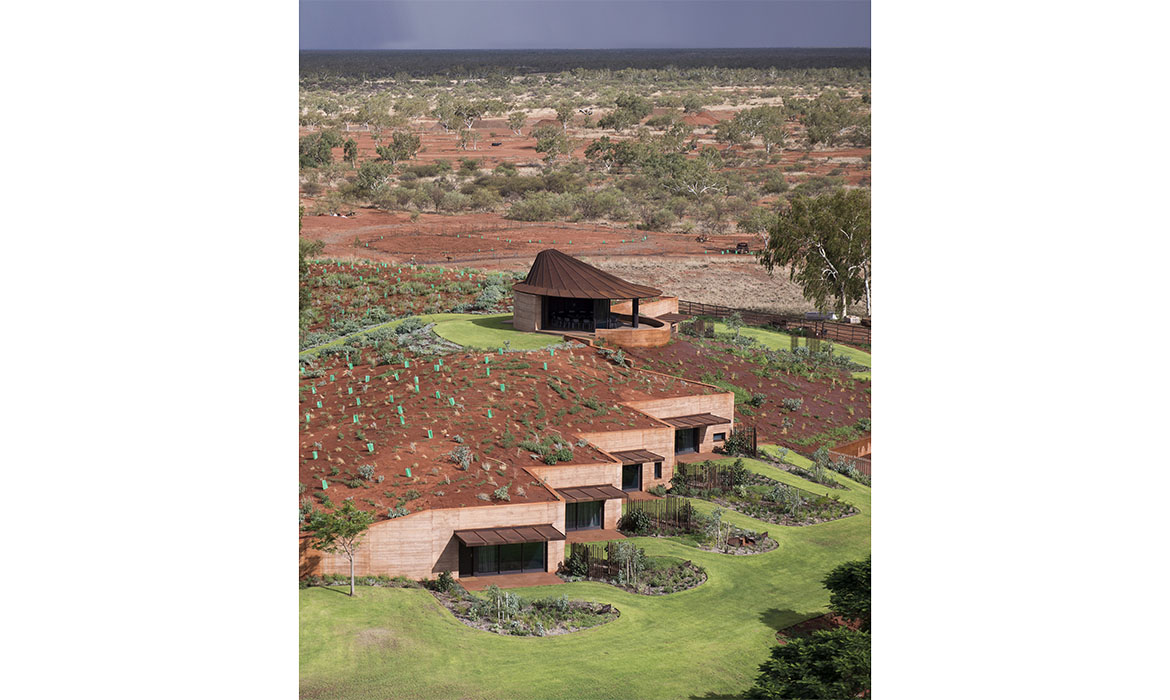
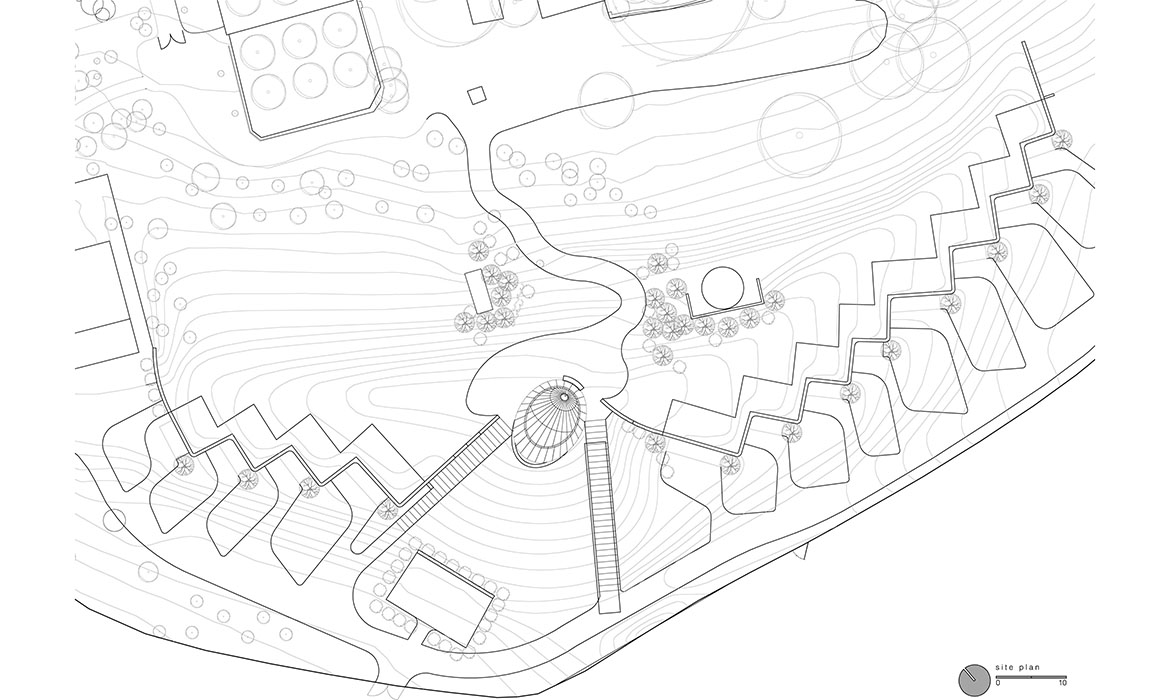
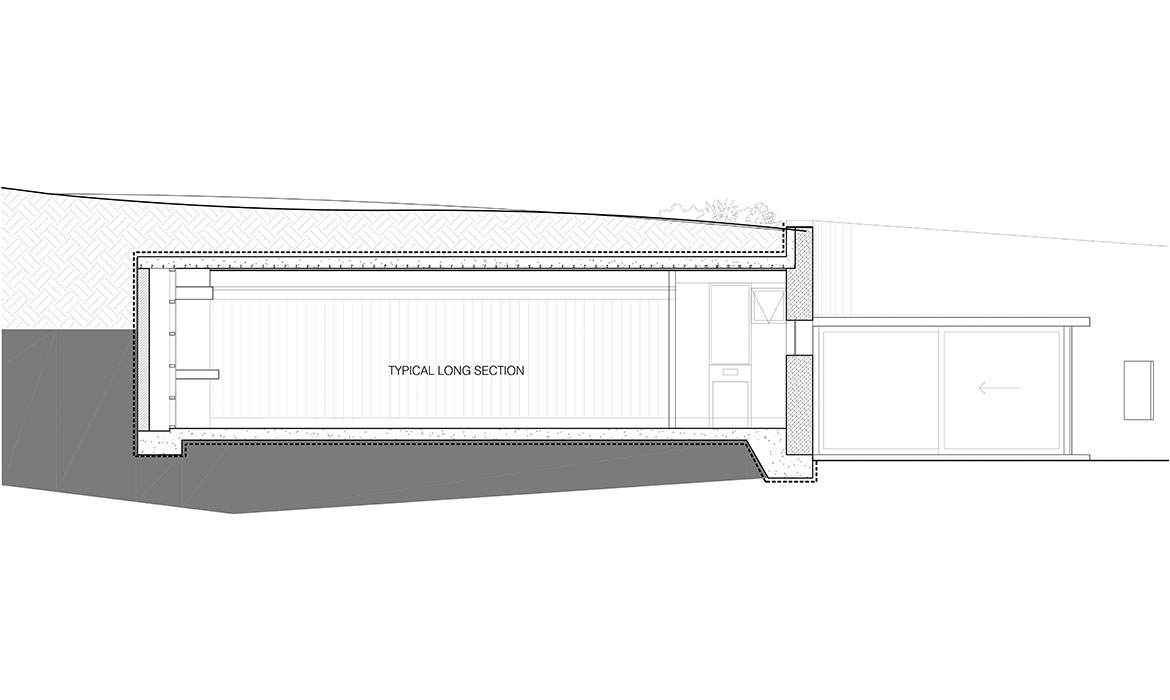
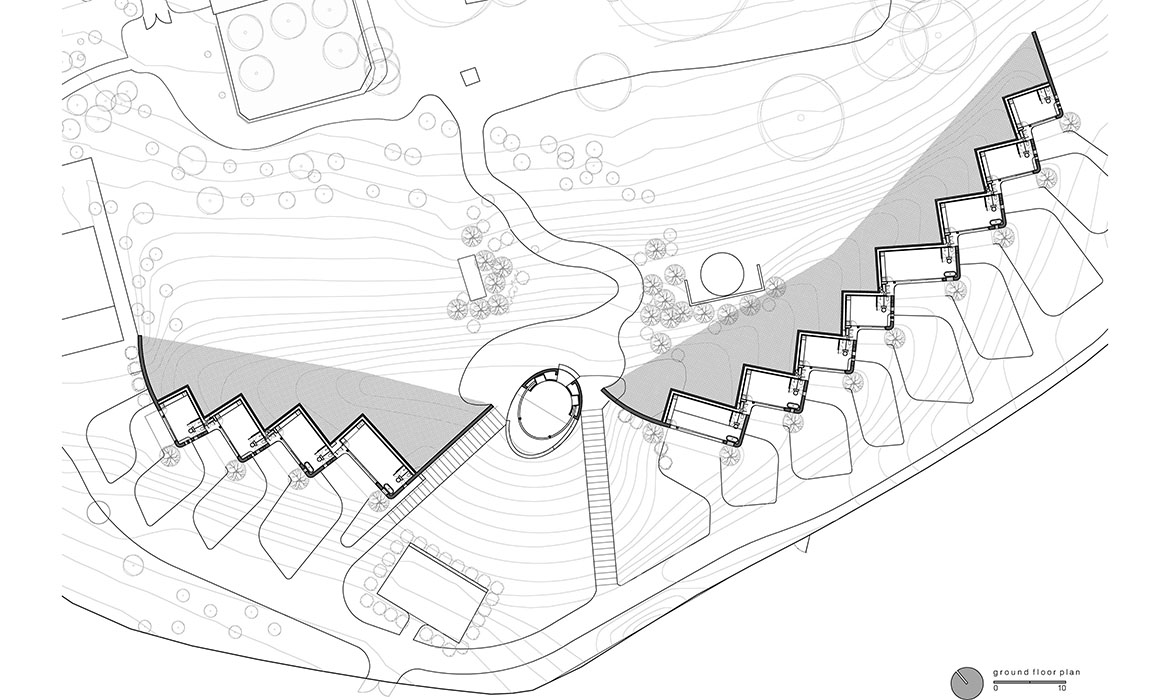
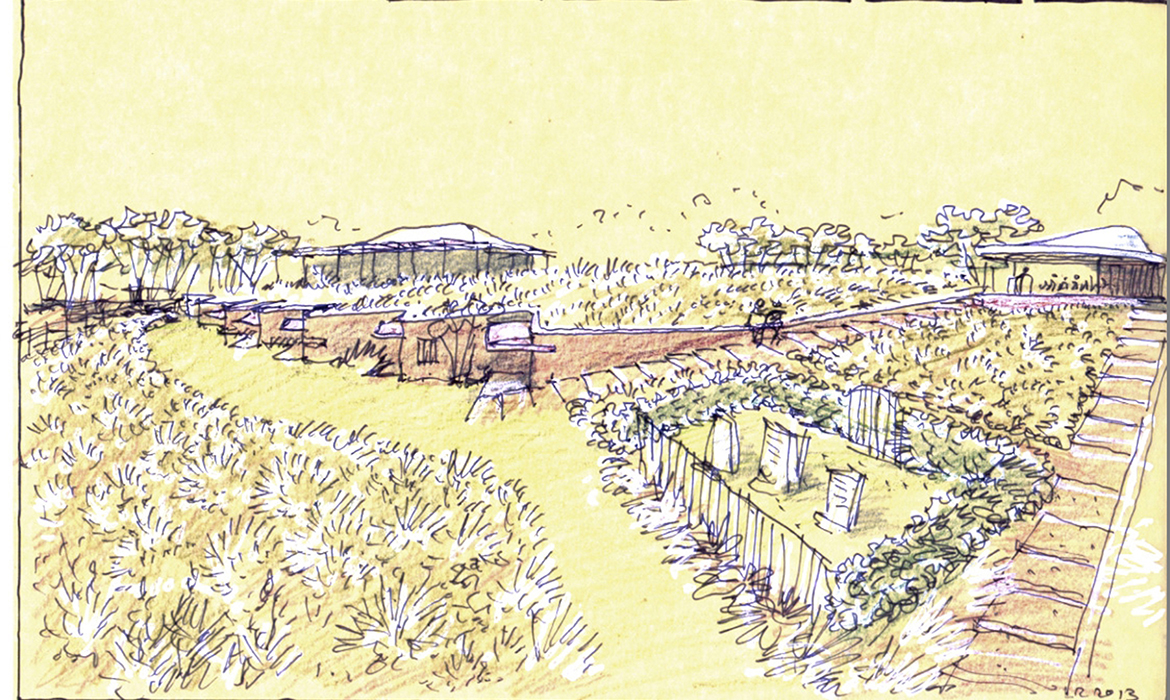
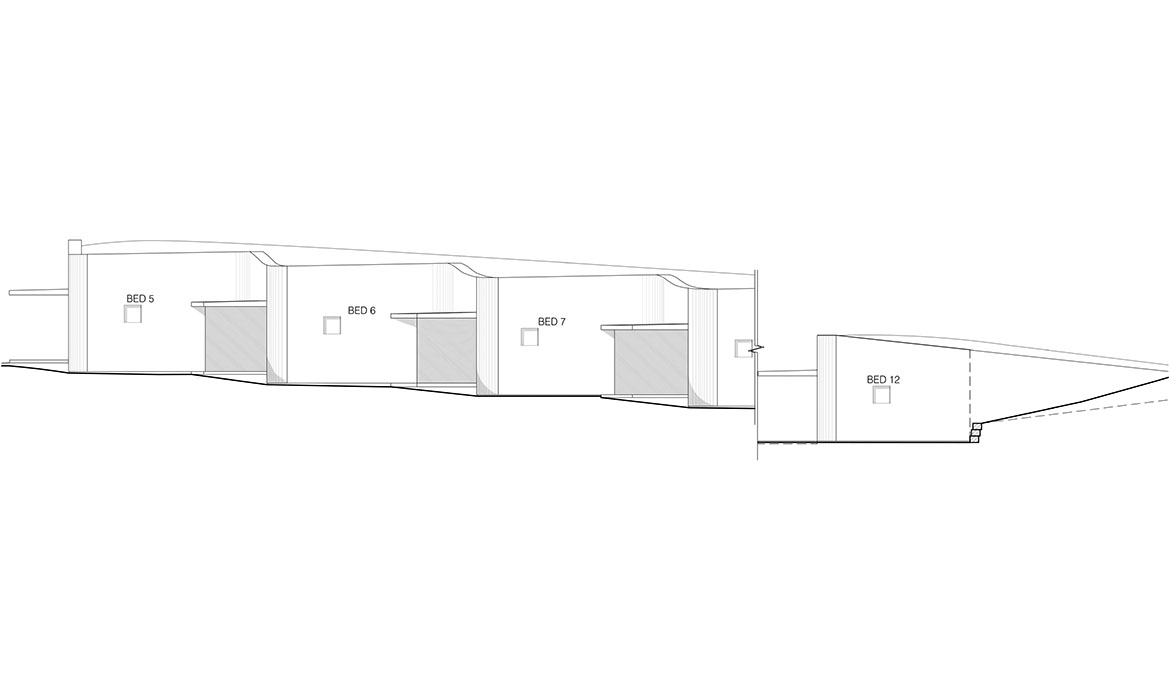
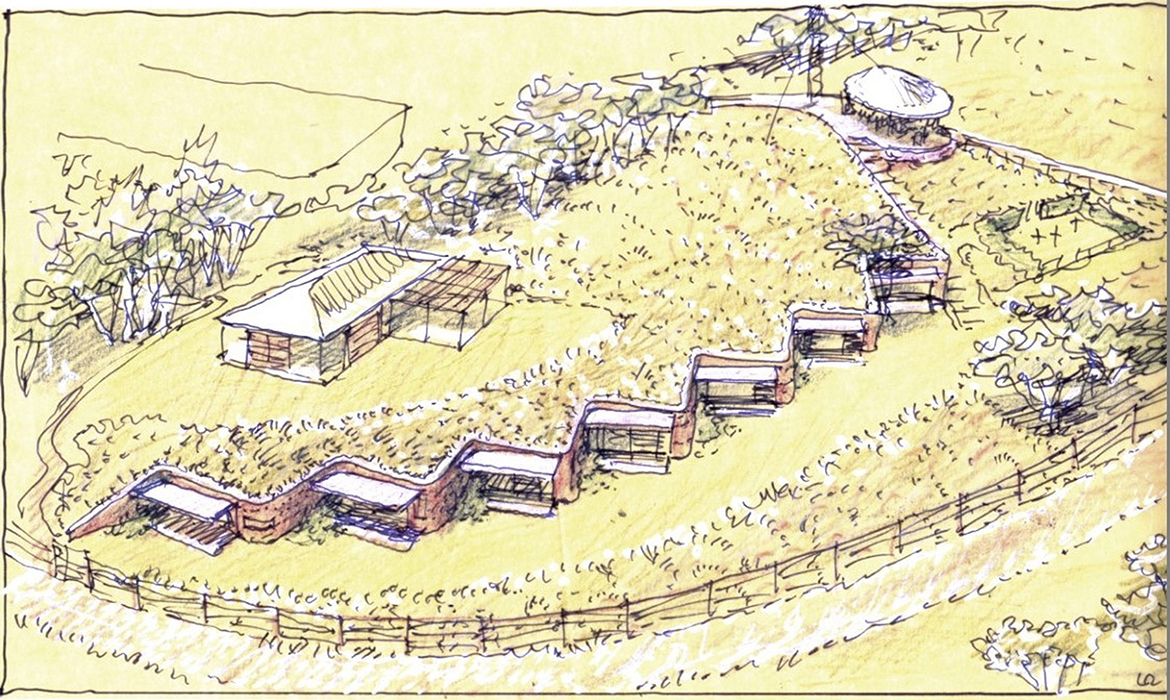
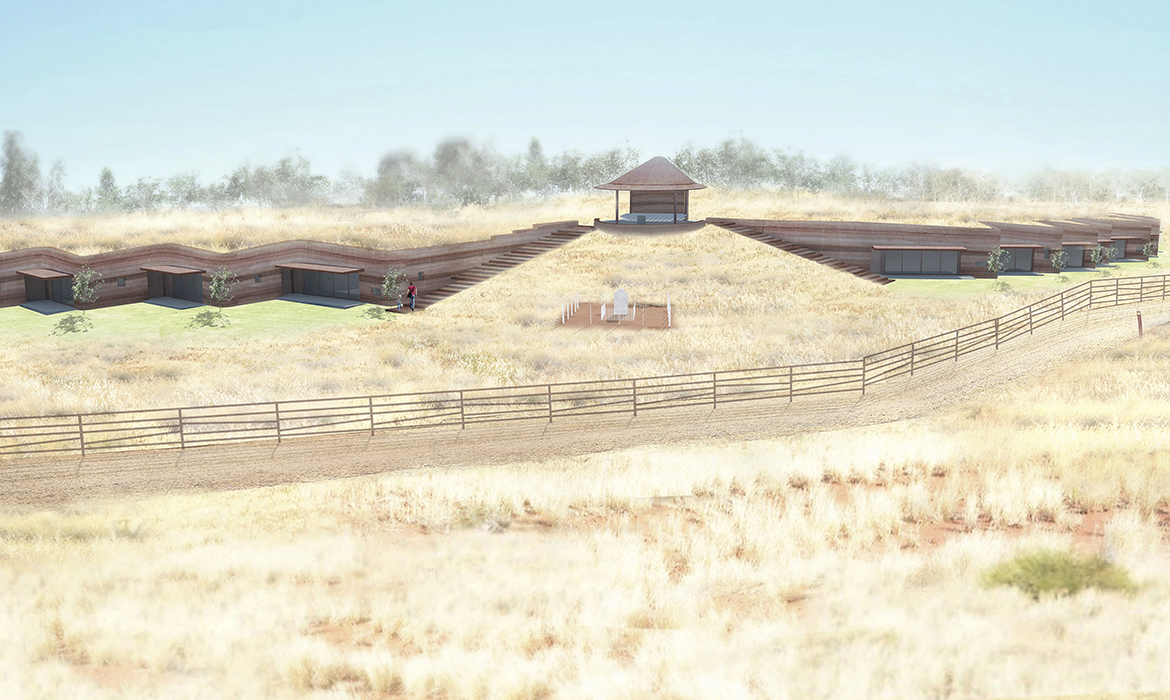
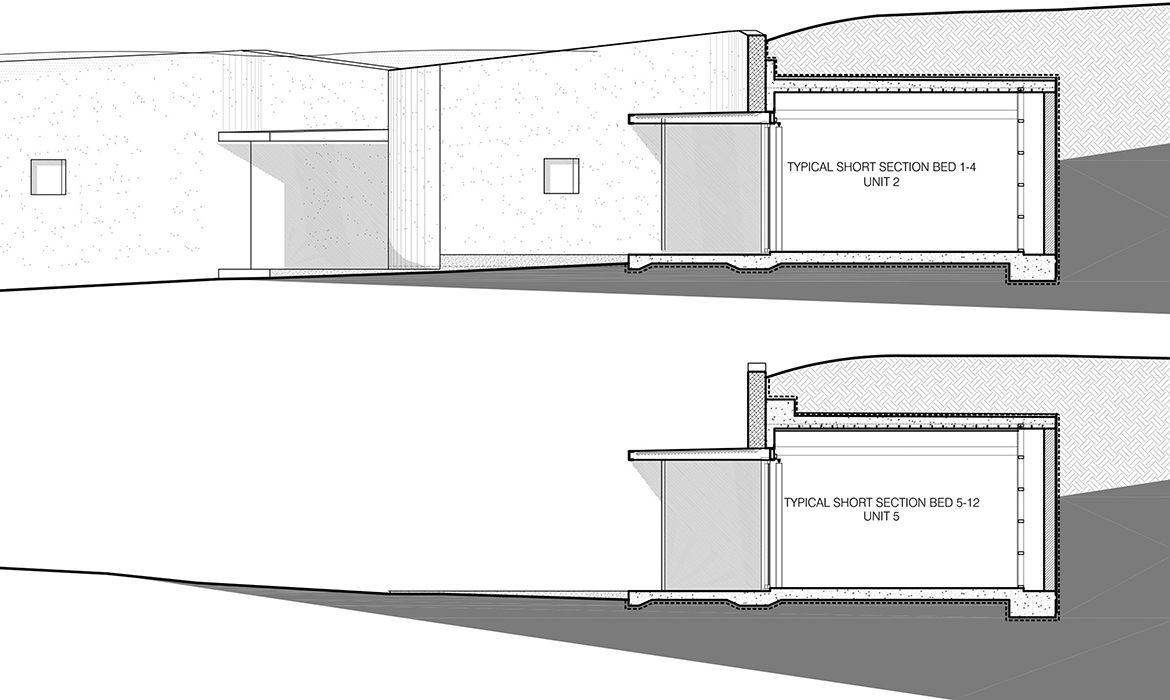
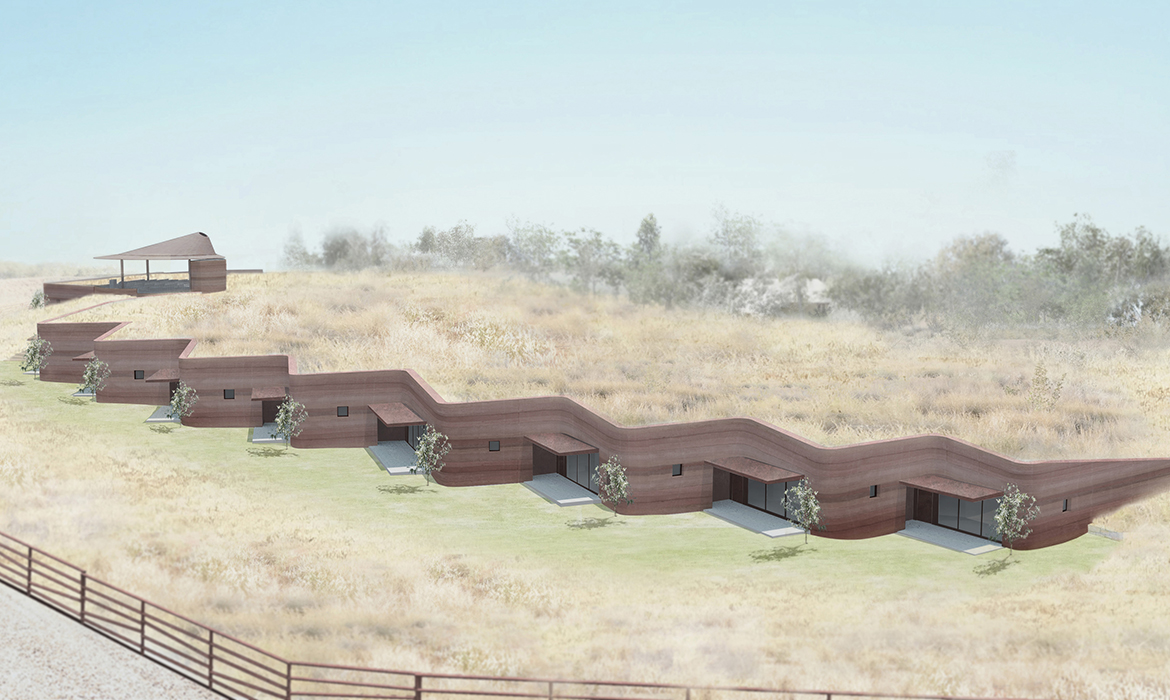
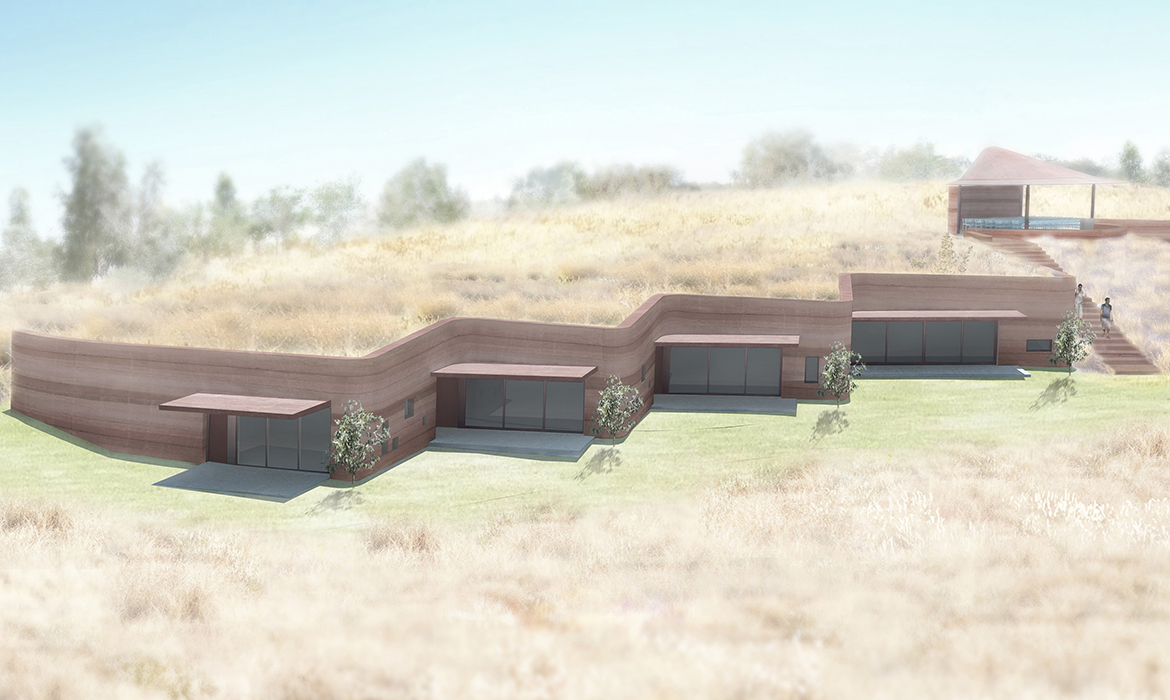
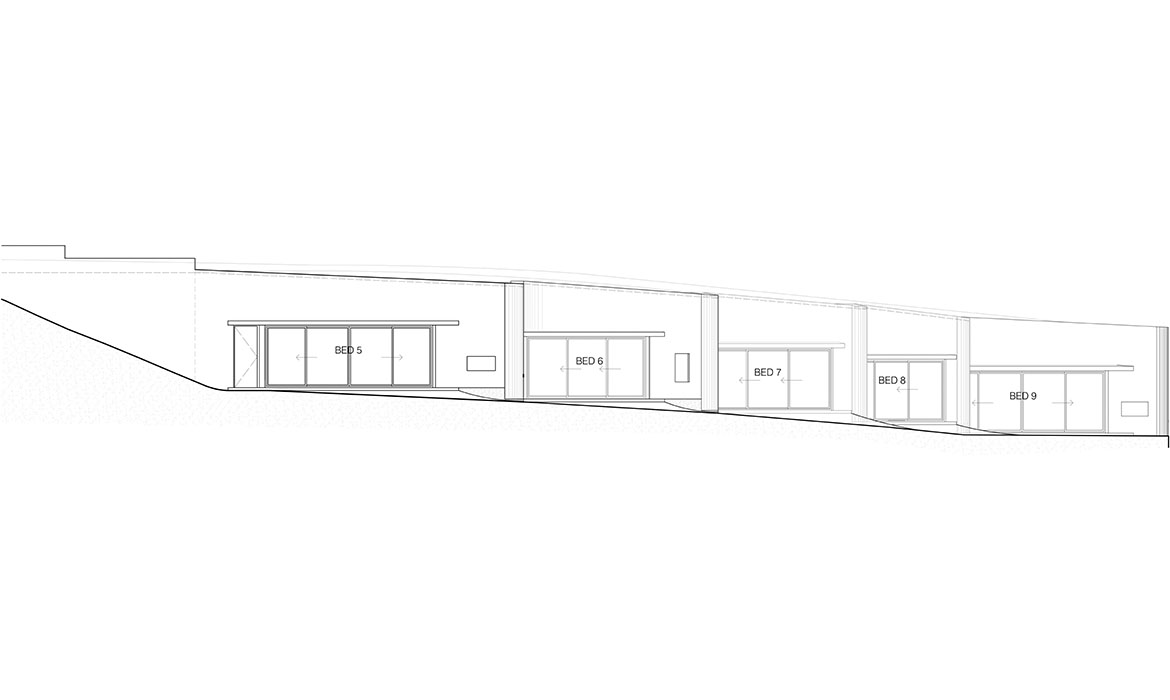
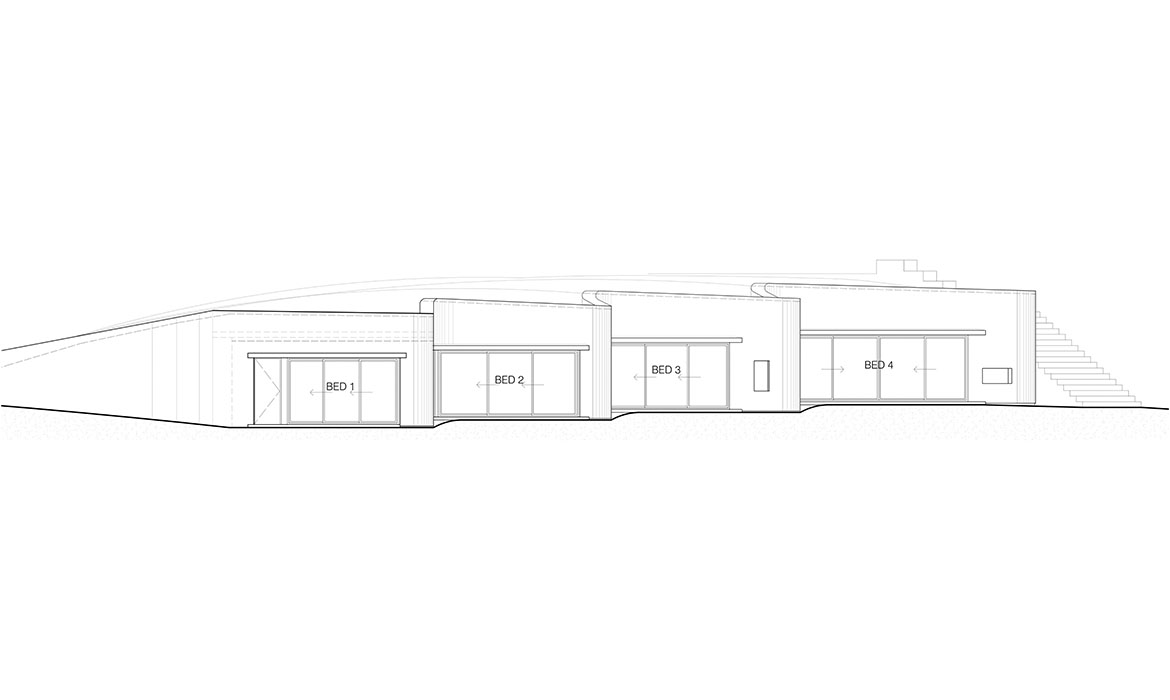
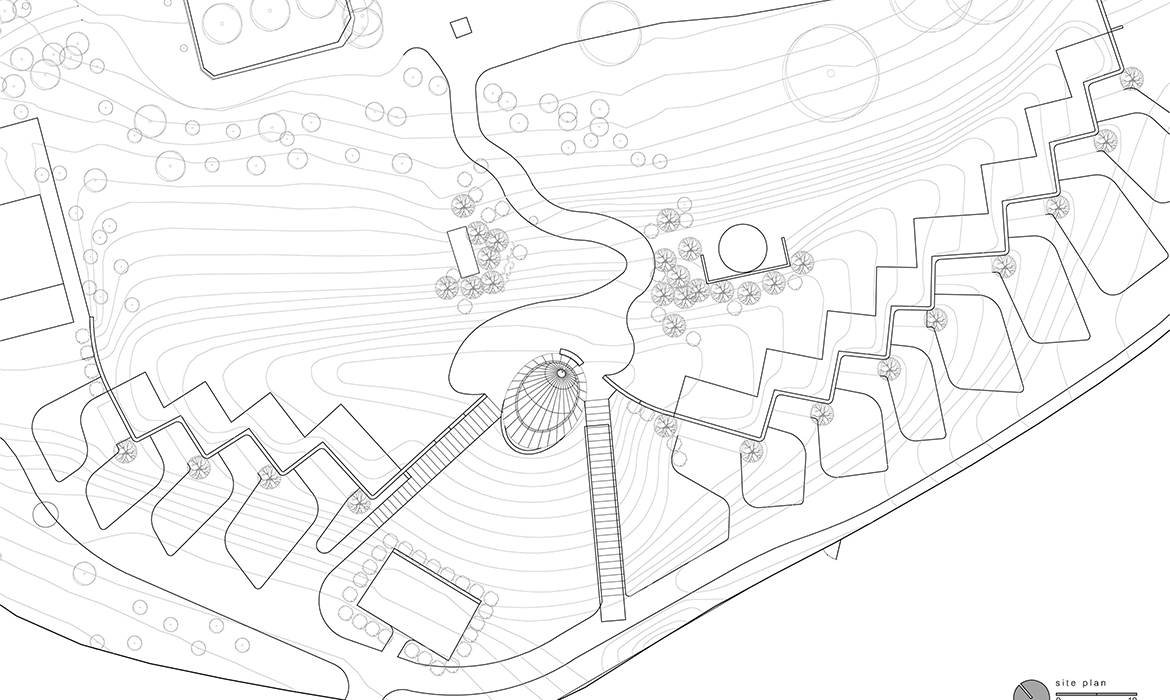
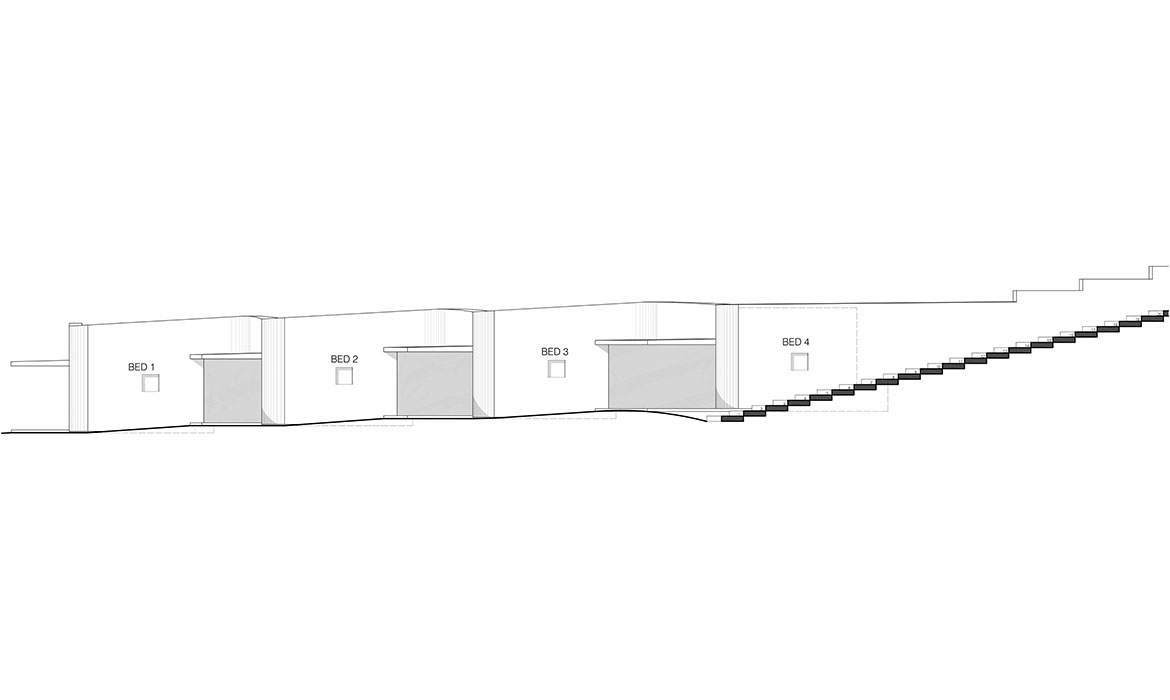
Buried beneath an existing sand dune and faced with a continuous rammed earth wall, the units follow the crest of the dune and fan out toward the ghost gums on the river banks. The design represents a new approach to remote Western Australian architecture, moving away from the sun baked, corrugated metal shelters to naturally cooled earth architecture. Choosing to bury the units and facing them with rammed earth stabilises the ambient temperature of the units. Rammed earth is an excellent cooler, it absorbs the humidity from air and ground, releases it through evaporation and cools the wall temperature. Predominantly the structures are not exposed to the sun’s heat and are protected from cyclonic conditions, all these measures will contribute to their longevity.
At 230 metres long, the rammed earth wall, the longest in Australia, is 450mm thick and composed of the local iron rich clay found in abundance in the clay pans on the property, along with pebbles quarried from the river bed a few hundred metres away and a small amount of cement to stablise the mix. The water is locally extracted from the underlying water table of the river.
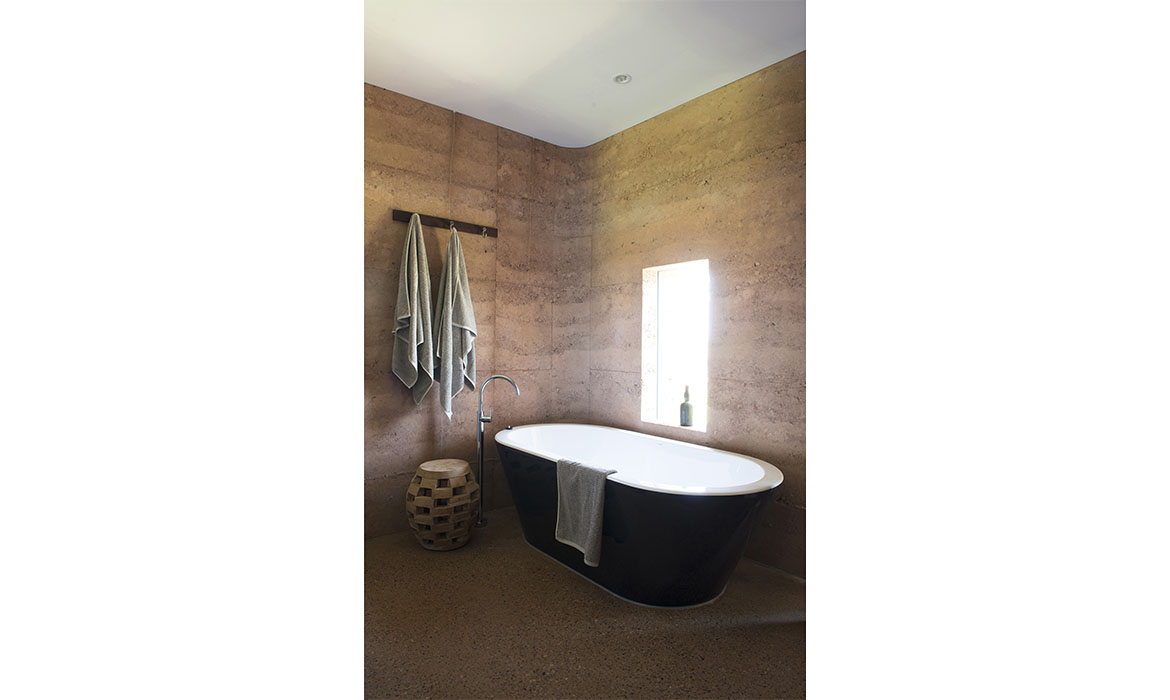
The rammed earth is also exposed internally. The rectangular layout of the individual musterer’s accommodation has two rammed earth walls and two walls of concrete blockwork retaining the sandhill. A concrete slab on the ground is left exposed with a light grind that reveals the riverbed pebble aggregate embedded in the concrete.
As the cooling factor and thermal mass of rammed earth are not factored into the Australian Building Code, a specialist consultant was engaged who could demonstrate the energy efficiency of the design by providing a fully simulated and modelled design thermal calculation. Only with the help of Building Thermodynamic Performance consultants, Floyd Energy was the building able to pass the section of the Building Code of Australia covering energy efficiency requirements.
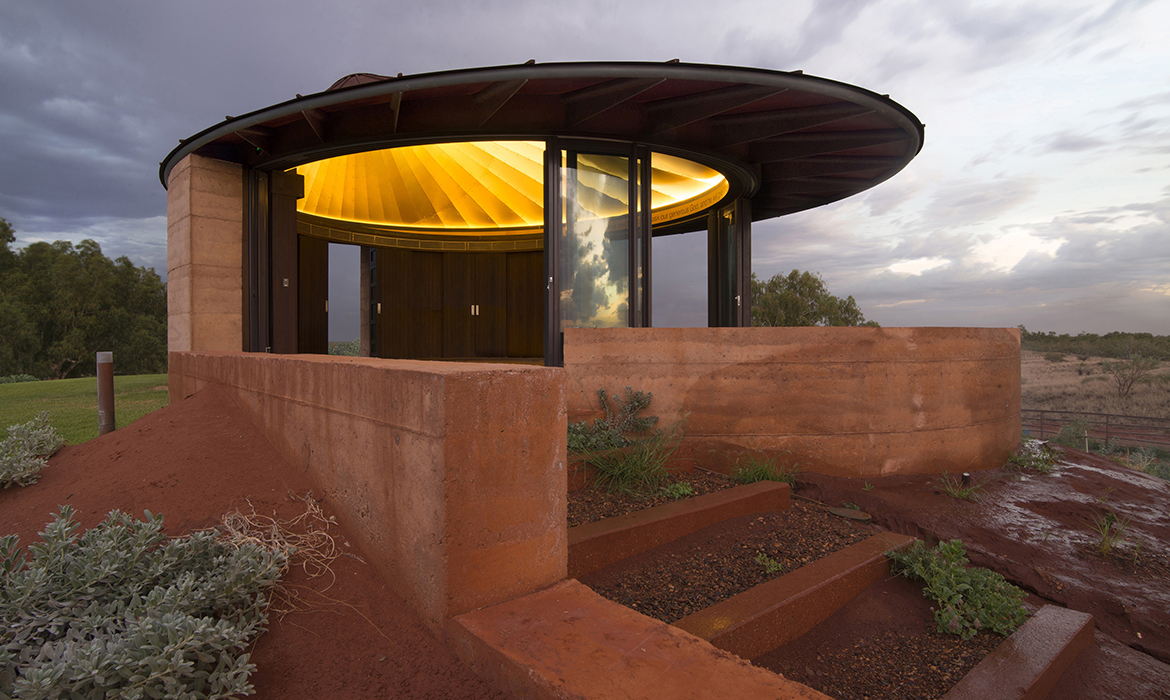
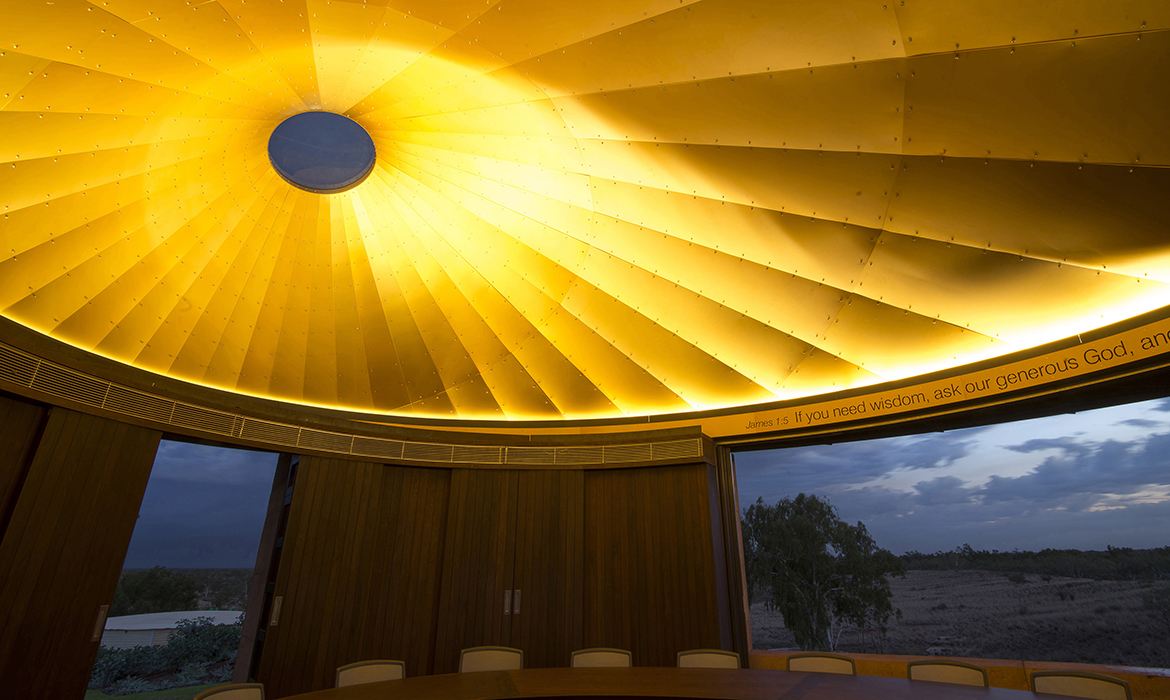
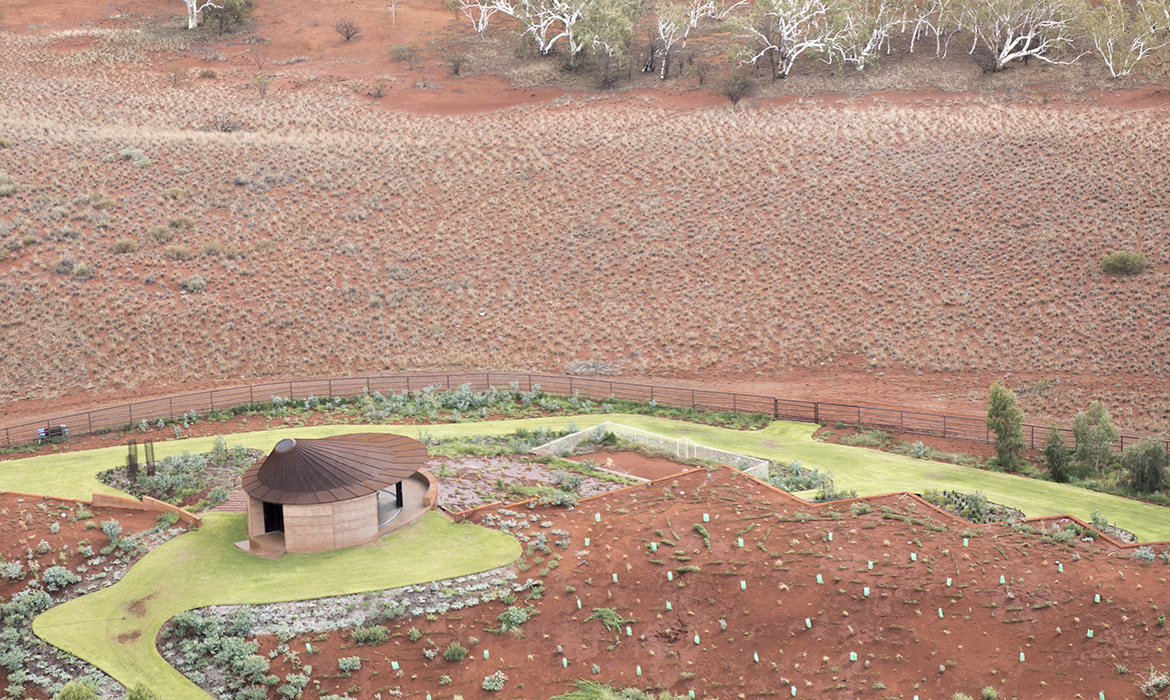
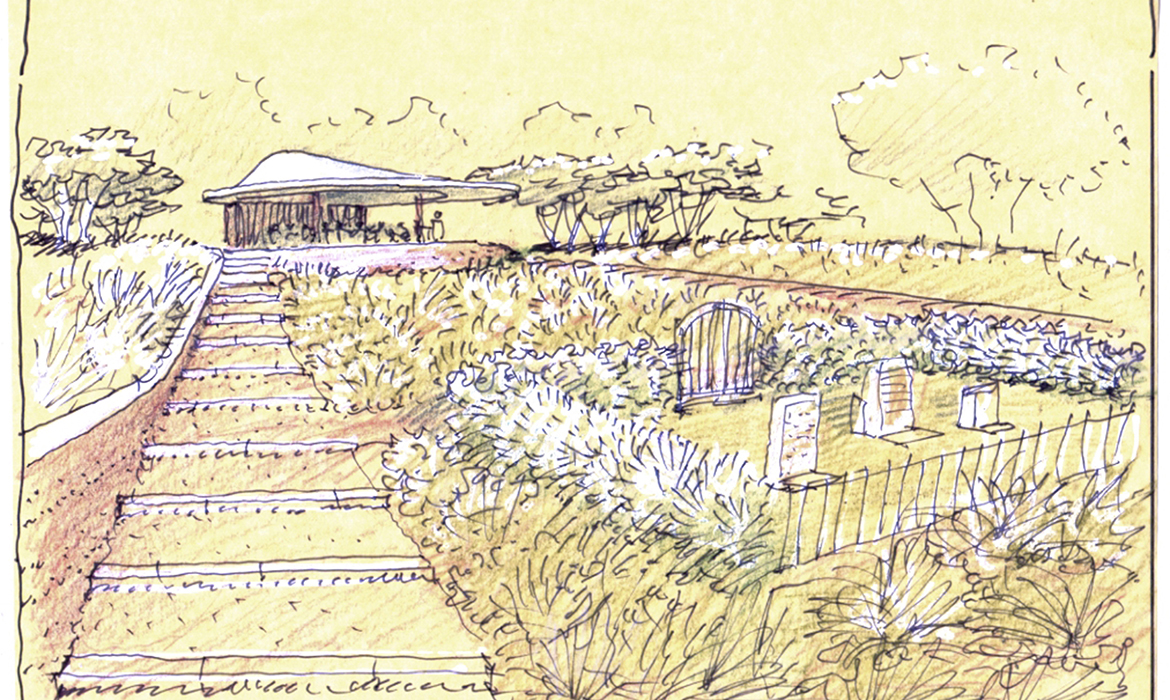
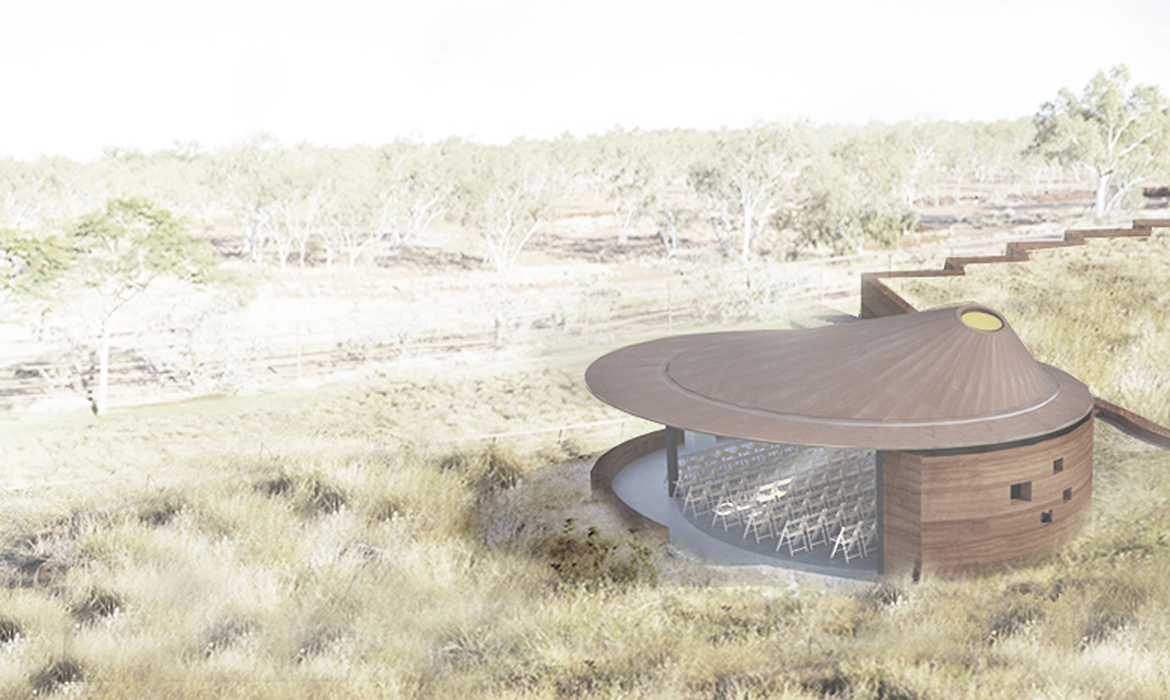
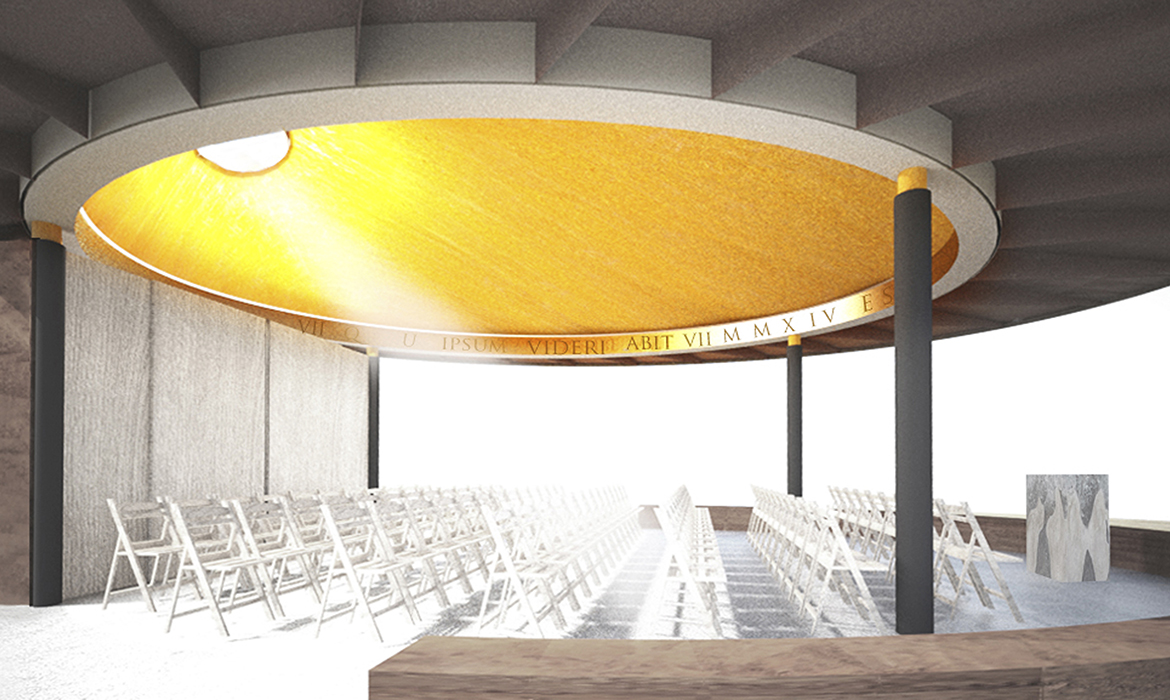
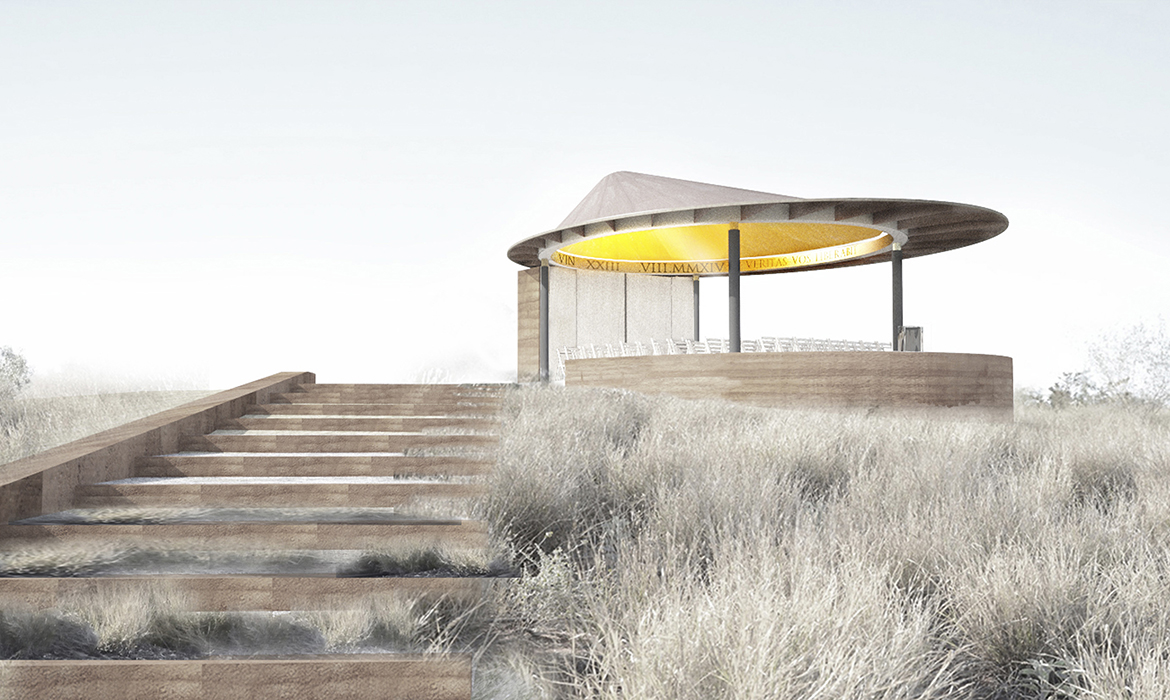
On the highest point a Chapel dominates the development; a space imbibed of the sacred aura of the place, from the original indigenous carertakers of the site to the headstones marking the graves of the first settlers at the bottom of the hill. The same room is also a meeting point, a meditation place and a contemplative look out. The Chapel is an oval construction with a conical Cor-Ten steel roof that provides protection from the scorching sun. The cone apex, truncated at an oculus, creates a solar meridian on the floor. A gold anodised aluminium ceiling and a sacred verse inscribed on the ring beam of the roof are subtle spiritual components that do not rival the intrinsic spirituality of the landscape.
Cronologia:
Novembre 2013
Commissione
Ottobre 2014
Completamento