Trasformazione delle rovine romane di Can Tacó

Crediti
Cliente
City Hall Montmeló i Montornès Del Vallès
Collaboratori
Dani Rebugent
Autori
Toni Gironès
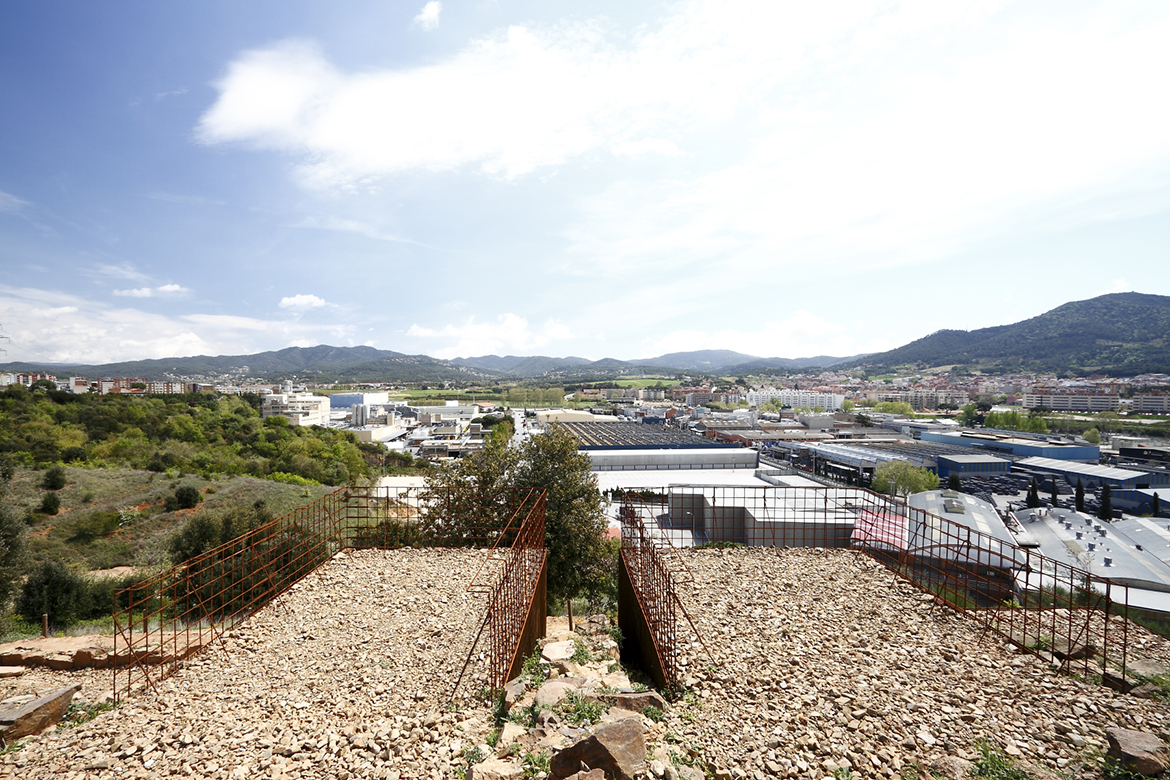
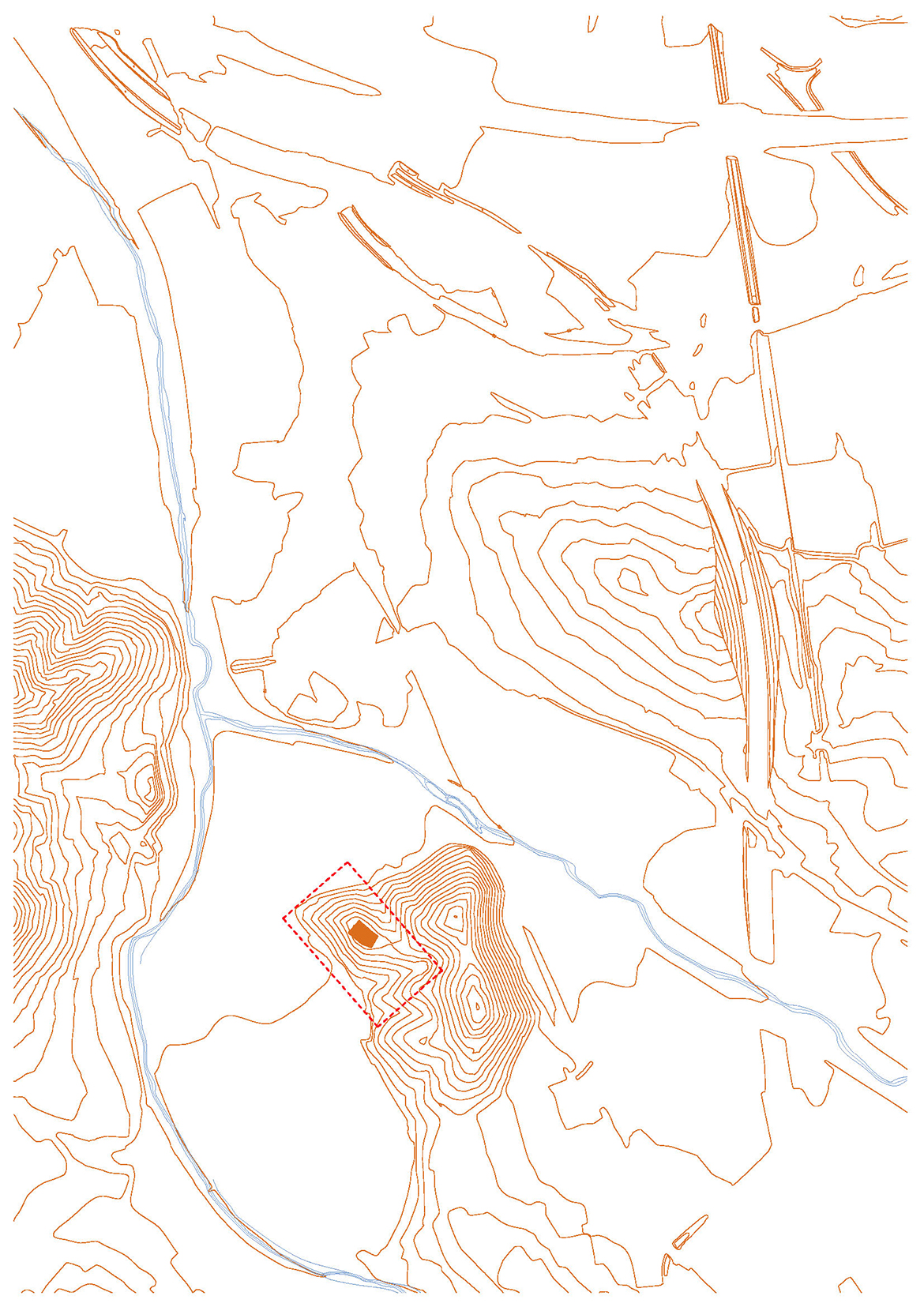
The archaeological Roman site of Can Tacó is settled in “Turó d’en Roina”, facing south and 50 meters above the point where the rivers Congost and Mogent meet, at the birth of the river Besòs and 20 km far from its confluence with the Mediterranean sea.
This place is part of the mountain range named “els Turons de les Tres Creus”, a natural place that keeps the biodiversity in a highly fragmented metropolitan area. This particular situation arises the need of addressing the refurbishment naturalistically and the archaeologically.
Disegni tecnici:
Report esteso:
Relazione estesa
The archaeological Roman site of Can Tacó is settled in “Turó d’en Roina”, facing south and 50 meters above the point where the rivers Congost and Mogent meet, at the birth of the river Besòs and 20 km far from its confluence with the Mediterranean sea.
This place is part of the mountain range named “els Turons de les Tres Creus”, a natural place that keeps the biodiversity in a highly fragmented metropolitan area. This particular situation arises the need of addressing the refurbishment naturalistically and the archaeologically.
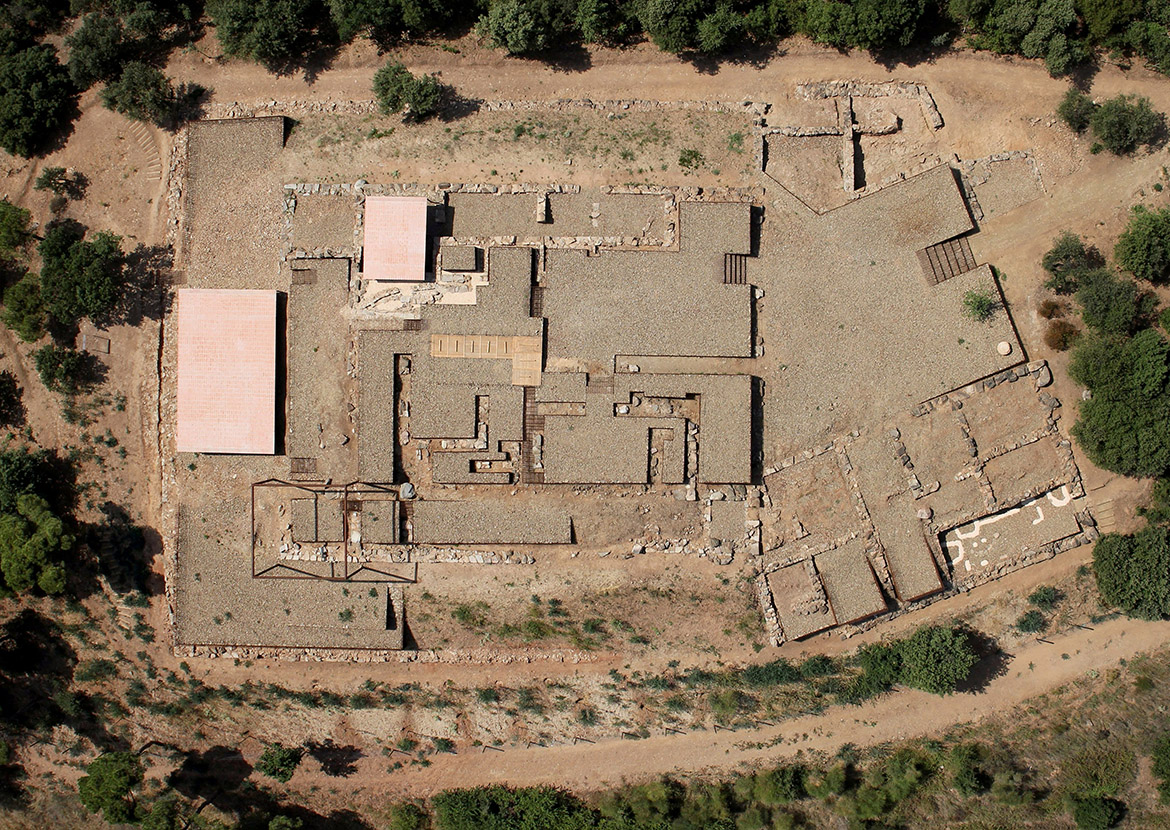
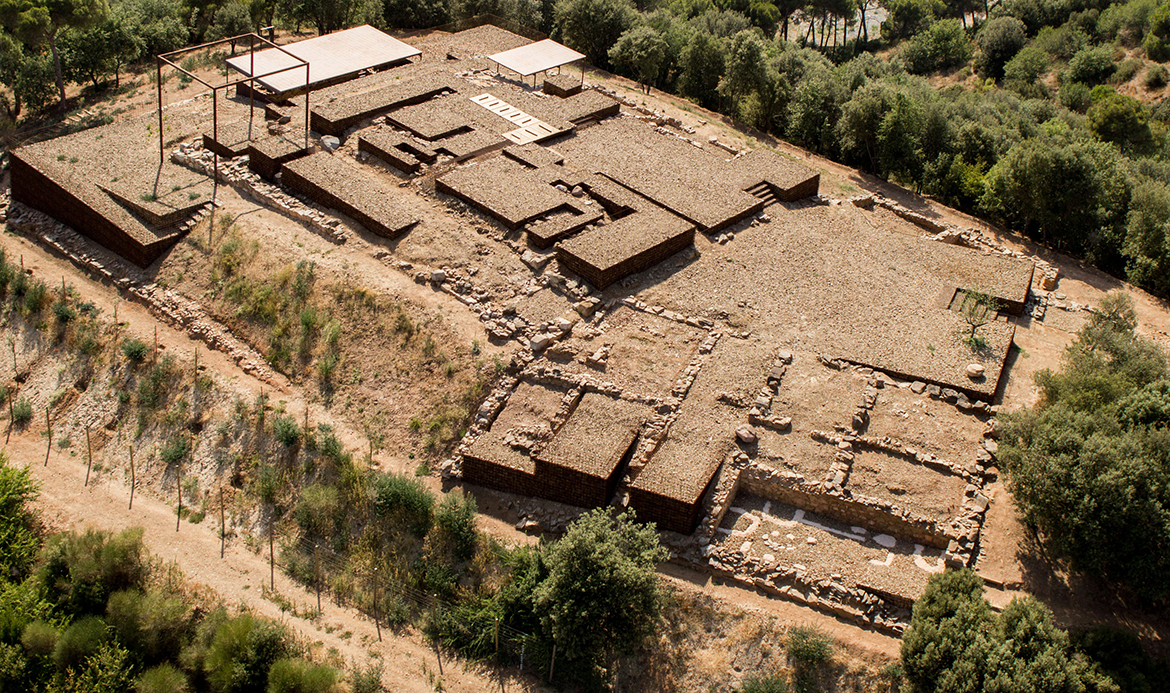
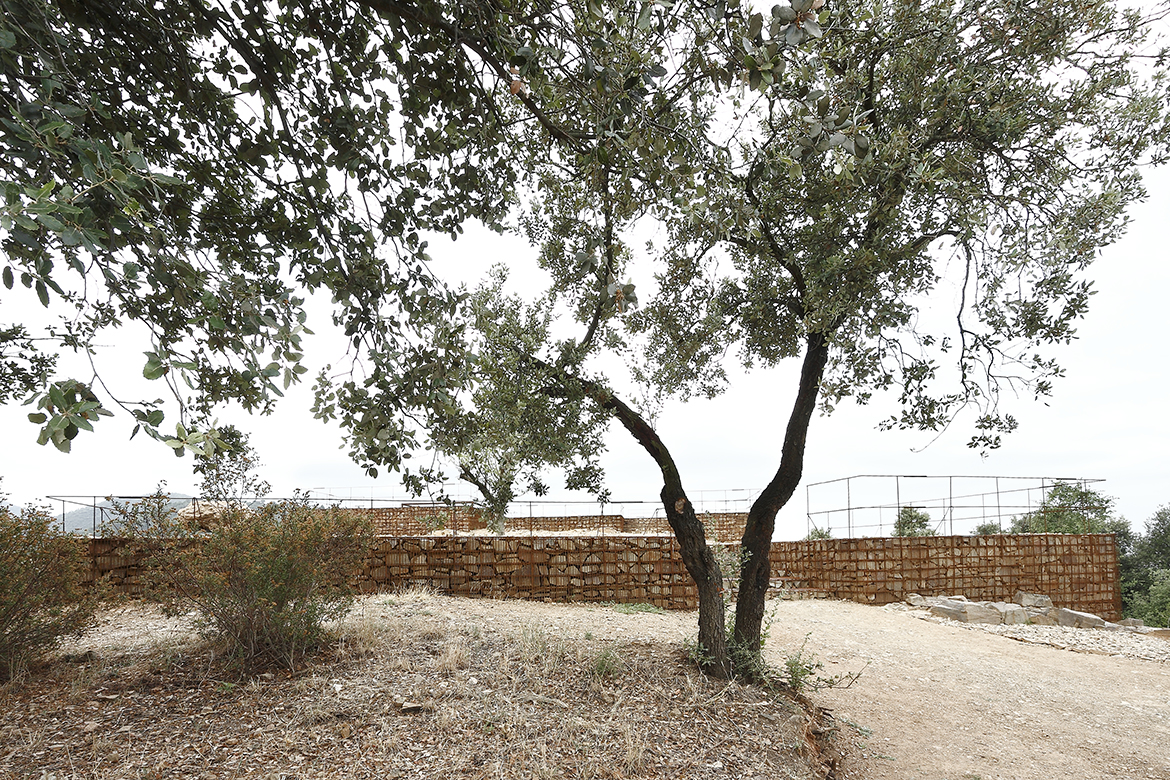
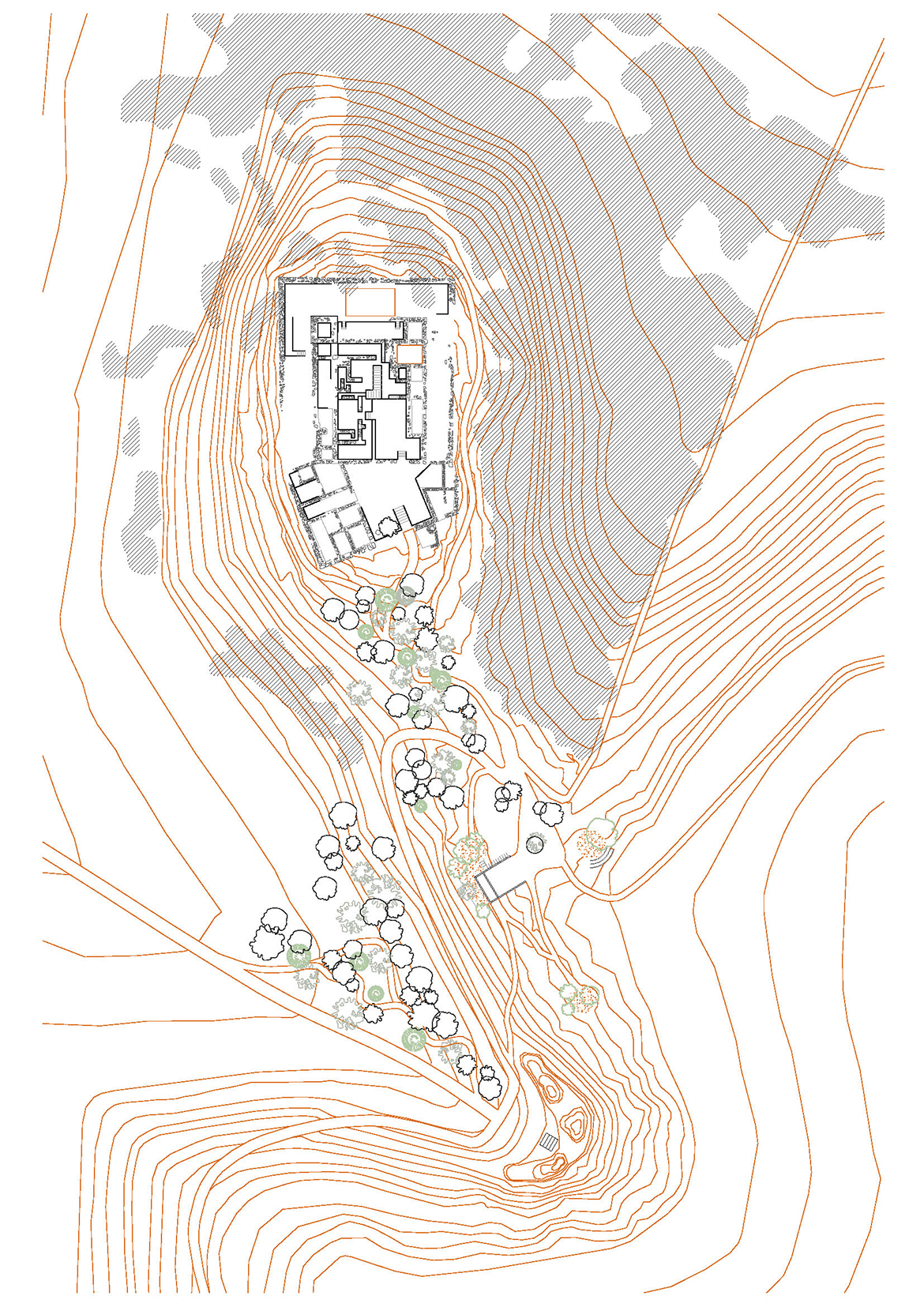
Walking through a little wood of oaks and at the end of a tranquil and sinuous path, we discover the remains of an historical Roman villa, with a clear and strong geometry and with areas of great interest.
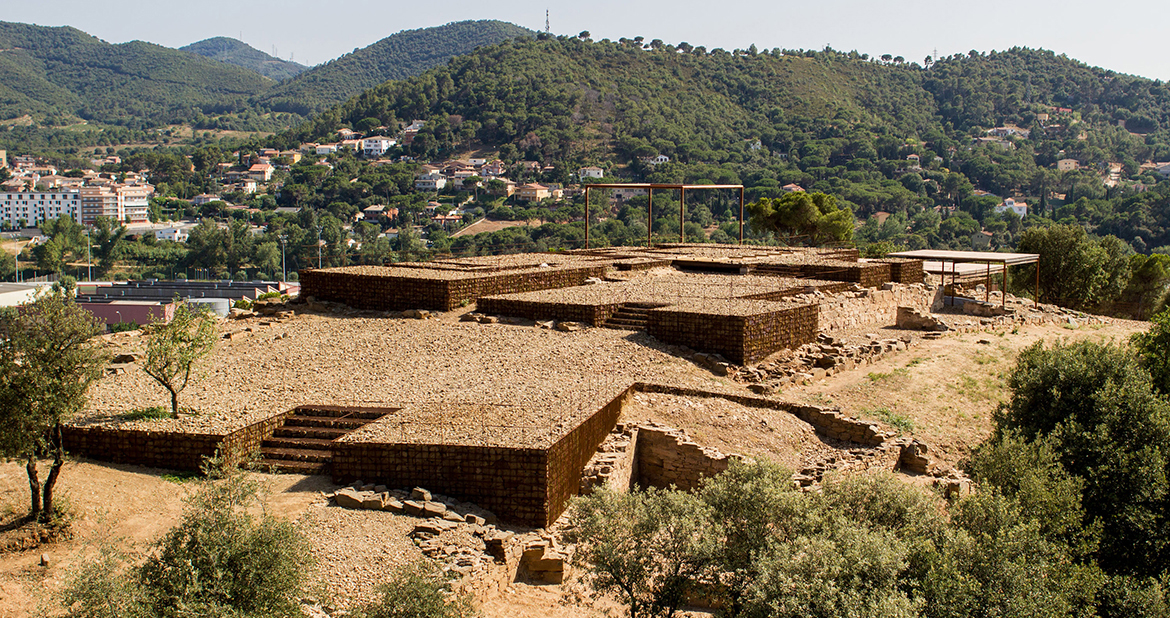
Built by successive terracing and partly made of local licorella stone, what had been an important settlement prior to the construction of the Via Augusta, is today a natural viewpoint to the region of “el Vallès”.
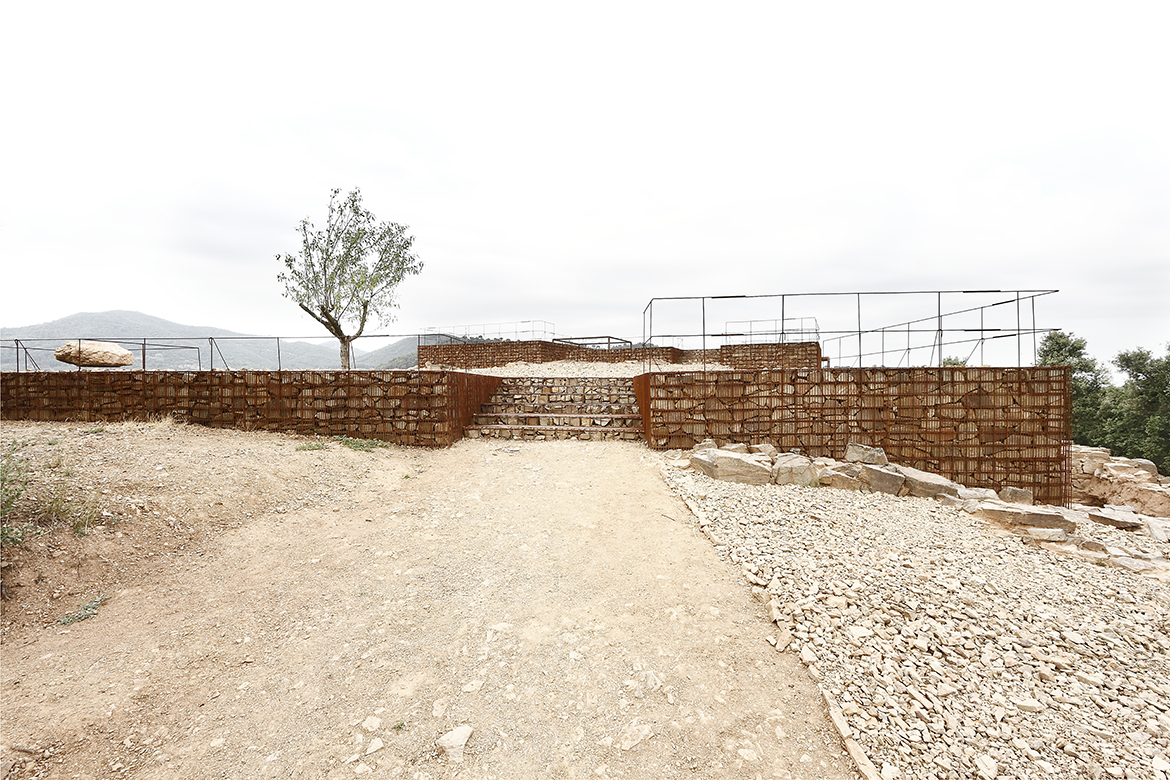
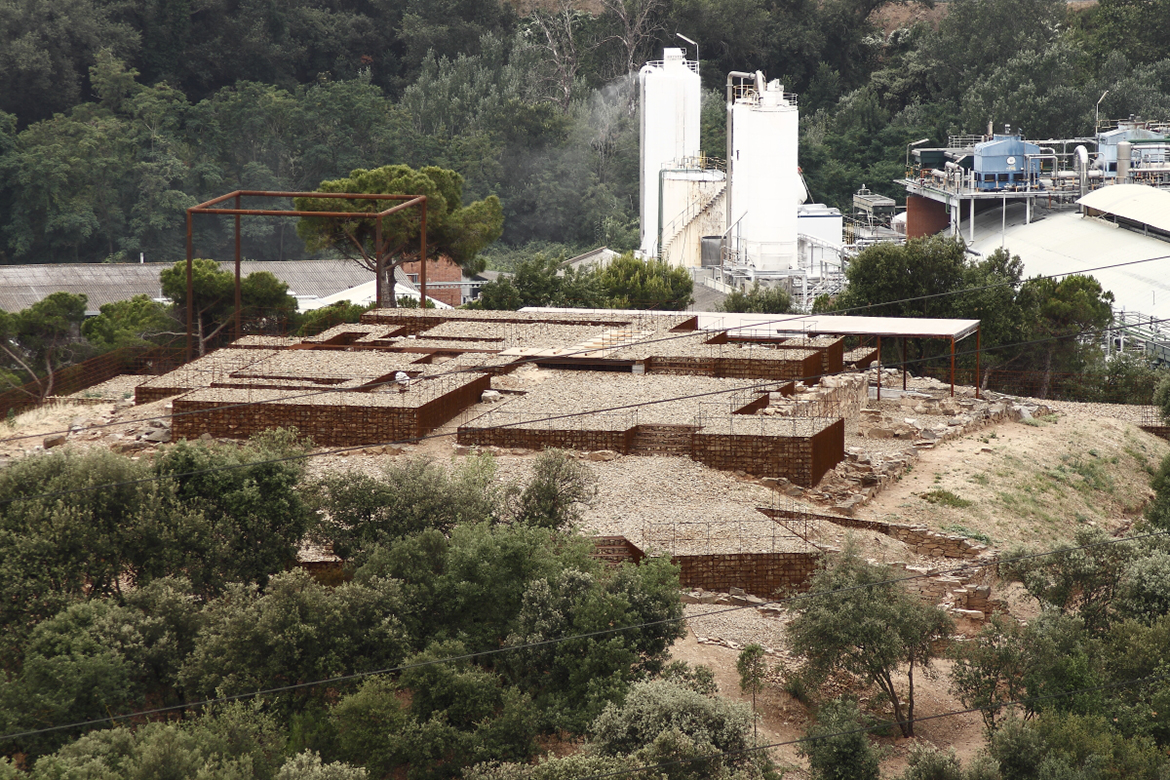
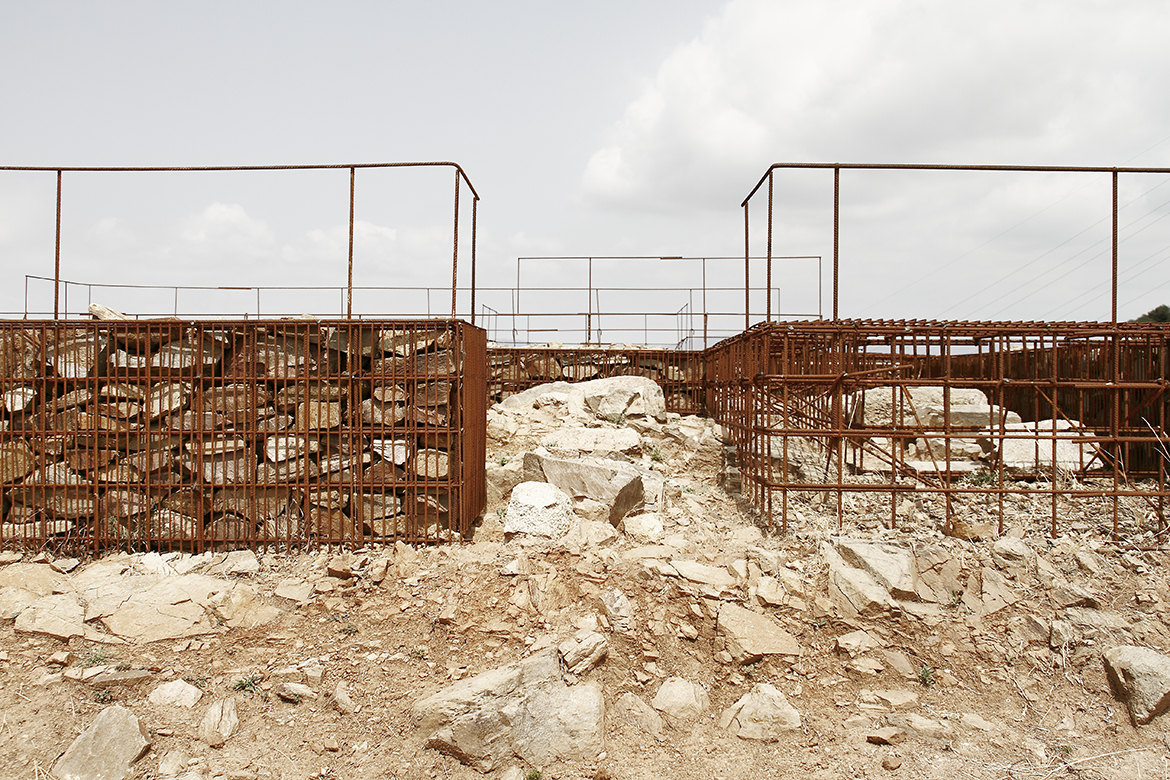
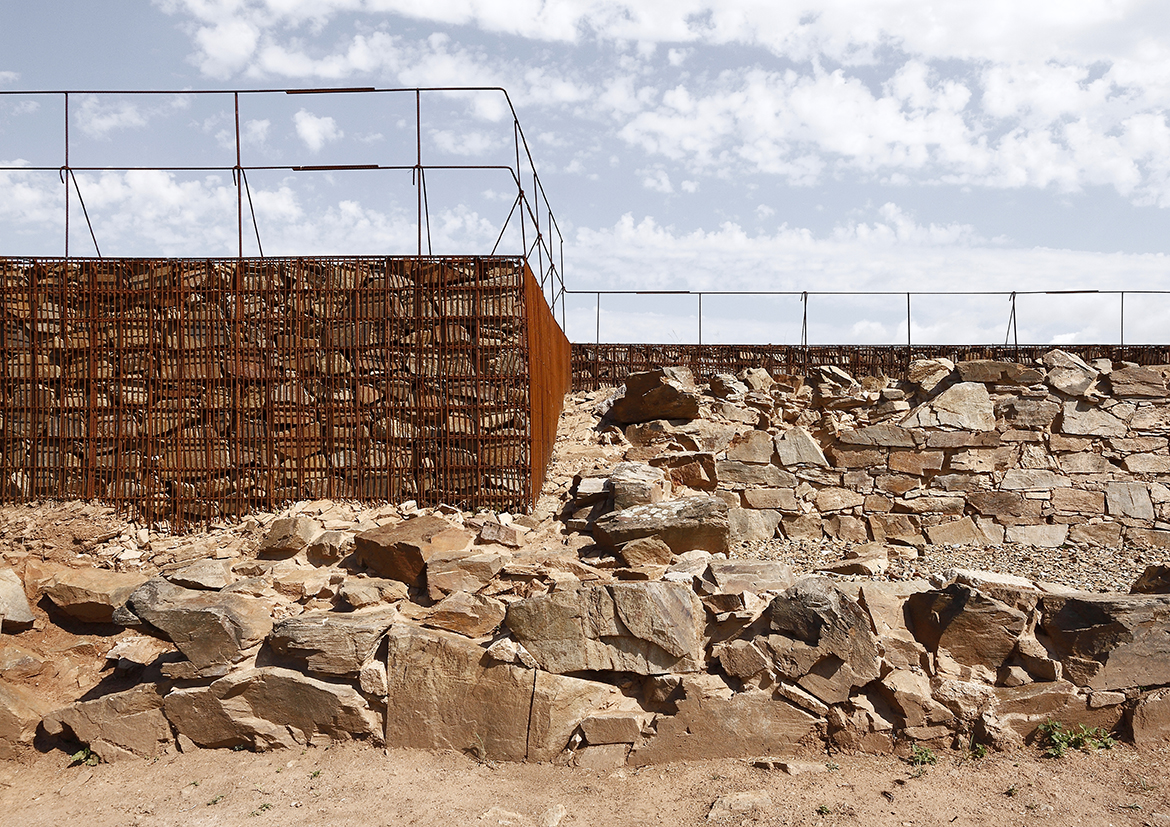
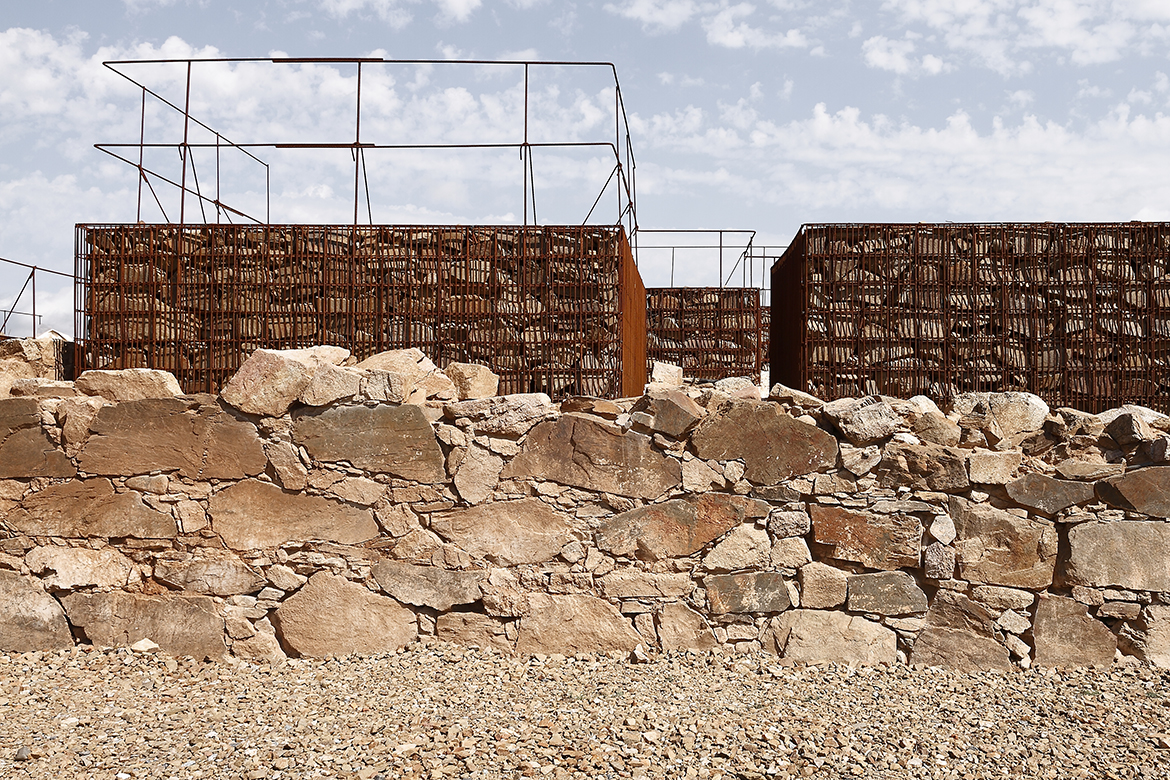
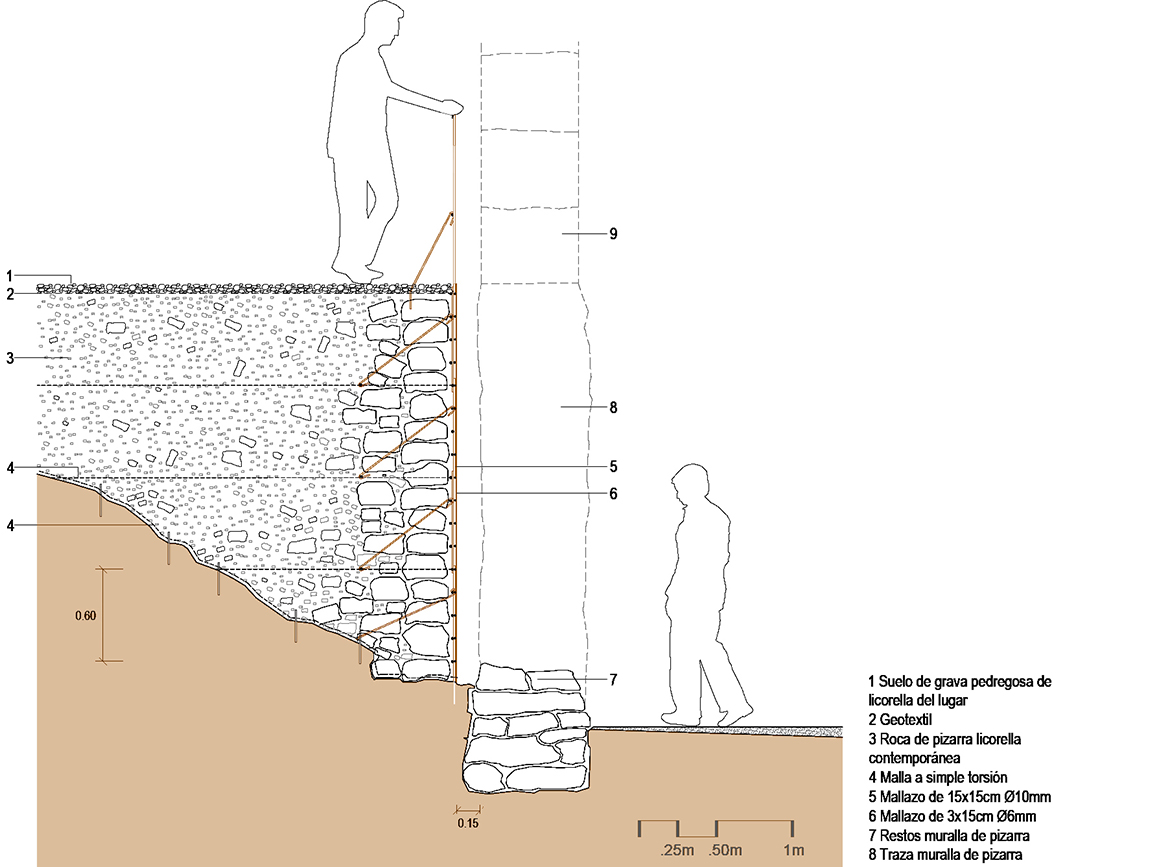
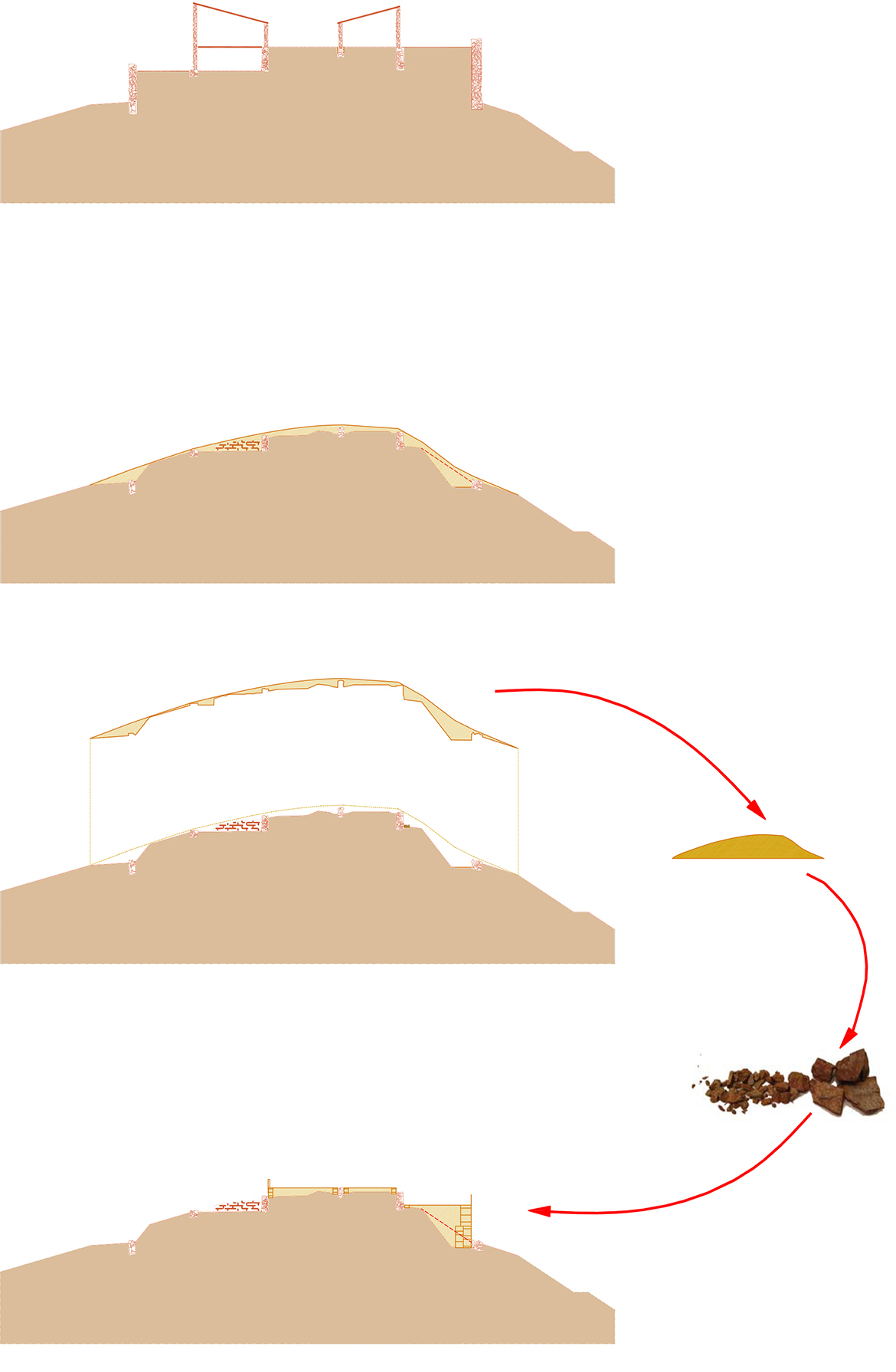
The project intervenes in the backfill of the Roman traces, enhancing the content (the space) and highlighting the container (the walls). The soil that over the time had covered the remains is withdrawn during the archaeological excavation, accumulated apart and used afterwards as one of the main materials. Therefore, these soil, just like the gravels and the rocks of the thought-to-be old Roman quarry, are selected and tidied up with a new disposition, giving them a new lease of life.
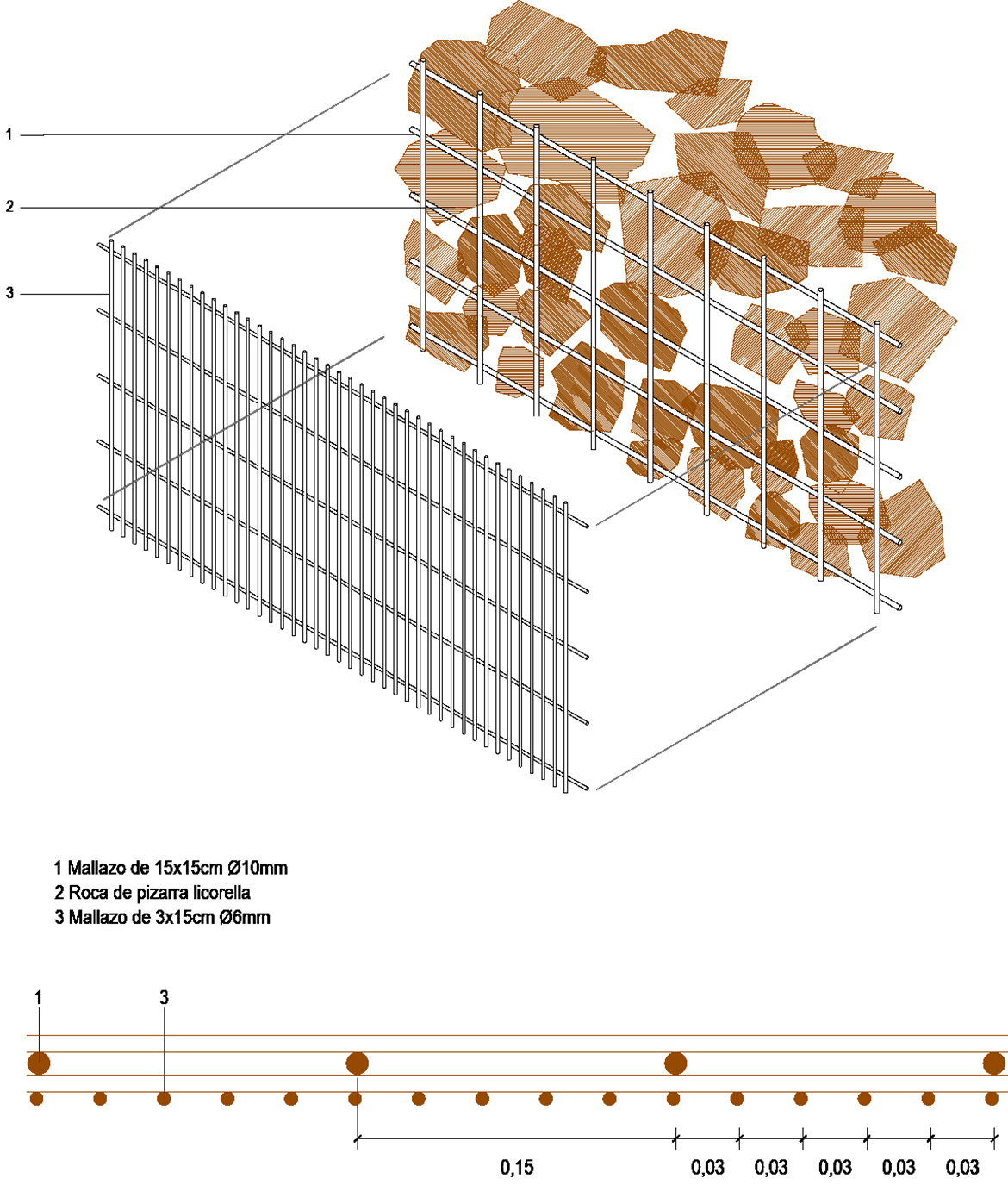
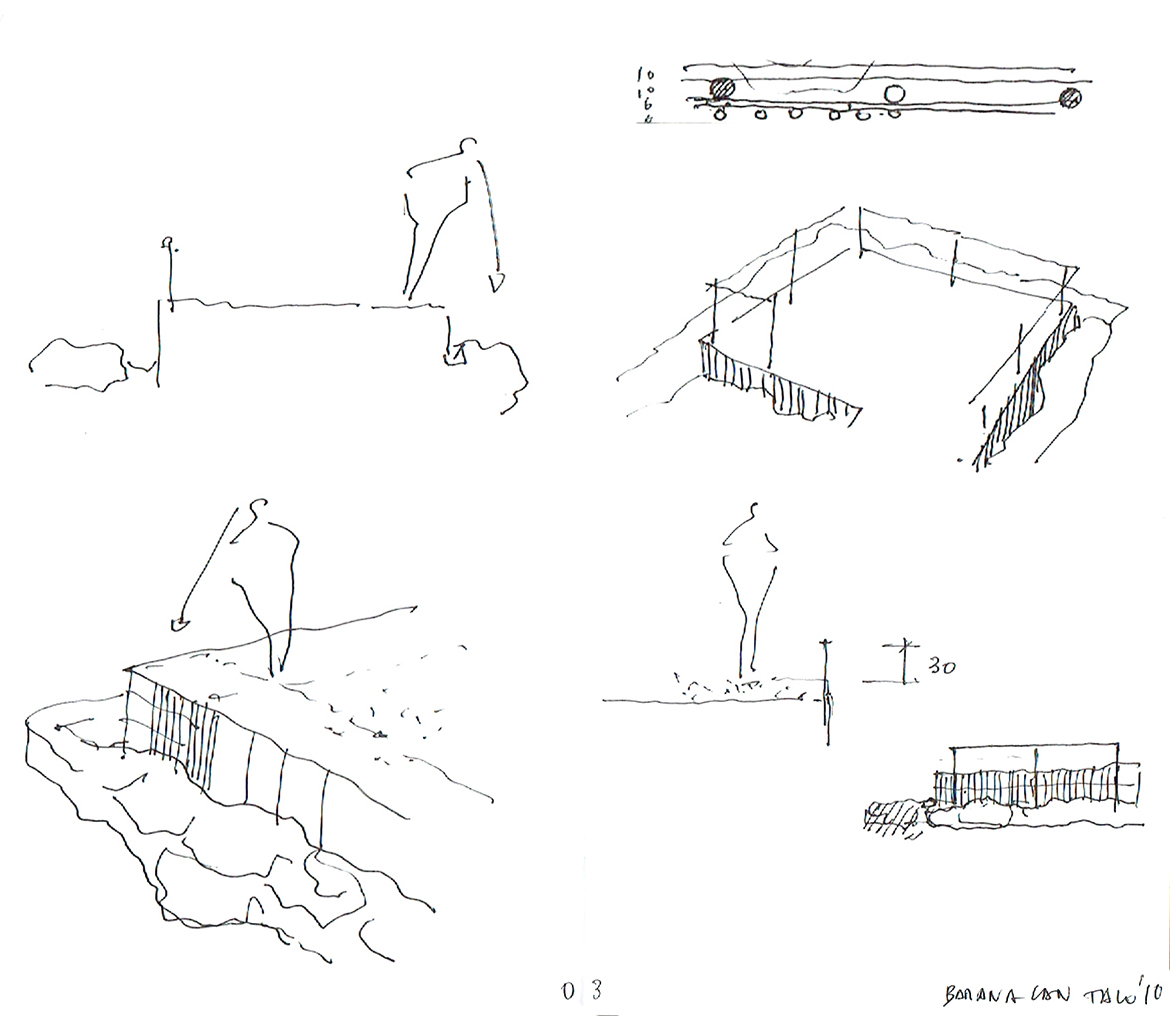
A first steel mesh contains the new stones; these subsequently contain soil and gravel, and jointly they reproduce the successive horizontal planes where the Romans used to transit. A second denser and thinner mesh is arranged like a curtain over a period of time. Consequently, stone and steel, mountain and industry, live together in these landscapes of accumulation. Interpreting the preexisting, enhancing and activating, adding and not erasing, and at the same time co-evolving with the environment trying to optimize resources.
Cronologia:
2008
Incarico
2012
Fine lavori